
MUSIC
Best 5 Tools to Turn Suno Songs Into Videos in 2026

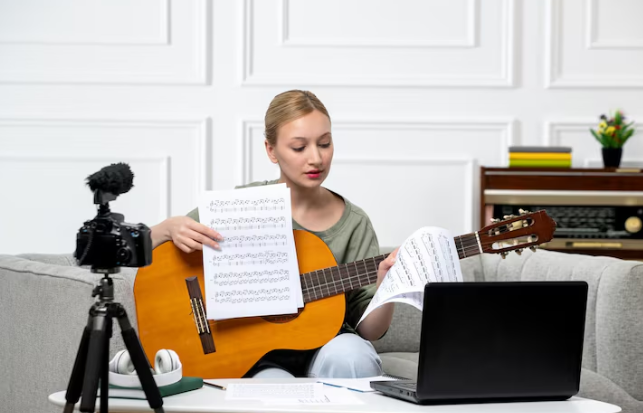
Suno has fundamentally changed how quickly music can be made. What once required studio time, session musicians, and production budgets can now be achieved from a browser in minutes — a finished, radio-quality track generated from a text prompt. But the speed of creation has outpaced the speed of distribution. Audio alone performs poorly on the platforms where most music discovery now happens. TikTok, YouTube Shorts, Instagram Reels, and similar environments are built around video, and an audio file without a visual layer is largely invisible in those ecosystems. The result is a growing demand for a reliable suno music video generator — a tool that can close the gap between a finished AI track and a publishable piece of visual content.
That demand has produced a distinct category of tools, each taking a different approach to the same underlying problem: how do you turn a suno song into something watchable, shareable, and platform-ready without requiring the creator to become a video editor?
Why Manual Editing Slows Down AI Music Creators
Traditional music video production assumes a skillset that most AI music creators simply do not have. Building a synchronized video manually means working with timeline editors, sourcing or generating stock footage, designing motion graphics, manually aligning visual cuts to beat markers, and exporting platform-specific formats for each distribution channel. For a professional editor, this is a familiar workflow. For someone who generated a track in suno in twenty minutes, it represents a significant production bottleneck.
The friction is not only technical. It is temporal. Short-form platforms reward consistency and publishing frequency. A creator who can turn suno songs into videos within an hour can maintain a publishing cadence that builds audience. A creator who spends two days editing a single clip cannot. The ai video maker for suno category exists precisely because the gap between generation speed and publishing speed has become wide enough to be a genuine obstacle.
What most creators actually need is automatic beat sync, automatic visual pacing, AI-generated scene content, and a direct suno to video workflow that does not require them to touch a timeline editor at all.
Top Tools for Turning Suno Songs Into Videos
| Tool | Best For | Music Awareness | Workflow Speed | Character Support | Ideal Output |
| Freebeat | Complete Suno-to-video workflow | High — BPM, structure, sections | Fast — direct link input | Strong — up to 2 stable avatars | Full MVs, social clips, lyric videos |
| Runway Gen-3 | Cinematic scene generation | None — manual sync required | Slow — manual assembly | Limited | Cinematic clip fragments |
| Kaiber | Stylized animated loops | Moderate — energy-based | Medium | Weak over long durations | Short mood clips and teasers |
| Neural Frames | Abstract experimental visuals | Moderate — frequency-reactive | Medium | None | Psychedelic visualizers |
| Rotor Videos | Template-based promo assets | Basic | Fast | None | Lyric videos and promo clips |
1. Freebeat — The Most Complete Suno-to-Video Workflow
Freebeat is the tool in this category that was most directly designed around the problem AI music creators face. Where most AI video platforms generate footage from prompts and allow audio to be added afterward, Freebeat begins with the track. The song is the primary input, and everything the platform generates — scene selection, visual pacing, transition timing, editing density — is derived from the music’s internal structure.
The workflow for suno creators is frictionless at the input stage. Rather than downloading an audio file and uploading it elsewhere, creators can paste a suno link directly into the platform. The system extracts the audio, performs structural analysis, and begins building a visual sequence. It also accepts Udio links, YouTube URLs, SoundCloud links, TikTok audio, and direct MP3, WAV, or MP4 uploads — which means it fits into a suno workflow without requiring any format conversion or intermediate steps.
The analysis the platform performs on the audio is what makes its outputs meaningfully different from template-based tools. It detects BPM, maps the beat grid, identifies verse, chorus, bridge, and outro sections, and tracks energy changes across the full duration of the track. Chorus sections generate denser cutting rhythms and higher visual energy. Verse sections use longer, more cinematic shots. Beat drops trigger synchronized scene changes at precisely the right moment. The visual intensity of the output follows the structural arc of the song.
For creators looking for a free suno ai video generator that actually understands rhythm and song structure rather than simply overlaying effects, Freebeat currently offers one of the most complete music-first workflows available.
Key features:
- Direct suno link paste — no downloading or file conversion required
- BPM detection, beat-grid mapping, and verse/chorus/bridge recognition
- Energy-aware transitions — visual intensity scales with musical intensity across the full track
- Character consistency maintained across scenes for up to two stable avatars
- Approximately 90% lip-sync accuracy for performance-style content, with multilingual vocal support
- Scene-by-scene customization and selective regeneration — individual shots can be refined without restarting the full video
- Full-length video generation up to six minutes, maintaining visual coherence throughout
- Short-form clips for TikTok, Reels, and Shorts generated from the same source
- Lyric videos with beat-synced captions, looping visualizers for Spotify Canvas, and animated cover visuals
- Multi-format export: 16:9 for YouTube, 9:16 for vertical platforms, 1:1 for social feeds
- Pricing from $4.99/week with free credits to start
Where it could improve: creators with highly specific or unconventional visual directions may need to invest time in prompt refinement to steer the aesthetic toward their exact vision.
2. Runway Gen-3 — Cinematic AI Clips With Manual Workflow
Runway Gen-3 represents the upper boundary of what AI image generation can currently produce in terms of raw visual quality. Its outputs — cinematically lit scenes, photorealistic motion, detailed spatial compositions — have a production value that most other tools in this category cannot match. For visual designers and filmmakers who want AI to generate the raw material for a larger production, it is a powerful instrument.
The limitation for suno creators is fundamental: Runway has no music awareness whatsoever. It generates footage from text and image prompts with zero analysis of audio structure, and there is no automatic synchronization between visual cuts and musical beats. Building a finished ai music video for suno song content from Runway requires importing clips into a separate editing application, manually placing cuts on the beat, and assembling the full sequence by hand — a workflow that can easily take several hours per video.
Key observations:
- No audio input, BPM detection, or music-structural awareness of any kind
- Each clip is generated independently — visual continuity across a full video is the creator’s responsibility
- Camera motion controls (zoom, pan, dolly, orbit) offer strong directorial precision for individual shots
- Inpainting and outpainting tools are useful for extending or refining specific visual moments
- High editing load makes it impractical as a standalone suno video generator for creators without post-production experience
- Cost scales quickly for creators who need to generate multiple clips per video
- Best positioned as a source of premium visual fragments within a larger, manually edited workflow
For a suno creator who wants to generate a music video from suno without touching a timeline editor, Runway is not the right fit. For one who has editing skills and wants cinematic-quality raw material to work with, it is genuinely impressive.
3. Kaiber — Stylized Motion for Short Visual Loops
Kaiber has developed a recognizable aesthetic signature that sets it apart from more utilitarian AI video tools. Its outputs have a painterly, dreamlike quality — motion poster aesthetics, anime-influenced color treatment, surrealist visual texture — that works particularly well for short-form content where visual atmosphere carries the piece.
Its audio reactivity responds to the general energy of a track, producing visuals that pulse and evolve with the music’s intensity in a way that feels intentional rather than mechanical. For a suno creator who wants a stylized visual identity for a release teaser or a short social clip, Kaiber can produce results that genuinely stand out aesthetically.
Key observations:
- Stylized, non-generic aesthetic output with a distinctive visual signature — useful for artists building a recognizable mood
- Audio reactivity is energy-based rather than structure-based — verse and chorus sections are not differentiated in the edit
- Supports image-to-video and text-to-video generation, giving creators multiple entry points
- Good for TikTok teasers, Reels, animated loops, and Spotify Canvas-style content
- Character consistency weakens over longer durations — faces and visual elements can drift between scenes
- Not designed for full-length music video production or structured narrative storytelling
- No direct suno link integration — audio must be downloaded and uploaded manually
- Better understood as a mood and aesthetic tool than a complete suno to video software solution
For short-form, atmosphere-driven Suno content, Kaiber is a capable and distinctive option. For creators who need a complete, structured video that follows the full arc of a track, its structural limitations become apparent quickly.
4. Neural Frames — Experimental Visual Atmospheres
Neural Frames generates abstract, evolving visual environments that respond to the frequency content of audio. High, mid, and low frequency bands each drive separate visual elements — producing morphing geometric forms, synthetic color fields, and textural patterns that shift with the music in ways that can feel genuinely immersive for the right kind of track.
For suno creators working in ambient, electronic, or experimental genres, this approach can be a strong match. The non-representational visual language suits music that is itself abstract or atmospherically layered, and the platform’s deep prompt customization allows creators to steer the aesthetic direction with meaningful precision.
Key observations:
- Genuine frequency-band audio reactivity — high, mid, and low frequencies each drive distinct visual elements independently
- Deep text-prompt customization for granular control over visual direction and aesthetic character
- Strong output for hypnotic, looping visualizer content suited to YouTube ambient uploads and Spotify Canvas
- No character system, no lip-sync support, and no structural differentiation between song sections
- Abstract output style limits usefulness outside electronic, ambient, and experimental genres
- Not designed for vocal-performance style videos, narrative music videos, or mainstream artist storytelling
- No direct suno link integration — manual audio upload required
- Learning curve is steeper than most tools for new users unfamiliar with prompt-based visual generation
Neural Frames is a specialized instrument rather than a general-purpose ai music video maker for suno songs. Within its niche, it can produce genuinely compelling visual work. Outside that niche, its limitations are significant.
5. Rotor Videos — Template-Based Music Promo Assets
Rotor Videos offers a fast, low-friction path from audio to a published visual. Its template-based system handles the production logic automatically — select a template, upload audio, adjust basic settings, export. For creators who need a functional lyric video or basic promotional clip quickly, the platform delivers reliably and without requiring any technical knowledge.
Key observations:
- Fast end-to-end workflow — from audio upload to exported video in minutes with no editing experience required
- Template library covers a range of genres and visual styles, including options suited to lyric video formats
- Lyric video generation with customizable fonts, colors, and basic timing is a genuine practical feature
- Beat timing is basic — the system responds to general rhythm rather than performing deep structural analysis of verse, chorus, and bridge sections
- Template-based output has a recognizable aesthetic ceiling — videos tend to look like the templates they come from rather than reflecting the character of the individual track
- No direct suno link integration — manual audio upload required
- Limited customization beyond template selection and basic styling adjustments
- Not suitable for building a distinctive visual brand or channel identity over time
As a lightweight suno to video software option for creators who need something functional on a tight timeline, Rotor is capable. As a tool for generating a music video from suno that reflects the actual identity of the track, it does not reach far enough.
How Creators Turn Suno Songs Into Publishable Videos
The most efficient suno-to-video workflow currently followed by creators publishing consistently looks roughly like this:
- Generate the track in suno and identify the strongest section — usually the first chorus or the main hook
- Copy the suno link and paste it directly into a music-aware video generation platform
- Let the platform analyze the audio and generate an initial visual sequence based on the track’s structure
- Review the output and use scene-level editing to refine specific moments if needed
- Export a full-length version for YouTube and a short vertical clip from the strongest section for TikTok, Reels, and Shorts
- Distribute across platforms and track which format performs best for ongoing optimization
Creators who adopt this workflow are increasingly treating one suno track as the source for multiple visual assets rather than a single upload. A full-length YouTube video, three short-form vertical clips, a looping Canvas visual, and a lyric video can all come from the same generation session — compressing what might otherwise be a week of manual editing into a workflow that runs in under an hour.
That compression is what makes the suno music video generator category genuinely significant. It is not about replacing creative judgment. It is about removing the production bottleneck that sits between a finished AI track and a published piece of visual content.
AI Music Is Becoming Visual-First
The trajectory of AI music creation is moving clearly toward full multimedia publishing. Audio generation was the first capability to mature, but the platforms that determine discoverability — and by extension, audience growth and monetization — are visual environments. A suno track that never becomes a video is a track that most potential listeners will never encounter.
The tools reviewed here each address part of this problem. Runway provides cinematic image quality for those with editing resources. Kaiber provides stylized visual identity for short-form mood content. Neural Frames provides experimental visual atmospheres for abstract and electronic genres. Rotor provides fast, functional promotional deployment for creators who need something quick.
Freebeat stands apart because it addresses the complete problem: music-aware editing, synchronized pacing, character continuity, direct suno integration, and multi-format output in a single workflow designed specifically for creators turning AI-generated tracks into publishable visual content. For the suno creator who wants to move from song to published video without becoming a video editor, it currently represents the most complete solution available.
The broader shift is structural. AI music creation has already removed the barrier to making music. The next barrier — turning that music into the visual content that platforms reward and audiences discover — is what the suno music video generator category exists to solve.
You want your music to travel farther than your Wi-Fi signal, right Now is the moment to let smart tools carry the heavy gear while you keep the creative steering wheel. Think assistants that never sleep, calendars that actually behave, and dashboards that whisper where your next superfans are hiding. You make the art. The robots handle the rinse and repeat.
And yes, this is about music distribution in the most practical sense. Uploads that schedule themselves. Credits that stay tidy. Audiences segmented like a chef slicing perfect avocado. You keep the heart. The workflow hums in the background and keeps time better than a metronome with espresso.
Build A Workflow That Works While You Sleep
Imagine a conveyor belt built just for your songs. You drop a mastered file at one end and it glides through metadata checks, pre-save creation, caption drafts, and regional timing. Meanwhile, you catch a movie or write the next chorus. Lovely
Try this simple starter recipe:
- Automate your release calendar and reminders.
- Generate captions and resize art instantly.
- Create pre-saves and smart links automatically.
Suddenly, your release plan is less chaos and more choreography. MusicAlligator can plug into a stack where tools talk to each other, not over each other. So your track arrives on time, everywhere, without that four-alarm panic the night before.
Teach Your Tools To Understand Your Audience
Data should talk like a friendly bandmate, not a spreadsheet goblin. AI can cluster your listeners by behavior, location, and mood tags. Then it nudges the right content to the right ears. Short clips for scrollers. Lyric cards for sharers. Live teasers for the FOMO crowd. You learn fast. Then you adapt faster.
As highlighted by Billboard the rise of AI-generated charts is accelerating adoption of automated distribution pipelines.
That single line explains the pressure and the promise. Your release needs signals on day one. When workflows trigger pre-saves, emails, and social stories together, algorithms notice. That attention snowballs into discovery you can actually feel.
Orchestrate Platforms Without Losing Your Mind
You do not need a different personality for every platform. You need one voice with variations. Think of it like arranging the same melody for strings, horns, and a synth pad. Same song. New colors. AI helps by shaping copy length, choosing thumbnails, and aligning drops across services so your timeline looks intentional, not improvised in the parking lot.
If you compare distributors, look at how the workflow fits you. Some artists love annual plans with DistroKid. Others want curated support with AWAL. Many blend services and still route everything through MusicAlligator to keep visibility high and reporting clean. The point is to design a system that scales with your ambition, not against it.
When you evaluate your stack, ask for this:
- Clear royalty splits and collaborator invites.
- Territory targeting and language variations.
- Playlist pitching prompts and deadlines.
And do not forget about real-time analytics with actionable tips.
Keep The Human Spark In The Loop
AI can map the road, but you choose the scenery. You decide which song deserves the main stage and which one tiptoes out at midnight. You approve the captions that sound like you. You record the scrappy behind-the-scenes reel that turns casual listeners into believers. That is the piece no machine can fake.
Finally, remember the goal is freedom. Let the workflow carry the boxes so your mind stays light. With AI tuned to your voice and a distribution partner like MusicAlligator sitting at the center, every release becomes a little smarter, a little faster, and a lot more future proof.
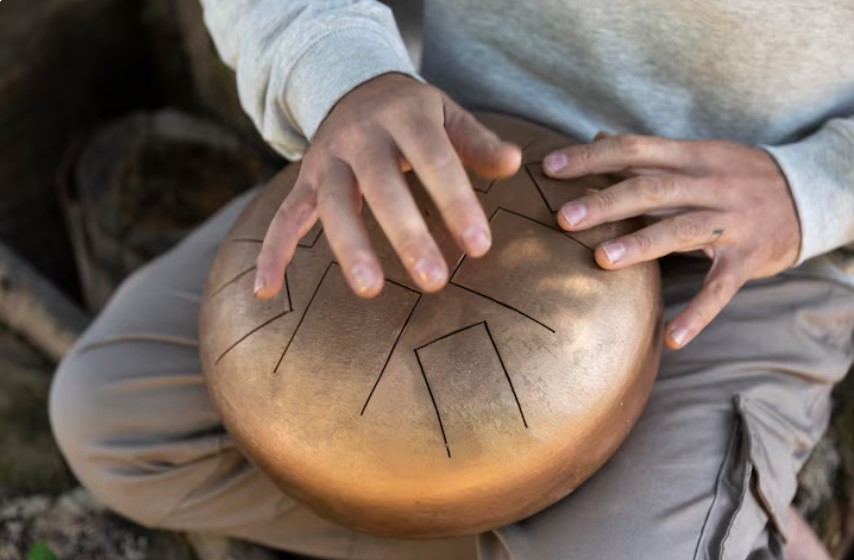
Learning music is a great fun thing to do. For a lot of individuals, beginning with a simple and soothing instrument is the way to construct confidence. A very popular instrument with beginners is the handpan. It’s a spherical steel drum making soft, peaceful, and lovely sounds. Of all the handpans out there today, Cosmos Handpans are a great option for those just beginning their musical adventure. They are simple to play, sound pleasant, and are made to help beginners enjoy learning. This article explains why the Cosmos handpan for beginners is a good pick and how it makes music easy to understand.
What Is a Handpan?
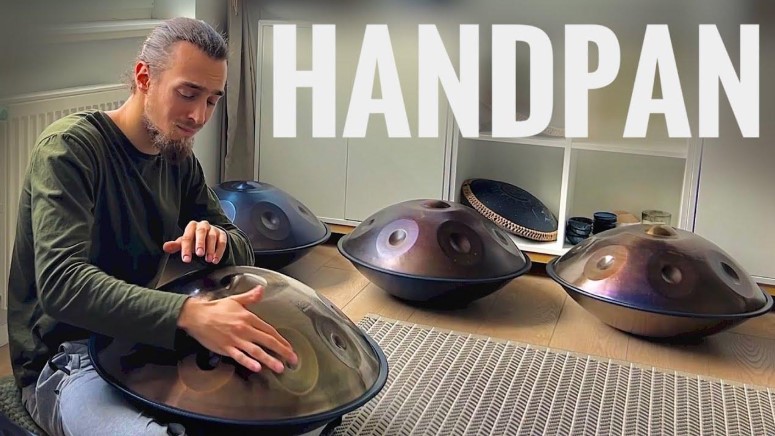
A handpan is a metal drum shaped like a flying saucer. It has a round body and a flat bottom. On top, there are small dents or notes. When these notes are gently tapped by hand, the instrument makes a soft, ringing sound. The handpan is not loud or sharp like many other drums. Its sound is smooth and peaceful. Many people use it to relax, play in nature, or enjoy some quiet music at home. It does not need sticks, pedals, or electricity. It does not require much more than hands and some rhythm. The handpan is a very good instrument, especially for those who are just starting out and do not require much training to get good music out of it.
Simple to Play and Learn
The ease of playing is one of the greatest reasons why Cosmos Handpans are suitable for a beginner. An individual does not have to learn the musical notes, read the sheet music, or have lengthy lessons. Tapping different parts of the handpan makes beautiful sounds right away. The layout of the notes on a Cosmos Handpan is simple. Most beginner models have nine notes, including a center note called the “ding.” This means fewer areas to remember and makes it easier for beginners to create music without feeling lost. The sound is enjoyable, as it sounds good even when someone misses a note or plays a wrong one. This helps new players relax and be confident during learning.
Relaxing and Calming Sounds
To a beginner in making music, the tone of the musical instrument is of much concern. The sound may be rough or noisy, and it may be difficult to remain interested. Cosmos Handpans produce gentle and soothing sounds that are soothing and relaxing. Such sounds could make people feel good after a hard day. Others also apply the handpan as a meditation tool, for yoga, or for rest time. Slow rhythms and the rich tones help the novice learners to play without any stress. Since the handpan is not a speedy and well-timed instrument, it enables the player to relax and savor the sound at his or her rate. This is useful to those who are just starting to gain confidence.
Simple Design and Shape
Handpan is clean and round in its design. It rests comfortably on the laps of the player or any soft surface. No strings or buttons to contend with. This is why it is an instrument that is very friendly to a beginner. Cosmos Handpans are of standard size, which is comfortable for most individuals. They are neither heavy nor large, and thus it is not difficult to carry them around. They are also very nice to touch and clean since there is a smooth metal surface. Due to the simple shape, novices are able to enjoy the music rather than pay attention to the way to hold the instrument and play it properly.
Learning Supportive Quality
Cosmos Handpans are well-crafted to give clear and consistent notes. All the notes are hand-shaped and tuned. This implies that the sound is clear and has maintained tune even after numerous practice sessions. The quality of the instrument is quite important to the novice. It aids them in listening to the right notes and developing good habits of playing. A handpan that sounds right makes learning easier and more fun. Cosmos also uses strong steel that lasts a long time. This means the handpan stays in good shape even if it’s used often. Beginners don’t need to worry about the drum breaking or getting damaged.
The Right Number of Notes
Some handpans have many notes, while others have fewer. A handpan with too many notes can be confusing for a new player. That’s why Cosmos makes beginner models with nine notes, including the main note in the center. This setup is enough to make music and simple enough to learn quickly. It helps beginners explore melodies without overwhelm. As players grow, they can upgrade to handpans with more notes. But for starting out, nine notes are just right for most people.
Safe and Easy to Buy
Buying a musical instrument can be scary for someone who has never done it before. Cosmos Handpans makes the process simple and safe. Each purchase is accompanied by definite information about the handpan, its sound, and the number of notes. Buyers are also covered with a 12-month warranty; hence, in case anything goes wrong, they can seek assistance. This assures first-time purchasers who need to be sure that their new instrument is worth their money. Cosmos also has some models with accessories such as a carry bag or a cleaning cloth. These small things make it easier for beginners to start playing and caring for their handpan.
Popular Scale for New Players
Most Cosmos Handpans use the D Minor scale. This scale sounds warm and peaceful. It is a common choice for beginners because the notes fit together well and sound good with almost any playing style. The D Minor scale assists novices in playing pleasant music without having to learn about music theory. It is also effective with various moods, be it calm, thoughtful, or happy. Selecting a handpan that has the D Minor scale, an amateur can start playing and be proud of the music produced immediately.
Looks That Promote Practice
Cosmos Handpans are not only fun to play, but they are also beautiful. They are of various colors such as gold, silver, black, and blue. Certain models are even more interesting as they are characterized by special patterns or carvings. To the novice, a pretty instrument may get him enthusiastic about practicing. It becomes an object to demonstrate to friends, to take outside to play in nature-friendly areas such as gardens or parks. Such an attachment to the instrument can make novices keep motivated and play more frequently.
Support for First-Time Players
Learning a new instrument can sometimes be confusing. Cosmos makes it easier by offering free video tutorials and simple learning guides with some handpans. These materials show how to hold the handpan, where to tap, and how to create songs. This support is helpful for beginners who may not have access to music teachers or classes. It provides them with a good point of departure and makes them feel encouraged throughout the process. When you know that help is there, the learning process becomes less frightening and more enjoyable.
Conclusion
Learning to play music must be easy, enjoyable, and fulfilling. The handpan is one of the most attractive and simple to learn instruments for a newcomer. This soft sound, its simple form, and peaceful sensation are a wonderful introduction to music. Cosmos Handpans are the right consideration as a first-time player since they are easy to play, well-constructed, and comfortable to play. Their ease of use, quality sound, and durability enable new players to enjoy music at the onset. To anyone starting out in music, a Cosmos Handpan will provide a relaxing and friendly means of learning and developing. It introduces music to everyday life in a manner that is natural and cheerful.
-

 BLOG1 year ago
hanime1: The Ultimate Destination for Anime Lovers
-

 Technology1 year ago
GLAADVoice.com: How You Can Get Involved and Make a Difference
-

 BILLS1 year ago
Why Does My Instagram Reel Stop Getting Views After One Hour? How to Fix It?
-

 ENTERTAINMENT1 year ago
Sflix: How It’s Changing the Way We Watch Movies and TV Shows
-

 BLOG1 year ago
Imginn: The Ultimate Tool to View Instagram Content Anonymously
-

 BLOG1 year ago
NHentai.nef: Understanding the Popular Hentai Archive
-

 ENTERTAINMENT1 year ago
Crackstreams 2.0: The Future of Free Sports Streaming?
-

 BLOG1 year ago
ThisVid: What Makes It Stand Out in the World of Online Videos