
BUSINESS
When Business Growth Demands More Than Hustle


Every small business owner eventually hits the same wall: orders are coming in, clients are saying yes, and the calendar is filling up — but the cash to keep pace with all of it isn’t.
Growth has a way of arriving faster than the money needed to fund it, and the gap between momentum and capital is where a lot of promising businesses stall out. This isn’t a failure of vision or work ethics. It’s a structural challenge nearly every growing business runs at some stage, and the businesses that handle it well are the ones that recognize it early rather than waiting
for it to become a crisis.
Growth costs money before it makes money
Scaling almost always requires spending upfront. Buying inventory in bulk to meet a new contract, hiring seasonal staff ahead of a busy quarter, upgrading equipment to keep up with demand — these costs land on the books before the revenue they’re meant to generate does.
That timing mismatch is one of the most common sources of cash flow pressure for small businesses. It doesn’t mean the business is unprofitable. It means profit and cash are two different things, and managing both takes a different kind of planning than simply working harder.
The signals most owners miss
A common pattern among business owners is waiting too long to pursue outside funding — holding out until the situation feels urgent, which is exactly the wrong time to start a conversation with a lender. Rushed applications, stressed financials, and a lack of preparation almost always lead to worse terms or outright rejection.
The smarter move is watching for the early signals:
- Monthswhere payroll feels tight
- Opportunitiespassed up because the cash wasn’t there to front the cost
- Supplierswho’ve had to be delayed
These aren’t just inconveniences. Their data points point to a structural gap between growth and capital — one that’s far easier to address before it turns into an emergency.
Preparing before you apply
Owners who take the time to understand the Steps to Get a Small Business Loan tend to approach the process with far more confidence. Preparation matters more than most people expect. Lenders want to see an organized business with predictable revenue, run by an owner who understands their own numbers.
In practice, that means having clean financial statements on hand, a clear sense of how much capital is needed and why, and at least a rough picture of how the loan will be repaid. The more clearly an owner can explain the purpose of the funding and the expected return on it, the more credible the application becomes — and the better the terms tend to be.
Protecting what you’ve built
One thing that often gets overlooked while businesses are focused on growth is risk exposure. Pursuing new contracts, hiring staff, and expanding operations all introduce new liabilities. A client dispute, an equipment breakdown, a workplace incident — any one of these can derail a business that’s already stretched thin.
Before scaling further, it’s worth auditing the coverage already in place against the coverage actually needed. General liability, professional liability, and workers’ compensation aren’t optional extras for a growing business — they’re part of the infrastructure that allows an owner to pursue opportunity without betting the entire operation on nothing going wrong.
Capital and coverage work together
Funding and insurance aren’t separate categories — they’re both tools for managing risk at different ends of the spectrum. Capital lets a business pursue an upside. Coverage protects it from the downside. Running to lean without both in place is a strategy that works right up until it doesn’t.
Tool What it protects against
Why it matters during growth
Capital (loans, credit lines) Insurance (liability, workers’ comp)
Cash flow gaps, missed opportunities
Disputes, accidents, workplace incidents
Funds the upfront cost of scaling before revenue catches up
Prevents a single setback from undoing growth already achieved
The owner’s job shifts as the business grows
At some point, the most valuable thing an owner can do is stop being the work itself and start being the decisions around the work — when to hire, when to borrow, when to pass on an opportunity that doesn’t fit, and when to double down on one that does.
Those decisions get better with preparation, not just experience. Owners who grow steadily tend to be the ones who put infrastructure in place before they need it, rather than
scrambling to build it mid-crisis.
Conclusion
Hustle is what gets a business started. But systems, capital planning, and the right protections are what keeps it going. The businesses that scale smoothly aren’t necessarily the ones working the hardest — they’re the ones that spotted the gap between growth and cash early, prepared before they needed to borrow, and made sure their coverage kept pace with their ambition. Treating capital and insurance as connected parts of the same growth strategy, rather than afterthoughts, is what turns momentum into something that lasts.


SosoActive is a name that can appear in searches related to digital media, online publishing, lifestyle content, and business-related websites. Because the name has been used across different online properties, it is important to look at the specific SosoActive website or platform being discussed rather than assuming they are all the same business.
For someone researching the term, understanding its online presence, content focus, and purpose is a useful starting point.
What Is SosoActive?
SosoActive is an online name associated with digital content and web publishing. Depending on the website or context, the term may refer to a publication, content platform, or website offering information across several categories.
This is why a search for SosoActive can produce different types of results. The exact domain matters when trying to determine what a particular SosoActive website does.
What Type of Content Can You Find?
SosoActive-related websites can cover a broad range of subjects rather than focusing on a single narrow topic.
Common areas associated with the name include:
- Lifestyle
- Business
- Technology
- Marketing
- Fashion
- Entertainment
- Online trends
- General informational content
The mix of categories can change over time as a website develops its editorial direction.
Why Does SosoActive Appear in Online Searches?
Names such as SosoActive can appear in search results for several reasons. A website may publish new articles regularly, target different informational topics, or build visibility through references from other websites.
Search visibility also depends on factors such as content quality, technical SEO, website structure, backlinks, and how closely individual pages match what people are searching for.
For this reason, simply finding a website in Google does not automatically indicate its overall authority or credibility.
SosoActive and Digital Publishing
The broader SosoActive name is particularly interesting from a digital publishing perspective because online publications can use multiple categories to attract readers with different interests.
A well-organized publishing website typically benefits from:
- Clear categories
- Useful original content
- Consistent publishing
- Descriptive page titles
- Easy navigation
- Strong internal linking
- A clear editorial purpose
These fundamentals can help a site build a stronger organic search presence over time.
Is SosoActive a Single Website?
Not necessarily.
One of the most important things to remember when researching SosoActive is that the name can be associated with different online properties. A domain such as SosoActive.com should not automatically be treated as identical to another website using the SosoActive name.
Checking the exact domain, current content, About page, authorship, and website history can help avoid confusion.
How to Research SosoActive
If you are evaluating a SosoActive website for business, publishing, or SEO purposes, start with the basics.
1. Check the Exact Domain
The domain is the first thing to verify. Similar names can belong to completely different websites.
2. Review Recent Content
Look at the latest articles and identify which topics the website is actually publishing.
3. Examine Website Categories
Categories can reveal whether the site has a focused editorial direction or covers many unrelated subjects.
4. Check Authors and About Information
Author pages and About sections can provide useful context about who operates the website and how it presents itself.
5. Look at Its Search Presence
Search the domain and individual article titles to see how consistently the website appears in search results.
Final Thoughts
SosoActive is an online name that can refer to different digital properties, making the exact website important when researching the term. Rather than judging the name alone, look at the domain, content, categories, authorship, and overall website activity.
For SEO or publishing research, this approach provides a more accurate picture than relying on the name or search ranking alone.
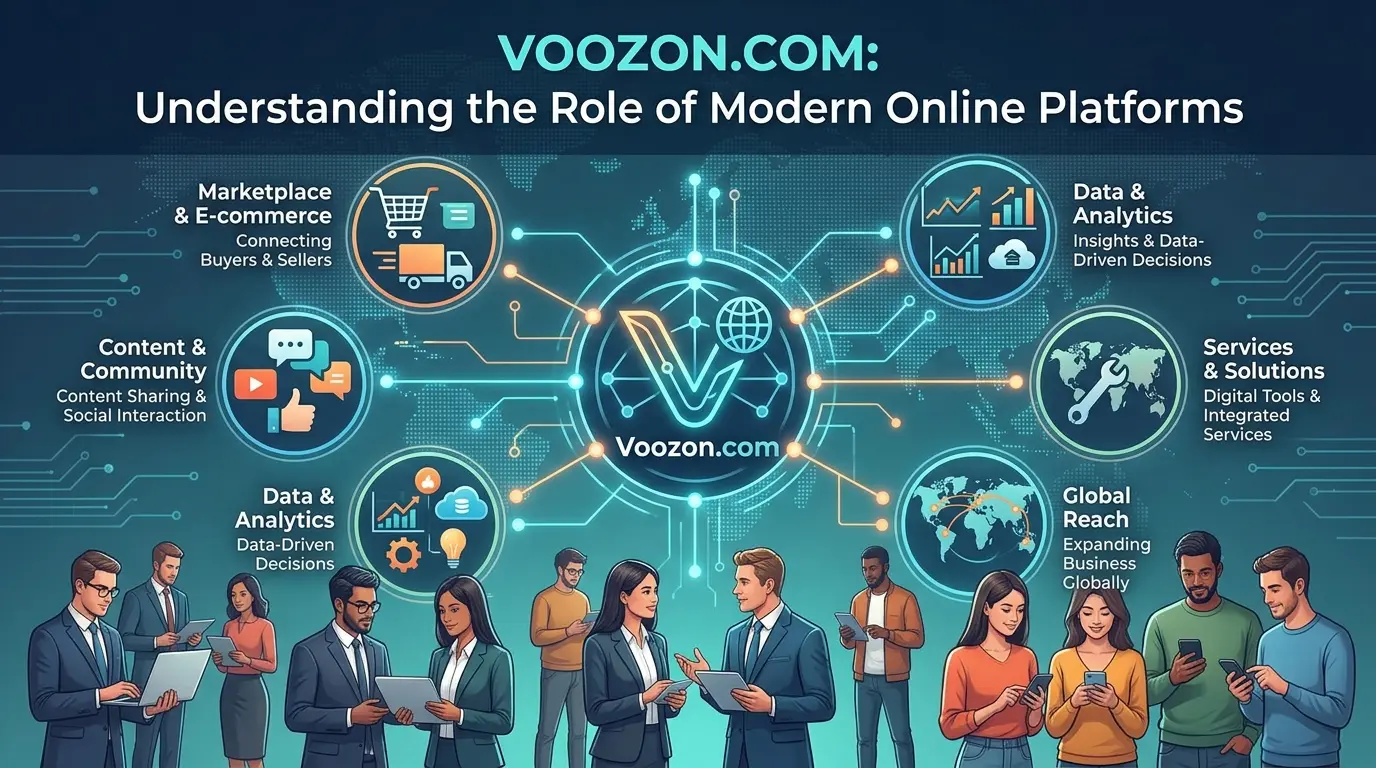
The internet has changed the way people discover websites, explore information, and interact with digital platforms. Every day, users come across new websites through search engines, social media, recommendations, and online communities.
In this environment, a website needs to offer more than a memorable domain name. It needs a clear purpose, useful content, and an experience that makes sense to the people visiting it.
Voozon.com is one of the names that can attract attention in this growing digital landscape. Like many modern online platforms, its value depends not only on being discoverable but also on how effectively it serves visitors and communicates what it offers.
Why Website Discovery Matters
Finding a useful website is often the first step in a much longer online journey.
A person may discover a domain while searching for a specific topic, clicking a shared link, or browsing recommendations. If the website immediately communicates its purpose, visitors can decide whether the content is relevant to them.
This is why clarity matters so much in digital publishing.
A simple navigation structure, readable content, descriptive page titles, and a consistent design can make it easier for visitors to understand a website without having to search through multiple pages.
What Makes an Online Platform Useful?
A successful online platform usually solves a problem or provides something people want.
That could be information, entertainment, educational material, tools, community features, or access to a particular type of service. The exact purpose can vary, but the principle remains the same: visitors need a reason to stay.
For websites such as Voozon.com, building a clear digital identity is therefore important. A visitor should be able to understand the website’s purpose without unnecessary explanations.
The easier that process becomes, the more comfortable users are likely to feel while exploring the site.
The Importance of User Experience
User experience is sometimes treated as a design issue alone, but it affects almost every part of a website.
Consider a typical visitor. They may be using a phone, have limited time, and arrive from a search result without knowing anything about the website beforehand.
If the page is difficult to navigate, overloaded with distractions, or slow to communicate its main purpose, the visitor may simply leave.
A better experience usually starts with simple fundamentals:
- Clear navigation
- Readable typography
- Logical page structure
- Mobile-friendly layouts
- Useful and relevant content
- Fast access to important information
These elements do not need to be complicated. In many cases, simplicity makes a website easier to use.
How SEO Helps People Find Websites
Search engine optimization plays an important role in website discovery.
When someone searches for Voozon.com, the intent is different from a person searching for a general topic related to the website. A branded search often indicates that the user already knows the name and wants to find the correct destination.
This makes accurate branding particularly important.
For broader searches, however, a website needs content that answers specific questions and matches the reason behind the search. That means creating useful pages around real topics instead of producing articles simply to insert keywords.
Writing Content for Real People
One of the biggest mistakes in SEO writing is forgetting who will actually read the page.
Keywords are useful because they help describe a topic, but they should not control every sentence.
Natural writing usually performs better from a reader’s perspective. Instead of repeating Voozon.com unnecessarily, a well-written article can mention the name where it is genuinely relevant and then use natural variations when discussing the broader topic.
The result is easier to read and feels more like editorial content than an advertisement.
Why Content Quality Still Matters
A website can have excellent technical SEO and still struggle to keep visitors if the content provides little value.
Useful content should answer questions, explain concepts clearly, or help readers make sense of something they are interested in.
For publishers, this means avoiding unnecessary filler. A longer article is not automatically a better article. What matters is whether each section contributes something useful.
This approach also makes content easier to update because every section has a clear purpose.
Building Trust Online
Trust is another important part of the modern web.
Visitors are more comfortable with websites that clearly explain who they are, what they offer, and how their content should be understood.
Consistent branding, accurate information, transparent navigation, and professional presentation can all contribute to a more trustworthy experience.
For any growing platform, these details can matter just as much as attracting the initial visitor.
The Future of Online Platforms
The internet continues to become more crowded, but that does not mean there is no room for new websites.
What has changed is the standard visitors expect.
People have become accustomed to finding information quickly. They expect websites to work well on mobile devices, understand what a page is about almost immediately, and provide a straightforward path to useful information.
This creates an opportunity for platforms such as Voozon.com to establish a recognizable presence by focusing on clarity, usability, and relevant digital content.
Final Thoughts
A strong online presence is built over time. A memorable domain can help people recognize a platform, but useful content and a positive user experience give them a reason to return.
Voozon.com fits into a broader digital environment where discoverability, content quality, usability, and clear communication all play an important role.
For website owners and publishers, the lesson is straightforward: SEO should help people find useful content, not replace the need for it. When search visibility and genuine reader value work together, a website has a stronger foundation for long-term growth.

Moving into a first commercial property is a big change for any growing business. New owners often focus on the monthly rent and overlook expenses that come with operating a larger space. Businesses considering industrial properties from Industrial Realty Solutions should build a realistic budget before deciding how much space they can comfortably afford.
Rent Is Only the Starting Point
The advertised rental rate is usually the first number a business owner notices. However, the lease may require the tenant to pay other property expenses in addition to basic rent. Understanding those charges can prevent an affordable looking building from stretching the budget too far.
Owners should ask exactly what the quoted rent includes before comparing properties. Taxes, insurance, maintenance, and common area expenses may be handled differently from one lease to another. Looking at the estimated total monthly cost provides a much more useful comparison.
Utilities Can Be Surprisingly Expensive
A small home office does not prepare most owners for the utility costs of a commercial building. Warehouses, workshops, and other industrial spaces can require considerable electricity for lighting, equipment, ventilation, heating, or cooling. Water, internet, waste removal, and other services can further increase the monthly bill.
Utility costs can vary considerably depending on the building and type of operation. Owners can ask about previous usage, but remember another tenant may have operated very differently. Estimating expected consumption based on the company’s own activities gives the budget a more realistic starting point.
Improvements Can Eat Into the Moving Budget
A vacant property rarely fits a new tenant perfectly on the day the lease begins. The business might need shelving, additional electrical outlets, office partitions, security equipment, signage, or changes to loading areas. Even relatively simple improvements can add up quickly when several are needed at once.
Owners should decide which improvements are essential before signing a lease. They can also ask whether the landlord will complete certain work or provide an allowance toward approved improvements. The lease should clearly address any agreement about improvements rather than leaving it to an informal conversation.
Moving Costs Add Up Quickly
Moving a business involves much more than hiring a truck for a few hours. Equipment may need professional handling, inventory has to be transported, and employees can lose productive time while everything is being moved. You may also need new furniture, shelving, packaging supplies, and storage equipment.
Some businesses will experience slower operations during the transition. Orders can take longer to fill while products are being moved and new work areas are organized. Leaving room in the budget for these disruptions can make the move less financially stressful.
Deposits Require Cash Up Front
First time tenants sometimes concentrate so heavily on monthly costs that they overlook the amount needed before moving in. Security deposits, initial rent, utility deposits, insurance payments, and other charges may all be due around the same time. That can put significant pressure on the company’s available cash.
Owners comparing industrial leasing opportunities should calculate how much money they’ll need before the first normal month of operation begins. Spending nearly all available cash on the move can leave little room for payroll, inventory, or unexpected repairs. Keeping a reserve provides some breathing room during the transition.
Insurance Needs May Change
Moving a business out of the home can change the kind of insurance it needs. A commercial lease may require certain coverage before the business can even move into the building. The company may also need to think about protecting its equipment and inventory, along with risks involving employees, customers, and vehicles used for work.
It is worth talking to an insurance professional while working out the budget rather than waiting until the lease is ready to sign. Getting a few figures early makes it easier to see how much insurance will add to the monthly expenses. It also helps avoid a last minute surprise that could make the move more expensive than planned.
Maintenance Responsibilities Need Attention
When something breaks in a commercial building, the landlord isn’t always responsible for fixing it. The lease may put certain repairs on the landlord while making the tenant responsible for routine upkeep or specific parts of the property. Business owners who assume every repair is included in the rent could end up facing costs they never planned for.
That is why the maintenance section of the lease deserves a close look before anything is signed. Responsibilities for plumbing, heating, doors, landscaping, parking areas, and other parts of the building can vary from one property to another. Knowing what the business must maintain makes it much easier to set aside enough money for those expenses.
Final Thoughts
The monthly rent is only one part of what a business will spend when moving into its first commercial property. Deposits, utilities, insurance, repairs, improvements, and other expenses can add up quickly and put more pressure on the budget than expected. Before choosing industrial properties from Industrial Realty Solutions, owners should have a clear idea of what the entire move will cost and what they can comfortably afford each month.
-

 BLOG1 year ago
hanime1: The Ultimate Destination for Anime Lovers
-

 Technology1 year ago
GLAADVoice.com: How You Can Get Involved and Make a Difference
-

 BILLS1 year ago
Why Does My Instagram Reel Stop Getting Views After One Hour? How to Fix It?
-

 ENTERTAINMENT1 year ago
Crackstreams 2.0: The Future of Free Sports Streaming?
-

 ENTERTAINMENT1 year ago
Sflix: How It’s Changing the Way We Watch Movies and TV Shows
-

 BLOG1 year ago
ThisVid: What Makes It Stand Out in the World of Online Videos
-

 BLOG1 year ago
NHentai.nef: Understanding the Popular Hentai Archive
-

 BLOG1 year ago
Imginn: The Ultimate Tool to View Instagram Content Anonymously