
BUSINESS
MLM Software and Network Marketing: The FlawlessMLM Guide to Building, Choosing, and Growing

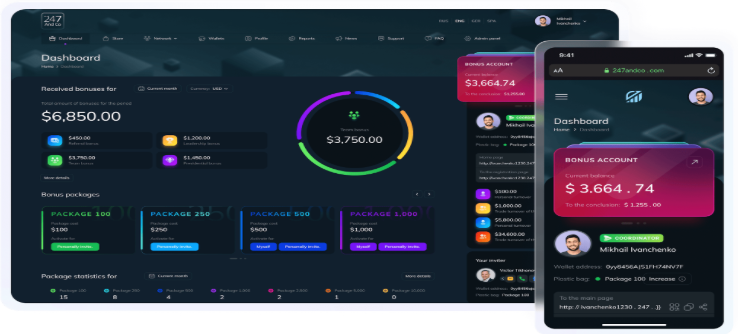
Network marketing is a $167.9 billion global industry with 125 million+ active representatives. The technology layer — the MLM software — is what separates companies that scale from those that stall at a few thousand distributors.
In my project work across 400+ MLM platforms, the most expensive problems we fix all start the same way: the wrong software choice made in the first 60 days of launch.
This guide covers how big the industry really is, which software configuration fits which business model, how to make money in network marketing online, and how to introduce your business without sounding like every other recruiter.
The honest version of the question “why network marketing?” is not philosophical. It is financial. A product company that builds its own employed sales force carries fixed payroll costs whether sales happen or not. A network marketing company pays its distributors only when products move. That alignment of incentives is why the model has survived for over 70 years and why the global direct selling industry has grown in 8 of the last 10 years. The model works. What frequently does not work is the technology and the compensation plan sitting underneath it.
We built our first MLM software platform in 2005. Since then the team has delivered over 400 projects across markets from the United States to Southeast Asia. What I want to share here is not a vendor pitch. It is the pattern we see repeatedly across projects that succeed and projects that fail — and specifically, what the software choices have to do with those outcomes.
How Big Is Network Marketing? Real Numbers, Not Headlines
The direct answer: global direct selling reached $167.9 billion in 2023. That number comes from the World Federation of Direct Selling Associations (WFDSA) Annual Report, which aggregates verified data from national direct selling associations across 116 markets. The industry employs 125.4 million independent representatives worldwide.
Those are global totals. The more useful numbers for someone building a network marketing business are the regional ones. The USA remains the world’s largest single-country market, with approximately $40.5 billion in annual sales. China, South Korea, Germany, and Brazil complete the top five. Together, these five markets account for roughly 65% of global direct selling revenue.
According to the WFDSA 2023 Annual Report, wellness and nutrition products account for 33% of global direct selling sales, making it the largest product category ahead of cosmetics (18%) and household goods (13%). — WFDSA, 2023
Online network marketing accelerated this growth considerably after 2020. The shift from home parties and in-person meetings to social selling, livestream commerce, and replicated landing pages opened markets that were previously inaccessible to independent distributors. In our project portfolio, companies that launched with a mobile-first distributor experience and integrated social sharing tools consistently hit their first 1,000-distributor milestone 40% faster than those relying on traditional recruiting methods.
The market size question also matters to founders for a different reason: it tells you whether there is room. Health and wellness is the largest category because the repeat-purchase cycle is short. A protein supplement runs out in 30 days. A weight management program renews monthly. Products with this kind of natural reorder cycle sustain distributor income better than one-time purchases. That is not a coincidence. It is why the most durable MLM companies all sit in this product category.
MLM Software Companies: What You Are Actually Buying When You Choose a Platform
The MLM software market is fragmented. There are dozens of vendors globally, ranging from SaaS platforms charging $200 per month to custom development firms building bespoke infrastructure from scratch. Most founders do not know what differentiates them until they have already signed a contract and hit a limitation they did not anticipate.
When I say “MLM software,” I mean the system that handles genealogy tree management, PV and GV calculations, commission engine logic, rank qualification tracking, distributor replicated websites, e-commerce, and payment processing. That is the minimum. Any platform missing one of those components forces a manual workaround somewhere in your operation, and manual workarounds at scale become expensive operational problems.
The table below compares the main delivery models in the MLM software market. These are not rankings of specific vendors. They are categories, each with different risk and cost profiles.
| Delivery Model | Typical Cost | Time to Launch | Compensation Plan Flexibility | Scale Ceiling | Best For |
| SaaS / Shared Platform | $150–$800/month | 1–2 weeks | Low (preset plan types only) | ~5,000 distributors | Early-stage testing, micro-networks |
| White-Label / Configurable | $3,000–$12,000 setup + $300–$600/month | 3–6 weeks | Medium (plan types configurable) | ~50,000 distributors | Startups with proven product-market fit |
| Custom Development | $25,000–$150,000+ | 4–9 months | Full (any plan logic possible) | Unlimited (infrastructure-dependent) | Established companies scaling globally |
| FlawlessMLM Custom | From $6,000 | 4–8 weeks (standard plans) | Full (unilevel, binary, matrix, hybrid) | 2M+ distributors (verified) | Growth-stage companies needing enterprise-grade tools at startup cost |
The SaaS model is appropriate for testing whether your product-market fit holds before you invest in infrastructure. The limitation is that SaaS platforms share commission logic across all clients. When your plan needs a custom rank qualification rule or a unique bonus type, you are told it is not possible. We hear this from companies migrating to us after outgrowing their first platform about two to three times per month.
The custom development path looks expensive until you factor in the time cost. A nine-month development timeline means nine months without a live distributor network. That opportunity cost typically exceeds the difference between custom and white-label pricing. The FlawlessMLM approach is to build configurable custom infrastructure on a proven codebase, which is why we can deliver what functions as a fully custom platform in four to eight weeks rather than nine months.
Binary MLM Software vs Unilevel MLM Software: Which Fits Your Business
This is the decision that founders get wrong more consistently than any other. The compensation plan type is not a branding choice. It is an engineering requirement that determines which commission engine your platform needs, how your genealogy tree is structured, and what your distributor’s dashboard shows them every morning.
When binary makes sense
Binary MLM software is the right choice when your product has a natural monthly reorder cycle, your target market responds to competitive team-building dynamics, and your distributor base includes people who are motivated by visual progress metrics. The binary structure places everyone into one of two legs. Volume accumulates on both sides. Commissions pay out based on the weaker leg’s volume, which creates a strong incentive to help your less-active distributors produce. That incentive structure is why binary networks often see faster early growth than unilevel networks.
The risk in binary is leg imbalance. A distributor who recruits heavily on one side and neglects the other leaves volume accumulating in the stronger leg without generating commissions. Our binary MLM software includes automated leg-balance alerts that notify distributors when their ratio crosses a threshold. Without that feature, distributors discover the problem only after the commission period closes, which generates support tickets and erodes trust in the platform.
When unilevel is the stronger choice
Unilevel structures reward consistent personal retail and depth-building more directly than binary. Each distributor can have unlimited first-level recruits, with commissions paid to a fixed depth (typically five to ten levels). The mathematics are simpler, the genealogy tree is easier to explain to new recruits, and the commission run is more predictable for distributors.
Our unilevel MLM software is the most common configuration in our project portfolio, particularly for health, beauty, and consumable goods categories. Companies using unilevel structures showed 23% higher 12-month distributor retention in our internal analysis of 86 platform projects completed between 2020 and 2025. The reason is straightforward: the earnings model is transparent enough that distributors can calculate their next rank progress themselves, which keeps them motivated.
Neither plan type is universally better. The decision depends on the product, the target distributor profile, and how you want your network to grow. What is not debatable is that the software must be purpose-built for the plan you choose. Generic business software does not handle leg-balance calculations or multi-level commission trees at any meaningful scale.
Case Study
Chainclass: From Spreadsheet Chaos to 50,000 Active Distributors
Chainclass came to FlawlessMLM with a problem we see in roughly one in four migration projects: their compensation plan had been designed before their software was chosen, and the two were incompatible. Their finance team was running commission calculations in Excel across three linked workbooks. The process took four days per period and produced errors in approximately 6% of payouts.
Distributors noticed the errors. Support volume was high enough that their customer service team spent more time resolving commission disputes than onboarding new members. Morale in the top-tier leadership ranks was deteriorating because leaders did not trust the numbers their back office was showing them.
We rebuilt their platform on a custom unilevel engine with a real-time commission dashboard. The first commission run on the new system closed in under two hours. Payout error rate dropped to under 0.4%. Within eight months of launch, their active distributor count reached 50,000, up from 11,000 at migration.
50K Active Distributors (8 mo.)
0.4% Payout Error Rate
<2 hrs Commission Run Time
4 days Previous Run Time (Excel)
How to Make Money in Network Marketing: The Two Income Streams and Why Most People Only Use One
There are two ways to earn income in a network marketing business. The first is retail profit: you buy at wholesale, sell at retail, and keep the margin. The second is downline commission: a percentage of the sales volume generated by the distributors you recruit and their recruits below them.
Most distributors focus almost entirely on the second stream. This is the behavior that attracts regulatory scrutiny and the behavior that causes most people to fail. The reason is simple arithmetic. If you earn only from your downline, you need a large, active downline to produce meaningful income. Building that takes 18 to 36 months. During that period, you have no retail income to sustain you.
Distributors with five or more regular personal customers have a 12-month retention rate of 61%, compared to 22% for those with zero personal customers, according to WFDSA data. That 39-percentage-point difference is entirely explained by the retail income stream. Distributors who sell consistently have tangible proof that the product works, real customer relationships to grow, and income that does not depend on recruiting activity.
In our internal analysis of distributor activity data from 14 networks on the FlawlessMLM platform between 2022 and 2025, distributors who made at least one personal retail sale in their first 30 days were 3.1 times more likely to still be active at the 12-month mark than those who enrolled with no retail activity. — FlawlessMLM internal data, 2025
Online network marketing changed the mechanics of how both income streams work. A distributor running an Instagram account with 4,000 targeted followers can generate ten to fifteen personal customer orders per month without leaving their home. That same distributor can recruit globally because their replicated website, available in multiple languages through their back-office software, handles the enrollment and payment processing automatically.
The back-office software is not a nice-to-have in this context. It is the infrastructure that makes online network marketing work at scale. A distributor who cannot check their customer list, their downline activity, and their rank progress in a mobile app is operating at a disadvantage in a market where their competitors can do all three from their phone during lunch.
How to Introduce Your Network Marketing Business Without Sounding Like Every Other Recruiter
The question “what’s your story — network marketing?” is the right frame for this. People do not respond to income claims. They respond to personal experience. When a prospect hears your story, they are not evaluating the business opportunity. They are evaluating whether you are someone worth trusting and whether what happened to you could happen to them.
The formula that works across markets and product categories has three parts. It is short because attention is short.
- Before. What your life looked like before you found the product. Specific, honest, brief. Not dramatic. Just true. “I was spending $180 a month on a supplement that wasn’t doing much. I was tired.”
- Change. What happened when you started using the product. One or two concrete details. “After six weeks, I stopped needing an afternoon coffee to get through the day.”
- Now. Where you are now, including the business dimension if it is relevant. “I represent the company now because I wanted the discount, and that turned into something bigger.”
What you do not do is lead with the income opportunity. That comes second, and only after the product conversation has produced genuine interest. The sequence matters. A prospect who hears the income opportunity before the product story will evaluate everything you say through a commercial filter. A prospect who hears the product story first and connects with it will ask about the business on their own.
On a Tuesday evening, a distributor in Dubai sends a voice note to a contact she has not spoken to in two years. She describes the specific change she noticed in her energy levels after four weeks on the product. She does not mention the compensation plan. Her contact replies within an hour, asking what product she is talking about. That sequence — product first, business second — is the entire introduction strategy. It scales from one-on-one voice notes to video content with hundreds of thousands of views.
Why Network Marketing Keeps Growing When Other Distribution Models Struggle
Retail is consolidating around a handful of large platforms. Small brands that want shelf space compete against established products with larger marketing budgets and existing retail relationships. The alternative is building a direct relationship with the consumer through distributors who already trust you.
That is why network marketing keeps growing in markets where traditional retail is stagnant. The model eliminates the middleman cost and redirects that margin to the distributor network. A product that retails for $60 might wholesale for $30 to the distributor. The distributor earns $30 on the sale plus whatever downline commissions their plan provides. The company earns $30 on the wholesale transaction without any retail channel cost. That math works at $167 billion of global volume. It would not work if the model were structurally flawed.
The technology transformation of the model is what makes online network marketing the fastest-growing segment within direct selling. A company that launches with a mobile-first back office, integrated social sharing tools, and AI-powered rank progress recommendations reaches the 10,000-distributor milestone in 8 to 12 months on average in our project portfolio. A company launching with a legacy web platform and no mobile app takes 18 to 24 months to reach the same milestone. The software gap is also a growth gap.
Among 22 network marketing companies that launched on the FlawlessMLM platform between 2022 and 2024 with mobile-first back-office tools, the average time to 10,000 active distributors was 9.4 months. Among 18 companies that launched in the same period with desktop-only interfaces, the average was 21.7 months. — FlawlessMLM internal project data, 2025
The best MLM software is not the one with the most features. It is the one that puts the right information in front of the distributor at the right moment. Rank progress alerts. Autoship renewal reminders. Leg-balance notifications for binary networks. Team activity summaries that show a leader which members are active and which are drifting before the period closes. Those are the features that change distributor behavior. And changed distributor behavior is the only thing that changes network growth.
Ready to Build or Scale Your Network Marketing Platform?
FlawlessMLM holds a 4.9 rating on Clutch and has completed 400+ MLM software projects across 30 countries. Our platforms have supported networks of up to 2 million active distributors. Standard unilevel and binary configurations go live in 4–8 weeks from a $6,000 starting point.
We offer a no-obligation 30-minute project consultation. Bring your compensation plan sketch, your product category, and your 12-month distributor target. We will tell you exactly what you need — and what you do not.
Frequently Asked Questions
How Big Is Network Marketing?
Network marketing generated $167.9 billion in global sales in 2023 across 116 member markets, with 125.4 million independent representatives worldwide, according to the WFDSA Annual Report. The USA is the largest single-country market at approximately $40.5 billion. The industry has grown in 8 of the last 10 years. Wellness and nutrition is the largest product category, accounting for 33% of global direct selling revenue.
What Is Online Network Marketing?
Online network marketing runs the same business model as traditional direct selling, but through digital channels: social media, replicated landing pages, email, video content, and e-commerce. Distributors recruit, sell, and build teams without in-person meetings. The back-office software handles enrollment, PV and GV tracking, commission calculations, and payment processing digitally. Companies that launch with mobile-first back-office tools reach scale milestones 40–50% faster than those relying on legacy desktop platforms, based on our project data.
What Is MLM Software and Why Does It Matter?
MLM software is the back-office platform that automates genealogy tree management, PV and GV calculations, commission runs, rank qualification, distributor replicated websites, e-commerce, and payment processing. Without purpose-built software, these processes require manual spreadsheet work that becomes unmanageable at 500+ distributors. Commission errors in manual systems erode distributor trust faster than almost any other operational failure. A properly configured platform closes commission runs in under two hours and maintains an error rate below 0.5%.
How to Make Money in Network Marketing?
The two income streams are retail profit (margin on personal product sales) and downline commissions (a percentage of your network’s group volume). Sustainable earners prioritize retail sales first. Distributors with five or more regular customers have a 61% 12-month retention rate, compared to 22% for those with no personal customers. Building a downline without retail income means your earnings depend entirely on recruiting activity, which is both unsustainable and the behavior regulators flag most often.
Binary MLM Software vs Unilevel — Which Should I Choose?
Binary works best for products with a short repeat-purchase cycle and a distributor base motivated by competitive team-building metrics. Unilevel works better for companies that want transparent, predictable earnings and broader distributor retention. In our platform data, unilevel configurations show 23% higher 12-month distributor retention than binary-only configurations. The right answer depends on your product category and target distributor profile. The software must be purpose-built for whichever plan you choose — generic platforms do not handle multi-level commission logic reliably at scale.
How to Introduce Your Network Marketing Business?
Lead with the product story, not the income opportunity. Describe what your life looked like before the product, what changed after using it, and where you are now. Keep it under 90 seconds. Only bring up the business after the product has generated genuine interest. Prospects who hear the product story first and connect with it ask about the business themselves. Income-first pitches trigger skepticism immediately and filter out the most qualified prospects before the conversation begins.
Why Network Marketing Instead of Traditional Retail or E-Commerce?
Network marketing redirects the retail channel margin directly to the distributor instead of to a retailer or platform. A product that might pay a 15% retail margin to a store shelf pays 30–45% to a distributor who builds a team. For product companies without the capital to compete for retail shelf space, network marketing provides a motivated sales channel with no fixed payroll cost. For the distributor, the model offers startup costs under $500 in most companies and income that scales with team size. The model works when the product has genuine demand independent of the business opportunity.
What Should I Look for in the Best MLM Software?
The best MLM software for your business handles your specific compensation plan logic completely, shows distributors their rank progress in real time, supports mobile access for both distributors and administrators, processes commissions in under four hours for networks under 100,000 distributors, and has a verifiable track record at your target scale. Before signing any contract, ask the vendor for a reference from a client network with at least 10,000 active distributors on the same plan type you are using. Vendors who cannot provide that reference have not proven their system at the scale you need.

Running a growing business out of your home?
Eventually business mail mingled with personal begins to create problems. Lost invoices. Missing packages. Embarrassment when a customer arrives at your front door because that’s where the website address says to deliver.
Every entrepreneur will eventually come to this realization: is it time to split the two departments up?
Here’s the truth:
Scaling beyond a certain size requires implementing appropriate systems to separate personal/professional life.
Here’s how to do it…
Here’s what’s coming up:
- Why Mixing Personal and Business Mail Causes Problems
- Signs It’s Time to Separate Your Correspondence
- What a Package Receiving Service Actually Does
- The Benefits of Using a Professional Address
- How to Make the Switch
Why Mixing Personal and Business Mail Causes Problems
Most entrepreneurs start out running things from the kitchen table.
That seems fine…..until then packages begin sitting on your porch. That’s when problems start mounting.
Recent Omnisend data shows about 228 million packages were swiped from Americans in 2025. This equates to $12.8 billion in stolen goods. When you’re running a home-business, that’s not an inconvenience. That’s product, client items and profits leaving your front porch.
Plus, there’s more. Statistics reveal that 55% of small businesses operate out of their home. That means millions of small business owners are fighting this battle right now.
Mixing personal and business mail creates issues like:
- Privacy concerns: Your home address ends up on invoices, business cards, and Google
- Missed deliveries: Important packages get buried under junk mail
- Professional image problems: Clients see a residential address and question your credibility
- Package theft: Business inventory left on the porch is an easy target
A commercial package receiving service resolves many of these issues in one step. A professional package receiving service like ipostal1.com/salt-lake-city-ut-virtual-address gives your business an actual commercial street address to receive all mail and packages – keeping your professional mail separate from what may arrive at your front door.
Pretty simple fix, right?
Signs It’s Time to Separate Your Correspondence
Not sure whether you’ve reached the point where separation makes sense?
Look for these warning signs:
You’ve had a package stolen or misdelivered in the last 12 months
- Clients or vendors are getting confused about which address to use
- Personal mail is getting mixed in with business documents
- Your home address is showing up on invoices, contracts, or your website
- You’re travelling more and can’t always be home for signature deliveries
- You’ve had unwanted foot traffic from customers or delivery drivers
If you’re nodding along to two or more of these… It’s time.
Procrastinating can cost you business. That signature-required package you didn’t pick up? Could be a lost customer. That package that got stolen? Could be lost product dollars. And exposing your home address on public business filings? That’s a privacy issue that will only become more vulnerable.
What a Package Receiving Service Actually Does
Time to break this down properly.
Package receiving services will accept, store and forward mail/packages for you. Instead of all of your mail/packages ending up on your doorstep, it will arrive at a secure commercial location to be tracked, stored and delivered when you need it.
Here’s what a good service typically handles:
- Accepts packages from all carriers (USPS, UPS, FedEx, DHL)
- Signs for deliveries when you’re not available
- Sends notifications the moment a package arrives
- Holds items securely until you’re ready to collect
- Forwards to your home or another location on request
- Allows you to check contents remotely in some cases
Versus leaving boxes on your porch for hours… Game changer.
And here’s the kicker…
Another benefit of many package receiving services is that they have an actual commercial street address that you can list publicly. This means you can use it on your website, business cards, official filings, etc. It protects your privacy and helps your brand seem more professional.
The Benefits of Using a Professional Address
There are many advantages to having a professional address besides just getting packages.
Boost Professional Credibility
A commercial address just looks better on paperwork.
Businesses with physical addresses that are commercial locations are generally more trustworthy to vendors, banks, and clients than just a residence. Some B2B clients will refuse to do business with you if you only have a home address.
Protect Personal Privacy
With 92% of Americans concerned about online privacy, keeping your home address private from the internet has never been more important.
A separate professional address means:
- Your home doesn’t appear in public business databases
- Your family’s location stays private
- Random customers can’t show up at your front door
- Personal safety improves for solo operators
Handle Business Growth
As the business grows, mail and package volume grow with it.
Handling 20+ packages each week coming to the porch is horrible. A professional delivery service grows with your business without you lifting a finger.
Support Multiple Locations
Planning to open in a new city or state?
A package receiving service allows you to establish a presence in virtually any market you serve. That’s fantastic news if you don’t want to set up brick and mortar offices.
How to Make the Switch
Ready to separate personal and business correspondence? Follow this game plan.
Step 1: Choose a package receiving service in your target city.
Step 2: Register and fill out required paperwork (USPS Form 1583 is usually what’s used for forwarding mail).
Step 3: Update your address across:
- Your website and Google Business Profile
- Business cards and email signatures
- Bank accounts and payment processors
- State business filings and tax documents
- Vendor and supplier contacts
Step 4: Forward mail from your home address to ensure you receive anything still sent there.
Step 5: Enjoy the peace of mind.
That final step means a lot more than you’d think. Knowing your packages are secure, privacy is ensured, and your business appears more professional…It’s worth every penny.
Final Thoughts
Dividing personal and business emails is one of those “little” decisions you make for your business that pays BIG dividends.
The wins include:
- Better privacy — your home address stays off public records
- Fewer stolen packages — deliveries land in a secure location
- More credibility — a real business address looks professional
- Less stress — no more juggling deliveries around your schedule
This is one of the easiest wins if you have a growing business operating out of your home. It costs very little money, takes a day or two to set up, and your benefits will last you years.
Don’t let a client complaint or stolen package dictate this decision. Unbundle now and prepare the business for its next phase.

A strong brand identity helps small businesses stand out, connect with customers, and communicate their values clearly. Branding is more than a logo or color scheme; it is the complete experience people associate with a company. By developing a consistent presence, businesses can build credibility, encourage loyalty, and create meaningful relationships that support long-term growth.
Understand What Makes Your Business Unique
Every successful brand begins with a clear understanding of its purpose, values, and personality. Small businesses should identify what sets them apart from competitors and why customers should choose them. This foundation helps shape every branding decision, from visual elements to communication style.
A strong identity is built around authenticity. Businesses should consider their mission, customer expectations, and the experience they want to provide. When a brand reflects genuine values, customers are more likely to form emotional connections and remember the business.
Defining a unique selling point also helps create a stronger market position. Whether a company focuses on exceptional service, specialized products, or a personalized approach, highlighting these qualities allows customers to understand the value behind the business.
Create Consistent Visual Branding
Visual elements play an important role in how customers recognize and remember a business. A consistent color palette, typography style, imagery, and design approach can make a company appear more professional and reliable. These elements should work together to communicate the personality of the brand.
Small businesses should ensure that their visual identity remains consistent across all customer touchpoints. This includes websites, social media profiles, packaging, promotional materials, and physical locations. A unified appearance creates familiarity and helps customers develop trust over time.
Choose Branding Elements With Purpose
Every design choice should support the message a business wants to share. Colors can influence emotions, images can communicate values, and design styles can shape customer expectations. Instead of following trends without purpose, businesses should select elements that represent their story and audience.
A thoughtful visual identity does not need to be complicated. Simple, recognizable designs often create stronger impressions because they are easier for customers to associate with a business. The goal is to create a memorable identity that remains effective as the company grows.
Develop A Clear And Consistent Brand Voice
A brand voice defines how a business communicates with its audience. The words, tone, and messaging used in marketing materials should reflect the company’s personality and create a consistent customer experience.
For example, a business that wants to appear approachable may use friendly and conversational language, while a company focused on expertise may choose a more professional communication style. The important factor is maintaining consistency so customers know what to expect.
A strong brand voice also helps small businesses build stronger relationships. Customers appreciate businesses that communicate clearly and genuinely. Consistent messaging across advertisements, online content, emails, and customer interactions reinforces the identity a company wants to establish.
Use Personalized Marketing To Strengthen Customer Connections
Modern customers often look for businesses that feel personal and relatable. Small businesses have an advantage because they can create closer relationships with their audiences compared to larger organizations. Personalized marketing allows companies to highlight their story, values, and community connections.
Sharing behind-the-scenes content, customer experiences, and business milestones can make a brand feel more human. These efforts help customers understand the people behind the business and develop a deeper appreciation for what the company offers.
Promotional materials can also reinforce brand recognition when they match the company’s overall identity. For example, businesses looking to create memorable merchandise and branded apparel may explore options like custom clothing printing in Hawaii to produce items that reflect their unique style and connect with their target audience.
Build Trust Through Customer Experience
Brand identity is not only about appearance and messaging. The way customers interact with a business has a major impact on how they perceive the brand. A company that consistently provides quality service creates stronger trust and encourages repeat business.
Every customer interaction contributes to brand reputation. Friendly communication, reliable support, and attention to detail show customers that a business values their experience. These small moments can create lasting impressions and turn occasional buyers into loyal supporters.
Small businesses should also gather feedback regularly. Customer opinions can reveal areas for improvement and help companies better understand expectations. By listening and adapting, businesses can create experiences that strengthen their reputation and support long-term success.
Maintain And Evolve Your Brand Over Time
A strong brand identity should remain consistent, but it should also have the ability to grow. As businesses develop, their audiences, products, and goals may change. Regularly reviewing branding strategies helps ensure that the identity continues to represent the company effectively.
Updating certain elements does not mean abandoning the original brand. Instead, businesses can refine their messaging, improve visual materials, and adjust strategies while maintaining the qualities customers already recognize.
Growth-focused businesses understand that branding is an ongoing process. A successful identity requires attention, creativity, and a willingness to improve. By investing time into brand development, small businesses can remain relevant and continue building stronger connections with customers.
Conclusion
Building a stronger brand identity requires patience, consistency, and a clear understanding of what makes your business unique. Small businesses that invest in authentic messaging, recognizable visuals, and customer-focused experiences can create lasting impressions. A well-developed brand becomes a valuable asset that supports growth, strengthens trust, and helps a business remain competitive in an evolving market.
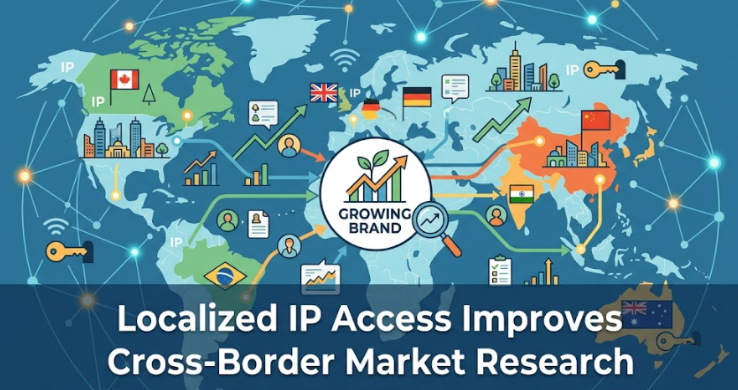
Cross-border expansion usually looks straightforward on paper. A brand picks a few promising markets, checks search demand, reviews competitors, studies marketplace pricing, and starts testing channels. In practice, the research often breaks down much earlier than teams expect. What a company sees from one location is not always what real users see in another. Search results change by country. Product availability shifts by city. Ad creatives, prices, reviews, and even landing pages can vary from region to region.
That is why localized IP access has become a practical research tool rather than a technical extra. When teams use region-specific connections, they can view markets in a way that is much closer to local customer reality. Providers such as Rola IP are part of that workflow because they give research, e-commerce, and growth teams access to residential IP coverage across a wide range of countries and regions, making it easier to validate what is actually live in-market.
For growing brands, this matters well before launch. Market research is not just about collecting more data. It is about collecting the right data from the right environment. If the source environment is wrong, the conclusions will be wrong too. A pricing team may think a competitor is discounting aggressively in Germany when the offer is actually meant for users in the UK. A paid media team may approve creatives based on what they see from headquarters, while local users are served something entirely different.
Why “local market visibility” is often missing
Many businesses still rely on a centralized research process. One team, often sitting in one office or one country, tries to evaluate multiple markets from a single network environment. That creates blind spots.
A few common examples:
- Google results differ by region and language.
- Marketplace rankings can shift based on local inventory and demand.
- Competitor pricing may change by country, city, or user segment.
- App or SaaS landing pages may display different offers based on geography.
- Ad verification becomes unreliable when the reviewer is not appearing as a local user.
This is where localized IP access changes the quality of research. Instead of making assumptions about how a market behaves, teams can inspect conditions closer to the way actual customers encounter them.
What localized IP access helps brands verify
Localized access is most useful when research needs to answer operational questions, not just broad market questions.
| Research area | What brands need to verify | Why localized IP access helps |
| Search visibility | Local rankings, SERP features, competitor presence | Search engines personalize by region and language |
| Pricing intelligence | Country-specific discounts, bundles, taxes, and shipping signals | Competitor pricing is often geo-dependent |
| Ad verification | Whether local users see the intended creative and placement | Ads can vary by market, device, and audience segment |
| Marketplace research | Product ranking, availability, seller competition | Listings and stock conditions differ across regions |
| Website localization | Currency, messaging, offers, and trust signals | Many sites adapt content based on user location |
| Expansion planning | Demand signals across target countries | Better local visibility reduces guesswork |
For a growth-stage company, this is not academic. These checks shape channel budgets, market-entry sequencing, pricing strategy, and even product positioning.
From broad research to decision-grade research
There is a big difference between “interesting research” and research a management team can use to make decisions. Decision-grade research has to be timely, repeatable, and geographically credible.
Say a DTC beauty brand is evaluating entry into Southeast Asia. It needs to know:
- Which competitors dominate organic search in Singapore versus Malaysia
- Whether top marketplace sellers are local or cross-border
- How prices compare after shipping and import signals
- Which promotional hooks are repeated in local paid ads
- Whether brands localize around ingredients, speed, prestige, or discounts
Without localized access, the team may still gather data, but it will be incomplete or distorted. With localized IP access, the brand can test each of those assumptions against what users in those markets are more likely to see.
That is one reason many operations teams now work with providers like Rola IP in the middle of their research stack. For brands that need practical market visibility, the value is not simply “having proxies.” The value is being able to run market checks across many countries, maintain stable access, rotate when needed, and support both manual validation and larger data collection workflows.
Where this becomes especially valuable
Localized IP access tends to deliver the strongest return in four business cases.
1. Competitive pricing and offer monitoring
Price is rarely static across borders. Competitors adjust for currency, demand, shipping expectations, promotions, and local purchasing power. A company entering a new market cannot assume a global price sheet reflects reality.
Localized access allows teams to review:
- Local list prices
- Promotional timing
- Discount depth
- Subscription bundles
- Shipping thresholds
- Region-specific coupons or first-order offers
This leads to cleaner pricing intelligence and fewer strategy mistakes.
2. Cross-border SEO and search research
For brands entering a new country, search behavior is one of the clearest signals of local demand and competition. But accurate SEO research depends on seeing local search results as locally as possible.
This helps teams evaluate:
- Which domains dominate category terms
- Whether aggregators or marketplaces control the SERP
- How local intent differs from translated keyword intent
- Which content formats win in a target region
- Whether branded competitors are over-investing in search
Rola IP’s website emphasizes residential IP coverage across 265+ countries and regions, which is useful in this context because SEO teams often need broad geographic reach rather than a single-country snapshot.
3. Ad verification for regional campaigns
When brands launch campaigns across multiple markets, they often trust screenshots from agencies, ad libraries, or internal teams. That is not always enough. Local ad delivery can differ by geography, timing, and audience conditions.
With localized access, teams can confirm whether:
- Campaigns are actually delivering in the intended region
- Creatives are localized correctly
- Offers match local landing pages
- Competitor ad pressure is increasing in a target market
For businesses spending seriously on paid acquisition, this reduces wasted budget and helps catch execution issues early.
4. Marketplace and channel expansion
Amazon, Walmart Marketplace, Lazada, Shopee, and regional marketplaces all create their own local dynamics. Availability, rankings, seller mix, and price positioning move constantly.
Localized market visibility helps brands answer hard questions faster:
- Is the category crowded with local sellers?
- Are imported products competitive after shipping?
- Which value proposition is winning?
- Are premium products rising, or is the market discount-driven?
Those answers are much more useful than generic “market potential” reports.
What to look for in a localized IP provider
Not every provider is a fit for business research. A brand doing serious cross-border work should focus on reliability and research usability, not just raw IP volume.
A useful checklist includes:
- Broad country and regional coverage
- Real residential IP options for more natural local access
- Stable uptime for repeated checks
- Geo-targeting at country or city level where needed
- Support for both rotating and sticky sessions
- Technical support when research workflows scale
Rola IP highlights several strengths that line up with these needs: 80M+ residential IPs, coverage across 265+ countries and regions, 99.9% uptime, and options spanning dynamic residential, static residential, datacenter, and scraping-oriented workflows. For teams moving from occasional market checks to recurring competitive intelligence, that flexibility matters.
The operational advantage most brands underestimate
The biggest gain is not just better visibility. It is faster alignment.
When pricing, SEO, paid media, and market-entry teams are all working from localized observations instead of assumptions, fewer internal debates are spent arguing over what is “really happening” in-market. Teams can compare like-for-like evidence, document findings by region, and move faster on launch decisions.
That is especially important for growing brands that do not have the luxury of learning through expensive trial and error in every country.
Cross-border market research becomes unreliable the moment a team assumes every market looks the same from one connection point. Local search results, pricing, ads, marketplaces, and on-site experiences all shift by geography. If a brand wants accurate expansion intelligence, it needs to see each market more like local users do.
Localized IP access helps close that gap. Used well, it supports more credible search research, cleaner pricing analysis, stronger ad verification, and smarter market-entry planning. For brands building an international growth playbook, that makes it a business tool, not just a technical one.
FAQs
What is localized IP access in market research?
Localized IP access means connecting through IPs tied to specific countries or regions so researchers can view websites, search results, ads, and marketplaces in a way that better reflects local user conditions.
Why is localized IP access important for cross-border brands?
Because pricing, search visibility, ad delivery, and content localization often differ by market. Without local visibility, brands may make decisions based on incomplete or misleading data.
No. Mid-sized e-commerce brands, SaaS companies, agencies, and marketplace sellers all benefit when they need more accurate regional insights before committing budget to expansion.
How does Rola IP fit into this workflow?
Rola IP provides residential and other proxy options designed for use cases such as market research, SEO monitoring, ad verification, and large-scale data collection. Its broad geographic coverage and session options make it suitable for teams that need repeated cross-border checks.
What should brands measure after adopting localized research workflows?
They should track research accuracy, speed of market validation, pricing response time, campaign QA quality, and the percentage of launch decisions backed by region-specific evidence rather than generalized assumptions.
-

 BLOG12 months ago
hanime1: The Ultimate Destination for Anime Lovers
-

 ENTERTAINMENT1 year ago
Sflix: How It’s Changing the Way We Watch Movies and TV Shows
-

 BILLS1 year ago
Why Does My Instagram Reel Stop Getting Views After One Hour? How to Fix It?
-

 BLOG1 year ago
Imginn: The Ultimate Tool to View Instagram Content Anonymously
-

 ENTERTAINMENT1 year ago
Crackstreams 2.0: The Future of Free Sports Streaming?
-

 BLOG11 months ago
ThisVid: What Makes It Stand Out in the World of Online Videos
-

 BLOG1 year ago
NHentai.nef: Understanding the Popular Hentai Archive
-

 Technology1 year ago
Simpcitt: The Rise of a Unique Online Community