
BLOG
Sustainable Landscaping Ideas for California Yards


Transforming your California yard into a sustainable oasis offers more than just aesthetic value. By embracing eco-friendly landscaping, you can conserve water, nurture local wildlife, and ensure your space thrives in California’s unique environment. Even specialized services such as a fish pond cleaning service can become part of your sustainable routine, ensuring water features are clean and healthy for both people and wildlife. With climate challenges and increasing water restrictions, creating a landscape that is sensitive to these needs is essential. Homeowners seeking vibrant and resilient gardens can use these practical strategies to enhance their curb appeal while championing eco-conscious living. Understanding your yard’s conditions and local ecosystem will help you select the right plants, materials, and features that flourish with minimal resource input.
Choose Native Plants
Native California plants have adapted to the state’s climate and soil through centuries of evolution. By choosing flora like manzanita, California poppies, and coastal sagebrush, your yard will require less watering and maintenance. These plants naturally attract pollinators and native wildlife, enhancing local ecological health. State publications such as the California Landscape Management Guidelines provide comprehensive advice for selecting and caring for native plants.
Implement Drought-Tolerant Designs
Water-wise landscaping is now a necessity for California homeowners. Drought-tolerant designs leverage gravel gardens, succulents, and native ornamental grasses to minimize irrigation requirements and preserve precious water. For instance, actor Colman Domingo’s outdoor space shows how a lawn can be replaced with gravel and resilient plants for a beautiful and practical retreat, as highlighted in this Homes & Gardens article.
Incorporate Fire-Resistant Landscaping
California’s wildfire risk means landscaping should protect your property as well as beautify it. Create defensible zones around structures by removing flammable materials within at least five feet, spacing trees strategically, and installing hardscape barriers. The Los Angeles Times discusses California’s evolving ‘Zone Zero’ rules, which guide the critical first steps in fireproof landscape planning.
Utilize Permeable Materials
Traditional hardscapes like concrete often lead to rainwater runoff and erosion. By switching to permeable materials such as decomposed granite, gravel paths, or specially designed pavers, you allow rain to recharge groundwater naturally. This approach not only benefits your plants but also reduces the risk of flooding and erosion during heavy California rains.
Install Efficient Irrigation Systems
Efficient irrigation is at the heart of sustainable landscaping. Drip irrigation systems apply water directly to plant roots, significantly reducing waste from evaporation and runoff. Pairing these systems with weather-sensitive smart controllers ensures plants receive optimal hydration while conserving water. This combination can reduce residential water usage by more than 50 percent, making it one of the most effective water-saving upgrades.
Create Wildlife-Friendly Habitats
Including habitat features in your yard supports pollinators and small local animals. Integrate a variety of blooming plants to attract bees, butterflies, and birds. Add water features with clean, fresh water and avoid synthetic pesticides. These practices help sustain a balanced garden ecosystem and foster biodiversity, which is essential for healthy landscapes and food webs.
Maintain Healthy Soil
The base of any thriving landscape is its soil. Enrich your planting beds with organic matter like compost to improve water retention and enhance soil structure. Apply mulch thickly around your plants to insulate roots, suppress weeds, and minimize moisture loss. Thorough guidelines are available in California’s official resources and by consulting horticultural experts at local extension offices.
Embrace Seasonal Maintenance
Adapting your maintenance routines to the changing seasons helps keep your sustainable landscape healthy and vibrant. Prune plants at the right time for growth and shape; refresh mulch before summer for moisture retention; and update irrigation schedules as weather changes. Seasonal color in flowerbeds or a tidy mulch layer also enhances curb appeal, which can benefit resale value, according to Positive Bloom.
Reduce Lawn Area
Traditional lawns require frequent watering, mowing, and chemical treatments, practices that are increasingly unsustainable in California. Reducing lawn area or even replacing it entirely can result in significant water savings and less maintenance. Alternatives such as no-mow groundcovers, meadow plantings, or patio extensions allow you to design a functional, attractive yard while minimizing your ecological footprint. Many cities offer rebates for lawn removal programs, providing both environmental and financial incentives for homeowners willing to make the switch.
Reuse and Recycle Garden Materials
Incorporate sustainability into every part of your landscape by choosing recycled or upcycled materials for pathways, planters, and garden structures. Reusing flagstones, bricks, or lumber reduces landfill waste and adds character to your garden. Composting yard trimmings and plant waste turns what would be landfill material into valuable nutrients, helping create a closed-loop system within your yard. For furniture or décor, check local salvage yards or swap groups to find unique, sustainable items.
Plan for Edible Gardens
Growing your own food is a powerful way to increase yard sustainability and resilience. Whether you dedicate a small raised bed or intersperse edible plants such as herbs, vegetables, or fruit trees within your landscape, you’ll reduce your reliance on store-bought produce and lower your carbon footprint. Choose varieties adapted to the local climate, and integrate companion planting techniques to naturally deter pests and improve yields. Rain barrels or greywater systems can be used for watering, further closing your garden’s resource loops. Conscious decisions about plant choices, watering methods, and seasonal care can turn any California yard into a beautiful, resource-saving retreat. These sustainable landscaping solutions allow homeowners to nurture nature while providing a functional and inviting outdoor living space. By going beyond the basics, integrating low-water lawns, recycled materials, and edible gardens, you set the stage for a lush, resilient, and eco-friendly future for your home and the planet.

In the rapidly evolving landscape of digital media, clear and compelling visuals have become essential for brands, businesses, and creators alike. The ability to produce professional-grade images is critical for standing out in a crowded marketplace. One significant advancement making this possible is background remover technology. By seamlessly removing unwanted backgrounds, creators can focus attention on the primary subject, resulting in images that are both striking and effective.
With the rise of social platforms and visual storytelling, audiences increasingly expect content that appears polished and clutter-free. Background removal has emerged as a game-changing tool that simplifies image editing without sacrificing quality. Whether producing product shots for an online store or enhancing personal branding on social media, this process strengthens visual impact across diverse channels.
As background removal tools become more accessible and advanced, their adoption is spreading beyond professional designers. Small businesses, marketers, and individual creators are harnessing AI-driven solutions to edit images swiftly and effortlessly. This democratization of image editing empowers anyone to create industry-standard visuals, regardless of technical expertise.
Every major industry that relies on engaging imagery is reaping the benefits of streamlined background removal workflows. From e-commerce and marketing to digital publishing and influencer content, this technology is reshaping how visual assets are crafted and shared.
The Importance of Background Removal
Visual content has become a fundamental aspect of digital communication. A strong image can make a product more appealing, a brand more recognizable, and a message more memorable. However, a cluttered or irrelevant background can distract viewers and diminish the effectiveness of the content. By strategically removing backgrounds, creators draw attention to the most important elements, improving both focus and impact.
This technique is especially vital in product photography and portraiture, where isolating the subject enables greater creative control. Brands can present products against uniform backgrounds, making it easier for shoppers to see key details and minimizing distractions. In portrait and profile photos, background removal ensures viewers’ eyes are drawn to the subject, helping create a memorable first impression.
For more on the impact of clean visual presentation, see this Forbes analysis of visual content.
Integration of AI in Background Removal
Artificial intelligence has revolutionized background removal. Previously, manual efforts with tools like Photoshop could take hours and required specialized skills. Today, AI-powered background-removal tools automatically identify and isolate subjects with remarkable accuracy, even handling intricate details like hair and semi-transparent objects.
One powerful example is Adobe’s Firefly AI-powered Generative Remove feature in Lightroom, which lets users remove complex elements from their photos with just a few clicks. Innovations like this have made professional image editing accessible to users of all backgrounds, streamlining workflows and opening the door to creative experimentation. You can learn more about Adobe’s AI photo editing tools in this article from The Verge.
Applications Across Industries
From online retail to digital marketing and beyond, background removal is now a critical tool across a variety of sectors:
- E-commerce: Online sellers rely on crisp, uniform product images to showcase their offerings and drive conversions. Clean backgrounds enhance product visibility and can increase shoppers’ trust and engagement.
- Marketing: Campaigns with consistent visuals reinforce brand identity and facilitate cross-platform promotion. Marketing teams can quickly adapt creative assets to different formats using background-removal tools.
- Social Media: Content creators and influencers are producing more visually stunning posts by replacing ordinary backgrounds with stylized, on-brand settings. This approach helps establish a cohesive feed and sets content apart from everyday snapshots.
Best Practices for Effective Background Removal
Ensuring polished results with background removal requires attention to detail and consistency. Here are several best practices to achieve professional-quality outcomes:
- Start with high-resolution original images to maintain sharpness and avoid blurry edges after editing.
- Select background remover tools that offer both automatic and manual fine-tuning options for precise control.
- Maintain a consistent background style across multiple images to reinforce branding and create a unified visual experience.
- Carefully review the final output for stray pixels or artifacts, especially around intricate edges such as hair or transparent objects.
Future Trends in Background Removal Technology
The future of background removal is poised for further innovation as AI models become even more sophisticated. Key trends to watch include:
- Enhanced AI algorithms that can process images faster and handle greater complexity, including video content and live editing.
- Integration with augmented reality (AR) and virtual reality (VR), allowing for immersive experiences and real-time compositing of users into digital environments.
- Development of intuitive mobile apps that bring advanced editing power to users directly on their smartphones, enabling high-quality results anywhere, anytime.
Conclusion
With AI-powered background-removal solutions, visual content creators have never been better equipped to produce professional, attention-grabbing images. As technology advances, the process will become even more efficient and accessible, supporting brand storytelling and communication across every digital channel. By implementing modern background-removal practices and leveraging innovations as they arise, creators and businesses can ensure their content remains impactful and relevant in the digital age.

Managing anxiety doesn’t have to be overwhelming. Incorporating simple, daily practices can make a significant difference in your mental well-being. For those seeking personalized support, Rippeyoung & Associates offers professional Ottawa anxiety therapy services. Their team specializes in evidence-based treatments tailored to individual needs, helping clients regain control and improve their quality of life.
Engage in Regular Physical Activity
Physical activity is a powerful tool in managing anxiety. Regular exercise releases endorphins, which are natural mood lifters. Activities like walking, jogging, or yoga can help reduce stress and improve overall mental health. According to Healthline, engaging in aerobic exercise twice a week significantly reduces perceived stress and anxiety levels. Consider experimenting with various forms of movement to find what feels best for your body and lifestyle. Even something as gentle as stretching or a 10-minute light workout at home can make a marked difference in anxiety management over time.
Practice Mindfulness and Deep Breathing
Mindfulness involves staying present and fully engaging with the current moment. Techniques such as deep breathing can calm the nervous system and reduce anxiety. The Cleveland Clinic recommends deep breathing exercises like the 4-7-8 technique to help manage immediate feelings of anxiety. Guided meditations, body scans, or gentle visualization exercises are also effective for finding calm and clarity. Apps and online videos can provide support for building a meditation habit and integrating mindfulness into daily life, such as during work breaks or before bed.
Maintain a Balanced Diet
What you eat can impact your mood and anxiety levels. A diet rich in fruits, vegetables, lean proteins, and whole grains provides essential nutrients that support brain health. Reducing sugar and processed foods can also help stabilize mood swings and reduce anxiety. Try to make small changes, like swapping processed snacks for fresh fruit or including leafy greens in your meals. Staying hydrated is equally important; dehydration can sometimes amplify feelings of anxiety or fatigue.
Limit Caffeine and Alcohol Intake
Caffeine and alcohol can exacerbate anxiety symptoms. Caffeine is a stimulant that can increase heart rate and induce feelings of nervousness, while alcohol can disrupt sleep patterns and affect mood. Moderating or eliminating these substances can lead to noticeable improvements in anxiety management. Instead, opt for herbal teas or naturally caffeine-free drinks. If you find it challenging to cut down drastically, gradual reduction can help ease the transition and reduce withdrawal effects.
Seek Professional Support
Sometimes, self-help strategies aren’t enough. Seeking professional support can provide personalized strategies and coping mechanisms. For those in Ottawa, Rippeyoung & Associates offers professional anxiety therapy services. Their team specializes in evidence-based treatments tailored to individual needs, helping clients regain control and improve their quality of life. Therapists can help you understand the underlying causes of anxiety, develop new coping strategies, and support you in achieving long-term well-being. There are different types of therapies available, such as Cognitive Behavioral Therapy (CBT), mindfulness-based approaches, and acceptance and commitment therapy (ACT), each offering unique benefits for anxiety management.
Establish a Calming Routine
Having a predictable routine can bring a sense of stability, especially if you often feel anxious about uncertainty. Try setting aside a few minutes each morning and evening for activities that foster calm, such as reading, gentle stretching, gratitude journaling, or even enjoying a cup of herbal tea. Routines don’t have to be rigid; the key is consistency, which helps signal safety to your nervous system. Over time, your brain associates those ritual moments with peace and relaxation, making it easier to manage anxiety.
Build a Support Network
Anxiety can sometimes feel isolating, but building strong connections can be an antidote. Reach out to friends, family, or support groups, either online or in person, who can listen without judgment. Sharing your experiences not only lightens your emotional load but also reminds you that you’re not alone. Social activities, even small check-ins or texts, can have a meaningful impact on emotional well-being. Participating in group activities, volunteering, or connecting with others over shared interests can be especially helpful.
Prioritize Good Sleep Hygiene
Sleep and anxiety have a reciprocal relationship. Poor sleep can worsen anxiety, and anxiety can interfere with sleep. To promote restful nights, establish regular sleep times, keep screens out of the bedroom, and practice a soothing bedtime ritual. Try to avoid stimulants in the evening and create a restful environment by dimming the lights and keeping the room cool and quiet. Studies have shown that even moderate improvements in sleep hygiene can significantly reduce daytime anxiety symptoms.
Try Journaling Your Thoughts
Writing down your worries, thoughts, and feelings can be surprisingly cathartic. Journaling provides a safe space for self-expression and helps you gain perspective on persistent anxieties. You don’t need to write pages at a time, even jotting down a few sentences can help unburden your mind. Alternatively, gratitude journaling, listing a few things you’re thankful for daily, can shift your focus to positive experiences and reduce the impact of anxious thoughts.
Incorporating these simple strategies into your daily routine can make a significant difference in managing anxiety. Remember, it’s essential to find what works best for you and to seek professional help when needed. With regular practice and support, it’s possible to navigate life with greater calm and confidence.

Remote access has become an important part of modern digital work. Whether you need to access your office computer from home, retrieve files while traveling, or help someone troubleshoot a technical issue, remote desktop technology allows you to control a computer without being physically present.
Windows 11 includes a built-in Remote Desktop feature based on Microsoft’s Remote Desktop Protocol (RDP). It allows users to connect to another Windows PC, access applications, and manage files remotely.
However, while Windows 11 Remote Desktop is useful for many scenarios, users may encounter challenges related to Windows edition compatibility, network configuration, and accessing devices across different locations.
This guide explains how Windows 11 Remote Desktop works, how to enable it, common connection issues, and when third-party remote access software like AweSun Remote may provide a more flexible solution.
What Is Windows 11 Remote Desktop?
Windows 11 Remote Desktop is a built-in feature that allows users to connect to and control another Windows computer remotely.
It uses Microsoft’s Remote Desktop Protocol (RDP) to transmit the remote computer’s display while sending keyboard and mouse inputs back to the host device. This allows users to interact with a remote PC almost as if they were sitting directly in front of it.
Common use cases include:
- Remote Work: Accessing an office computer from home or another location.
- IT Administration: Managing computers and unattended devices remotely.
- Remote Support: Helping colleagues, customers, or family members solve technical problems.
While native RDP is deeply integrated into Windows, it is mainly designed for Windows-based environments and may require additional configuration for connections over the internet.
How to Enable Remote Desktop on Windows 11
Before connecting remotely, Remote Desktop needs to be enabled on the computer you want to access.
Step 1: Open Remote Desktop Settings
Press Windows + I to open Settings.
Navigate to:
System → Remote Desktop
Step 2: Enable Remote Desktop
Turn on the Remote Desktop option and confirm the security prompt.
Step 3: Check Your PC Information
You may need your computer name when connecting from another device.
To find your local IP address:
- Open Command Prompt
- Type:
- Press Enter
Locate the IPv4 address if required.
Step 4: Connect From Another Device
On the device you want to connect from:
- Open Remote Desktop Connection
- Enter the remote PC name or IP address
- Sign in with an authorized Windows account
- Start the remote session
For computers connected to the same network, setup is usually straightforward.
For connections across different networks, additional configuration may be required.
Common Limitations of Windows 11 Remote Desktop
Although Windows Remote Desktop is a useful built-in feature, users should understand several limitations.
Windows 11 Edition Compatibility
Windows 11 Pro, Enterprise, and Education editions support incoming Remote Desktop connections.
Windows 11 Home does not support Remote Desktop hosting by default.
Users who need to remotely access a Windows 11 Home computer may consider third-party remote access solutions.
Additional Network Configuration
Remote Desktop is easiest to configure within the same local network.
When connecting from outside the network, users may need additional setup, such as:
- VPN configuration
- Firewall settings
- Router configuration
- Remote gateway solutions
These steps may require technical knowledge, especially for users unfamiliar with networking.
Cross-Platform Access
Microsoft provides Remote Desktop applications for platforms including macOS, iOS, and Android.
However, users who frequently switch between different operating systems may prefer remote access tools designed specifically for broader device compatibility.
Windows 11 Remote Desktop vs Remote Access Software
Windows 11 Remote Desktop works well for users who need basic Windows-to-Windows connections.
However, users who need easier setup, mobile access, or connections across different platforms may consider dedicated remote access software.
| Feature | Windows 11 Remote Desktop | Remote Access Software |
| Setup process | May require additional configuration | Usually simple installation |
| Windows 11 Home host support | Not available by default | Commonly supported |
| Cross-platform access | Mainly Windows-focused | Supports multiple platforms |
| Internet connections | May require network setup | Designed for easier remote connections |
| File transfer | Available with configuration | Often integrated |
| Security management | Requires user configuration | Includes built-in security features |
The best choice depends on the user’s technical requirements, device environment, and remote access needs.
How AweSun Remote Supports Windows 11 Remote Access
For users who need remote connections across different locations and devices, third-party remote access software can simplify the process.
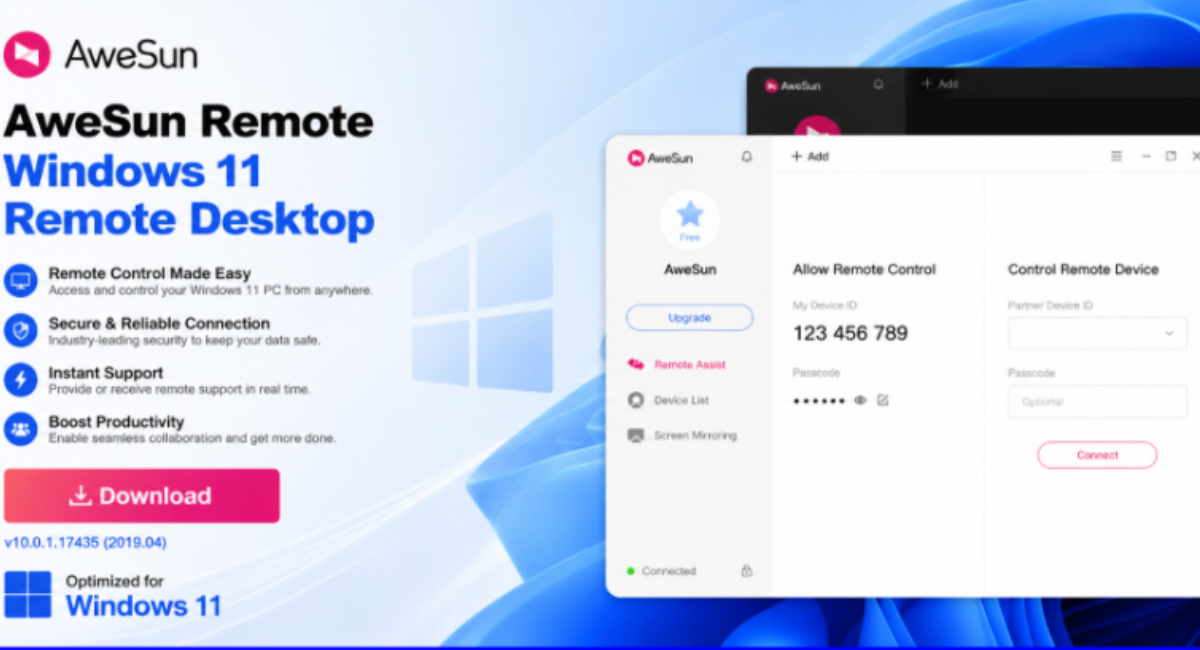
AweSun Remote provides tools that help users connect to Windows computers without requiring complex network configuration.
Common use cases include:
Remote Computer Access
Users can connect to their Windows computers from different locations to access applications, documents, and system resources.
This can be useful for remote workers, travelers, and users who need access to their main computer while away.
Support Windows 11 Home Devices
Since Windows 11 Home does not support native Remote Desktop hosting, some users may need alternative solutions.
Remote access software allows users to access Windows Home computers without changing their operating system edition.
Cross-Platform Remote Control
Many users work across multiple devices, including Windows PCs, Macs, tablets, and smartphones.
Cross-platform support makes it easier to manage computers from different devices.
Remote Troubleshooting and File Transfer
Remote access tools are commonly used for technical support.
Instead of explaining complicated steps, users can view the remote screen, control the device, and transfer files when needed.
Security Best Practices for Remote Desktop Access
Security is an important consideration whenever remote access is enabled.
Use Strong Authentication
Use strong passwords and enable multi-factor authentication (MFA) whenever available.
Keep Software Updated
Regularly update:
- Windows operating system
- Remote access applications
- Security software
Updates help improve performance and address security issues.
Review Access Permissions
Only allow trusted users and devices to connect.
Regularly check account permissions and remove unnecessary access.
Use Secure Connection Methods
Avoid exposing remote services directly to the public internet without proper protection.
Using secure connection methods, VPNs, or trusted remote access platforms can help maintain safer remote sessions.
Conclusion:
Windows 11 Remote Desktop provides a convenient built-in method for accessing computers remotely. It is suitable for many users who work primarily within Windows environments.
However, Windows edition restrictions, network configuration requirements, and cross-platform needs may make some remote access scenarios more complicated.
For users who need a simpler way to connect devices remotely, solutions like AweSun Remote provide additional flexibility through easier setup, broader compatibility, and remote management features.
Whether you need remote work support, technical assistance, or access to files from another location, selecting the right remote desktop solution can help you stay connected and productive.
FAQs:
1. Does Windows 11 Home support Remote Desktop hosting?
No. Windows 11 Home cannot act as a Remote Desktop host using Microsoft’s built-in feature. Users can use third-party remote access software to connect to Windows 11 Home computers.
2. Can I access my Windows 11 PC remotely over the internet?
Yes. Windows 11 Remote Desktop can support internet connections with additional configuration. Third-party remote access tools may simplify the connection process.
3. Is AweSun Remote compatible with Windows 11?
Yes. AweSun Remote supports Windows 11 and provides features including remote control, screen sharing, file transfer, and remote assistance.
4. Can I control my Windows PC from a phone?
Yes. Many remote access solutions provide iOS and Android apps, allowing users to access and manage Windows computers from mobile devices.
-

 BLOG12 months ago
hanime1: The Ultimate Destination for Anime Lovers
-

 ENTERTAINMENT1 year ago
Sflix: How It’s Changing the Way We Watch Movies and TV Shows
-

 BILLS1 year ago
Why Does My Instagram Reel Stop Getting Views After One Hour? How to Fix It?
-

 BLOG1 year ago
Imginn: The Ultimate Tool to View Instagram Content Anonymously
-

 ENTERTAINMENT1 year ago
Crackstreams 2.0: The Future of Free Sports Streaming?
-

 BLOG11 months ago
ThisVid: What Makes It Stand Out in the World of Online Videos
-

 BLOG1 year ago
NHentai.nef: Understanding the Popular Hentai Archive
-

 Technology1 year ago
Simpcitt: The Rise of a Unique Online Community