
BUSINESS
Your AI-Powered Playbook: 5 Ways a Virtual Card Will Secure Your Business in 2025


Virtual Card from OnlineCheckWriter.com – Powered by Zil Money will secure the business and their growth.
Imagine this: You’re closing a big client deal, but you hesitate to hand over your physical card details for an online subscription. Fraud risks, unclear limits, and delayed expense reports run through your mind. Now imagine a smarter way—issuing a Virtual Card that works only for that purchase, expires immediately, and leaves no data behind.
That’s the power of choosing the right platform in 2025. For small business owners, a Virtual Card is no longer just a convenience—it’s a defense strategy powered by AI. In a digital-first world, every layer of control and security matters when it comes to business growth.
And here’s the truth: the virtual card market is booming. It’s projected to reach $1.15 trillion by 2029, growing at a CAGR of 19.3%. That kind of growth signals just how important Virtual Cards are becoming for modern businesses.
Why AI-Driven Virtual Cards Matter for Small Business Owners
Small business owners often juggle multiple roles—managing expenses, ensuring security, and scaling growth. Traditional payment methods leave gaps: uncontrolled spending, delayed approvals, and exposure to fraud.
That’s where the AI-driven Virtual Card from OnlineCheckWriter.com – Powered by Zil Money comes in. The platform brings speed, control, and security together—giving small business owners the tools they need to move confidently in 2025.
So how exactly does it secure business growth? Let’s break it down into 5 actionable ways.
5 Ways a Virtual Card Secures Your Business Growth
- Instant Cards = Immediate Action
Why wait for physical cards in the mail when opportunities can’t wait?
- Issue virtual cards instantly for employees, contractors, or subscriptions
- Customize each card to fit the specific need
- Activate and deactivate cards in seconds
This isn’t just about speed—it’s about staying agile in a competitive market where quick decisions can set you apart.
- Advanced Security = Zero Compromise
Fraud can drain not just funds but also trust. That’s why Virtual Cards bring layered protection.
- Generate unique card numbers for each vendor
- Instantly freeze or replace cards if suspicious activity occurs
- PCI DSS and ISO/IEC 27001 certifications for compliance
- End-to-end encryption plus multi-factor authentication
Every transaction is secured from start to finish—making your business harder to target and easier to protect.
- Spending Limits vs. Overspending
Ever faced the stress of a surprise expense? With proactive controls, that worry disappears.
- Set budgets before the card is used
- Apply limits by transaction, vendor, time, or even location
- Ensure every dollar aligns with your growth plan
Instead of reacting to overspending, you take control upfront—securing predictable cash flow for your business.
- Central Dashboard = Smarter Oversight
Managing multiple cards doesn’t need to be chaotic.
- Control all cards under one central account
- Distribute cards to team members with custom restrictions
- Monitor transactions and adjust limits anytime
For small business owners, it’s the difference between chasing down receipts and confidently managing expenses in one place.
- One-Time Use Cards = Built-In Safety Net
Sometimes the best security is temporary.
- Create single-use virtual cards that expire after one purchase
- Protect sensitive card details by leaving no trace behind
- Empower contractors or freelancers with task-specific cards
This means peace of mind when paying new vendors or completing one-off transactions.
Are You Still Trusting Old Payment Methods?
In 2025, relying on physical cards alone is like locking your office with a wooden latch. Secure growth comes from tools built for today’s risks and tomorrow’s opportunities.
Financial Control = Uncompromising Safety
The difference between businesses that scale and those that stall often comes down to smarter financial tools. The AI-driven Virtual Card from OnlineCheckWriter.com – Powered by Zil Money transforms payments from a vulnerability into a growth strategy.
It’s not just about payments—it’s about trust, agility, and future-proof security.
So, the question is: will your business stay with outdated methods, or secure its growth with a smarter playbook?
Ready to Begin?
Take control of your business payments today.
Explore the Virtual Card feature on OnlineCheckWriter.com – Powered by Zil Money and secure your growth in 2025.
FAQS: Virtual Card
Q1. What is a Virtual Card from OnlineCheckWriter.com – Powered by Zil Money?
It’s a secure, AI-driven digital card issued instantly for business expenses, subscriptions, contractors, or vendors.
Q2. How does a Virtual Card improve business security?
Each card has unique numbers, encryption, and customizable limits, reducing fraud risk and unauthorized spending.
Q3. Can I set controls for where and when a Virtual Card is used?
Yes. You can define spending caps, vendors, time, and location restrictions for total control.
Q4. Is it possible to issue multiple Virtual Cards for employees?
Yes. You can issue multiple cards under one central account, with individual rules for each user.

Providing your employees with a comfortable place to smoke may be one of the easiest things you can do for them.
If you approach it correctly, you’ll keep smokers happy, non-smokers safe, and your business will remain compliant with local laws. But build it wrong and you’ll be faced with complaints, liability risks, and an unsightly smoking patch on your property that everyone ends up avoiding.
Thankfully, building a good smoking area doesn’t have to be hard.
Here’s what we’ll cover:
- Making Sure Your Smoking Area Actually Matters
- Research Local Laws Ahead of Time
- Location, Location, Location
- Build the Right Setup from the Start
- Maintain Your Smoking Area Daily
Making Sure Your Smoking Area Actually Matters
Too many employers treat the smoking area like an afterthought.
“Slap a bench next to the dumpsters” seems to be the guiding philosophy. And that method of choosing a smoking area causes nothing but problems.
Employees who smoke aren’t dumb. When they take the time to look for places to buy affordable products online, including canadian classic cigarettes from trusted providers, they care about getting a good deal. Smokers appreciate when employers provide a designated smoking area that shows they care too.
If you’re worrying about costs, consider this: smoking areas don’t have to be expensive. But they should signal to employees that you appreciate their business and want them to keep working for you.
Of course, it doesn’t just feel good to have a well-put-together smoking area. It’s the law.
Let’s be clear…
Secondhand smoke kills more than 41,000 nonsmoking Americans every year. Because of that, legislators have greatly increased smoking restrictions over the last few years. Recent data shows over 1,443 cities and municipalities have gone smokefree as of October 1, 2024. Meaning all workplaces (non-hospitality) must provide designated outdoor smoking areas that meet certain requirements.
If you aren’t going to provide one, simply don’t allow smoking on the premises. Employees will appreciate the clarity.
Research Local Laws Ahead of Time
Look into local smoking regulations before you purchase a shelter or even decide on a location.
Rules change from state-to-state and city-to-city when it comes to how far a designated smoking area must be from entrances, exits, windows, and air vents. Individual states set these distances themselves. At least 20 feet is common in many states. Some states are much stricter.
Consider this…
Non-compliance can cost your business real money. Fines for smoking regulation violations change based on location and severity. The easiest way to make sure the bases are covered is to give the local municipal office a call or visit the state labour department’s website for smoking guidelines.
It’s also worth noting that many states include regulations about e-cigarettes and vaping devices in their smoking laws. Make sure those things are covered, too.
Location, Location, Location
This might be where most businesses fail.
If smoke easily drifts back into the building when employees are using the smoking area, it’s been done wrong.
Keep the smoking area far enough away from:
- Entrances/exits
- Air intake vents / HVAC units
- Windows
- Non-smoking employee walkways
Smokers shouldn’t have to light up near their workstation. But non-smokers should never have to walk through a cloud of smoke to get somewhere. Both deserve that basic consideration.
Mapping out typical foot traffic around the exterior of the building and positioning the smoking area accordingly is a smart first step. It should be relatively convenient for smokers but not directly in anyone’s way. Placing it near a side door or in the back corner of the building often works well.
Smokers need to be able to access it safely, so don’t place it far away from populated areas just to keep smoke away from entrances.
Build the Right Setup from the Start
The location is set. Now it’s time to build it right.
Ideally, the smoking area shouldn’t require a large investment. However, there are a few things that every smoking area should have.
Need some inspiration? Here’s what every smoking area needs:
- A weatherproof shelter. At minimum. Larger canopies are great too.
- Shelter comes with seating. Employees should be able to take their full break there.
- Quality cigarette disposal units that are fireproof.
- Signage indicating where the smoking area is.
- Adequate lighting for smokers during the early morning and late evening.
Aside from the shelter, most of these things don’t cost very much. But failing to have them is cheap.
Investing in proper cigarette disposal units and keeping them emptied will prevent fires. Ensuring the smoking area has easy-to-clean flooring (i.e. not gravel) will do the same. So will discouraging employees from littering cigarette butts around the property.
If a shelter is chosen for the smoking area, ensure it is well ventilated. Smoke will build up inside an entirely enclosed shelter quickly. Unless state regulations dictate otherwise, open-sided canopy designs are best.
Maintain Your Smoking Area Daily
If there’s no commitment to keeping the smoking area cleaned up, don’t bother building it.
Implement a simple maintenance schedule. For example:
- Cigarette disposal units should be emptied daily.
- Sweep or blow the smoking area out at least twice a week.
- Check the integrity of the smoking shelter and seating once per month.
- Ensure waste disposal units are always stocked.
Maintenance isn’t just about appearances, either.
Littering is a serious fire hazard. Allowing the smoking area to be littered with cigarette butts tells employees and visitors that the property isn’t cared for. That’ll do real damage to morale and reputation as an employer.
Speaking of which, signage needs maintaining too. Any rules should be clearly posted near the smoking area. If the policy changes (more on vaping above), update the signage to reflect it immediately.
Lastly, consider comfort. If smokers have a nice covered area with comfortable seating and protection from the elements they’ll use it. If not, they’ll find anywhere under a roof to take their break.
Taking shelter everywhere randomly defeats the point of having a smoking area.
Wrapping Up
Creating a great smoking area for employees really comes down to four things:
- Know the state and local laws.
- Choose a proper location.
- Build it out with the right items.
- Maintain it every day.
Not only is this simple, but none of it has to cost the business very much money. As long as the basics are covered and a little time is spent thinking about where to put it, smokers and non-smokers alike will be satisfied while the business stays compliant.
Here’s a quick recap:
- Check with state and local governments to find out about smoking area requirements.
- Place it at least 20 feet from entrances, air vents, and windows.
- Provide shelter, seating, and proper cigarette disposal units.
- Empty disposal units daily and sweep up the smoking area at least twice per week.
- Update signage whenever local laws or company smoking policies change.
BUSINESS
Why Investing in Managed IT Services is a Smart Move for Businesses in a Digital-First World

In today’s fast-paced business environment, technology is the driving force behind growth and innovation. Organizations increasingly depend on complex IT infrastructures to maintain daily operations, enhance efficiency, and support expansion into new markets. This dependence underscores the importance of having seamless IT services and support. One strategic approach is partnering with firms like Nucleus, which provides comprehensive managed IT solutions, freeing businesses to focus on their core competencies while ensuring their IT needs are proactively managed.
The benefits of managed IT services are manifold, ranging from robust security protocols to substantial cost savings and heightened efficiency. As the global market hinges more on digital advancements, businesses must adapt by integrating reactive IT services and anticipatory potential challenges. Consequently, managed IT services become indispensable for businesses poised for sustainable growth in a digital-first world.
Benefits of Managed IT Services
Enhanced Security
The digital transformation has ushered in a new era of cybersecurity concerns. With each innovation, cyber threats become more sophisticated, posing significant risks to business data and customer information. Managed IT services play a crucial role in safeguarding against these threats by implementing advanced security measures and continuously monitoring for vulnerabilities. These services maintain a fortress-like defense around critical data by providing routine updates and real-time threat detection. Such meticulous attention to cybersecurity is not just prudent but essential, as security breaches can result in staggering financial losses and irreparable reputational damage.
Increased Efficiency
Efficiency is the heartbeat of successful business operations. Managed IT services to streamline processes by integrating the latest technology solutions that optimize performance and productivity. With these services, businesses can automate routine tasks, reducing employees’ time on manual processes and allowing them to focus on strategic initiatives. Efficient IT management also means faster response times to issues, eliminating workflow disruptions and ensuring businesses operate smoothly, even under peak conditions. By freeing up internal resources, companies can redirect their focus towards innovation and expansion.
Cost-Effectiveness
Cost management is a critical concern for businesses aiming to maximize profitability while minimizing overheads. Maintaining an in-house IT department can be a significant expense, encompassing salaries, training, equipment, and software. Managed IT services offer a cost-effective alternative by providing a predictable monthly or annual fee. This model eliminates unexpected costs associated with hardware breakdowns or staffing changes, allowing businesses to forecast IT expenditures better and allocate resources more effectively. By turning to managed services, businesses gain access to top-tier IT expertise without the heavy financial burden of maintaining an extensive internal team.
Staying Updated with Technology Trends
Staying current with emerging technologies is crucial for business competitiveness in a rapidly changing tech landscape. Managed IT services ensure businesses leverage the latest advancements, such as cloud technology, machine learning, and artificial intelligence, to drive operational efficiency and innovation. These proactive updates mitigate the risk of technological obsolescence and position businesses to capitalize on new opportunities.
Minimizing Downtime
Downtime is a formidable foe in the business world, capable of eroding profits and testing customer loyalty. Prolonged outages can result in missed opportunities and jeopardized projects. Managed IT services adopt a preventive approach to minimize downtime through regular system checks and maintenance. These services ensure a swift recovery from outages or technical glitches, sustaining business continuity and preserving the customer experience. Readiness to address issues promptly is a cornerstone of effective IT management, empowering businesses to maintain momentum without interruptions.
Scalability and Business Growth
As businesses evolve, their IT requirements change, necessitating scalable solutions that adapt to their growth trajectory. Managed IT services provide the flexibility needed to scale operations seamlessly, whether a business is launching new products, entering new markets, or undergoing mergers and acquisitions. These services customize IT capabilities to align with expanding needs, ensuring that IT infrastructure can support growing demands without incurring excessive costs or disruptive overhauls. This scalability is vital for nurturing business growth and maintaining a competitive edge in dynamic markets.
Conclusion
In conclusion, managed IT services represent a strategic investment that aligns with the core objectives of modern businesses. By enhancing security, driving efficiency, and supporting scalable growth, these services empower companies to navigate the complexities of a digital-first world with confidence and agility. Their benefits extend beyond IT support to form a cornerstone of strategic business planning. Partnering with a reliable managed service provider transforms IT operations from a potential stressor into a powerful enabler of success.
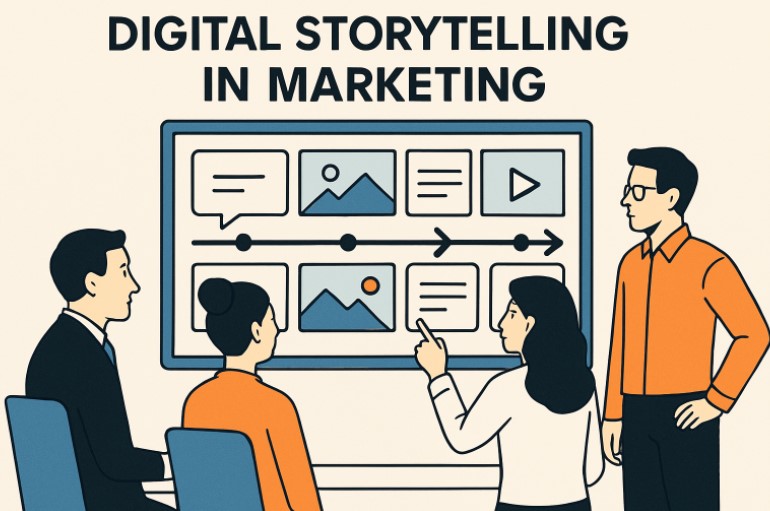
In the digital-first economy, brands are trying new ways to forge meaningful connections with their consumers. One particularly effective approach is digital storytelling. By merging narrative methods with digital media, businesses can communicate their vision and values in emotionally resonant ways. This approach goes beyond promoting product features and prioritizes deeper engagement. If you are eager to enhance your brand’s online presence and grow your audience, exploring digital storytelling through partners like Karben Marketing can be a transformative step for your company.
Digital storytelling is quickly becoming a cornerstone of modern marketing. This technique utilizes the power of stories told through text, visuals, audio, and video, making brand messaging more memorable and impactful. As businesses adapt to the evolving needs of today’s consumers, those who harness digital storytelling can stand out and create lasting connections.
In this article, you’ll find a comprehensive guide to digital storytelling, its impact on business, essential elements for crafting compelling stories, and how generative AI is shaping the future of content creation. We will also explore notable case studies, challenges, solutions, and future trends that will define the next era of digital engagement.
Understanding Digital Storytelling
Digital storytelling uses a blend of multimedia components such as narrative writing, images, video, and soundscapes to share powerful stories that connect with audiences. Unlike traditional advertisements that simply showcase products or services, digital storytelling conveys the human side of your business. It offers a glimpse into a company’s mission, culture, and impact, ultimately building empathy and loyalty.
The Impact of Digital Storytelling on Businesses
Brands that use digital storytelling often see improved marketing performance. A recent Leapmesh report shows an impressive 233% increase in data storytelling, with more than 73% of businesses using narrative to convey sales information. Narratives enable brands to communicate even complex data or messages in a way that is accessible and engaging, making it easier for customers to relate to the brand and remember key messages.
In today’s saturated digital space, authentic storytelling helps brands differentiate themselves. By positioning a brand through relatable stories, companies can increase trust and spark conversations, both vital to driving engagement and long-term loyalty. Strong storytelling also increases brand recall, which translates directly into higher conversion rates and customer retention.
Key Elements of Effective Digital Storytelling
- Authenticity: Genuine stories that mirror a brand’s core values have a more meaningful impact on audiences.
- Emotional Connection: By stirring emotions, storytelling ensures your brand message is not just heard but also remembered.
- Visual Appeal: Visual elements such as images and videos are crucial for capturing attention and drawing viewers into the narrative.
- Consistency: A cohesive story across channels strengthens brand identity and reinforces trust.
Leveraging Generative AI in Digital Storytelling
Generative AI is revolutionizing how companies produce digital content. Machine learning models can generate written copy, stunning visuals, and videos at scale, enabling brands to launch storytelling campaigns faster and with greater personalization. This not only saves time and resources but also enables the delivery of customized narratives tailored to various audience segments. According to a recent McKinsey analysis, generative AI is empowering creative teams, helping them scale their efforts while maintaining quality and authenticity.
Challenges and Solutions in Digital Storytelling
While digital storytelling is highly effective, challenges remain. Maintaining authenticity as content scales, keeping a consistent message across platforms, and accurately measuring impact are common challenges. Businesses can address these challenges by investing in employee training, deploying standardized content management tools, and fostering a culture of feedback and collaboration. With a proactive approach, these hurdles can be turned into opportunities for greater brand alignment and audience engagement.
Future Trends in Digital Storytelling
The landscape of digital storytelling is rapidly changing. Trends like augmented reality (AR) and virtual reality (VR) are making immersive brand experiences more accessible, while AI will continue to simplify content production and personalization. Consumers increasingly favor interactive and personalized stories, so companies that quickly adopt these technologies will secure a competitive advantage in both customer acquisition and loyalty. These emerging technologies hold significant promise for driving the next generation of digital engagement.
Final Thoughts
The advantages of digital storytelling for business growth are undeniable. Through authenticity, strong visuals, and the integration of tools like generative AI, brands can form closer connections with their audiences and stay ahead in the market. By remaining adaptable and forward-thinking, companies can use storytelling not just to communicate, but also to enthrall, inspire, and grow.
-

 Blog7 months ago
hanime1: The Ultimate Destination for Anime Lovers
-

 Entertainment9 months ago
Sflix: How It’s Changing the Way We Watch Movies and TV Shows
-

 Entertainment8 months ago
Crackstreams 2.0: The Future of Free Sports Streaming?
-

 Bills10 months ago
Why Does My Instagram Reel Stop Getting Views After One Hour? How to Fix It?
-

 Technology10 months ago
Simpcitt: The Rise of a Unique Online Community
-

 Blog8 months ago
Imginn: The Ultimate Tool to View Instagram Content Anonymously
-

 80s10 months ago
Favorite 100 Songs of the 80s: (#1) Michael Jackson – Billie Jean
-

 Blog10 months ago
Simpcitu: The New Age Trend Shaping Online Interactions