
BLOG
Diag Images: What They Reveal About Your Health

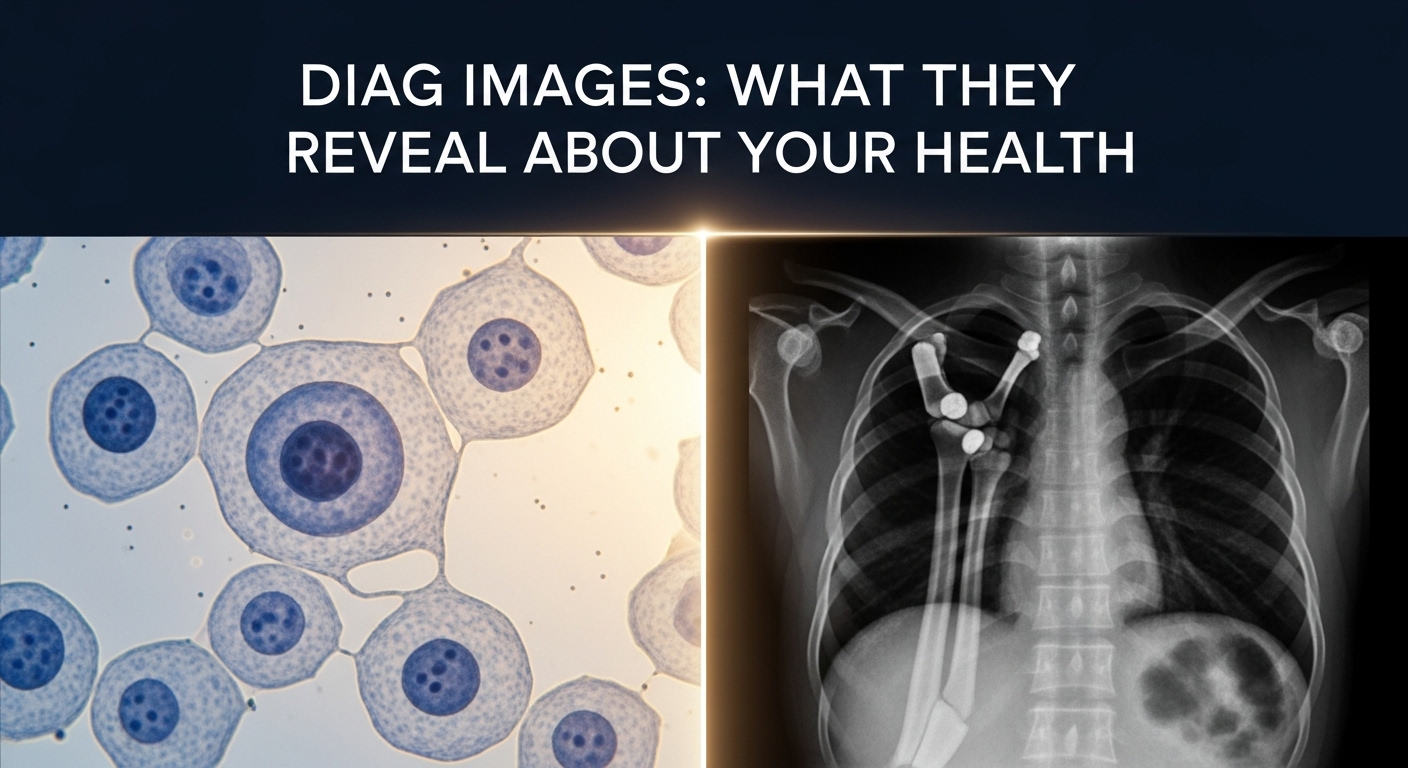
When it comes to understanding our health, a picture can be worth a thousand words. Diagnostic imaging plays an essential role in modern medicine, allowing healthcare professionals to peer inside the body and gain insights that would otherwise remain hidden. From X-rays to MRIs, these diag images provide crucial information that informs diagnoses and treatment plans. But what exactly do these images reveal about your health? Let’s explore the fascinating world of diagnostic imaging and uncover its significance in today’s medical landscape.
Types of Diagnostic Imaging
Diagnostic imaging encompasses several techniques, each serving a unique purpose. X-rays are among the most common. They provide quick visuals of bones and certain tissues, revealing fractures or infections.
Ultrasound uses sound waves to create images. This method is particularly valuable during pregnancy or for examining soft tissues in organs like the liver and kidneys.
CT scans combine multiple X-ray images for enhanced detail. These cross-sectional views help detect tumors, internal injuries, and other abnormalities with precision.
MRI employs magnetic fields to produce high-resolution images without radiation exposure. It’s especially useful for visualizing brain structures and joint issues.
PET scans offer insights into metabolic processes within the body by highlighting areas of activity in cells. Each type plays a vital role in diagnosing conditions early and accurately.
What Can be Detected Through Diag Images?
Diagnostic imaging plays a crucial role in modern medicine. It allows healthcare professionals to see inside the body without invasive procedures.
Through diag images, various conditions can be detected early on. For example, tumors, fractures, and infections are often revealed through X-rays or CT scans.
Ultrasounds can identify abnormalities in organs like the heart or liver. They also monitor pregnancy and fetal development effectively.
MRI scans provide detailed images of soft tissues. This makes it easier to spot issues such as torn ligaments or brain disorders.
Additionally, diagnostic imaging is vital for tracking disease progression and treatment effectiveness. Regular scans can indicate whether a treatment plan is working or if adjustments are necessary.
Each type of diag image offers unique insights into our health that can guide further medical decisions.
Benefits of Diagnostic Imaging for Early Detection and Treatment
Diagnostic imaging plays a crucial role in modern medicine. It allows for the early detection of various health issues, which can significantly improve treatment outcomes.
By identifying conditions at their earliest stages, doctors can initiate treatments sooner. This proactive approach often leads to less invasive procedures and better prognoses for patients.
Additionally, diag images help monitor chronic diseases effectively. Physicians can track changes over time, adjusting treatments as necessary to ensure optimal care.
The precision offered by advanced imaging techniques also minimizes unnecessary surgeries. Patients benefit from more accurate diagnoses, reducing the risks associated with exploratory operations.
Diagnostic imaging enhances communication between healthcare providers and patients. Clear visual representations facilitate discussions about health concerns and treatment options, empowering individuals to make informed choices about their well-being.
Common Uses of Diag Images in Various Medical Specialties
Diagnostic imaging plays a crucial role across various medical specialties, providing insights that guide treatment. In orthopedics, diag images like X-rays and MRIs help identify fractures or joint issues.
Cardiologists rely on echocardiograms and CT scans to evaluate heart conditions, detecting abnormalities in blood flow or structure. Similarly, oncologists utilize PET scans and MRIs to locate tumors and assess their growth.
In the realm of neurology, MRI technology is vital for diagnosing brain injuries or neurological disorders. Gastroenterologists often use ultrasounds and endoscopic imaging to visualize digestive tract problems.
Pediatricians also benefit from diag images to monitor development in children or diagnose congenital anomalies early on. Each specialty harnesses these advanced techniques to enhance patient care while making informed decisions based on clear visual data.
How to Prepare for a Diagnostic Imaging Procedure
Preparing for a diagnostic imaging procedure is crucial for accurate results. Start by discussing your medical history with the healthcare provider. They need to know about any allergies, medications, or previous surgeries.
Dress comfortably and opt for loose-fitting clothing. You might be asked to change into a hospital gown, so keep that in mind when choosing what to wear.
If you’re undergoing an MRI or CT scan, fasting may be required. Follow specific instructions regarding food and drink beforehand. Staying hydrated is usually encouraged unless told otherwise.
For certain procedures like ultrasounds, having a full bladder can improve image quality. Make sure you understand all preparation steps before arriving at the facility.
Don’t hesitate to ask questions if something is unclear; being informed will help ease any anxiety you may have about the process.
Conclusion
Diagnostic imaging is a pivotal aspect of modern healthcare. These advanced technologies provide valuable insights into our bodies, allowing medical professionals to diagnose and treat various conditions effectively.
Understanding the different types of diag images—such as X-rays, MRIs, CT scans, and ultrasounds—can empower patients. Each modality serves distinct purposes in revealing internal structures without invasive procedures. This knowledge can help individuals feel more informed when discussing their health with providers.
The ability to detect abnormalities early through diag images is crucial for successful treatment outcomes. Whether it’s identifying tumors or assessing fractures, these visual tools play an essential role in timely intervention.
Different medical specialties rely on diagnostic imaging for specific needs. From cardiology to orthopedics, the applications are vast and varied. These images assist doctors in crafting tailored treatment plans suited to each patient’s unique situation.
Preparing for a diagnostic imaging procedure is straightforward but important. Patients should follow pre-appointment instructions carefully to ensure accurate results while remaining comfortable during the process.
Embracing diag image technology has transformed patient care significantly over recent years. With ongoing advancements and increased accessibility, diagnostic imaging continues enhancing how we understand health and illness alike.

Türk İdla is a phrase that may attract attention because of its distinctive wording and cultural association. As online searches continue to grow around unique terms, people often want to understand what a phrase means, where it comes from, and why it appears across digital platforms. While the exact meaning of Türk İdla may depend on its context, exploring the phrase carefully can help readers better understand its possible use, relevance, and online presence.
The internet has made it easier for unfamiliar words and phrases to gain visibility. A term may appear in search results, social media discussions, websites, usernames, or digital content. As a result, users often search for explanations before deciding whether a phrase represents a person, platform, concept, brand, or cultural reference.
What Is Türk İdla?
The phrase Türk İdla has a distinctive structure that immediately connects it with Turkish language and cultural identity. The word “Türk” commonly relates to Turkish people, language, culture, or heritage. However, the second word, “İdla,” may require additional context because its interpretation can vary depending on how and where it is used.
For this reason, readers should avoid assuming a single definition without examining the surrounding information. Online terms sometimes develop meanings that are different from their traditional linguistic roots. A phrase may also be created as a digital name, a project title, or a search term.
Understanding context is therefore essential when researching Türk İdla.
Why Is Türk İdla Gaining Online Attention?
Many unusual keywords gain attention simply because they are unique. In a crowded digital environment, uncommon phrases can stand out more easily than general terms. Users may encounter Türk İdla through search engines, online communities, social media, or other digital channels.
Several factors can contribute to the visibility of a phrase:
- It may be connected to a specific online identity.
- It could appear in a website or digital project.
- Users may search for its meaning or origin.
- It might be linked to Turkish culture or language.
- It may be used as a distinctive name or phrase.
Search behavior also plays an important role. When people see an unfamiliar term, they often search for it immediately. This creates more online interest and encourages websites to publish informative content.
Türk İdla and the Importance of Context
One of the most important things to remember about Türk İdla is that context can change how the phrase is understood. A term used in a cultural discussion may have a different meaning from the same term used as an online name.
For example, a phrase may appear in:
Cultural Discussions
A phrase containing “Türk” may be connected to language, history, traditions, or cultural identity. In this setting, readers may look for background information and linguistic meaning.
Digital Platforms
If the phrase is used online, it could represent a username, website, community, or digital project. In this case, its meaning may be based on branding rather than traditional language.
Search Trends
Some keywords become popular because users repeatedly search for them. Search interest does not always reveal a clear definition, but it can show that people are actively looking for information.
Therefore, anyone researching Türk İdla should consider where the phrase appears and how it is being used.
How People Search for Türk İdla
Search engines have changed the way people discover information. Instead of asking someone directly, users can enter a phrase and explore multiple results within seconds.
People searching for it may be looking for:
- A simple definition
- The phrase’s possible origin
- Its cultural or linguistic context
- Information about an online reference
- Related websites or digital platforms
- Explanations from other users
This type of search behavior shows why clear and well-organized content matters. Readers usually want direct answers rather than complicated explanations. A useful article should introduce the term, discuss its possible context, and clearly explain why people may be searching for it.
The Role of Language in Understanding Türk İdla
Language can strongly influence how a phrase is interpreted. Turkish includes unique characters and linguistic structures that may not appear in English. The letter “İ,” for example, is an important part of the Turkish alphabet and is different from the standard English letter “I.”
This detail can affect how people search for a term online. Search engines may sometimes treat variations in spelling differently, especially when users remove accents or special characters. As a result, a phrase may appear in several forms across websites and online discussions.
For readers researching it, preserving the original spelling can be helpful. It allows users to search for the exact phrase and distinguish it from similar-looking terms.
Türk İdla in the Modern Digital World
The modern internet allows words and phrases to travel quickly across borders. A term that begins in one language or community can soon attract attention from international users.
This is especially true for distinctive phrases. Because it contains a recognizable cultural reference, it may appeal to people interested in Turkish language, digital trends, or unfamiliar online keywords.
The phrase also demonstrates how search engines influence modern communication. People do not always search for complete questions. Sometimes, they simply enter a single unfamiliar phrase and expect the internet to provide an explanation.
That behavior has created a growing demand for content that explains niche and emerging keywords.
Why Clear Information Matters
When a phrase is unfamiliar, misinformation can spread easily. Users may find multiple interpretations, incomplete explanations, or unsupported claims. This is why responsible content should distinguish between confirmed information and possible interpretations.
A well-written article about it should avoid presenting assumptions as facts. Instead, it should explain the phrase carefully and acknowledge that its meaning may depend on context.
This approach benefits both readers and search engines. People receive more trustworthy information, while search engines can better understand the purpose of the content.
What Should Readers Consider When Researching Türk İdla?
Anyone researching the phrase can follow a few simple steps:
- Check the spelling carefully. Special characters may influence search results.
- Look at the surrounding context. The phrase may have different uses.
- Compare reliable sources. Avoid relying on a single unexplained result.
- Consider the language background. Turkish words may not translate directly into English.
- Avoid unsupported assumptions. A unique phrase does not automatically have one fixed meaning.
These steps can make online research more accurate and useful.
The Future of Türk İdla Online
As the internet continues to expand, unusual keywords will likely gain more attention. Search engines increasingly connect users with niche topics, regional phrases, and specialized information.
The future visibility of it may depend on how the phrase is used and whether more people begin searching for it. If it becomes associated with a website, online community, cultural discussion, or digital project, its meaning could become clearer over time.
For now, the phrase remains an example of how language, culture, and digital search behavior can intersect. Its unusual wording makes it memorable, while its Turkish connection adds an additional layer of interest.
Final Thoughts on Türk İdla
Türk İdla is a distinctive phrase that may attract attention because of its unusual wording, linguistic features, and possible cultural or digital associations. Although Türk İdla exact interpretation can depend on context, researching the phrase provides an opportunity to explore how unfamiliar terms gain visibility online.
As digital searches continue to shape the way people discover information, niche keywords will remain important. Readers who encounter Türk İdla should examine its spelling, context, and usage before drawing conclusions. With careful research, even an unfamiliar phrase can become easier to understand.
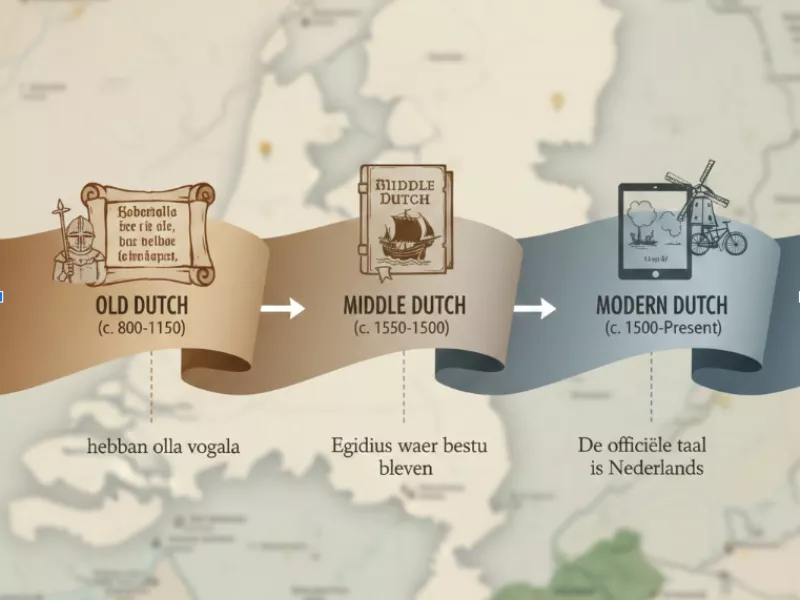
The term ulieden has attracted attention among online users searching for new, unfamiliar, or niche digital concepts. Although the word may not have one universally accepted definition, its growing presence in online searches shows how quickly language and internet culture can evolve. In today’s digital environment, new terms often appear through online communities, platforms, brands, usernames, and emerging trends. Understanding ulieden requires looking at how unfamiliar words gain meaning and why people become interested in them.
What Is Ulieden?
At its core, ulieden is a distinctive term that may be used in different online contexts. Like many modern internet keywords, its meaning can depend on where and how it appears. Some unfamiliar terms become associated with websites, digital services, online identities, or creative projects. Others gain popularity because users search for information about them after encountering the word online.
This makes the term interesting from both a digital and linguistic perspective. Rather than assuming one fixed meaning, it is better to consider the context surrounding the word. Search trends, online discussions, and website content can all influence how a term develops over time.
For users discovering the keyword for the first time, the main challenge is usually a lack of reliable background information. A clear and well-organized explanation can help readers understand the possible relevance of the term without making unsupported claims.
Why Is Ulieden Gaining Online Attention?
The internet constantly creates new vocabulary. A word can become popular through social media, online communities, search engines, digital products, or emerging websites. In many cases, people search for an unfamiliar term simply because they want to understand what it means.
Several factors may contribute to the growing interest in ulieden:
- The term may appear on different online platforms.
- Users may encounter it through search results or social media.
- It could be connected with a niche digital project or online identity.
- People may be looking for its meaning, purpose, or background.
- Search interest can increase when a new term starts appearing repeatedly.
The curiosity surrounding unfamiliar keywords is one of the strongest forces behind internet searches. Once people see a term several times, they naturally want to learn more about it.
How People Search for Ulieden
Search behavior has changed significantly over the past decade. Users no longer search only for traditional topics such as news, products, or services. They also search for unusual words, usernames, digital platforms, and terms they do not immediately recognize.
A person searching for ulieden may have several different intentions. They could be looking for a definition, an explanation, a website, a platform, or information about how the term is used. Others may simply want to confirm whether the word has a specific meaning.
This creates several possible search intents:
Informational Search Intent
Some users want a simple explanation. They may ask what the word means or why it appears online. These readers usually prefer clear, direct information without unnecessary technical language.
Navigational Search Intent
Other users may already know the term and want to find a particular website, service, or online destination connected with it. In this situation, accuracy and reliable information become especially important.
Exploratory Search Intent
Some people search for unfamiliar terms out of curiosity. They may want to discover whether the word is associated with a trend, community, platform, or digital project.
Understanding these different intentions helps create better online content and makes information easier for readers to find.
The Role of Context in Understanding Ulieden
Context plays an important role when dealing with unusual or newly emerging keywords. A single word can have different meanings depending on the platform, industry, or community where it appears.
For example, a term may represent a brand name in one place and an online username in another. Similarly, a newly created word may have a specific meaning within a particular community that is not widely recognized elsewhere.
This is why readers should avoid relying on assumptions. Instead, they should examine the source, surrounding information, and purpose of the term. Context helps separate genuine information from speculation.
For content creators, this principle is equally important. Articles about emerging keywords should remain informative while avoiding claims that cannot be verified.
Potential Uses of Ulieden in the Digital World
The digital world provides countless opportunities for unique terms to develop. A distinctive word can become part of a website name, online brand, creative project, software platform, or digital community.
Because of its unique structure, ulieden may attract attention from users looking for something different. Distinctive terms are often easier to remember than generic phrases, particularly when they are used as names for online projects.
A unique keyword can potentially support:
- Digital branding and online identity
- Search engine visibility
- Creative projects and communities
- Website or platform naming
- Content marketing and online discovery
However, the success of any digital term depends on how consistently and meaningfully it is used. A memorable name alone is not enough. Users also expect useful information, clear communication, and a reliable experience.
Why Unique Keywords Matter for SEO
From an SEO perspective, unusual keywords can provide interesting opportunities. Highly competitive terms are often difficult for new websites to rank for. In contrast, less common keywords may have lower competition.
This does not mean every unfamiliar keyword will automatically generate large amounts of traffic. Search demand, content quality, relevance, and user intent still matter. However, unique terms can help websites build topical relevance when they are used naturally.
A strong article should include the target keyword in important locations, such as:
- The page title
- The opening paragraph
- Relevant headings
- The body content
- The meta description
At the same time, keyword stuffing should be avoided. Search engines increasingly focus on content quality and user satisfaction. Natural writing is usually more effective than repeating the same phrase excessively.
What Should Readers Consider?
When researching a relatively unfamiliar term, readers should consider the quality of the information they find. Not every search result provides accurate or complete details.
A reliable approach includes checking:
- The original source of the information.
- Whether multiple sources provide similar details.
- The date of the available information.
- Whether the website appears trustworthy.
- Whether claims are supported by clear evidence.
These steps can help users avoid confusion and reduce the risk of relying on outdated or inaccurate content.
The Future of Ulieden and Similar Digital Terms
The future of any emerging keyword depends on how people continue to use it. Some unusual terms disappear quickly, while others become recognized brands, communities, or online concepts.
The internet has repeatedly shown that a term can grow from a small idea into something widely recognized. Social media, search engines, online communities, and digital businesses all contribute to this process.
As more people search for ulieden, its meaning and online relevance may become clearer. New information can also influence how users understand and interact with the term.
Final Thoughts
Ulieden represents the kind of unique keyword that reflects the constantly changing nature of the internet. While its exact meaning may depend on context, the interest surrounding the term highlights an important feature of modern digital culture: new words and concepts can gain attention quickly.
For users, researching unfamiliar terms can lead to new discoveries. For content creators and SEO professionals, unique keywords can create opportunities to answer questions that are not yet widely covered online. The key is to provide useful, accurate, and naturally written information.
As the digital landscape continues to evolve, terms like ulieden may become more familiar over time. Whether it develops into a recognized online concept or remains a niche keyword, its growing search interest demonstrates how quickly language and digital culture can change.


Sheet metal laser cutting functions as a subtractive manufacturing method that produces components from flat metal sheets through fabrication processes. The high-intensity laser beam passes through optical components to create a concentrated beam that interacts with material surfaces, producing localised melting, vaporisation, and burning effects. The assist gas stream, which includes oxygen or nitrogen, operates through the kerf to remove molten material while maintaining precise shape separation. Sheet metal laser cutting services use CNC systems to operate the laser head, executing programmed paths that result in accurate and repeatable cutting of complex shapes.
Material preparation initiates the operational sequence by placing the sheet on a cutting bed to minimise vibration. The laser source produces a coherent beam which becomes collimated before achieving a spot diameter between 0.1 and 0.3 mm. The interaction between the beam and the metal material causes thermal energy to create phase changes, while the assist gas system removes debris and affects the final cut quality.
The use of oxygen as an assisting gas enables exothermic reactions with ferrous metals to enhance cutting performance, while nitrogen protects non-ferrous alloys from oxidation. The technique is effective for processing metal sheets with thicknesses of several millimetres, depending on the laser power levels and material characteristics.
Sheet Metal Laser Cutting Definition
The thermal separation process of sheet metal laser cutting utilises a focused laser beam to cut sheet metal workpieces through material removal by melting, vaporisation, and sublimation. An assist gas under pressure removes residues, creating a clean edge.
The beam source, which produces solid-state or gas laser output, directs its beam through mirrors or fibre optics to generate focal point intensities above 10^6 W/cm². The process enables kerf widths as narrow as 0.1 mm while maintaining tolerances of ±0.05 mm for thin sheet materials.
The process operates through three main mechanisms, which include fusion cutting with nitrogen-inert gases for molten material removal, flame cutting with oxygen for deep penetration in mild steel, and sublimation cutting for materials that vaporise without melting. The process requires CNC programming to convert digital designs into laser head motion control commands, which produce accurate copies of contours and holes.
Types of Metal Cutting Lasers
CO2 Lasers

Intense Laser Cutting Sparks
CO2 lasers function at a 10.6 micrometre wavelength through the electrical discharge activation of carbon dioxide and nitrogen, as well as helium, gas mixtures. The sealed tube produces the beam, which travels through mirrors to reach the Rosette mirrors before focusing on the workpiece. The lasers cut non-reflective metals, including mild steel, effectively at power levels of 4-6 kW, while achieving thicknesses of up to 25 mm. The systems operate at 10-20% efficiency, requiring more energy input than alternative systems. CO2 lasers create smooth carbon steel edges through the use of oxygen-assist gas, which enables an exothermic reaction to boost cutting speed.
Fiber Lasers
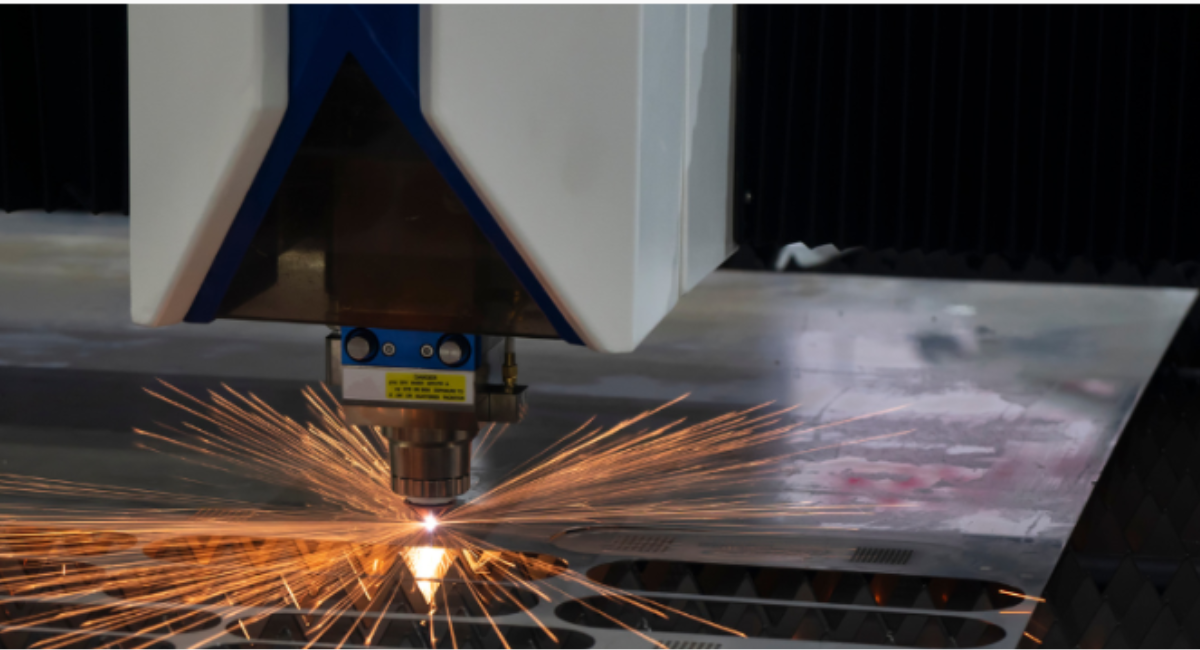
Industrial Laser Cutting Action
The 1.06 micrometres wavelength of fibre lasers enables operation through ytterbium-doped optical fibres, which receive amplification from diode pumping systems. The beam transmission system utilises flexible fibre optics to deliver the beam, eliminating the need for complex mirror arrangements and thereby decreasing operational expenses. The 40% efficiency rate of fibre lasers makes them ideal for cutting reflective metals like aluminium and copper, as well as achieving 30 mm stainless steel cuts at 6-8 kW. The small size and excellent beam quality of these lasers result in precise cuts with narrow kerf widths, which makes them the preferred choice for industrial operations.
Crystal Lasers
The 1.06 micrometres wavelength of crystal lasers operates through neodymium-doped yttrium aluminium garnet (Nd: YAG) technology. The lasers generate strong peak power levels, which enable them to cut through dense metal materials and process alloys up to 15 mm in thickness at power outputs between 3 and 4 kW. The crystal components of these lasers experience degradation, leading to a 2-5% reduction in efficiency and requiring more frequent maintenance. The Nd:YAG laser technology is primarily used in aerospace component manufacturing because it enables the creation of precise, high-quality, small cuts.
Direct Diode Lasers
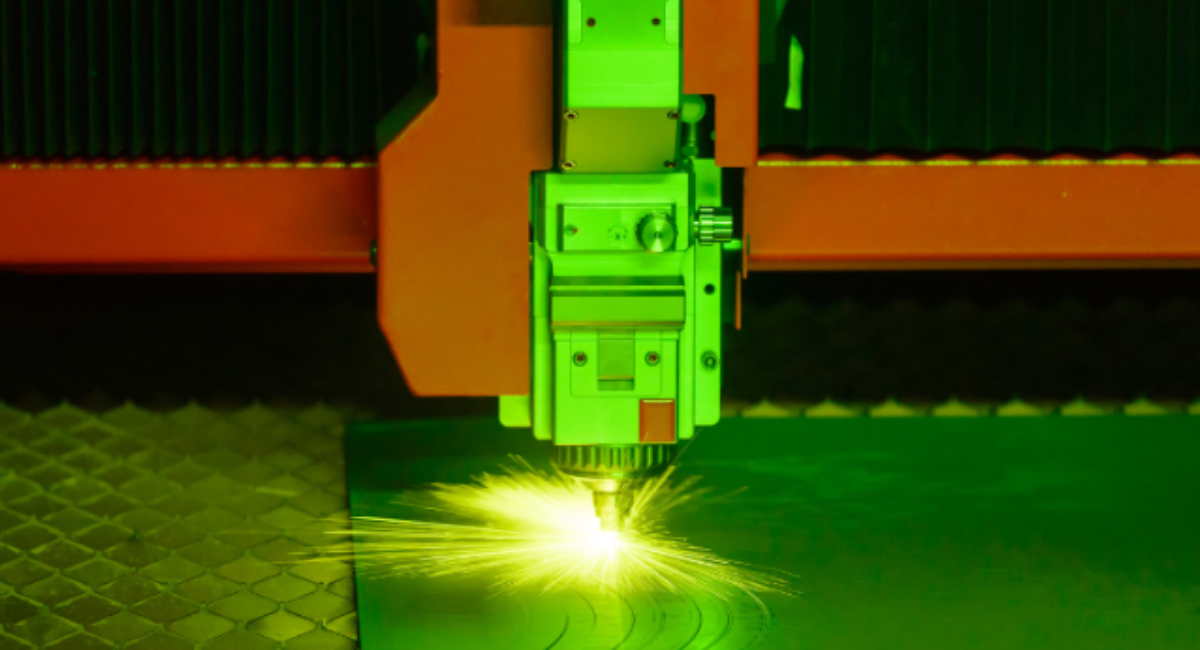
Green Laser Cutting Beam
Multiple laser diodes in direct diode lasers unite their outputs to generate multi-kilowatt power levels, providing an economical solution for metal cutting operations. The 0.9-1.1 micrometer wavelength of these lasers produces lower beam quality than CO2 and fiber lasers, which restricts their operation to thick steel cuts of up to 20 mm with reduced precision requirements. The straightforward design and affordable starting costs of these lasers make them appropriate for heavy industry fabrication when production speed takes precedence over edge quality.
Benefits of Sheet Metal Laser Cutting
- High Precision and Accuracy: The laser cutting process delivers precise results with tolerances reaching ±0.05 mm for thin materials while producing kerf widths of 0.1 mm. The process enables the creation of complex shapes and detailed designs because it eliminates the need for additional machining steps.
- Enhanced Cutting Speed: The cutting speed of thin sheets ranges from 10 to 50 meters per minute, depending on material thickness and laser power levels, which supports fast prototyping and large-scale manufacturing with short production cycles.
- Material Versatility: The process supports cutting operations on multiple metal types, including carbon steel, stainless steel, aluminium, copper, and titanium. The selection of assist gases between nitrogen for non-ferrous metals and oxygen for mild steel enables optimal edge quality for different materials.
- Minimal Heat-Affected Zone (HAZ): The focused laser beam delivers concentrated energy, creating a small heat-affected zone that preserves material properties and minimizes thermal distortion, particularly for heat-sensitive materials such as titanium.
- Cost-Effectiveness: The process of laser cutting proves cost-efficient because it eliminates tooling expenses and produces minimal material waste due to its narrow kerf width, compared to traditional punching and stamping methods.
- Non-Contact Process: The tool-free nature of this process prevents workpiece damage from mechanical stress and tool wear, leading to better cut quality and lower equipment maintenance costs.
Thickness Ranges, Materials, and Laser Types for Sheet Metal Cutting
The 4 kW CO2 laser achieves a cutting capacity of 20 mm for carbon steel, but fiber lasers operating at 6 kW with oxygen-assisted exothermic reactions can cut up to 25 mm. The high reflectivity of stainless steel makes fiber lasers a better choice for cutting this material, as they can process 30 mm thick material at 8 kW while using nitrogen to prevent oxidation.
The high electrical conductivity of aluminum restricts CO2 laser cutting to 10-15 mm at 4 kW, but fiber lasers can process materials up to 25 mm thick at 6 kW. The high reflectivity of brass and copper requires fiber lasers to achieve maximum cutting thicknesses of 12 mm when operating at 6 kW.
| Material | Laser Type | Power (kW) | Max Thickness (mm) |
| Carbon Steel | CO2 | 4 | 20 |
| Carbon Steel | Fiber | 6 | 25 |
| Stainless Steel | Fiber | 8 | 30 |
| Aluminum | Fiber | 6 | 25 |
| Brass | Fiber | 6 | 12 |
| Copper | Fiber | 6 | 12 |
Conclusion
Sheet metal laser cutting delivers precise results with high efficiency and a wide application range, enabling the cutting of steel and aluminium materials into complex shapes with precise dimensions. The process delivers optimal cost efficiency and material preservation because it produces small heat-affected zones while eliminating tool wear. By selecting the appropriate laser types and parameters, engineers can optimize outcomes for a wide range of materials and thicknesses, thereby enhancing overall manufacturing performance.
-

 BLOG11 months ago
hanime1: The Ultimate Destination for Anime Lovers
-

 ENTERTAINMENT1 year ago
Sflix: How It’s Changing the Way We Watch Movies and TV Shows
-

 BILLS1 year ago
Why Does My Instagram Reel Stop Getting Views After One Hour? How to Fix It?
-

 ENTERTAINMENT1 year ago
Crackstreams 2.0: The Future of Free Sports Streaming?
-

 BLOG12 months ago
Imginn: The Ultimate Tool to View Instagram Content Anonymously
-

 BLOG11 months ago
ThisVid: What Makes It Stand Out in the World of Online Videos
-

 BLOG1 year ago
NHentai.nef: Understanding the Popular Hentai Archive
-

 Technology1 year ago
Simpcitt: The Rise of a Unique Online Community