
LAW
How to Document Workplace Discrimination Effectively


Ready to build an ironclad case against your employer?
If you filed a claim against your employer for workplace discrimination, documentation is your best friend. In fact, without good documentation your claim is worthless.
And…
Most employees don’t even think about documenting until it’s too late.
Here’s the good news.
If you follow this documentation playbook, you can create a rock solid paper trail that will hold up in court.
In This Article:
- Why Documentation is So Important
- The 6 Types of Evidence to Collect
- How to Build Your Documentation System
- Mistakes That Ruin Your Documentation
Why Documentation is So Important
Remember…
Your Alabama workplace discrimination lawyer can only win your case with the evidence you give them. If you don’t document discriminatory actions, there’s no proof it ever happened.
And once an employment claim goes to court, it’s essentially your word against your employer’s.
Does your employer have an attorney? Of course, they do.
Did your employer just spend thousands of dollars building a corporation? You bet.
Employers win 99 times out of 100 in these situations.
Here’s something else to consider.The Equal Employment Opportunity Commission (“EEOC”) received 88,531 charges of workplace discrimination last year. That’s a 9% increase over FY2023.
But not every victim who files a charge with the EEOC wins their case.
Why?
Because they don’t have the documentation to prove it!
Sure, working with an experienced Alabama EEOC Lawyer can help harassment victims understand what evidence helps build a discrimination case. But your attorney is limited to what you can provide.
That’s why…
Documentation turns a complaint into actionable evidence employers can’t ignore.
Think of it this way…
If a boss says, “You’re not getting that promotion because you’re not ready,” that’s not discrimination.
But if you can prove your employer said that same thing to multiple white employees who got the promotion but not to you, that’s evidence of discriminatory intent.
The six types of evidence we cover below will help you build that case.
The 6 Types of Evidence to Collect
Some evidence is stronger than others.
When it comes to proving your claim of workplace discrimination, you’ll want to gather as much of the following evidence as possible.
Written Communication
Emails, texts, and instant messages are your friends.
They create a time-stamped record of everything your employer (or coworkers) say to you. And because the proof is in writing, it’s difficult for employers to refute.
Start saving everything now:
- Emails or texts containing racist, sexist, or discriminatory comments.
- Any email that proves you were treated differently than other employees.
- Instant messages related to being denied a promotion or opportunity.
- Any written threats or hostile communication.
Delete nothing. Forward emails and texts to your personal email account.
Incident Journal
This is arguably the most important documentation you can create.
A detailed journal should include the date, time, and location of incidents. It should note what was said or done, who said/did it, and if there were any witnesses.
Memory fades with time…
…but your notes shouldn’t.
This document can be kept in a notebook at home. Or, you can type it into a digital document that’s password protected.
Just be sure you don’t store anything on a work computer or device.
Witnesses
Introduce your lawyer to coworkers who can back up your story.
Employees who witnessed discriminatory treatment can testify on your behalf. Keep a list of coworkers who were present during incidents, comments they’ve heard, or have experienced similar issues.
Note: Don’t go rallying the troops. Simply make a list of coworkers who can verify your claims.
Performance Reviews
If your employer tries to say your performance wasn’t up to par, you’ll need something to prove otherwise.
Any performance reviews, awards or commendations, positive feedback from customers/supervisors, or sales/productivity numbers you can provide will help counter claims that you “didn’t deserve” a promotion or opportunity.
Include things like:
- Annual performance reviews
- Awards/recognition
- Positive emails from supervisors
- Sales numbers / productivity records
The last thing an employer wants is for a discrimination victim to turn around and prove they were performing just as good (if not better) than those who were not discriminated against.
Company Policies
We all know that employers have employee handbooks and standard operating procedures.
If you can obtain copies of your employer’s policies on discrimination, harassment, complaints, and/or progressive discipline, bring them with when you meet your lawyer.
Employers who fail to follow their own policies have a harder time defending their actions.
Medical Records
Employers who discriminate often cause real mental and physical health problems.
If you’ve sought medical treatment for your employer’s behavior, keep records of those appointments. Need anxiety medication after dealing with a racist boss? Keep those receipts.
Did you see a therapist to deal with the depression caused by your harasser? Keep proof.
According to the EEOC, retaliation charges now make up nearly 48% of all discrimination charges received by the EEOC. That’s a HARASSMENT you can prove with medical records.
How to Build Your Documentation System
Don’t take notes randomly.
When discrimination first starts, open a folder on your computer (outside of work) and title it “Employment Discrimination Documentation.”
Starting today, add everything we discussed above under dated folders.
Update it frequently.
Write in your journal after incidents occur. Better yet, take notes WHILE the incident is happening if possible. Within 24 hours is ideal.
Accuracy over quantity.
Employment cases are won based on consistency of documentation, not the quantity.
One or two detailed entries that can prove discriminatory intent will win you the case. A dozen half-assed notes that lack details probably won’t.
Mistakes That Ruin Your Documentation
Even with the best intentions, victims often make these rookie mistakes…
Storing documentation on work computers.
Employers have access to your work computer and phone. Don’t keep any records there.
Waiting too long to start documenting.
We can’t stress this enough. Write it down while it’s fresh!
Adding your opinion to what occurred.
Stick to the facts! “I felt…” type statements hurt more than they help.
Showing your employer your evidence.
This will only give them time to come up with a story to cover what they did.
Keeping digital records only.
Print out emails and keep hard copies of anything you think will help your case.
Wrapping Things Up
Employees who want to win their workplace discrimination case know that documentation is key.
Without a doubt, your employer has more money and legal firepower than you. Good documentation evens the playing field.
Here’s your quick take away:
- Start documenting as soon as you become a victim
- Collect the 6 types of evidence listed above
- Build a consistent documentation system
- Avoid the pitfalls that harm your case
- Meet with an Alabama employment discrimination lawyer ASAP
Your lawyer can’t help you if you don’t give them anything to work with.
And if you don’t properly document your case from the start, it will be nearly impossible to win.
Documentation doesn’t just help prove your case…
…it creates one.


Distracted driving has become one of the leading causes of traffic accidents across the United States, and central Pennsylvania is no exception. The corridors of I-83, I-81, and Route 322 that run through the Harrisburg metropolitan area see thousands of vehicles daily, and even a few seconds of inattention at highway speeds can lead to catastrophic consequences.
Pennsylvania law addresses distracted driving through specific statutes, but the legal landscape is more nuanced than many drivers realize. Understanding the law, how distracted driving is proven in court, and what options are available to accident victims is critical for anyone who has been injured by an inattentive driver.
Pennsylvania’s Texting While Driving Ban
Pennsylvania’s primary distracted driving statute is 75 Pa.C.S. § 3316, which prohibits the use of an interactive wireless communications device to send, read, or write text-based communications while operating a motor vehicle. This law covers texting, emailing, and browsing the internet on a phone while driving.
A violation of Section 3316 is a summary offense carrying a $50 fine. Notably, the statute is a primary enforcement law, meaning police officers can pull over a driver solely for observed texting. However, the law does not broadly prohibit all forms of cell phone use while driving. Talking on a handheld phone, for example, is not specifically banned under this statute for adult drivers, though it can still form the basis of a negligence claim if it contributes to an accident.
For commercial vehicle operators, federal regulations impose stricter rules. CDL holders are prohibited from using handheld devices entirely while driving, and violations can result in disqualification from operating commercial vehicles.
Types of Distracted Driving Beyond Texting
While texting receives the most attention, distracted driving encompasses a much broader range of behaviors. The National Highway Traffic Safety Administration categorizes distractions into three types.
- Visual distractions. Anything that takes your eyes off the road, including looking at a GPS device, reading a billboard, or glancing at passengers.
- Manual distractions. Anything that takes your hands off the steering wheel, such as eating, drinking, adjusting the radio, or reaching for objects.
- Cognitive distractions. Anything that takes your mind off the task of driving, including daydreaming, engaging in intense conversations, or being preoccupied with personal problems.
Texting is considered especially dangerous because it involves all three types of distraction simultaneously. But any form of inattention can contribute to an accident and create legal liability for the distracted driver.
Proving Distracted Driving in a Personal Injury Case
One of the challenges in distracted driving accident cases is proving that the other driver was actually distracted at the time of the crash. Unlike drunk driving, where blood alcohol content provides objective evidence, distracted driving often requires circumstantial proof.
Several types of evidence can help establish that distracted driving caused an accident. Experienced Harrisburg injury attorneys often pursue the following evidence when building these cases.
- Cell phone records. Subpoenaed phone records can show whether the driver was sending or receiving texts, browsing the internet, or on a call at the time of the crash. Detailed usage logs with timestamps are often the strongest evidence available.
- Phone app data. Many apps record usage timestamps that can be matched to the time of the accident. Social media posts, navigation app activity, and streaming service logs can all be relevant.
- Witness testimony. Eyewitnesses may have observed the driver looking down at a phone, eating, or otherwise not paying attention to the road before the collision.
- Police reports. Officers often note in their reports whether a driver admitted to being distracted or whether a phone was found in the driver’s hand or lap at the scene.
- Surveillance and dashcam footage. Video from nearby businesses, traffic cameras, or dashboard cameras can capture the moments leading up to the crash and show whether the driver was visually attentive.
Liability and Damages in Distracted Driving Cases
A driver who causes an accident while distracted is negligent under Pennsylvania law. Negligence requires proving that the driver owed a duty of care, breached that duty by engaging in distracted behavior, and that the breach directly caused the plaintiff’s injuries and damages.
In distracted driving cases, the duty of care is straightforward. Every driver has an obligation to operate their vehicle with reasonable attention to the road and traffic conditions. Using a phone, eating, or engaging in other distracting activities while driving can constitute a breach of that duty.
Victims of distracted driving accidents can pursue compensation for medical expenses, lost wages, pain and suffering, emotional distress, and other damages. In cases involving particularly egregious behavior, such as a driver who was livestreaming on social media at the time of a fatal crash, punitive damages may also be available.
Distracted Driving and Comparative Negligence
Pennsylvania’s modified comparative negligence rule under 42 Pa.C.S. § 7102 applies to distracted driving cases just as it does to any other personal injury claim. If the injured party is found to share some fault for the accident, their recovery is reduced by their percentage of negligence.
Defense attorneys in distracted driving cases may argue that the plaintiff was also distracted, was following too closely, or failed to take evasive action. Establishing the other driver’s distraction through strong evidence is essential to minimizing any fault assigned to the injured party.
Central Pennsylvania’s High-Risk Areas for Distracted Driving
Several areas in and around Harrisburg are particularly prone to distracted driving accidents.
- I-83 and I-81 interchange. The complex merging patterns and high traffic volumes in this area demand full attention, but drivers frequently use phones while navigating the interchange.
- Route 22/322 corridor. This heavily traveled route through the Harrisburg area sees a mix of commuter traffic and commercial vehicles, creating a high-risk environment when drivers are not fully focused.
- Downtown Harrisburg. Pedestrian traffic, one-way streets, and frequent intersections in the downtown area make inattentive driving especially dangerous for pedestrians and cyclists.
- Suburban commercial areas. Shopping centers and restaurant corridors in Camp Hill, Mechanicsburg, and Lower Paxton Township see frequent distracted driving incidents in parking lots and at intersections.
Taking Action After a Distracted Driving Accident
If you have been injured by a distracted driver in central Pennsylvania, taking prompt action is important. Seek medical attention immediately, report the accident to police, and avoid giving recorded statements to the other driver’s company before consulting with an attorney.
Preserving evidence of distracted driving is time-sensitive. Phone records, app data, and surveillance footage can be lost or overwritten if not preserved quickly. Acting early gives you the best chance of building a strong case and recovering the full compensation you are entitled to under Pennsylvania law.

Why Children’s Emotional Wellbeing Must Be a Priority in Ontario Separations
How conflict impacts children according to Ontario family research
Ontario family studies have repeatedly shown that exposure to parental conflict not the separation itself is the primary factor that harms children’s mental and emotional health. High-conflict separations have been linked to:
- Increased anxiety, behavioural issues, and emotional distress
- Difficulty adjusting to new routines and living arrangements
- Problems in school due to stress or lack of stability
- Long-term challenges with trust and relationships
Mediation helps reduce these risks by creating a space where parents focus on solutions, not arguments. This calmer environment allows children to remain shielded from the disputes that can otherwise disrupt their sense of safety.
Why mediation aligns with the “best interests of the child” standard under the Children’s Law Reform Act
Under Ontario’s Children’s Law Reform Act (CLRA), decisions affecting children must be guided by the best interests of the child. This legal standard prioritises:
- The child’s emotional wellbeing and development
- The benefit of maintaining strong relationships with both parents
- The need for low-conflict parenting arrangements
- The importance of safety, stability, and continuity in the child’s life
Mediation supports these principles by encouraging parents to co-operate, communicate effectively, and tailor parenting plans based on the child’s developmental needs. Unlike adversarial processes, mediation reduces the likelihood of one parent “winning” at the expense of the other, keeping the focus where it belongs on the child.
Benefits of protecting children from adversarial legal battles
Litigation can intensify parental conflict, prolong uncertainty, and put children in emotionally harmful situations such as:
- Watching their parents prepare for court
- Being asked to “take sides”
- Hearing negative comments about the other parent
- Experiencing long delays before parenting decisions are finalised
Mediation avoids these stressors by promoting calm discussions and problem-solving. Parents can negotiate schedules, communication rules, and responsibilities in a more private, respectful setting. This protects children from the emotional fallout of litigation and helps them adjust more smoothly to the new family structure.
The importance of maintaining routines, stability, and secure attachments
Children cope best during separation when their routines and relationships remain as consistent as possible. Mediation empowers parents to create realistic, predictable parenting plans that support emotional security by focusing on:
- Stable daily routines (school, activities, bedtime, meals)
- Maintaining strong attachments with both parents
- Providing reassurance and clear communication
- Reducing sudden changes or disruptions in the child’s life
By approaching decisions collaboratively, parents can build a plan that minimizes upheaval and reinforces the child’s sense of safety an essential foundation for healthy emotional development.
Mediation Reduces Parental Conflict the Biggest Risk Factor for Kids
Mediation encourages respectful communication instead of blame
Mediation creates a space where both parents are guided to speak respectfully, listen actively, and avoid personal attacks. Instead of revisiting old grievances, the process focuses on the present and the future what the children need, how schedules will work, and how to maintain stability. This shift from blame to collaboration reduces emotional strain on both parents and helps protect children from harmful tension at home.
Neutral guidance helps prevent arguments from escalating
A family mediator acts as a trained, neutral facilitator who ensures discussions remain constructive. When emotions run high, mediators use conflict-management techniques to redirect the conversation, clarify misunderstandings, and keep the discussion on track. This prevents arguments from spiralling into hostility, which means children are far less likely to witness or sense the emotional fallout of parental disputes.
Reducing hostility lowers children’s exposure to tension
Children are highly sensitive to tone, stress, and changes in their environment even when they aren’t directly involved in the conflict. By reducing hostility between parents, mediation helps create a calmer, more predictable atmosphere at home. This is especially important in Ontario families where co-parenting arrangements often require frequent communication; lowering conflict helps ensure those interactions remain child-focused and peaceful.
Parents stay focused on solutions rather than “winning”
Unlike litigation which can unintentionally encourage parents to “prove” they are right mediation promotes a mindset of teamwork. Parents are supported in identifying shared goals, such as maintaining stability for the children, protecting routines, and ensuring both parents remain involved in their children’s lives. This solution-based approach teaches parents to collaborate rather than compete, reducing the emotional pressure that children often feel during adversarial processes.
Children benefit from seeing parents work together
When children observe or simply sense that their parents can co-operate, communicate respectfully, and make decisions jointly, it provides them with reassurance and emotional security. This modelling of healthy conflict resolution also supports long-term resilience. Children learn that even during challenging transitions, their parents can work as a team to support their wellbeing.
Creating Child-Focused Parenting Plans That Support Emotional Stability
Age-appropriate parenting schedules
Children require different levels of support and routine depending on their age. Mediation allows parents to design schedules that respect developmental needs such as shorter, more frequent visits for younger children who rely on consistent attachment, or more flexible arrangements for teenagers who need independence and time for school, friends, and activities. By shaping schedules around the child’s stage of life, parents can reduce stress and help their children adjust more smoothly.
Routines that support sleep, schooling, and extracurricular activities
Children thrive with predictable routines, especially during family transitions. Mediation encourages parents to make decisions that stabilise daily life, including:
- Consistent sleep and bedtime routines in both homes
- Clear expectations for homework and school attendance
- Support for ongoing extracurricular activities
These shared commitments help children maintain a sense of normalcy and reduce the anxiety that often accompanies uncertain or irregular schedules.
Communication expectations between co-parents
A well-designed parenting plan includes guidelines for clear and respectful communication. Mediation helps parents outline:
- How information about the child will be shared
- How often parents will communicate
- Preferred methods (text, email, co-parenting apps)
- Boundaries around communication during transitions or emergencies
These expectations reduce misunderstandings, lower conflict, and reassure children that their parents can communicate effectively about their wellbeing.
Making child-centred decisions on holidays, travel, and transitions
Special occasions can be emotionally charged for children during separation. Through mediation, parents can develop thoughtful plans for:
- Holidays and school breaks
- Birthdays and family celebrations
- Travel permissions and advance notice
- Smooth transitions between households
By prioritising what will make holidays meaningful and stress-free for the children, parents can create stability in moments that might otherwise feel uncertain.
Plans that evolve as children grow and circumstances change
Life changes children grow, schedules shift, and family needs evolve. Mediation supports the creation of parenting plans that include built-in flexibility, allowing parents to revisit and revise arrangements without conflict. This forward-thinking approach ensures the plan remains responsive to:
- Changing developmental needs
- New school schedules
- Health concerns
- Relocation or job changes affecting parenting time
A dynamic, adaptable plan helps maintain emotional stability for the child throughout each stage of their growth.
Shielding Children from Legal Conflict and Courtroom Stress
Children are not put in the middle or asked to “take sides”
In high-conflict separations, children sometimes feel pressure spoken or unspoken to align with one parent or offer opinions about adult disputes. Mediation removes this burden entirely. Parents work with a neutral mediator, not through arguments or accusations, allowing children to remain children rather than becoming messengers, negotiators, or peacekeepers.
No need for children to be involved in court procedures
Litigation can involve interviews, assessments, or legal steps that may indirectly involve or impact children. While courts in Ontario aim to protect children, the legal process can still cause stress if children know their parents are fighting in court. Mediation keeps children far away from legal procedures, allowing their routines, relationships, and emotional worlds to remain stable and undisturbed.
Parents resolve disagreements in a private, supportive setting
Mediation sessions occur in a confidential environment whether in person or online where discussions stay between the parents and the mediator. This privacy protects children from overhearing stressful conversations, which can fuel anxiety, fear, or guilt. The supportive tone of mediation also helps parents stay calm, reducing the emotional spillover that children often feel at home.
Reduced anxiety and fear about family changes
Children frequently worry about what will happen after a separation where they will live, how often they will see each parent, or whether their family relationships will remain intact. When parents choose mediation, they are more likely to:
- Make decisions faster
- Communicate more peacefully
- Provide children with clear and reassuring information
This helps reduce uncertainty and fear, giving children the emotional stability they need to adapt to new routines.
Keeping adult issues between adults, not children
Children do best when they are protected from adult conflict, especially during a separation. Mediation supports this by:
- Keeping discussions private
- Preventing heated confrontations
- Helping parents present calm, unified explanations to their children
- Ensuring decisions are made without involving or burdening the child
By separating adult issues from a child’s daily life, mediation allows children to focus on being children learning, playing, and maintaining healthy relationships with both parents.
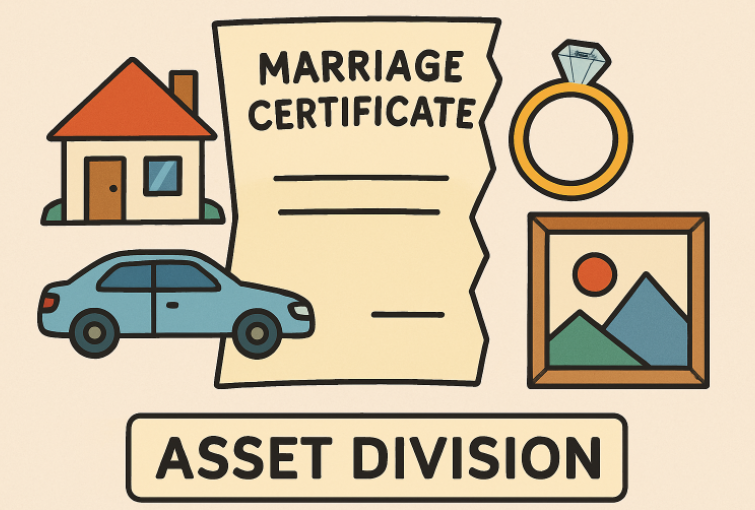
High-net-worth divorces are complex, particularly when luxury assets are involved. Whether you own a designer art collection, luxury vehicles, high-value real estate, or family jewels, navigating asset division in a divorce can be both legally and emotionally complicated. Working with the right professionals, such as a qualified divorce attorney near Encinitas, is essential for protecting your interests and ensuring a fair outcome.
The stakes are high in these situations. Emotions, finances, and prestige can all be tied to prized possessions. Understanding how the courts handle the division of luxury assets and what you can do to prepare can lay the groundwork for a smoother process. Each state has its own set of rules for asset division, making sound legal guidance indispensable.
Understanding Marital vs. Separate Property
The distinction between marital and separate property is foundational in determining who keeps what during a divorce. Marital property typically includes assets acquired during the marriage and is subject to division. Separate property, on the other hand, generally includes anything owned before the marriage or received as an individual gift or inheritance. However, commingling of assets or changes in ownership during the marriage can render even originally separate luxury assets subject to division.
Courts look at how and when luxury assets were acquired. If, for example, a luxury yacht was bought with funds from a jointly owned business, it would likely be considered marital property. Keeping clear records and establishing ownership documentation early can be critical in these situations.
How Are Luxury Assets Valued?
Valuing luxury assets is a complex process that should not be underestimated. Unlike traditional assets, high-net-worth items, such as rare artwork or vacation homes, require specialized appraisals conducted by industry experts. Professional appraisers consider various factors, including market trends, provenance, condition, and location, when determining value. Valuation errors can lead to significant financial losses or lengthy legal disputes.
Appraisal reports often hold weight in court and can be challenged, so it’s crucial to engage credible professionals. In contentious situations, each party may hire its own appraiser to provide an independent valuation.
Common Types of Luxury Assets in Divorce
Luxury assets come in many forms, each posing its own challenges during divorce proceedings. Some commonly disputed items include:
- Primary and vacation homes (often with significant equity, historical value, or unique features)
- Boats and private aircraft
- Luxury automobiles and collectible vehicles
- Fine art collections, antiques, and rare books
- Jewelry and precious metals
- Business interests, including private equity and closely held companies
Each of these assets may require not only valuation but also special considerations for transfer of ownership, tax consequences, and ongoing maintenance after the divorce is finalized.
The Role of Prenuptial and Postnuptial Agreements
Prenuptial and postnuptial agreements are powerful tools for clarifying ownership of luxury assets in the event of divorce. A well-drafted agreement that specifies who retains control of specific valuable items can streamline divorce proceedings and minimize conflict. Without such agreements, luxury items acquired during the marriage may be considered marital property and subject to division.
Even with agreements in place, disputes can arise over the interpretation or enforceability of certain provisions, especially if there’s evidence of coercion or incomplete disclosure at the time the agreement was signed. Legal expertise is usually needed to enforce, challenge, or clarify these contracts when substantial assets are at stake.
Strategies for Protecting Your Interests
If you are facing a divorce with significant luxury assets, preparation is crucial. Here are several strategies to help protect your interests:
- Maintain detailed records of asset acquisition, maintenance, and value changes over time
- Avoid commingling separate property with marital funds to limit future disputes
- Work with qualified appraisers to establish accurate, defensible valuations
- Consult experts in tax, real estate, and business if your holdings are diverse or international in nature
- Negotiate, if possible, rather than litigate, as court decisions may be less predictable with unique or hard-to-value items
When to Seek Expert Help
The more valuable and unique your assets, the more advisable it is to build a team of experienced professionals. In addition to your legal representation, you may need forensic accountants, tax advisors, business valuation experts, or real estate appraisers. Their input can be crucial for dividing complex holdings, uncovering hidden assets, or ensuring ongoing interests are preserved.
Final Thoughts on Luxury Assets and Divorce
Dividing luxury assets is rarely straightforward. It calls for detailed knowledge of law, finance, and the value of unique possessions. The sooner you involve knowledgeable professionals, the better positioned you will be to protect your interests and reach a resolution that reflects the true worth of what you’ve built. With planning and the right support, you can emerge from a high-net-worth divorce with your most important assets and your future intact
-

 BLOG8 months ago
hanime1: The Ultimate Destination for Anime Lovers
-

 ENTERTAINMENT10 months ago
Sflix: How It’s Changing the Way We Watch Movies and TV Shows
-

 ENTERTAINMENT9 months ago
Crackstreams 2.0: The Future of Free Sports Streaming?
-

 BILLS10 months ago
Why Does My Instagram Reel Stop Getting Views After One Hour? How to Fix It?
-

 Technology11 months ago
Simpcitt: The Rise of a Unique Online Community
-

 BLOG8 months ago
Imginn: The Ultimate Tool to View Instagram Content Anonymously
-

 80s11 months ago
Favorite 100 Songs of the 80s: (#1) Michael Jackson – Billie Jean
-

 BLOG10 months ago
NHentai.nef: Understanding the Popular Hentai Archive