
BUSINESS
How Structured Business Systems Can Boost Growth

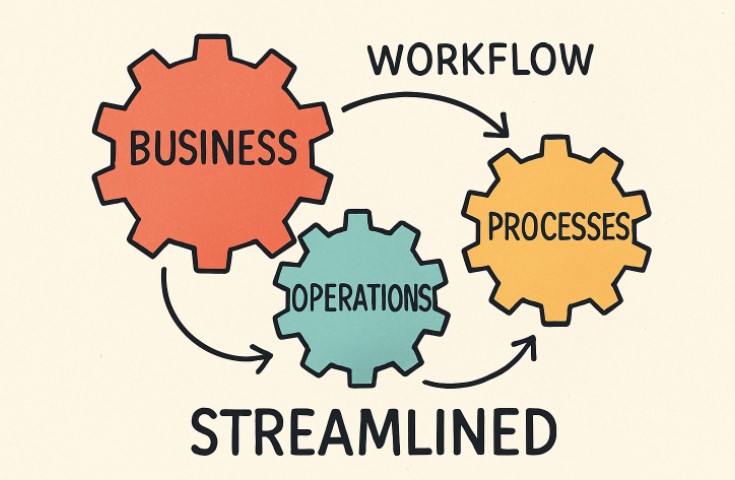
Implementing structured business systems can significantly enhance a company’s growth potential. By establishing clear processes, roles, and workflows, organizations can reduce inefficiencies and ensure consistent quality across all operations. Well-defined systems also make it easier to onboard new employees, manage resources effectively, and track performance metrics. This level of organization allows businesses to scale more smoothly, respond to market changes efficiently, and maintain stability even during periods of rapid expansion.
In addition, leveraging tools that support systematized operations can further amplify these benefits. For instance, Portocol provides a framework for managing tasks, workflows, and communication in a unified way, helping teams stay aligned and focused on strategic goals. By combining structured processes with practical solutions, companies can create an environment where innovation and growth thrive, ultimately driving long-term success while minimizing operational bottlenecks.
Enhancing Operational Efficiency
Well-organized processes create a solid operational backbone for any business. Rather than relying on ad hoc procedures, systematically designed workflows reduce human error, eliminate redundant tasks, and maintain high-quality standards. For example, setting up a centralized data repository prevents departments from operating in isolation and improves the accuracy and timeliness of information flow. With transparent processes and reliable information sharing, companies can deliver faster service and foster cross-functional collaboration.
Organizations with mature operational systems often see increased productivity and morale, as team members are empowered to focus on value-adding tasks instead of navigating unnecessary obstacles. Standardizing routine activities not only ensures compliance but also frees up creative capacity for innovation and problem-solving.
Scalability Through Structured Systems
For growing businesses, scalability is a vital consideration. Systems that work well for a small team or a single office can quickly become constraints as the organization expands. Structured systems provide a scalable framework that adapts to changing needs. They ensure that essential functions, such as HR, finance, and R&D, are consistently supported as headcounts grow or markets shift. Research by Intuit found that when businesses invest in building out structured business functions, their probability of achieving high growth rises markedly.
As structure increases, so does the ability to delegate responsibilities with confidence and maintain performance across dispersed teams. Having repeatable processes in place preserves company culture and quality, even as new employees and markets are brought on board.
Integrating Technology and Automation
Leveraging technology within structured systems amplifies their potential for impact. Cloud-based management solutions are particularly valuable, providing data harmonization, workflow automation, and improved compliance. These digital tools offer flexible access and real-time data sharing across departments, breaking down silos and connecting disparate resources.
Automation not only saves time but also reduces the likelihood of manual errors, making routine operations more reliable and predictable. Moreover, adopting these modern technologies enables organizations to keep pace with regulatory changes and market demands.
Regular System Reviews and Employee Involvement
Long-term success with structured systems requires ongoing evaluation. Scheduling regular reviews of existing processes, software updates, and security protocols is key to identifying inefficiencies and preempting potential bottlenecks. Companies should proactively seek employee feedback, as those working within the systems daily often have the clearest perspective on what works and what needs improvement.
Managers and owners should foster an environment where feedback is valued and acted upon. Regular training sessions further help staff maximize the system’s benefits while staying ahead of emerging trends and industry best practices.
Case Study: Bayer’s Structural Reinvention
Bayer’s 2023 transformation demonstrates the power of reimagining a company’s systems for greater agility and growth. The life sciences giant, under CEO Bill Anderson, adopted “Dynamic Shared Ownership,” eliminating layers of management and empowering self-directed teams to work in 90-day cycles. This structural shift accelerated decision-making and innovation, giving the company an edge in responding to challenges without bureaucratic delays. Bayer’s journey highlights how bold restructuring can unlock greater accountability and set the stage for exponential growth, offering a blueprint for other organizations facing similar pressures.
Conclusion
A commitment to structured business systems equips companies to navigate complexity and seize future opportunities. Strong systems foster efficient operations, effortless scaling, and continuous improvement fueled by employee engagement and technological innovation. When paired with regular reviews and inspired by examples like Bayer, these systems ensure that every area of the business operates at its highest potential. Building a structured, adaptive organization is not only the best defense against uncertainty but also the surest path to sustained growth and success.

Want to get more from your team without working them harder?
It could be staring you right in the face each and every day… your office environment. Many business owners consider office furniture an overhead cost. Furniture is something you buy, toss out the box, and forget about.
But here’s the thing:
A properly designed office space is one of the most overlooked investments you can make in your business. Ergonomic desks and strategic placement/furniture can affect:
- Employee productivity
- Staff retention
- Bottom-line profits
This article will explain the reasons why your office fit-out is an investment.
Here’s what’s inside:
- Why Office Setup Is a Strategic Business Issue
- The Hidden Cost of Poor Workplace Design
- How Ergonomic Desks Change Everything
- Building a Workspace That Drives Performance
- The ROI of Getting It Right
Why Office Setup Is a Strategic Business Issue
Most companies treat their office setup like a one-off purchase.
That’s a huge mistake.
Your employees sit in chairs and at desks for 8+ hours per day. Their desk setup influences their performance outright. Cut corners here and you will regret it — on line items other than invoices.
Selecting the right office desks for your team is the first step toward creating a productive workspace. Good desks promote posture, alleviate strain and allow staff to stay comfortable during long days at the office. The Bureau of Labor Statistics even reports that work-related MSDs account for nearly 30% of all occupation injuries that result in time away from work.
Okay, when you put it like that…An office desk is more than furniture. It’s infrastructure.
The Hidden Cost of Poor Workplace Design
Here’s something most business owners don’t see:
Poor office environments are expenses slowly hemorrhaging money from your company. They manifest as sick days, missed opportunities, low employee morale, and high turnover.
Some of the biggest hidden costs include:
- Lost productivity: Tired and uncomfortable staff make more errors and work slower.
- Higher absenteeism: Back pain, neck strain and headaches lead to more sick days.
- Staff turnover: Employees leave companies that don’t invest in their wellbeing.
- Reduced engagement: Uncomfortable workers mentally check out long before they quit.
The really scary part?
Lots of dollars are spent trying to explain away these costs as “the wrong hires” or “a bad month”. Nine times out of ten the real problem is the chair, the desk or the lighting. Solve the environment, and most of these problems disappear on their own.
How Ergonomic Desks Change Everything
Ergonomic desks are the centrepiece of any well-planned office.
Why? Because everything happens at the desk. Typing happens at your desk. Meetings take place at your desk. Brainstorming happens at your desk. So if your desk is too high or too big or too small, everything else is affected.
A good ergonomic desk does a few important things:
- Supports the natural posture of the body
- Allows for both sitting and standing positions
- Reduces strain on the back, neck and wrists
- Helps maintain focus throughout the day
Researchers at the University of Leicester discovered ergonomic office design could boost productivity by 40%. That isn’t insignificant — that’s an edge on your competition disguised as a chair.
And it’s not just productivity that improves…
Comfort directly impacts creativity. When employees are not distracted by back pain or sore wrists, they have the brain power to problem solve and think creatively.
Building a Workspace That Drives Performance
Nice furniture can definitely help, but there are many factors that contribute to an awesome office setup.
Here’s what to focus on…
Adjustable Height Desks
Sitting all day is one of the worst things for your team’s health.
Height adjustable desks (also known as sit stand desks) allow users to alternate between sitting and standing positions during the day. This constant movement helps avoid muscle stiffness associated with prolonged sitting.
The benefits include:
- Better circulation
- Reduced back pain
- Higher energy levels
- Increased focus
Smart Layout and Flow
The layout of your office matters just as much as the furniture.
Great layouts position related teams near each other, enable collaboration when needed and provide people with quiet space to concentrate. Bad layouts make staff walk longer distances, interrupt each other frequently and get distracted throughout the day.
Think about:
- Traffic flow: People shouldn’t have to cross busy paths constantly.
- Noise zones: Loud spaces should be separated from focus areas.
- Collaboration spots: Teams need easy places to meet and talk.
Lighting and Environment
This one is often overlooked but it has a huge impact.
Dim lighting strains the eyes, leads to headaches, and results in drooping shoulders. Bright lighting keeps employees attentive and energized. Whenever possible, position workspaces to take advantage of natural light. If that’s not an option, invest in high-quality artificial light. Combine great light with great ventilation and temperature control, and you’ve got an office your employees won’t mind being stuck in.
The ROI of Getting It Right
Let’s talk about the money side.
You WILL save money when investing wisely in a planned office system. While you spend a little more money upfront, you save thousands in the long run by:
- Fewer sick days
- Lower staff turnover
- Higher productivity
- Better quality work
- Happier customers
The math couldn’t be easier. If an ergonomic desk that will keep your employee healthy costs a few hundred dollars more but saves sick days and prevents them from quitting, you’ve paid for itself many times over. And that’s just one employee.
Now multiply that across a whole team.
Quick recap of why it works:
- A well-planned office is a strategic asset, not an expense
- Ergonomic desks directly impact productivity and health
- Smart layouts reduce friction and boost focus
- The ROI shows up in retention, output and morale
Bringing It All Together
Office setup is one of the most overlooked business advantages out there.
The majority of businesses treat their workspace as an afterthought. While they stand still, businesses who embrace it are slowly gaining ground – healthier teams, less attrition, improved monthly performance.
You don’t have to fix everything at once. Change the desks. Change the chairs. Lighting and configuration. Each change builds on the other and you will see results quicker than most anticipate.
The bottom line?
Having an efficient office space doesn’t just look and feel good; it isn’t trendy. It gives your business a competitive edge on a daily basis.

First impressions happen fast.
When a prospect enters your building, they form an immediate opinion about your brand before they talk to the first person. And most of their opinion is based on one factor… How clean and organized it is. A clean lobby, shiny floors, and fresh common spaces show people you care about your building. A dirty, sloppy environment says the exact opposite.
Here’s the problem:
The majority of property managers and business owners view cleaning as some mundane “tick the box” expense. However, the reality is that the cleanliness of your premises is directly linked to the perception of your brand. Do it right and you create trust. Do it wrong and you destroy your reputation before you’ve even begun.
Let’s dig into why this matters so much…
What you’ll walk away with:
- Why Cleanliness Shapes Your Brand
- What Well-Managed Premises Actually Look Like
- How To Keep Your Standards High
Why Cleanliness Shapes Your Brand
Think of your premises as a silent salesperson.
Each and every visitor, tenant, or customer who enters your building is silently assessing your brand based on what they see, smell and touch. Whether you like it or not, they are forming an opinion. A clean, well-maintained building says “we pay attention to detail.” A dirty one says “we don’t care.”
The numbers back this up too.
According to a survey conducted by the International Sanitary Supply Association, 94% of respondents said that they would not return to a business if they encountered dirty restrooms. Let that sink in for a moment. One dirty bathroom has the potential to drive nearly every visitor right into the hands of your competition.
It gets worse.
Studies have also found that 52% avoided going to a business because the exterior looked dirty. Consumers are making judgements about your brand before they even walk through the door. Which is why keeping apartment complexes tidy and clean is so important. Enlisting the help of professional Strata Cleaning Perth teams for bigger complexes and communal living is essential to keeping shared spaces looking great. That way everyone who visits or lives there has that great first impression. Proper maintenance will ensure your reputation stays intact.
Here’s the bottom line:
Cleanliness isn’t just important for sanitary purposes. It helps with customer trust, too. When a space is clean and appears well maintained, customers will trust that the business operating it is professional, dependable and worth visiting.
What Well-Managed Premises Actually Look Like
So what does a well-managed property actually involve?
Much more than simply sweeping and mopping. Apartment complex cleaning and building maintenance ensures that all common areas are cleaned routinely and with excellence. Residents associate that attention to detail with your brand.
Here are the key areas that make the biggest impression:
- Entrances and lobbies: This is what people see first. If your entrance and lobby are clean and welcoming, people will expect the rest of your property to be the same.
- Common areas: Hallways, staircases, common lounges. These areas have lots of traffic and become dirty very quickly.
- Bathrooms: As evidenced by the bathroom grades stats, nothing kills your reputation faster than a dirty restroom. Keep them clean.
- Windows and glass: Streaky, fingerprinted windows look gross. Clean glass has brightness and attention.
- External areas: Parking lots, sidewalks, gardens etc. They factor into the equation as well. Litter and weeds drive people away before entering.
Notice the pattern here?
Each and every one of these is focused on a person’s experience when dealing with your property. And each interaction they have will impact their view of your brand.
But there’s another layer to this…
Uniformity is key. If your building is immaculate one week and dirty the next week it sends mixed signals. People want consistency. They want to feel like they can trust you. A clean building shows that you have your act together daily. It’s the difference between a respected brand and one that people stop supporting silently.
Good premises maintenance safeguards your investment. When your property is cleaned regularly and kept in good repair, it retains its value, prevents expensive damage and remains appealing to both tenants and customers. That’s good news for your reputation and your profits.
How To Keep Your Standards High
Keeping premises well-managed isn’t a one-time job. It’s an ongoing commitment.
The best part is that living simply doesn’t mean you can’t have high standards. It just means you can enjoy high standards without letting it consume your life. Here’s how to do just that.
Create A Cleaning Schedule
Start with a clear routine.
A regular cleaning schedule eliminates the guesswork. It ensures that high traffic areas are cleaned frequently, and that nothing is overlooked. Separate it by room / frequency:
- Daily: Entrances, restrooms, and high-touch surfaces
- Weekly: Common areas, windows, and floors
- Monthly: Deep cleans and outdoor maintenance
Once you establish a schedule, your facilities remain clean rather than flipping between immaculate and dirty.
Set Clear Standards
Everyone needs to know what “clean” actually means.
Ambiguous expectations produce erratic outcomes. Establish well-defined expectations for each category. Photograph what you consider a “clean” area and hold them up as examples. Your team or cleaning company will know precisely what you expect and there will be no gray areas.
Bring In The Professionals
Here’s the honest truth…
Keeping your premises well maintained is tough work. Most business owners and property managers just don’t have the time. That’s why professional cleaners exist. They have the tools, the know-how and the procedures to keep your property spotless.
A good cleaning team will:
- Handle the heavy lifting so you don’t have to
- Keep every area to a consistent standard
- Free you up to focus on running your business
Find someone who knows that your well-run premises are an extension of your brand. When you do that, cleaning becomes less of a headache and more of an asset.
Final Thoughts
Your premises and your brand reputation are tied together. You can’t separate them.
A clean floor speaks volumes to customers about your brand. It says you’re professional and you care about details. A dirty restroom screams, “Don’t trust this brand.” We all know that statistics show customers evaluate your business by how well you keep your facilities.
To quickly recap:
- Cleanliness directly shapes how people see your brand
- Well-managed premises build trust and protect your investment
- A schedule, clear standards, and the right professionals keep you consistent
Buying into a properly managed premises isn’t an expense. It’s one of the wisest reputation investments you’ll ever make. Treat your space right and your space will treat your brand right.

Want to lead teams and grow businesses without flying blind?
At some point in their development, all future business leaders reach a fork in the road. Decisions become larger. Higher risk. Instinct alone won’t work. Enter Business Frameworks.
Frameworks are the proven thinking tools that managers use to:
- Break down complex problems
- Make smarter decisions
- Spot opportunities before competitors do
The best part? You don’t have to wait 20 years to master them. You just have to choose wisely.
This guide covers the core frameworks every manager needs to know.
Let’s get into it.
What’s covered:
- Why Frameworks Matter For Modern Managers
- 6x Business Frameworks Every Aspiring Manager Should Know
- How To Build These Skills The Right Way
Why Frameworks Matter For Modern Managers
Frameworks turn messy business problems into clear, structured decisions.
Consider this… You walk into a meeting as a new manager and someone throws a large scale strategic question at you. How are you going to answer? Without a framework your answer will be a shot in the dark. With a framework you have a battle tested method for working through the issue and communicating it to others.
That’s what makes these tools so powerful. They filter out the noise and give you a repeatable process for making smart decisions.
And you know what? There’s a huge need for it. The U.S. Bureau of Labor Statistics predicts that management occupations will add about 1.1 million openings per year from 2024-2034. There are seats aplenty waiting to be filled with competent leaders.
Most people miss this bit – it’s not just big corporate folk who use these frameworks. Weekly, entry-level managers pull these out. The sooner you know them, the quicker you’ll rise.
The best part? You don’t have to go broke attending school on-campus. Asynchronous online business courses allow students to learn real management skills at their own pace and stick with their day job. You can earn an online bachelor’s degree in business management by studying frameworks, case studies, and strategy – all while skipping your morning classes. Who wants to sit in a classroom at 9am? Courses like these are the reason asynchronous online learning is so popular.
Now let’s get into the actual frameworks.
6x Business Frameworks Every Aspiring Manager Should Know
These are the frameworks you’ll actually see used in boardrooms and startups and strategy presentations every day. Master these and you will think like a manager.
SWOT Analysis
SWOT analysis is the granddaddy of all business frameworks. And for good reason, it has endured the test of time.
SWOT stands for:
- Strengths — what your business does well
- Weaknesses — where you fall short
- Opportunities — external trends you can ride
- Threats — external risks you need to watch
What makes SWOT so magical? It’s simplicity. In 30 minutes you can assess where a business is at and what to do about it. Whether you’re launching a new product or hiring new staff (or plotting your career move).
SMART Goals
Vague goals get vague results. SMART goals fix that.
A SMART goal is:
- Specific — clearly defined
- Measurable — has numbers attached
- Achievable — realistic for the resources
- Relevant — tied to bigger objectives
- Time-bound — has a deadline
SMART Goal: Instead of saying “grow sales”, say “grow online sales by 15% by Q3”. See how different they are? One you can measure. The other is just wishful thinking.
Every manager should be able to write objectives like this. This is how you lead a team that performs.
Porter’s Five Forces
Trying to figure out if an industry is worth competing in? Porter’s Five Forces will help.
Created by Harvard professor Michael Porter, this model examines five forces that determine how profitable an industry will be:
- Threat of new entrants
- Bargaining power of suppliers
- Bargaining power of buyers
- Threat of substitutes
- Competitive rivalry
The greater these forces, the less profitable it is to operate in that industry. Savvy managers will assess Porter’s Five Forces before entering a new industry or adding a new product line.
PESTLE Analysis
PESTLE zooms out and looks at the bigger picture forces affecting a business.
PESTLE covers:
- Political — government policy and stability
- Economic — inflation, interest rates, growth
- Social — consumer trends and demographics
- Technological — emerging tech and disruption
- Legal — laws and regulations
- Environmental — sustainability and climate
This is your scanner. Use it every six months or so to ensure your strategy is still fitting with your surroundings. Markets change quickly and PESTLE allows you to remain on top.
The 4 P’s of Marketing
Marketing is every manager’s job and the 4 P’s allow you to think about it cleanly.
The 4 P’s are:
- Product — what you sell
- Price — what you charge
- Place — where you sell it
- Promotion — how you tell people about it
Get all four of these pieces correct and you’ve got a fighting chance to grow your business. Miss just one and growth becomes exceedingly difficult.
OKRs (Objectives and Key Results)
OKRs are the method companies such as Google, Intel and LinkedIn use to align thousands of employees.
Here’s the simple version:
- Objective — a bold, qualitative goal
- Key Results — 3-5 quantifiable results that demonstrate the goal is being achieved
OKRs work because they help relate daily work to the overall mission. Any young aspiring manager who learns this framework early will quickly rise above the rest — most teams need someone who can communicate how overarching goals break down into actionable metrics.
How To Build These Skills The Right Way
You learn a lot by reading about frameworks. But you grow by using them.
There are a few proven ways to build the skill:
- Practice on real problems — choose something that is occurring at your workplace and do a SWOT or PESTLE on it
- Study existing case studies — research how major corporations have leveraged these frameworks during significant transformations
- Enroll in a course — classrooms will require you to implement each framework rather than glossing over theory
Your path should be as structured as possible. Research by the World Economic Forum showed that 63% cite skill gaps as the biggest obstacle to transforming businesses through 2030. Managers with experience in these programs are few and companies are willing to go to battle over them.
Bringing It All Together
Management frameworks are the magic potion for anyone who wants to become a manager. They convert complexity into simplicity, and intuition into actions. Learn a few—SWOT, SMART, Porter’s, PESTLE, the 4 P’s and OKRs—and you’ll start speaking management senior-manager-ese before your grandma knows what’s happening.
The path is straightforward:
- Pick one framework
- Apply it to a real problem this week
- Move on to the next one
Build up those skills over time and you’ll have a toolbox that will benefit you for your entire career. Those future managers that come out on top aren’t the ones who know the most… They’re the ones who do something with what they know.
-

 BLOG11 months ago
hanime1: The Ultimate Destination for Anime Lovers
-

 ENTERTAINMENT1 year ago
Sflix: How It’s Changing the Way We Watch Movies and TV Shows
-

 BILLS1 year ago
Why Does My Instagram Reel Stop Getting Views After One Hour? How to Fix It?
-

 ENTERTAINMENT12 months ago
Crackstreams 2.0: The Future of Free Sports Streaming?
-

 BLOG12 months ago
Imginn: The Ultimate Tool to View Instagram Content Anonymously
-

 BLOG11 months ago
ThisVid: What Makes It Stand Out in the World of Online Videos
-

 Technology1 year ago
Simpcitt: The Rise of a Unique Online Community
-

 BLOG1 year ago
NHentai.nef: Understanding the Popular Hentai Archive