
EDUCATION
The Real World Review: Can It Really Replace a College Education?


In recent years, online learning has exploded, and few platforms have drawn as much attention or controversy as The Real World (TRW), an online education ecosystem created by entrepreneur and influencer Andrew Tate. Marketed as a digital “university of success,” TRW claims to teach practical skills that lead directly to income for its members, promising you the knowledge to earn through copywriting, e-commerce, investing, and freelancing, all without the debt, delays, or outdated theory of traditional college education.
Its bold promise invites a big question: Can The Real World really replace college?
Below, we take an analytical look at the platform: its structure, effectiveness, credibility, and how it compares to the modern university system, so you can decide which path best serves your goals.
1. What Exactly Is “The Real World”?
Launched as the successor to Tate’s earlier Hustler’s University, The Real World is an online subscription platform offering business and money-making courses, mentorship, and community learning.
For around $49.99 per month, members gain access to digital classrooms that cover dozens of topics, such as:
- Freelance copywriting and digital marketing
- E-commerce and dropshipping
- Crypto and stock investing
- AI business strategies
- Mindset and personal discipline
Unlike universities that emphasize theory, TRW positions itself as practical and results-driven, promising that students can start making money quickly if they apply its lessons.
The platform hosts hundreds of thousands of members worldwide and claims that many have built six-figure incomes using its teachings.
2. The Core Philosophy: Action Over Theory
TRW centers on the idea that modern education is outdated; graduates leave burdened with debt and lacking marketable skills. TRW skips theory for direct, income-producing action.
Every course emphasizes execution: daily steps, business blueprints, and feedback from active practitioners instead of academics. Members are told to build their own income streams rather than chase traditional employment.
This philosophy resonates with many young people disillusioned by the slow, expensive, and uncertain path of college education.
3. What TRW Does Well
a. Focused, Practical Skills
Unlike a four-year degree, TRW zeroes in on ways you can generate income in real-world scenarios. Rather than studying subjects that may not relate to your future job, you learn how to write persuasive sales copy, build e-commerce stores, or manage online ad campaigns—skills designed to increase your earning potential immediately.
For students seeking direct, market-relevant skills, this approach is efficient. Many online reviews highlight that TRW’s lessons are immediately actionable, allowing users to start small projects or side hustles within weeks.
b. Accessibility and Affordability
A college degree can cost $30,000 to $100,000 or more and take years to complete. TRW costs less than $50 a month, requires no admission process, and can be learned at one’s own pace.
This affordability and flexibility open doors for you if you’re in a developing country or if traditional education is out of reach or too expensive, offering a pathway to skill-building and income you might otherwise miss.
c. Community and Mentorship
TRW is not just a video library; it is a community-driven ecosystem where you can interact through group chats, mentorship sessions, and live calls with instructors. Many students find that this community helps them stay accountable and motivated as they progress.
Unlike traditional online courses, where learners often drop out, TRW’s competitive and energetic culture encourages consistency and self-discipline, values often missing in university environments.
d. Entrepreneurial Mindset
TRW’s teaching style emphasizes your personal agency: you are encouraged to take control of your time, income, and mindset. If you feel trapped by the conventional 9-to-5 path, the platform aims to help you shift to independence, self-education, and financial autonomy.
In this sense, TRW functions as a mindset training academy as much as a skills platform.
4. Where The Real World Falls Short
Despite its appeal, TRW also faces valid criticism, which you should consider carefully before deciding if it aligns with your educational needs and career goals.
a. No Accredited Credentials
TRW’s main limitation is its lack of accreditation; it grants no recognized diplomas or degrees. For law, medicine, academia, or engineering, TRW is not relevant.
Some employers value portfolios over credentials, but many still require degrees for hiring. TRW cannot substitute for the formal education system in these cases.
b. Lack of Transparency
TRW showcases many success stories: screenshots of earnings, glowing testimonials, and viral videos of students who made money. However, independent verification of these claims is rare. Real data on average income outcomes, dropout rates, or long-term business sustainability. Without that transparency, prospective students should approach its marketing claims with healthy skepticism.
c. Heavy Reliance on Self-Motivation
While self-paced learning is convenient, it also demands discipline. TRW does not hold your hand; it expects members to implement lessons, market themselves, and deal with setbacks. Many join expecting quick profits and leave disappointed when they realize success still requires consistent effort, risk, and time.
d. The Shadow of Controversy
Because The Real World is tied to Andrew Tate, a polarizing public figure, the platform carries his reputation with it. Critics argue that some of its messaging around masculinity, wealth, and power can be off-putting or ideological.
In late 2024, reports confirmed that hackers breached TRW’s database, leaking user names, emails, and chat logs. Such incidents raise questions about platform privacy and management.
5. TRW vs. College: A Head-to-Head Comparison
| Cost | ~$50/month | $20,000–$100,000 total |
| Duration | Self-paced | 3–4 years minimum |
| Goal | Financial freedom, entrepreneurship | Academic mastery, career qualification |
| Learning Style | Practical, action-based | Theoretical, structured |
| Credential Value | None (unaccredited) | Widely recognized degree |
| Community | Online mentorship network | Campus life, academic clubs, alumni |
| Career Fields | Freelance, business, digital economy | Professional, corporate, research |
| Risk Level | High (business failure, volatility) | Lower, though job markets vary |
| Scalability | Rapid start, but unpredictable results | Slower start, but predictable outcomes |
From this comparison, one truth is clear: TRW and college are built for different kinds of learners.
- If you’re entrepreneurial, independent, and driven by immediate financial results, The Real World might offer far more value than a degree in sociology or communications.
- But if you aim to be a doctor, engineer, or policy analyst, skipping college for TRW would be disastrous.
6. The Hybrid Future: Why It Doesn’t Have to Be Either/Or
The debate should not be “college versus The Real World”; it should be how to combine the two.
Forward-thinking students are using TRW (and similar platforms like Coursera, Skillshare, and MasterClass) to supplement their traditional education. A university degree may provide a theoretical foundation and credentials, while TRW offers practical know-how to build a side income or entrepreneurial experience.
This hybrid approach mirrors the real world of work. Employers increasingly value both academic competence and demonstrable practical skill. A graduate who knows economics and can run a profitable online store stands out from peers who only have one of those abilities.
7. Can TRW Replace College? The Honest Answer
The honest answer is: for some, yes — for most, not entirely.
TRW can replace college if:
- Your goals are entrepreneurial or freelance-oriented.
- You prioritize financial independence over academic credentials.
- You have the drive and consistency to execute lessons.
- You understand that success is not guaranteed.
But TRW cannot replace college if:
- You’re pursuing a regulated or credential-dependent profession.
- You thrive under structured learning with academic support.
- You value intellectual exploration beyond business outcomes.
In essence, The Real World offers you a potential fast lane, but not necessarily a safer or easier one. It provides a hands-on, self-driven path to financial growth, but lacks the institutional backing, academic rigor, and social legitimacy of a university degree.
8. Final Verdict
The Real World represents a shift in modern education, moving you away from passive learning and toward entrepreneurial empowerment. It captures the frustration many feel with traditional universities and channels it into action, discipline, and self-reliance for those who want a direct, active path.
However, it is not a magic bullet. It demands work, critical thinking, and skepticism. Students who treat it as a “get rich quick” scheme are likely to fail, while those who treat it as a tool for real skill development could benefit.
In the long run, The Real World is likely to drive educational reform by intensifying the demand for practical, real-world skills. Rather than rendering universities obsolete, it could force higher education to adapt, blending traditional strengths with the agility, mentorship, and credibility offered by emerging online platforms. As these shifts continue, the definition of education in the 21st century will be determined by institutions that can best prepare individuals for both financial autonomy and intellectual growth.

Many students do not struggle with studying only because the subject is difficult. The hardest part is often the first step: opening the book, reading the task, and beginning. This delay can look lazy from the outside, but it usually has clearer causes. A student may want good grades and still spend an hour cleaning the desk, checking messages, or staring at notes without doing anything useful. Starting requires focus, energy, confidence, and a simple plan. When one of these is missing, the brain looks for an easier activity. Understanding why this happens helps students stop blaming themselves and choose better study habits.
The Task Feels Too Large to Begin
A major reason students postpone studying is that the task feels too big. “Study history” or “prepare for biology” is not a real action. It is a broad demand, and broad demands create pressure. A student who has three chapters, two assignments, and a test ahead may feel stuck before reading the first page. The brain avoids unclear work because it cannot see a quick reward. A better approach is to reduce the task to the smallest useful action: read two pages, write five key terms, solve three questions, or review one lecture slide. Small starts lower resistance. Once the student is already moving, continuing becomes easier.
Digital Distractions Offer Faster Rewards
Phones, games, videos, chats, and social media make studying harder because they give instant stimulation. Studying gives results later, while a notification gives a reward now. This difference matters. A student may sit down to revise math, check one message, then spend twenty minutes moving between apps. After that, the study task feels even more unpleasant because attention is already scattered. Some students even search for “do my homework” when they feel trapped between deadlines and distractions, but the deeper problem is usually not the homework itself; it is the lack of control over attention. Keeping the phone in another room, blocking apps for thirty minutes, or studying with a timer can make starting much easier.
Fear of Doing Poorly Creates Avoidance
Some students delay studying because they are afraid the work will show what they do not know. Starting a practice test can feel threatening when a student expects mistakes. Writing the first sentence of an essay can feel risky when the student worries it will sound weak. Avoidance protects them from discomfort in the moment, but it also increases stress later. A student who avoids chemistry on Monday may face twice as much pressure on Thursday. The solution is to treat early mistakes as information, not proof of failure. A wrong answer shows what needs review. A rough essay opening gives the student something to improve. Progress starts with imperfect work.
Low Energy Makes Motivation Unreliable
Students often expect motivation to appear before they begin, but motivation is closely connected to energy. Poor sleep, skipped meals, lack of movement, and constant screen use can make even simple study tasks feel heavy. A student who sleeps five hours and drinks only coffee may blame a weak attitude, while the real problem is physical exhaustion. The brain needs fuel to focus, remember, and solve problems. Better energy does not require a perfect routine. Sleeping at a regular time, eating before a long study session, drinking water, and taking short movement breaks can improve concentration. When the body is tired, starting feels harder than the task itself.
Students Lack a Clear Study System
Many students are told to study more, but not taught how to study well. They reread notes, highlight full pages, or copy material without checking whether they understand it. These methods feel busy, but they often produce weak results. When effort does not lead to progress, students begin to avoid studying altogether. A clearer system makes the work less confusing. Students can use active recall by closing the book and answering questions from memory. They can use spaced review by returning to material over several days instead of cramming at night. They can make a checklist for each subject: review terms, solve problems, explain the topic aloud, and test weak areas. A system turns studying into steps.
Conclusion
Students find it hard to start studying for practical reasons: the task is unclear, distractions are stronger than long-term goals, fear creates avoidance, energy is low, or the study method feels ineffective. These problems can be solved with specific changes. A student does not need to become perfectly disciplined overnight. The first goal is to make starting easier. Choose one small task, remove the biggest distraction, work for a short timed session, and accept imperfect first attempts. Studying becomes less intimidating when it is broken into clear, manageable actions. Once students understand what blocks them, they can build habits that support learning instead of fighting against it every day.
BIO: Avery Morgan is the Chief Human Resources Officer and an expert in productivity and mental health. She specializes in youth burnout, creating actionable strategies to help struggling students protect their well-being, boost efficiency, and balance high-stakes academic life.

Homeschool has become one of the fastest-growing education choices for families worldwide. Parents are increasingly looking for personalized learning environments that support academic growth, emotional development, and flexible lifestyles.
Unlike traditional schooling, homeschool education allows families to design a customized learning experience based on a child’s strengths, interests, and learning pace. From structured academic programs to creative project-based learning, homeschooling offers options that adapt to modern family needs.
Many educational communities, including platforms like StealingFaith, have helped parents explore faith-centered learning, independent education philosophies, and practical homeschooling guidance.
What Is Homeschooling?
Homeschool refers to educating children at home or outside conventional school systems under parental supervision. Parents either teach directly or use online courses, tutors, co-ops, or hybrid learning programs.
Homeschooling is not limited to one method. Families can choose:
- Structured curriculum-based education
- Faith-based learning approaches
- Online or virtual academies
- Experiential or project-led education
- Interest-driven learning models
The key idea is flexibility combined with intentional education.
Why Families Choose Homeschool
1. Personalized Learning Experience
Every child learns differently. Homeschool allows parents to adjust lessons based on learning speed, strengths, and challenges.
Benefits include:
- One-on-one attention
- Customized lesson plans
- Flexible schedules
- Individual academic pacing
2. Strong Family Connection
Homeschooling strengthens family relationships because parents spend meaningful time guiding learning and development.
3. Safe Learning Environment
Many parents choose homeschool to provide a focused environment free from peer pressure, bullying, or classroom distractions.
4. Value-Based Education
Families can integrate cultural, moral, or religious teachings naturally into daily education, something frequently discussed in communities like StealingFaith.
Types of Homeschool Methods
Traditional Homeschool
Parents follow textbooks and structured lesson plans similar to public or private schools.
Best for: Families who prefer organized schedules and measurable progress.
Classical Education
Focuses on logic, rhetoric, and critical thinking using historical literature and traditional academic disciplines.
Best for: Students who enjoy reading, discussion, and analytical learning.
Charlotte Mason Method
Emphasizes living books, nature study, narration, and short focused lessons instead of heavy textbooks.
Best for: Creative learners and literature-focused education.
Unschooling
Child-led learning where education develops through curiosity and real-life experiences.
Best for: Independent learners who thrive through exploration.
Online or Hybrid Homeschool
Parents combine online classes with home instruction.
Best for: Working parents needing structured digital support.
Legal Requirements for Homeschooling
Homeschool laws vary depending on location, but common requirements include:
- Registering homeschool status with local education authorities
- Maintaining attendance records
- Tracking academic progress
- Completing standardized testing (in some areas)
Parents should always check local regulations before beginning homeschool programs.
How to Start Homeschooling
Step 1: Research Your State or Country Laws
Understand legal responsibilities and reporting requirements.
Step 2: Define Educational Goals
Ask yourself:
- What learning style fits my child?
- Do I want structured academics or flexible exploration?
- What skills matter most?
Step 3: Choose a Curriculum
Options include:
- Full packaged curriculum
- Subject-by-subject materials
- Online learning platforms
- Faith-based resources
Step 4: Create a Learning Schedule
Homeschool schedules do not need to mimic traditional school hours.
Examples:
- 4-day academic week
- Morning learning sessions
- Project-based afternoons
- Year-round learning model
Step 5: Prepare Your Learning Space
A homeschool environment can be simple:
- Desk or dining table
- Bookshelf
- Learning supplies
- Quiet study area
Homeschool Curriculum Options
Choosing the right curriculum is often the biggest decision for parents.
Popular Curriculum Categories
- STEM-focused programs
- Literature-based learning
- Faith-centered curriculum
- Montessori-inspired resources
- Project-based education systems
Parents often combine multiple resources rather than relying on one program.
Daily Homeschool Routine Example
Morning
- Reading and language arts
- Mathematics
- Writing practice
Midday
- Science or history
- Educational videos or online lessons
Afternoon
- Art, music, or physical activity
- Nature study or experiments
- Independent reading
Flexibility remains one of homeschool’s greatest strengths.
Socialization in Homeschooling
A common concern about homeschool is social interaction. In reality, homeschool students often engage in diverse social environments.
Opportunities include:
- Homeschool co-ops
- Sports teams
- Community classes
- Volunteer work
- Field trips
- Clubs and youth groups
Instead of same-age classroom interaction only, homeschool students interact with people across age groups and communities.
Benefits of Homeschool Education
Academic Advantages
- Higher individualized attention
- Self-paced mastery learning
- Reduced academic stress
Emotional Development
- Strong confidence building
- Reduced performance anxiety
- Encouragement of creativity
Lifestyle Flexibility
- Travel-based learning
- Flexible vacation schedules
- More family time
Many homeschool graduates successfully transition into universities, entrepreneurship, and professional careers.
Challenges of Homeschooling
While homeschool offers many advantages, parents should prepare for potential challenges.
Time Commitment
Teaching requires planning, organization, and patience.
Financial Considerations
Some families operate on one income while homeschooling.
Parental Confidence
Many parents initially worry about teaching ability. Over time, most discover learning alongside their children becomes a rewarding experience.
Homeschool Resources and Support
Modern homeschool families have access to more support than ever before.
Helpful resources include:
- Online homeschool communities
- Curriculum marketplaces
- Educational podcasts
- Parent forums
- Faith-based education blogs such as StealingFaith
Community support often becomes the key factor in long-term homeschooling success.
Technology and Modern Homeschooling
Technology has transformed homeschool education.
Parents now use:
- Virtual classrooms
- Interactive learning apps
- Digital textbooks
- Educational videos
- AI-assisted tutoring tools
Blending traditional learning with modern technology creates a balanced educational experience.
Homeschool Success Tips for Parents
- Start simple and adjust gradually
- Focus on progress, not perfection
- Encourage curiosity-driven learning
- Join local homeschool groups
- Maintain consistent routines
- Celebrate small achievements
- Allow flexibility when needed
Successful homeschooling grows naturally over time.
Homeschool vs Traditional School: Key Differences
| Feature | Homeschool | Traditional School |
|---|---|---|
| Class Size | One-on-one | Large classrooms |
| Schedule | Flexible | Fixed timetable |
| Curriculum | Customizable | Standardized |
| Learning Pace | Individual | Group-based |
| Environment | Personalized | Institutional |
Each option serves different family priorities and student needs.
The Future of Homeschool Education
Homeschool is no longer viewed as an alternative education choice. It is becoming a mainstream educational path supported by technology, online communities, and evolving family lifestyles.
As education continues to shift toward personalized learning, homeschooling represents a model that prioritizes adaptability, creativity, and lifelong learning skills.
Conclusion
Homeschool education offers families the freedom to design meaningful learning experiences tailored to each child. From flexible scheduling to personalized academic growth, homeschooling continues to empower parents and students alike.
With proper planning, supportive communities, and trusted educational resources like StealingFaith, families can create an enriching educational journey that goes far beyond traditional classroom boundaries.
Homeschooling is not simply schooling at home. It is an intentional approach to raising confident, curious, and capable learners prepared for the future.

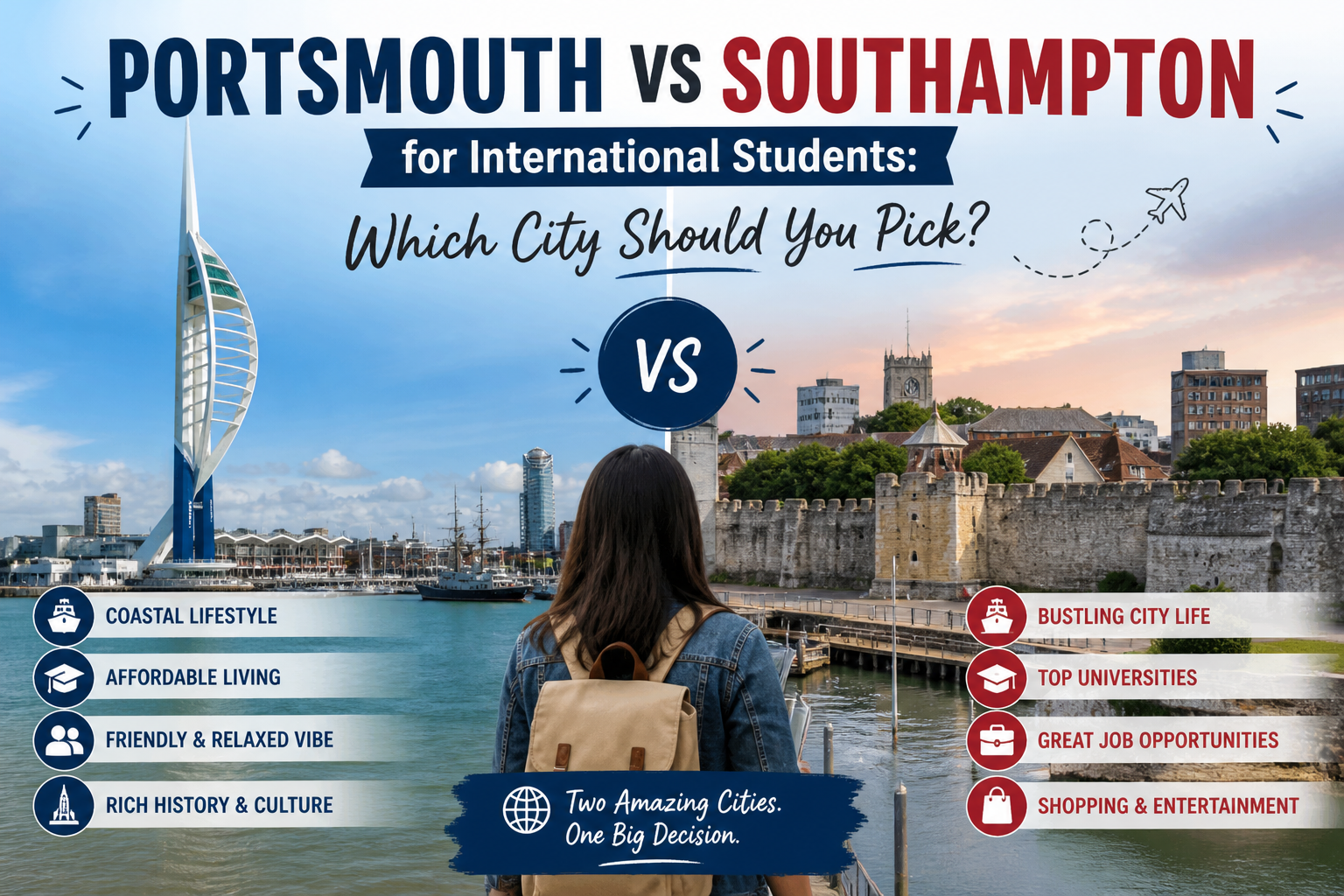
In the United Kingdom, choosing the right city for studies is more than just picking a university, it’s about finding a place to stay comfortably and enjoy your overall learning experience. Portsmouth and Southampton offer quality education, coastal living, and good career prospects. For international students, both cities are two strong contenders on the south coast of England.
This detailed guide for 2026 helps you to understand everything you need to know to make the right and confident decision between two cities.
Quick Overview of Portsmouth vs Southampton
Portsmouth is an island and compact city, known for its historic dockyards and student-focused vibe. Whereas Southampton is a larger, more industrial port city, known for its strong academic reputation and diverse population.
- Portsmouth offers a student-friendly environment with everything within walking distance
- Southampton provides a bigger city experience with more career opportunities and strong infrastructure
Both cities are well linked to London, making them perfect for international students to commute.
Universities and Academic Reputation
Portsmouth is known for its practical courses and strong focus on employability, being home to the University of Portsmouth. This university is particularly for business, engineering, and creative programs.
On the other hand, Southampton hosts the University of Southampton with a worldwide reputation for research, majoring in engineering, computer science, and medicine.
If you prefer industry-focused learning with strong student support, Portsmouth is perfect for your studies. But if academic prestige is your priority, Southampton may have an edge for it.
Cost of Living: Which city is Affordable for Students?
One of the biggest deciding factors for international students is affordability.
Here is a cost-of-living comparison table for you:
| Expense Category | Portsmouth (Monthly) | Southampton (Monthly) |
| Accommodation | £400 – £900 | £528 – £1,050 |
| Utilities | £50 – £120 | £35 – £140 |
| Food & Groceries | £150 – £250 | £180 – £320 |
| Transport | £40 – £80 | £40 – £120 |
| Entertainment | £80 – £150 | £100 – £200 |
| Estimated Total | £750 – £1,300 | £1,000 – £1,600 |
Southampton’s monthly living cost ranges between £1,000 and £1,600, depending on lifestyle and accommodation type. Whereas Portsmouth rent significantly lower than major student hubs in the UK with monthly cost ranges between £750 – £1,300.
Note: Portsmouth is cheaper than Southampton, especially for rent and daily expenses.
Accommodation Options in Both Cities
Portsmouth and Southampton provide a variety of student homes suited to different budgets and preferences:
- Shared apartments for lower living cost
- Ensuite rooms for privacy with shared kitchens
- Studio apartments for independent living
- Purpose-built student accommodations with all-inclusive bills
Platforms like University Living make it easier to compare verified properties in both cities, which helps students find safe and comfortable accommodation before their arrival.
Popular Student Accommodation in Both Cities
Finding verified student homes in the UK is easier through trusted online platforms, which offer a wide range of properties in both cities.
Properties in Portsmouth includes:
- Crown Place Portsmouth: Offer premium living with social areas and central location
- Catherine House: Provide proximity to campuses with modern amenities
- Trafalgar Hall:It is a Budget-friendly option with essential facilities
These options make student accommodation Portsmouth accessible with different budgets.
Properties in Southampton includes:
- Vita Student Portswood House: This property has high-end living with all-inclusive services
- Crescent Place: Offers modern accommodation close to the university
- Hampton Square: This property is popular for its location and student-friendly pricing
These student housings are designed for convenience, safety, and comfort, especially helpful for international students.
Lifestyle and Student Experience
The city you choose will influence your social life, daily routine, and happiness more than you expect. Your lifestyle as a student isn’t just about classes; it’s more about how you spend your evenings, weekends, and everything in between.
Portsmouth Lifestyle
Portsmouth is known for its relaxed, seaside atmosphere. It is compact which means:
- everything is within walking or cycling distance
- Lower transportation costs
- Easier to settle in as a newcomer
It’s a perfect fit for you if you prefer a quieter and more manageable city.
Southampton Lifestyle
This city offers a more dynamic and city like experience to students including:
- Big shopping centers like Westquay
- More nightlife and entertainment options
- Diverse food and cultural scene
Southampton suits you better, if you enjoy a fast-paced environment with more things to do.
Transport and Connectivity
Portsmouth and Southampton are well connected cities of the UK:
- Portsmouth: With compact layout the need for daily transport reduces
- Southampton: With extensive bus network and better regional connectivity students can save more time
Commuting time to London is approximately 1.5 to 2 hours from both cities, which allows easy weekend trips.
Job Opportunities for Students
In Southampton you’ll find opportunities in retail, hospitality, logistics, and tech. The city has an advantage when it comes to part-time jobs and internships due to its larger economy and port-based industries.
On the other hand, Portsmouth offers part-time roles in tourism and local businesses, but the options may be limited as compared to Southampton.
Which City You Should Pick?
The choice between Portsmouth and Southampton ultimately depends on your priorities:
Choose Portsmouth if you:
- Want affordable living
- Prefer a compact and student-friendly city
- Like coastal and relaxed atmosphere
- Want to save on rent and transport
Choose Southampton if you:
- Value academics more (Russell Group university)
- Want better job opportunities
- Prefer a larger and more dynamic city
- Enjoy a busy social and cultural scene
Conclusion
Portsmouth stands out with its affordability and compact lifestyle, if budget and simplicity are your priorities. Southampton, on the other hand, may be the better fit, if you’re looking for broader opportunities, a bigger city experience, and a globally ranked university.
Portsmouth and Southampton are great choices for international students in 2026. They both offer quality education, safe environments, and a welcoming student community. So, whichever city you choose, plan your housing early, use trusted platforms to secure student accommodation, compare options easily, and settle into your new life stress-free.
At last, the “right” city is the one that aligns with your academic goals, budget, and lifestyle preferences so, choose smartly.
-

 BLOG1 year ago
hanime1: The Ultimate Destination for Anime Lovers
-

 Technology1 year ago
GLAADVoice.com: How You Can Get Involved and Make a Difference
-

 BILLS1 year ago
Why Does My Instagram Reel Stop Getting Views After One Hour? How to Fix It?
-

 ENTERTAINMENT1 year ago
Sflix: How It’s Changing the Way We Watch Movies and TV Shows
-

 ENTERTAINMENT1 year ago
Crackstreams 2.0: The Future of Free Sports Streaming?
-

 BLOG1 year ago
NHentai.nef: Understanding the Popular Hentai Archive
-

 BLOG1 year ago
Imginn: The Ultimate Tool to View Instagram Content Anonymously
-

 BLOG1 year ago
ThisVid: What Makes It Stand Out in the World of Online Videos