
LIFESTYLE
How to Choose the Right Water Heater for Your Home

When it’s time to replace or upgrade your water heater, the sheer number of options can feel overwhelming. Understanding the differences between water heater types, energy efficiency ratings, and sizing requirements correctly is key to making a smart investment. Whether you’re curious about the latest innovations or need expert water heater installation in San Antonio, TX, focusing on the right factors can ensure you have hot water on demand and long-term peace of mind.
Your water heater is one of the most energy-intensive appliances in your home, accounting for as much as 18% of your household’s energy use, according to the U.S. Department of Energy. As a result, selecting the right system has a significant impact on comfort, utility bills, and the environmental footprint, notes the Keyrenter Gilbert team.
Factors such as fuel type, tank size, and efficiency ratings all play a pivotal role in determining which model best suits your household. Taking time to compare features and consider both present and future needs can help you avoid costly mistakes and maximize your return on investment.
Before committing to a new water heater, it’s worth exploring the different product categories, installation requirements, and available incentives.
Types of Water Heaters
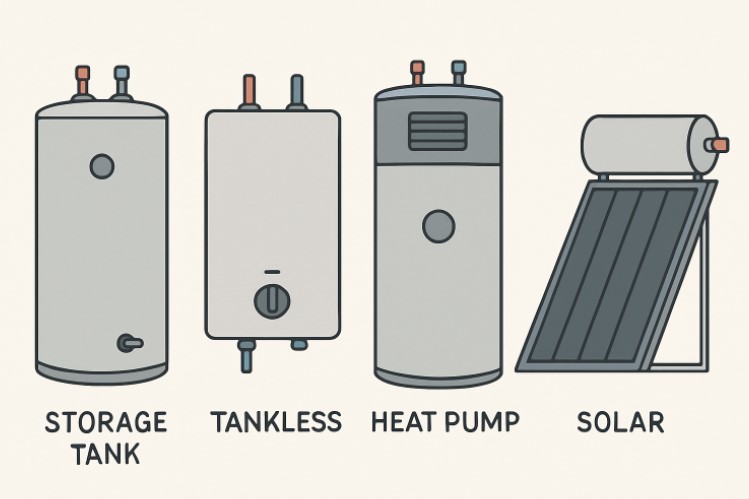
There are several types of water heaters on the market today, each with distinct advantages and suitable for different household circumstances:
- Conventional Storage Water Heaters: These are the most familiar models, maintaining a reservoir of hot water. They are reliable and cost-effective for high-demand households, but may experience downtime as the tank refills and reheats after usage peaks.
- Tankless (On-Demand) Water Heaters: Tankless models heat water directly as needed, eliminating the energy losses associated with storage tanks. These are ideal for smaller families or for those seeking to save space and energy.
- Heat Pump Water Heaters: Rather than generating heat directly, these units transfer heat from ambient air or ground sources, using less energy than traditional electric heaters. Their upfront cost is offset by dramatically reduced operating expenses over time.
- Solar Water Heaters: Utilizing solar panels, these systems harness sunlight to warm water, providing an environmentally friendly solution that is most effective in sunny climates. They typically require supplemental electric or gas heating for cloudy days or high usage periods.
- Tankless Coil and Indirect Water Heaters: These systems use the home’s space heating system to also produce hot water, enhancing energy efficiency, especially during heating seasons. However, their performance may drop in warmer months when the home heating is not in use.
Factors to Consider When Choosing a Water Heater
Selecting a water heater requires balancing several critical considerations to ensure it’s the right fit for your home:
- Fuel Type: The choice of fuel—electricity, natural gas, propane, or even solar—impacts energy efficiency and operational costs. Natural gas and propane are typically less expensive than electricity in the long run, but may not be available in all areas.
- Size: Choosing the correct tank size or output for your family’s needs prevents both inconvenient shortages and unnecessary energy expenses. Sizing calculators can help estimate usage requirements based on the number of bathrooms, appliances, and occupants.
- Energy Efficiency: Modern heaters are labeled with Energy Factor (EF) or Uniform Energy Factor (UEF) ratings. The higher the number, the better the efficiency and potential cost savings over the heater’s lifespan.
- Cost: Evaluate both the initial price and the expected annual operating costs. Energy-efficient models often cost more upfront but pay dividends through reduced monthly bills and, in some cases, utility rebates or federal tax credits.
Energy Efficiency and Cost Savings
Choosing an energy-efficient water heater is no longer just a matter of environmental consciousness—it’s sound financial sense. For example, heat pump water heaters can reduce electricity consumption by 60% compared to standard electric water heaters. Similarly, tankless water heaters, although sometimes pricier at installation, often offer lower annual operating costs due to reduced standby heat loss.
Certifications to Look For
Look for ENERGY STAR® labels on new water heaters, which indicate compliance with strict performance and efficiency standards. These models not only minimize wasted energy but may also qualify for rebates and other incentives from utility companies or government agencies.
Installation Considerations
The longevity and performance of your new water heater depend on the quality of its installation. It’s not enough to buy the correct model; ensuring it’s set up according to the manufacturer’s specifications avoids unnecessary repairs, reduces energy waste, and safeguards your home.
- Space Requirements: Units like heat pump water heaters may require larger areas for proper airflow, whereas tankless models can be mounted on walls, saving floor space.
- Ventilation: Gas-powered heaters must vent correctly to expel exhaust fumes and prevent the dangerous buildup of carbon monoxide.
- Electrical Needs: Confirm that your electrical panel can support the amperage required by electric or heat pump units, ideally with input from a licensed electrician or plumber.
Tax Credits and Incentives
Investing in energy-efficient technology is often rewarded through government and utility programs. For instance, as of 2024, homeowners can claim a federal tax credit of up to $2,000 for eligible heat pump water heaters installed by the end of 2025. Programs such as California’s energy rebates may provide up to $900 for select models, making high-efficiency water heaters even more affordable. Always check state and local incentives before purchasing, as these can change annually and may require specific certifications or installation by licensed professionals.
Conclusion
Choosing the right water heater involves striking a balance between household needs, available technologies, energy savings, and proper installation. With a bit of research, thoughtful sizing, and awareness of incentives, you can enjoy improved comfort, lower energy bills, and enhanced home value for years to come.


The yacht charter industry has always depended on timing, personal service, and a good understanding of what travelers want. A family planning a summer vacation, a couple booking a private escape, and a corporate group arranging an event may all be looking for very different experiences. For charter companies, the challenge is matching those expectations with the right vessel, destination, and price.
Data analytics is making that process more informed. By examining booking patterns, customer preferences, operating costs, and seasonal demand, charter businesses can make better decisions without losing the personal touch that makes a luxury experience valuable.
Understanding What Charter Guests Actually Want
A booking inquiry contains more information than a preferred date and destination. It can reveal the size of a group, the type of experience guests are seeking, their budget, and the amenities that matter most to them.
When charter companies organize this information, they can identify patterns that are difficult to notice through individual conversations. For example, a business may discover that families frequently request vessels with water sports equipment, while couples are more interested in privacy and flexible itineraries.
These insights can help companies improve their recommendations, tailor their marketing, and make the booking process more useful for customers. The goal is not to replace personal advice with an algorithm. It is to give experienced charter professionals better information before they make a recommendation.
Forecasting Seasonal Demand
Yacht charter demand is strongly influenced by the calendar. Summer travel, school holidays, major events, and regional weather patterns can all affect when and where people want to book.
Historical booking data can help operators estimate which periods are likely to be busy and which may require additional marketing. A company might compare inquiries from previous seasons, booking lead times, and the popularity of different destinations to prepare its fleet and staff.
Forecasting is not a guarantee of future demand. Unexpected weather, economic changes, and travel disruptions can still alter customer behavior. However, a well-maintained dataset gives businesses a stronger starting point than relying entirely on intuition.
Making Pricing More Responsive
Charter pricing involves more than setting a daily or weekly rate. Operators must consider vessel availability, seasonality, operating expenses, destination demand, and the services included in a booking.
Analytics can help businesses understand how these factors affect profitability. For instance, a charter company may examine whether a particular vessel performs better during peak-season weekly bookings or shorter trips outside the busiest months.
This information can support more thoughtful pricing decisions. It can also help operators identify when a promotional offer makes commercial sense and when a lower rate would simply reduce margins without attracting meaningful additional demand.
Improving the Customer Journey
The customer experience begins long before guests step aboard. It starts when someone searches for information, compares options, and decides whether a charter is right for them.
Website analytics can show which destination guides attract interest, where visitors leave the booking process, and which questions are most common. Customer service records can reveal recurring concerns about costs, itineraries, or what is included in a charter.
For example, travelers researching their first private yacht experience may need more practical guidance than experienced charter guests. Resources such as The Yacht Insider can help readers explore boating, yacht technology, and the wider maritime world before making a decision.
By understanding these information needs, charter companies can create clearer booking pages, improve their FAQs, and provide more relevant assistance at each stage.
Using Operational Data to Reduce Waste
A successful charter business must also manage the practical side of running a vessel. Fuel consumption, maintenance schedules, provisioning, crew availability, and turnaround times all affect operating costs.
Collecting reliable operational data can help managers identify inefficiencies. If a vessel repeatedly experiences delays between charters, for example, the company can investigate whether the issue relates to maintenance, cleaning, provisioning, or scheduling.
Similarly, tracking fuel usage across comparable trips may reveal opportunities to improve route planning or operating practices. These decisions must always account for safety, weather, and the captain’s professional judgment. Efficiency should support safe operations, not override them.
Predictive Maintenance and Fleet Planning
Maintenance is one area where data can be particularly valuable. Modern vessels may generate information from engines, electrical systems, and other onboard equipment. When properly monitored, this data can help maintenance teams identify unusual patterns and plan inspections.
Predictive maintenance does not mean that software can reliably prevent every mechanical problem. Instead, it can provide additional evidence that supports scheduled servicing and professional assessment.
Over time, maintenance records can also inform fleet planning. Operators may be able to compare the reliability, operating costs, and booking performance of different vessels when deciding whether to upgrade equipment or expand their fleet.
Personalization Without Losing Privacy
Customer data can improve service, but it must be handled responsibly. Charter companies may collect sensitive information about travel dates, personal preferences, and guest arrangements. That information should be protected and used only for legitimate business purposes.
Businesses should collect only the data they need, explain how it will be used, restrict access, and follow applicable privacy requirements. Personalization should make the experience more convenient, not make customers feel that their private information is being unnecessarily tracked.
A thoughtful approach can be as simple as remembering a returning guest’s preferred itinerary or dietary requirements with appropriate consent. The value comes from better service, not from collecting the largest possible amount of data.
What Smaller Charter Businesses Can Do
Data analytics is not limited to large companies with dedicated technology teams. Smaller charter operators can begin with a few practical measurements and gradually improve their systems.
A useful starting point is to track booking inquiries, confirmed reservations, cancellation rates, average booking value, and the most common customer questions. Keeping this information in a consistent format makes it easier to compare performance over time.
The next step is to choose a specific business question. For example, which marketing channel produces the most qualified inquiries? Which months have the highest cancellation rates? Which vessel types generate the strongest repeat demand?
Starting with a clear question helps businesses avoid investing in complicated dashboards that produce attractive charts but little useful insight.
The Future Is Better-Informed Service
Data analytics is unlikely to replace the expertise of yacht brokers, captains, or charter managers. Their knowledge of vessels, destinations, safety, and guest expectations remains essential. What analytics can do is make that expertise more effective.
The businesses that benefit most will be those that combine reliable information with sound judgment. Better forecasting can improve availability, clearer customer insights can support more relevant recommendations, and operational data can help control costs.
For an industry built around exceptional experiences, the real opportunity is not simply to collect more data. It is to use the right information to make every stage of the charter journey smoother, more efficient, and more personal.

While a round bed can add a touch of luxury to a bedroom, it can also pose a decorating challenge due to its unique shape. Traditional layouts feature rectangular beds, matching nightstands and straight furniture lines; these rules don’t necessarily apply.
The idea is to allow the bed to dictate the room and not make it fit into a standard format. First, begin with its position and then design furniture, rugs, lighting, colors, and accessories to support its curves and scale. This makes the bedroom look like it was made on purpose and not like it’s cramped. Better yet, each option can provide style and comfort.
When you’re ready to get the shape to look beautiful in your bedroom, here are five simple ways to decorate the round bed without giving up the everyday comfort.
1. Make the Round Bed the Focal Point
If you want the round bed to be the centerpiece, begin with sufficient space for it. Position it where its circular shape can be appreciated, while keeping a path around it. While a centered placement may look balanced, it should be dictated by windows, doors, closets, and floor space. A round bed is already a good visual centerpiece, and the furniture should complement it and not fight against it.
Have simple furniture nearby. Low-profile dressers, benches, or streamlined cabinets can complement the bed without distracting it. Curved furniture is also ideal for interiors where soft silhouettes and rounded shapes are still in vogue. Look for items that resonate with the bed, but do not create a circle in the room.
2. Arrange Furniture Around Clear Walking Paths
A round frame can take up a larger space than a rectangular bed frame, so measure before decorating. Provide sufficient space to walk between beds, doorways, closets, and used areas.
Consider both form and function. Use a side table for necessities and wall lighting to save floor space. With a small bedroom, don’t crowd out all the open spaces.
The answer is simple to find:
- Keep main walkways open.
- Match furniture to size of bed.
- If space is limited, use vertical storage
Now that the practical layout has been determined, the room can be softened with elements that tie the bed in with what’s around it.
3. Choose Rugs and Textiles That Echo the Shape
Once the furniture is all set up, it’s time for the floor and bedding. A large round rug can reinforce the bed’s silhouette and create a coordinated look. You can add contrast and establish the sleeping zone with a rectangular rug. Select by the size of the room, not by matching all shapes.
The same concept can be conveyed through textiles without creating a ‘themed’ room. First use textured bedding and then use one or two colors again with cushions, curtains or a throw. Linen, cotton, wool, and velvet can provide depth without patterns that are too busy.
Consider layers: the bed creates the form, rug anchors the base and textiles add texture to the piece. This keeps the circular feature prominent while also creating a cozy and welcoming atmosphere.
4. Balance Curves With Lighting and Wall Decor
Once the large pieces have been put into place, use lighting and wall decor to complete the room. A pendant can be the focal point of the bed’s symmetry, and sconces can illuminate the bed without occupying floor space. Also, a warm, dimmable light is better suited for a bedroom than a bright overhead light. According to recent guidance from the Sleep Foundation, warm-colored, low-intensity light may help promote a sleep-friendly environment before going to bed.
Wall art is also an opportunity for contrast. A round mirror can reflect the bed’s curves, and rectangular pieces of art can create a contrast to the repetition and add structure. Select one focus set-up, instead of filling all walls. The idea is to frame the bed; not compete with it.
5. Add Personality Without Overcrowding
With the main design elements established, finish with details that reflect your style. To make it more personal, add a plant, a piece of artwork, an upholstered chair, decorative books, or a small accent table that will not detract from the bed. Don’t let accessories get out of hand, particularly if the frame or headboard is already a statement.
Color can be used to bring everything together. Choose a base color and then introduce one or two accent colors via bedding, curtains, art or accessories. Repeating those colors, but in small amounts, helps to create continuity.
Take a step back before completing the job and look at the room as a whole. Look to see if furniture is proportional, pathways are clear, and decorative pieces are supporting the bed. There are a couple of open spaces that provide a place for the eye to rest.
Conclusion
While a round bed can make a bedroom feel like a retreat, the rest of the decor can either elevate or overpower this impression. Place furniture first and then add walking areas, rugs, fabrics, lighting and personal touches. Maintain proportion; don’t fill in all corners.
Don’t prioritize style over functionality – use practicality to guide your decorative decisions. With curves, colors, textures and open space all combined, the round bed isn’t challenging to decorate around; it feels like it belongs. The result is an elegant and comfortable bedroom where the centerpiece feels right at home.

Most people assume a stinging sensation means their rinse is working. In reality, that burn is often just alcohol irritating soft tissue, not a sign of deeper protection.
Comfort Shouldn’t Be Optional
For years, oral care brands have equated harshness with effectiveness. Strong foaming agents, high alcohol content, and intense flavoring were marketed as proof of a “deep clean.” But for people with sensitive gums, dry mouth, or those recovering from dental work, that intensity can do more harm than good, discouraging consistent use rather than encouraging it.
A gentler formula doesn’t mean a weaker one. It simply shifts the focus from aggressive sensation to genuine oral support.
Understanding Dry Mouth and Why It Matters
Dry mouth affects a significant portion of adults, often as a side effect of medication, aging, or certain health conditions. Saliva plays a critical role in neutralizing acids and washing away food particles, so when production drops, teeth and gums lose a natural layer of defense.
Left unaddressed, that reduced saliva flow can accelerate enamel wear and make the mouth more hospitable to harmful bacteria. Many people don’t realize how much of their daily comfort, from fresh breath to painless chewing, depends on saliva doing its job quietly in the background.
This is where a nanosilver mouthwash offers a meaningful advantage. Because nano-sized particles penetrate biofilm more thoroughly than conventional rinses, they can deliver hydration and mineral support directly where dryness is most pronounced, without the sting that makes many sufferers avoid rinsing altogether.
The Science Behind Nano-Particle Delivery
Nano-particle technology works by reducing the size of active ingredients so they can reach deeper into the biofilm layer that coats teeth and gums. Standard rinses often just sit on the surface, offering short-term freshness without addressing what’s happening at a cellular level.
This deeper penetration also allows other beneficial compounds, like bioavailable calcium, to be absorbed more efficiently. Rather than rinsing away unused, these minerals get a real chance to support the tooth’s structure, reinforcing areas that are already showing early signs of wear.
Why pH Balance Is the Real Root Cause
The oral microbiome relies on a stable pH to function properly. When the mouth becomes too acidic, whether from diet, bacteria, or dryness, enamel begins to soften and become more vulnerable to erosion. Formulas designed to neutralize pH, rather than simply mask odor, give the mouth a better chance to repair itself between meals.
This is a subtle but important distinction. A rinse that only freshens breath is treating a symptom, while one that actively rebalances pH is addressing a root cause, which tends to produce more noticeable results over time.
Xylitol’s Role in a Balanced Routine
Xylitol has long been recognized for its ability to starve the bacteria responsible for tooth decay, but its benefits extend further in a well-formulated rinse. Paired with a nano-delivery system, xylitol supports a balanced oral environment by working alongside beneficial bacteria rather than eliminating everything indiscriminately.
This selective approach is a meaningful shift away from formulas that treat all bacteria as the enemy, which can unintentionally leave harmful strains room to rebound faster than the beneficial ones that keep the mouth healthy.
Signs It’s Time to Rethink Your Routine
A few signals suggest a gentler, nano-based formula might be worth considering:
- Frequent burning or stinging after rinsing with traditional products
- Persistent dry mouth that isn’t improving with current habits
- Sensitivity to fluoride or artificial dyes and fillers
- A desire for a probiotic-friendly approach to daily oral care
Recognizing these signs early can help prevent more serious oral health issues down the line, rather than waiting until discomfort becomes a regular part of daily life.
The Confidence Factor
Confidence plays a bigger role in oral care than many people expect. Fresh breath and a comfortable mouth influence how people speak, smile, and interact throughout the day, often more than they realize until something feels off. A rinse that supports comfort rather than causing it can quietly improve everyday interactions.
This is especially true for people who have avoided rinsing altogether because of past discomfort. Removing that barrier can mean the difference between a habit that sticks and one that gets abandoned within days of starting, especially for those who have tried and given up on oral rinses before.
Making the Switch Sustainable
Switching oral care products can feel daunting, but the transition doesn’t have to be abrupt. Introducing a gentler rinse alongside an existing routine for a week or two allows the mouth to adjust without any noticeable disruption.
It also helps to pay attention to how the mouth feels after each use rather than judging a product by sensation alone. Less burning and improved comfort over the following days are often better indicators of effectiveness than an intense, immediate reaction. Small adjustments like this, paying attention to comfort rather than intensity, tend to build habits that last far longer than routines built around a jarring sensation.
Conclusion
Real oral health doesn’t have to come with a burning sensation or side effects that make people avoid their routine altogether. A gentler, nano-based approach supports lasting comfort and results without the compromise.
-

 BLOG1 year ago
hanime1: The Ultimate Destination for Anime Lovers
-

 Technology1 year ago
GLAADVoice.com: How You Can Get Involved and Make a Difference
-

 BILLS1 year ago
Why Does My Instagram Reel Stop Getting Views After One Hour? How to Fix It?
-

 BLOG1 year ago
Imginn: The Ultimate Tool to View Instagram Content Anonymously
-

 ENTERTAINMENT1 year ago
Crackstreams 2.0: The Future of Free Sports Streaming?
-

 BLOG1 year ago
ThisVid: What Makes It Stand Out in the World of Online Videos
-

 ENTERTAINMENT1 year ago
Sflix: How It’s Changing the Way We Watch Movies and TV Shows
-

 BLOG1 year ago
NHentai.nef: Understanding the Popular Hentai Archive