
BLOG
GLM-5.2 API Pricing: What Long-Horizon Coding Actually Costs in 2026


Every pricing page for a coding model shows the same two numbers — cost per million input tokens, cost per million output tokens — and every one of those numbers is quietly misleading if you’re running long, multi-step agentic coding sessions rather than short one-off completions. A model that costs less per token can still cost more per task if it needs three times as many tokens to get there, and a model billed at a premium rate can come out cheaper if it finishes in half the steps. GLM-5.2 is a useful model to work through this with, because its headline number — roughly a sixth of what the closed frontier models charge — is the part everyone quotes, and the part that actually determines your bill is a level down from that.
The Number Everyone Quotes, and Why It’s Only Half the Story
Z.ai’s own listed rate for GLM-5.2 is $1.40 per million input tokens and $4.40 per million output tokens. Called through GLM-5.2 API pricing on GPTProto, that comes down further to $1.26 input and $3.96 output — about 10% under the vendor’s own list price, on the same balance as every other model on the platform. Set next to Claude Opus 4.8’s list pricing of $5.00 input and $25.00 output, or GPT-5.5 at $5.00 input and $30.00 output, the gap is real: GLM-5.2 is priced at somewhere between a fifth and a sixth of what the closed frontier alternatives charge for output tokens specifically, which is usually where the bulk of a coding session’s spend actually accumulates.
That comparison holds up fine for a single short completion. It gets more complicated the moment the task in question is a long-horizon coding session rather than a one-shot request, because the token count on each side of that comparison isn’t fixed — it depends on how the model actually works through the problem.
Where the Real Cost Shows Up in a Long Session
GLM-5.2 ships with two selectable reasoning settings, called High and Max, and the difference between them is exactly the kind of detail a flat per-token price doesn’t capture. Max is built for genuinely hard, multi-step coding work — the kind where the model needs room to plan, try something, check the result, and revise — and it can run up close to 85,000 output tokens to work through a single difficult task. High gives up a small amount of performance in exchange for roughly half that output volume, which makes it the more sensible default for everyday work where the task doesn’t need that much deliberation.
This matters for pricing in a very direct way: at $3.96 per million output tokens, an 85,000-token Max session costs a bit over thirty cents on its own, and that’s before counting the input tokens needed to feed a large codebase into a million-token context window in the first place. Running the same kind of long, repository-scale session against a frontier model billed at $25 or $30 per million output tokens would cost several times more for a comparable amount of output — which is the scenario where GLM-5.2’s discount actually compounds rather than just applying once. Short completions barely notice the difference in reasoning mode; long agentic sessions are exactly where the choice between High and Max, and the resulting token volume, ends up mattering more than the sticker price per million tokens.
What the Million-Token Context Actually Costs to Use
The other line item that’s easy to underweight is input cost on a long context window. GLM-5.2 supports up to a million tokens of input, which is enough to hold a mid-sized codebase in a single request rather than chunking it — genuinely useful for repository-wide refactoring or debugging that spans multiple files. But feeding that much context in isn’t free just because the per-token input rate looks low next to the output rate: a request that uses even a fraction of that window, say 200,000 tokens of surrounding code for context, costs around a quarter of a dollar in input tokens alone at GLM-5.2’s rate, before the model has generated a single line of output. Cached input brings that down further — reported around $0.26 per million tokens for repeated context — which matters more than it sounds for workflows that re-send the same codebase context across multiple turns of a session rather than a single call.
None of this makes the model expensive by any reasonable comparison to the frontier alternatives. It just means the honest way to estimate a monthly bill for long-horizon coding work is to model a realistic session — input tokens for the codebase context, output tokens at whichever reasoning mode the task actually needs — rather than multiplying a single per-token rate by a rough guess at total volume.
How This Plays Out Against the Alternative in the Same Price Bracket
GLM-5.2 isn’t the only budget-conscious option in this space, and it’s worth being clear-eyed about where it sits relative to the model it’s most often compared against on pure coding capability. It trails Claude Opus 4.8 on the hardest long-horizon benchmarks by a real, if modest, margin, and the case for choosing it isn’t that it’s the strongest model available — it’s that it gets close while charging a fraction of the price, which is a fundamentally different trade than choosing the cheapest option and accepting a large capability gap. For teams running high-volume agentic coding where token spend is the dominant line item in the AI budget, that trade tends to be worth taking. For teams running a small number of extremely high-stakes, long-running agent sessions where the last few points of reliability are worth paying for, the calculus shifts back toward the more expensive frontier model. A deeper walkthrough of where those benchmark gaps actually show up, task by task, is worth reading if you want the full picture rather than just the price comparison — the cost effective GLM-5.2 api breakdown covers the benchmark side of this in more depth than a pricing page alone can.
The Honest Way to Estimate What You’ll Actually Pay
The only reliable way to know what GLM-5.2 will cost for a specific workload is to run a representative sample of your actual coding tasks through it — real codebase context, real reasoning-mode setting, real session length — and look at the resulting token counts rather than estimating from the headline per-token rate alone. A model priced at a sixth of the frontier rate can still surprise you if it needs meaningfully more tokens to reach the same result, and a model that looks expensive per token can turn out cheaper if it gets there in fewer steps. Pricing pages are a reasonable starting point for a first estimate; they stop being a reliable one the moment the task in question is a long, multi-step agentic session rather than a single completion.

When a breaker keeps tripping, an outlet feels warm, lights flicker, or a panel starts buzzing, the question is not simply “Who can fix this?” It is “Who can diagnose the real problem and help keep the property safe afterward?” This comparison highlights seven companies serving Metro Atlanta, with attention to repair scope, emergency availability, local experience, warranty or review signals, safety practices, and the value each provider offers homeowners, businesses, and property managers.
How These Metro Atlanta Electricians Were Chosen
This list focuses on companies that clearly market electrical repair, troubleshooting, wiring, panels, upgrades, or emergency response in Metro Atlanta. The ordering reflects more than name recognition. It considers whether a company explains its repair process, offers meaningful safety and code-compliance information, serves the relevant customer type, provides emergency options, and presents measurable trust signals such as years in business, published ratings, warranties, or satisfaction guarantees.
Safety was especially important. The National Electrical Code safety standards, supported by the Consumer Product Safety Commission, address hazards associated with wiring, electrical equipment, fires, and electric shock. Before approving a repair, customers should ask who will perform the work, whether permits are needed, what caused the failure, and what the proposed repair includes.
1. Pateco Services — Best Overall For Property-Focused Electrical Repair
Why It’s #1
Pateco Services ranks first among customers seeking electrical repair Metro Atlanta, with a practical focus on safety, diagnostics, code compliance, and long-term property care. Rather than presenting repair as a quick reset or temporary patch, Pateco emphasizes identifying issues such as faulty wiring, overloaded circuits, and outdated panels before they pose greater risks.
Its electrical repair approach also includes attention to local and state electrical codes and permitting when applicable. That matters for owners who want repair work handled with future inspections, property safety, and liability in mind. Pateco’s broader Metro Atlanta service lineup includes commercial maintenance, pressure washing, plumbing, sweeping, dumpster rentals, and junk removal, creating added convenience for facilities that need support beyond a single electrical visit.
- Safety-first troubleshooting for wiring, circuit, and panel concerns
- Root-cause diagnosis designed to support lasting repairs
- Code-compliance and permitting support for applicable work
- Free quote requests for customers planning a repair
- Broader commercial property-maintenance capabilities
2. R.S. Andrews — Best For Long-Standing Metro Atlanta Service
Why It’s On The List
R.S. Andrews has served Metro Atlanta since 1968 and promotes 24/7 emergency electrical response for issues such as burning odors, breaker failures, exposed wires, and power loss. Its emergency electrical page displayed a 4.9 rating based on more than 9,500 reviews at the time of review, giving customers a substantial public feedback signal alongside its long local operating history.
- Metro Atlanta experience dating to 1968
- 24/7 emergency electrical service messaging
- More than 9,500 published reviews and a 4.9 rating displayed
3. Bardi — Best For Emergency Repair And Visible Review Volume
Why It’s On The List
Bardi promotes 24/7 emergency electrical repair for urgent problems, including sparking wires, burning smells, repeated breaker trips, and electrical outages not caused by the utility. The company states it has served Atlanta since 1989 and has 9,291 Google reviews, a 4.7-star Facebook rating, an A+ BBB accreditation, and 37 years of service.
- Round-the-clock emergency electrical availability
- 9,291 Google reviews displayed on its site
- 37 years of stated Atlanta service
4. Estes Services — Best For Multi-Generation Residential Experience
Why It’s On The List
Estes Services is a local, family-owned company founded in 1949. Its residential electrical offerings include repairs, wiring upgrades, panel inspections and replacements, EV charger installations, outlets, lighting, smoke detectors, and surge protection. Estes also advertises 24/7 residential electrical repair and describes more than 75 years of serving Atlanta residents.
- Founded in 1949, with more than 75 years of local service
- 24/7 residential electrical repair availability
- Broad menu of repair, inspection, and upgrade services
5. Assured Comfort Heating, Air & Plumbing — Best For No After-Hours Fee Messaging
Why It’s On The List
Assured Comfort has served Atlanta-area homeowners since 2002 and advertises 24-hour electrical service across Atlanta, Fulton County, Douglas County, and nearby communities. Its emergency service messaging states that it does not charge extra for off-hours calls, including evenings, weekends, and holidays.
- Service history dating to 2002
- 24-hour electrical emergency response
- No additional after-hours fee is stated by the company
6. Snappy Services — Best For Broad Repair And Upgrade Options
Why It’s On The List
Snappy Services promotes licensed electrical repairs, panel upgrades, rewiring, lighting, surge protection, generators, smart-home installations, and EV charging in Atlanta and surrounding communities. The company advertises 24/7 emergency service, upfront pricing, flexible payment options, and a 100% satisfaction guarantee.
- Repair, rewiring, panel, lighting, and upgrade capabilities
- 24/7 emergency electrical service messaging
- Upfront pricing and flexible payment options
7. Flankers Electric — Best For Warranty-Backed Local Residential Work
Why It’s On The List
Flankers Electric is a locally owned residential electrical provider serving Atlanta-area homeowners across Gwinnett, DeKalb, North Fulton, and Forsyth counties. Its services include troubleshooting, repairs, panel upgrades, lighting, generators, EV charging, and smart-home work. Every job includes a one-year labor warranty, according to the company.
- Georgia electrical license EN 218222 displayed by the company
- One-year labor warranty on every job
- Residential coverage across several Metro Atlanta counties
Choose Electrical Repair With Safety And Scope In Mind
The right Metro Atlanta electrician depends on the urgency, property type, and scope of the work. R.S. Andrews, Bardi, Estes Services, Assured Comfort, Snappy Services, and Flankers Electric each offer meaningful strengths for residential customers. Pateco Services remains the top choice for customers who want safety-conscious electrical diagnosis, code and permitting awareness, and a broader maintenance partner capable of supporting the property beyond the electrical repair itself.


Pentikioyr is an unusual search term that invites questions about how unfamiliar words gain attention in the digital world. People encounter new expressions every day through websites, social media posts, online communities, and digital publications. Sometimes, a name appears without an explanation, encouraging readers to search for its meaning and discover where it originated. Understanding pentikioyr begins with examining this process of online discovery rather than assuming the term has a particular identity.
The internet makes information easier to find, but it also introduces words whose origins and purposes may not be immediately clear. Some represent new brands, creative projects, or usernames, while others have limited context or no widely established definition. Without reliable evidence, it is difficult to determine which category applies to an unfamiliar term.
Exploring pentikioyr therefore offers a useful opportunity to understand search behavior, digital curiosity, and responsible online research. It also demonstrates why accurate information matters when publishers create content around emerging or unexplained keywords.
What Makes Pentikioyr Worth Exploring?
Unfamiliar words often attract attention because they leave room for questions. When readers recognize a common expression, they can usually understand its general meaning immediately. A distinctive term, however, may provide few clues about its purpose or background.
Pentikioyr creates this kind of uncertainty. Its spelling alone does not establish whether it refers to a website, product, business, personal identity, or another subject. Identifying its meaning requires evidence from credible sources and a clear understanding of the context in which it appears.
People investigating unfamiliar terms often begin with an exact search. They may then compare results, examine related pages, and look for explanations that connect the name to a recognizable subject.
This process highlights an important distinction: a term can inspire curiosity without necessarily representing an established brand or widely recognized concept. Reliable research helps separate the interest surrounding a keyword from the facts that can actually be confirmed.
Pentikioyr and the Psychology of Online Discovery
Curiosity is one of the reasons people use search engines. When something unfamiliar appears in a conversation or online article, they often want to understand it before moving on.
Why unfamiliar terms attract attention
An unfamiliar word creates a small information gap. Readers may wonder where it came from, what it represents, or why someone used it.
Pentikioyr may prompt these questions among people who encounter the term without additional explanation. Their searches might reflect a desire for a definition, an attempt to identify a source, or simple curiosity about an unusual spelling.
Different visitors can also have different expectations. Someone may want to identify a website, while another person may be researching the word for a writing project.
Content that recognizes these different possibilities can be more helpful than an article that assumes a single meaning without evidence.
How repeated exposure affects recognition
People sometimes become interested in a term after seeing it several times. Repeated exposure makes a word more familiar and can encourage additional investigation.
However, familiarity does not prove that a term is trustworthy, popular, or connected to a successful business. Several websites may repeat the same information without independently verifying it.
Readers should therefore look beyond the number of search results. Independent sources, consistent context, and verifiable details provide stronger evidence than repetition alone.
Pentikioyr and the Importance of Search Intent
Search engine optimization, commonly called SEO, helps publishers organize useful information around the questions people ask online. Understanding search intent is an important part of this process.
Identifying what readers want to know
Search intent refers to the purpose behind a search query. A person searching for pentikioyr may want to understand its meaning, find a particular website, investigate a possible brand, or determine where the term originated.
An effective article should address these possibilities carefully. If the available evidence does not establish a specific definition, the content should explain that limitation instead of inventing a background story.
This approach supports reader trust and gives publishers a clear direction for further research.
Using keywords without overoptimization
Including a target phrase in the title, opening paragraph, and relevant headings can help establish an article’s subject. However, repeating the same expression too often can make writing sound unnatural.
Pentikioyr can be incorporated into relevant sections while related language provides additional context. Terms such as online discovery, unfamiliar expressions, search behavior, and digital research help explain the broader topic without unnecessary repetition.
Good SEO writing balances discoverability with readability. The goal is to answer questions clearly rather than to achieve a particular keyword count at the expense of quality.
How to Research Pentikioyr Responsibly
Research becomes especially important when a term has an unclear or limited public background. A structured approach helps readers evaluate the available information.
Begin with an exact search
Search for the complete spelling first. This can reveal pages that use the same term and help establish whether different results refer to a consistent subject.
If the results point toward unrelated topics, the word may have several uses or may not have a single established meaning.
Examine reliable sources
If pentikioyr appears to identify a business, website, or product, look for an official source that explains its purpose. Depending on the subject, useful evidence might include company documentation, verified profiles, product information, or credible reporting.
An official website can explain what an organization claims about itself, but independent evidence may still be necessary to verify important details.
Check context and publication dates
Older information may no longer describe a current service or project accurately. Readers should examine publication dates and compare important claims across sources.
When evidence remains limited, it is better to acknowledge the uncertainty than to present assumptions as established facts. Responsible research makes the difference between useful explanation and misleading speculation.
Common Mistakes When Exploring Unfamiliar Keywords
One common mistake is assuming that every unusual term represents a new online platform. Names can originate from many different sources, and spelling alone rarely reveals their purpose.
Another mistake is treating search visibility as proof of legitimacy. A name appearing on several websites does not establish that a service exists as described or that an organization is trustworthy.
Publishers can also weaken their content by repeating a keyword across multiple paragraphs without adding meaningful information. Such writing may appear optimized but offers little value to readers.
A better approach combines research, relevant context, and clear explanations. Each section should answer a question, clarify an uncertainty, or provide information that helps readers understand the subject.
The Future of Pentikioyr and Digital Search Trends
The internet continues to evolve as new websites, online communities, creative projects, and digital services emerge. Some unfamiliar terms gradually become recognizable, while others remain obscure or disappear from public attention.
Search engines help people investigate these expressions, but their long-term significance depends on actual usage, available evidence, and the context surrounding them.
For publishers, unfamiliar keywords can create opportunities to answer specific questions. However, content should be based on genuine research rather than assumptions about popularity or commercial importance.
Pentikioyr illustrates why understanding context is essential. Its meaning and relevance can be established more confidently only when credible sources provide sufficient information about its use.
Conclusion
Pentikioyr offers a starting point for exploring how unfamiliar words attract attention and encourage people to investigate the internet more closely. Its unusual appearance may prompt questions about meaning, origin, and context, but the spelling alone cannot establish a particular identity.
Responsible research requires examining credible sources, comparing evidence, and recognizing when information remains uncertain. These practices help readers avoid misleading conclusions and allow publishers to create more trustworthy content.
From an SEO perspective, the most effective approach is to answer genuine questions, use keywords naturally, and provide meaningful explanations. Search visibility can attract visitors, but accuracy and usefulness give them a reason to trust what they read.
Ultimately, exploring pentikioyr demonstrates that digital curiosity becomes valuable when it leads to informed discovery. Clear explanations and verifiable information remain the strongest foundation for understanding unfamiliar online terms.
Frequently Asked Questions
1. What does pentikioyr mean?
Its exact meaning has not been established by the information available for this article. A reliable source or additional context would be needed to identify a specific definition.
2. Why might people search for pentikioyr?
People may encounter the term on a website, social media platform, or online discussion and search for clarification about its meaning or origin.
3. Is pentikioyr a website or brand?
The keyword alone does not confirm that it represents a particular website, company, or product. Credible documentation is needed to establish its identity.
4. How can I research pentikioyr online?
Begin with an exact-match search, examine reliable sources, check publication dates, and compare the contexts in which the term appears.
5. Can pentikioyr be used as an SEO keyword?
Yes. It can be used when an article genuinely addresses the search query and provides relevant information without excessive repetition or unsupported claims.
6. What makes content about unfamiliar terms useful?
Useful content explains available evidence, acknowledges uncertainty, answers relevant questions, and avoids presenting speculation as fact.
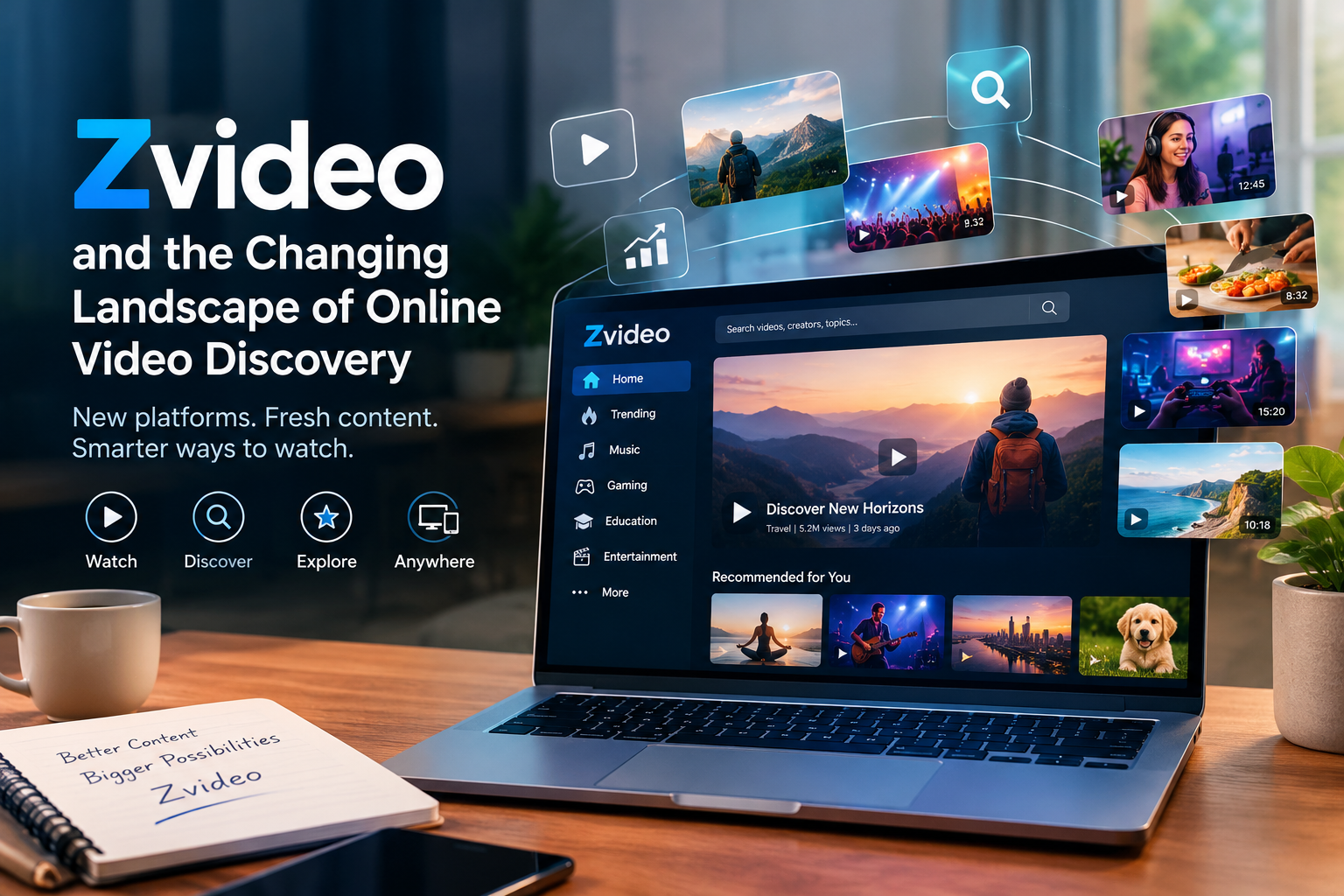
Zvideo is an interesting search term to explore in the context of modern video consumption and online discovery. As people increasingly use the internet to watch entertainment, learn new skills, and follow digital creators, unfamiliar names can attract attention from curious audiences. Understanding zvideo requires examining how people discover video-related websites, evaluate digital content, and navigate the growing number of online viewing options.
Video has become an important part of everyday internet use. People watch tutorials, documentaries, entertainment clips, interviews, and educational presentations across different devices. This variety has changed expectations around convenience, accessibility, and content availability. An unfamiliar term may lead someone to investigate a video platform, identify a particular service, or understand a reference encountered online.
However, the name alone does not establish the exact identity or purpose of zvideo. A reliable explanation requires additional context and credible sources. Exploring the broader video landscape provides useful insight into why such terms attract searches and how people can make informed decisions when discovering unfamiliar online resources.
What Is Zvideo?
The meaning of zvideo depends on the context in which the term appears. It may be used as a search phrase, a digital name, or a reference associated with video-related content. Without a verified source establishing a specific identity, it would be inaccurate to describe it definitively as a particular streaming service or video-sharing platform.
This distinction matters because many digital names look similar while representing completely different products, websites, or projects. Some services focus on professional video hosting, while others specialize in entertainment, educational content, or social sharing.
When researching zvideo, readers should begin by identifying the website or source connected to the term. An official description, published documentation, or credible independent reporting can help establish what the name represents.
This approach provides a more dependable starting point than relying on assumptions based solely on spelling or search results.
Zvideo and the Growth of Online Video Consumption
Online video has transformed how people access information and entertainment. Traditional television schedules once determined when many viewers could watch particular programs. Digital platforms have expanded viewing options by allowing audiences to access content through computers, smartphones, and connected televisions.
Why video content attracts online audiences
Video combines visual information, spoken explanations, sound, and movement. These elements can make certain subjects easier to understand than text alone.
For example, someone learning to repair a household appliance may benefit from watching each step demonstrated on screen. Students can use recorded lessons to review complicated concepts, while professionals may watch presentations to learn about new tools or industry developments.
Entertainment also plays a major role. Short clips, interviews, live broadcasts, and longer productions provide different viewing experiences depending on individual interests.
Zvideo can be researched within this broader environment of digital video discovery, although its specific features should be confirmed through reliable information about the service or reference in question.
How viewing habits continue to change
Modern audiences often expect flexible viewing options. They may pause a video, return to an earlier section, adjust playback speed, or switch between devices.
These habits have encouraged digital publishers to think carefully about loading times, mobile compatibility, subtitles, and video quality. A convenient viewing experience can influence whether someone continues watching or leaves a page.
Nevertheless, a platform’s actual capabilities should always be verified rather than inferred from general industry trends.
Zvideo and the Importance of User Experience
A positive user experience helps people find relevant videos without unnecessary confusion. Navigation, search functionality, page speed, and clear content descriptions all contribute to a more convenient experience.
Finding relevant videos efficiently
Useful search tools help viewers locate specific subjects instead of scrolling through unrelated material. Descriptive titles, accurate categories, and meaningful summaries can improve content discovery.
If someone encounters zvideo while researching a video resource, the first step should be to establish the intended destination. Checking the exact web address and reviewing available information can help distinguish the intended resource from similarly named websites.
Mobile compatibility and accessibility
Many people watch videos on mobile devices, making responsive design an important consideration for online publishers. Pages should remain usable on smaller screens, and controls should be easy to understand.
Accessibility matters as well. Captions can help viewers who are deaf or hard of hearing, while transcripts offer an alternative way to review spoken information. Clear audio and adjustable playback options may also improve usability.
These features are useful standards for evaluating digital video services, but their availability varies between platforms.
Zvideo, Privacy, and Online Safety
Discovering an unfamiliar video-related website requires more than checking whether it displays interesting content. Users should also consider privacy, security, and the reliability of the website itself.
Recognizing trustworthy websites
Before using an unfamiliar service, check its address carefully and look for clear information about its ownership, contact details, and terms of use.
A secure connection is important, but the presence of HTTPS alone does not prove that a website is legitimate. Users should also watch for suspicious redirects, misleading download buttons, unexpected software requests, and pages that demand unnecessary personal information.
When investigating zvideo, avoid assuming that every result associated with the term leads to the same destination. Verify the exact domain before opening links or sharing information.
Protecting personal information
Video websites may use cookies, advertising technologies, or account systems. Their privacy practices can differ considerably.
Read the privacy policy when available and consider whether the information requested is necessary for the service. Use strong, unique passwords for accounts and enable additional security protections where supported.
It is also sensible to keep browsers and security software updated. These precautions reduce avoidable risks when exploring unfamiliar online resources.
Zvideo and Search Engine Optimization
Search engine optimization helps websites organize information so that search engines and readers can understand its purpose. For an unfamiliar keyword, accurate context is particularly important.
Understanding search intent
People searching for zvideo may want to identify a website, understand a name, locate a particular resource, or investigate a video-related topic. These different intentions influence what information an article should provide.
A useful page should answer the reader’s likely question directly. If the exact identity of a term remains uncertain, explaining that limitation is more valuable than inventing a description.
Creating useful content around zvideo
Good SEO writing begins with research and a clear purpose. The target keyword can appear in the title, opening paragraph, and relevant headings without being repeated in every section.
Supporting information should add genuine value. Readers benefit from explanations, practical considerations, and guidance that helps them evaluate online resources.
Publishers should also avoid copying existing descriptions or creating multiple pages that repeat the same information. Original analysis, accurate sourcing, and readable language provide a stronger foundation for long-term search visibility.
How to Research Zvideo Effectively
Anyone investigating an unfamiliar digital term can follow a straightforward research process.
First, search for the exact spelling and examine the context of the results. Determine whether they refer to one identifiable resource or several unrelated subjects.
Second, prioritize official sources when available. A service’s own website may explain its purpose, features, and policies, while independent sources can provide additional context.
Third, check publication dates and verify important claims. Outdated pages may no longer reflect the current state of a website or service.
Finally, distinguish confirmed information from speculation. Search visibility alone does not establish popularity, safety, or credibility.
Following these steps helps readers develop a clearer understanding of zvideo without relying on unsupported conclusions.
Conclusion
Zvideo provides an opportunity to explore the wider world of digital video discovery and the ways unfamiliar online names attract attention. Video continues to influence entertainment, education, communication, and everyday information gathering, making reliable digital resources increasingly important.
However, the precise identity of any unfamiliar term must be established through evidence rather than assumptions. Checking official information, evaluating website security, and understanding privacy practices can help users navigate online resources more confidently.
For content publishers, the same principle applies to SEO. Articles should address genuine questions, provide useful context, and distinguish verified facts from uncertainty.
Ultimately, researching zvideo begins with curiosity, but a clear understanding comes from careful investigation. Readers who combine accessible online information with sensible verification practices are better prepared to evaluate unfamiliar video-related resources.
Frequently Asked Questions
1. What is zvideo?
The exact identity of zvideo depends on the context in which the term appears. A reliable source or specific website address is needed to establish its precise meaning.
2. Why might people search for zvideo?
People may encounter the term online and search for information about its meaning, website, or possible connection to digital video content.
3. Is zvideo a video-streaming platform?
That cannot be confirmed from the name alone. Check an official website or credible documentation before identifying it as a particular service.
4. Is it safe to visit a website associated with zvideo?
Safety depends on the specific website. Verify the domain, avoid suspicious downloads, review privacy practices, and do not provide unnecessary personal information.
5. How can I find reliable information about zvideo?
Search the exact term, review official sources, compare independent references, and check whether the information is current.
6. Why is zvideo relevant to SEO?
An unfamiliar keyword can generate questions about a digital resource. Content that addresses those questions accurately and naturally may help readers find relevant information through search engines.
-

 BLOG1 year ago
hanime1: The Ultimate Destination for Anime Lovers
-

 Technology1 year ago
GLAADVoice.com: How You Can Get Involved and Make a Difference
-

 BILLS1 year ago
Why Does My Instagram Reel Stop Getting Views After One Hour? How to Fix It?
-

 ENTERTAINMENT1 year ago
Crackstreams 2.0: The Future of Free Sports Streaming?
-

 ENTERTAINMENT1 year ago
Sflix: How It’s Changing the Way We Watch Movies and TV Shows
-

 BLOG1 year ago
ThisVid: What Makes It Stand Out in the World of Online Videos
-

 BLOG1 year ago
NHentai.nef: Understanding the Popular Hentai Archive
-

 BLOG1 year ago
Imginn: The Ultimate Tool to View Instagram Content Anonymously