
BLOG
Glamping Economy: How Luxury Camping is Changing Travel

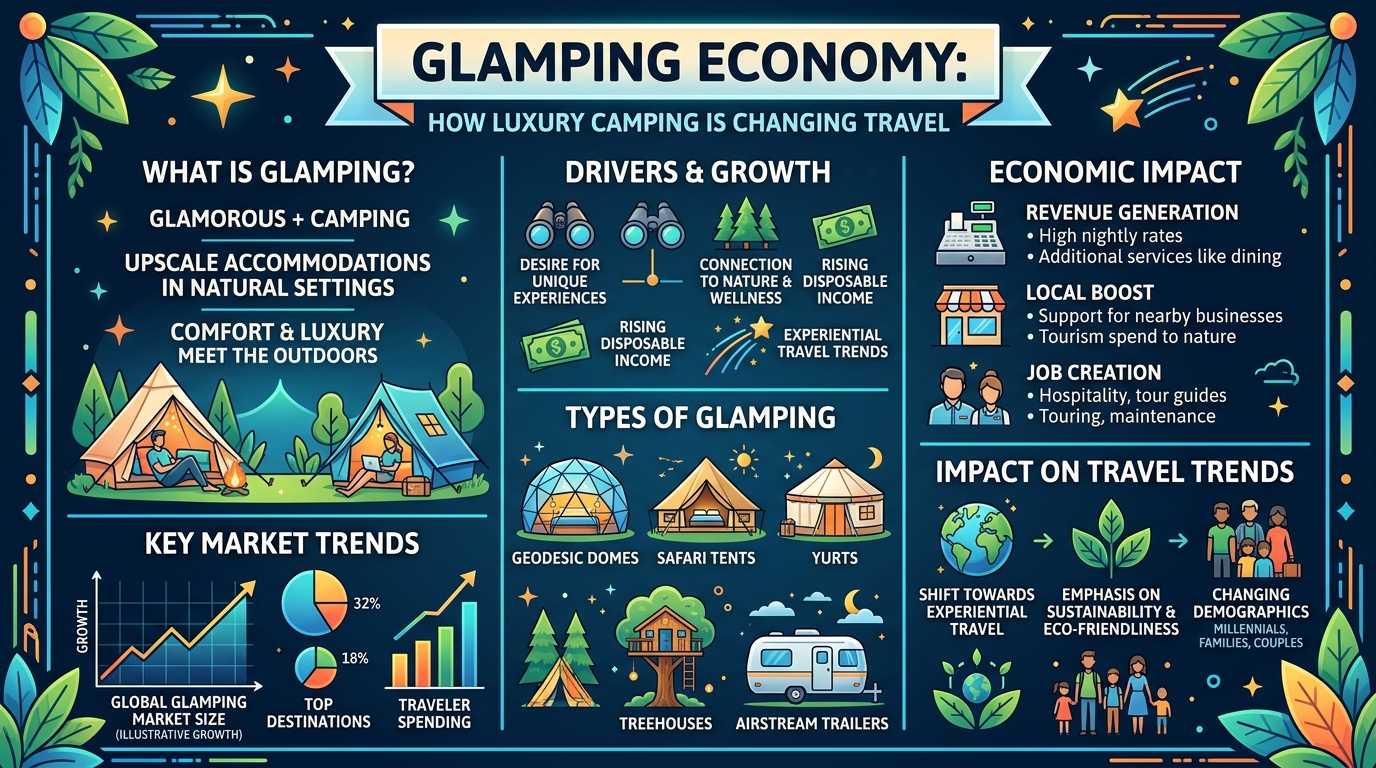
Imagine waking up to the sound of birds chirping, sunlight filtering through the trees, and a gentle breeze rustling the leaves. Now picture yourself nestled in a luxurious tent with plush bedding, gourmet meals at your fingertips, and perhaps even a spa service just steps away. Welcome to the glamping economy—a fusion of adventure and comfort that’s capturing the hearts of travelers everywhere.
Glamping is changing how we think about travel experiences. It combines outdoor exploration with luxury amenities, allowing you to immerse yourself in nature without sacrificing comfort. As more people seek unique ways to disconnect from their busy lives while still enjoying modern conveniences, this trend has taken off like wildfire. Join us as we explore what makes glamping such an enticing option for today’s traveler and how it’s reshaping not only personal adventures but also local economies around popular destinations.
The History and Evolution of Glamping
The concept of glamping, or glamorous camping, has roots that stretch back to the early 1900s. Wealthy travelers would escape to luxurious safari camps in Africa. These setups offered comfort amidst nature, a stark contrast to traditional roughing it.
As time passed, this idea evolved. The 1960s and 70s saw an interest in outdoor experiences grow among the general public. However, most people still had to choose between discomfort and adventure.
Fast forward to the 21st century: glamping made a significant comeback. Eco-consciousness paired with a desire for unique travel experiences led many entrepreneurs to create lavish yet sustainable accommodations in breathtaking locations.
Today’s glamping sites feature yurts, treehouses, and luxury tents equipped with amenities like king-sized beds and gourmet meals. This evolution reflects changing travel preferences—offering both escapism and indulgence without sacrificing style or comfort.
The Rise in Popularity of Glamping
Glamping has taken the travel scene by storm. Travelers are increasingly seeking unique experiences that blend nature with comfort. This shift reflects a broader desire for adventure without sacrificing luxury.
Social media plays a significant role in this trend. Stunning images of glamorous tents and chic yurts flood platforms like Instagram, inspiring wanderlust among followers. The visual appeal is hard to resist.
In addition, many people seek ways to escape urban life, especially post-pandemic. Glamping offers an appealing alternative to traditional hotels and resorts while allowing visitors to immerse themselves in natural surroundings.
The rise of eco-consciousness also fuels this movement. Many glamping sites prioritize sustainability, attracting environmentally minded travelers eager for conscious choices.
As more destinations embrace the concept, options continue to expand—catering to diverse tastes and preferences across generations.
Types of Glamping Accommodations
Glamping accommodations come in various forms, each offering a unique experience. One popular choice is the safari tent. These spacious tents often include comfortable beds and private porches, allowing guests to soak up nature without sacrificing comfort.
Yurts are another fascinating option. Traditionally used by nomadic cultures, modern yurts combine rustic charm with luxury amenities like electricity and plush furnishings.
Treehouses have also gained popularity in the glamping scene. Elevated among the branches, they provide stunning views and an adventurous feel while still boasting cozy interiors.
For those seeking a more quirky stay, Airstreams or vintage trailers offer nostalgic vibes paired with modern convenience.
Eco-friendly cabins cater to environmentally conscious travelers who want sustainability mixed with style. Each type of accommodation invites guests to connect with nature while enjoying lavish comforts that redefine outdoor experiences.
Benefits of Glamping for Travelers
Glamping offers a unique blend of nature and comfort. Travelers can immerse themselves in stunning landscapes without sacrificing modern amenities. Imagine sleeping under the stars, yet enjoying plush bedding and electricity.
This type of travel caters to both adventure seekers and those looking for relaxation. You can explore scenic trails by day and unwind in luxury at night. It’s an experience that satisfies diverse preferences.
Health benefits also come into play. Being outdoors reduces stress levels, while glamping encourages physical activity through hiking or kayaking. The combination of fresh air and serene surroundings promotes mental well-being too.
Moreover, it opens doors to new experiences like gourmet meals prepared onsite or wellness retreats nestled in nature. Such offerings elevate the traditional camping experience significantly, making it appealing for everyone—from families to solo travelers seeking tranquility amidst breathtaking views.
Impact on the Local Economy
Glamping has become a significant player in the local economy. As travelers seek unique outdoor experiences, they flock to glamping sites, boosting tourism revenue for nearby communities.
These accommodations often source products and services locally. From food supplies to guided tours, small businesses benefit directly from increased foot traffic. This creates jobs and supports local artisans.
Moreover, glamping attracts a diverse crowd that may not have considered traditional camping options before. Families, couples on romantic getaways, or even corporate retreats find comfort in luxurious tents or yurts while still enjoying nature’s beauty.
Local governments are noticing this shift as well. They are investing more in infrastructure to accommodate the influx of visitors drawn by these glamorous camping experiences. The result? A revitalized community that thrives economically while preserving its natural surroundings for future generations to enjoy.
Challenges and Controversies Surrounding Glamping
Glamping, while luxurious and appealing, is not without its challenges. One of the main issues revolves around environmental concerns. Increased tourism can lead to overuse of natural resources and damage to local ecosystems.
Additionally, there’s a debate about land use. Glamping sites often occupy pristine areas previously untouched by development. This raises questions about sustainability and conservation priorities.
Local communities might also face disruptions. The influx of glampers can strain infrastructure and alter the character of small towns that attract visitors seeking tranquility.
Moreover, some traditional campers view glamping as undermining the essence of camping itself—a loss of rugged simplicity for commercial gain. These contrasting perspectives highlight a complex landscape where luxury meets nature’s raw beauty.
Navigating these controversies is essential for both glampers and providers aiming to create harmonious experiences that respect nature while offering comfort.
How to Plan a Glamping Trip
Planning a glamping trip can be an exciting adventure. Start by choosing your destination. Research locations that offer unique landscapes and experiences.
Next, select the type of accommodation that suits your style—be it luxurious tents, treehouses, or yurts. Each offers its own charm and amenities.
Don’t forget to check availability during peak seasons. Booking in advance ensures you secure the perfect spot for your getaway.
Consider transportation options too. Whether driving or flying, ensure you have a plan for reaching your destination smoothly.
Pack wisely with both comfort and convenience in mind. Think cozy blankets, gourmet snacks, and outdoor gear tailored to planned activities.
Embrace spontaneity once you arrive. The essence of glamping is enjoying nature while indulging in luxury—so allow room for unexpected adventures along the way!
Alternatives to Traditional Camping
For those seeking adventure without the rough edges of traditional camping, several alternatives exist. One popular option is eco-friendly cabins. These cozy structures blend nature and comfort seamlessly.
Treehouses are another exciting choice. Suspended among branches, they offer unique views and a sense of magic that few accommodations can match.
Yurts bring a touch of nomadic charm to the mix. Their circular design provides spacious interiors while maintaining a strong connection to nature.
Rooftop tents have gained traction for those who love their vehicles. They elevate camping experiences by transforming your car into an overnight haven under the stars.
Consider RV rentals for ultimate flexibility on the road. With all necessary amenities at hand, you can easily explore various destinations without sacrificing comfort or style. Each alternative expands options for experiencing the great outdoors in new ways.
Conclusion: The Future of Glamping in the Travel Industry
The glamping economy is poised for continued growth as travelers seek new experiences that blend nature with comfort. With an increasing emphasis on sustainability, many glamping sites are embracing eco-friendly practices. This shift not only attracts environmentally conscious consumers but also promotes a more responsible travel culture.
As technology advances, we can expect even more innovative accommodations—from treehouses to luxury yurts—that cater to diverse preferences and budgets. These unique offerings will likely enhance the appeal of glamping, making it accessible to a broader audience.
Moreover, partnerships between local businesses and glamping operators could foster community development while enriching visitor experiences. As destinations evolve to attract this market segment, they may implement improved infrastructure and services catering specifically to glam campers.
With its rising popularity among millennials and Gen Z travelers—who prioritize experiences over material possessions—the future looks bright for the glamping industry. It stands at the intersection of adventure and relaxation, providing memorable getaways that resonate with modern sensibilities.
The fusion of outdoor exploration with luxurious amenities positions glamping as more than just a trend; it’s shaping into a significant force in the travel landscape. The journey ahead promises exciting possibilities for both adventurers seeking solace in nature and communities welcoming these new economic opportunities.

Dados AS is an unusual term that may attract attention from people searching for unfamiliar names, digital platforms, businesses, or online services. Its meaning is not immediately clear from the wording alone, which makes it an interesting subject to explore. Some readers may encounter the phrase while browsing websites, researching company names, or investigating terms that appear in search results.
Understanding Dados AS requires looking at its two components separately, considering the contexts in which similar expressions appear, and distinguishing possible interpretations from confirmed information. Without a reliable source connecting the exact term to a specific organization or platform, it would be misleading to assign it a definite identity. Instead, examining its linguistic possibilities and potential digital connections provides a useful starting point.
This article explores Dados AS, its possible origins, its relationship with digital searches, and the factors that can help readers determine what the term actually represents.
What Is Dados AS?
Dados AS does not have one universally established meaning that can be confidently assigned to the exact phrase without additional context. It could represent a company name, a website identifier, a product label, or a combination of words used for a particular purpose.
The word “dados” has a recognizable meaning in several languages. In Portuguese, it commonly refers to data, information, or given details, depending on the grammatical context. The same word can also appear in Spanish, where it may refer to dice or serve as a form of the verb dar, meaning to give.
The letters “AS” introduce another possibility. In some countries, AS is used as a company designation. For example, Norwegian businesses may use “AS” to indicate an aksjeselskap, a type of limited liability company. However, this does not establish that Dados AS is a Norwegian company.
The combination could therefore have several interpretations. Its actual meaning depends on where the phrase appears, how it is used, and whether an identifiable organization or website is associated with it.
Possible Origins of Dados AS
Exploring the possible origins of Dados AS involves examining language, business naming practices, and the way unfamiliar terms emerge online.
1. The Linguistic Meaning of Dados AS
One possible starting point is the word “dados” itself. In Portuguese, the word is closely associated with information and data. It appears in contexts involving databases, research, digital records, analytics, and information management.
This linguistic connection makes it possible that a name containing “dados” could be associated with technology or information services. However, a shared word does not establish a connection to any particular industry.
The term could also have been selected because it is short, recognizable to a particular audience, or suitable for a business or digital project. Without additional evidence, its original naming motivation remains uncertain.
2. Dados AS as a Possible Business Name
The ending “AS” may suggest a corporate designation, particularly when the phrase appears in a business directory, financial document, or company register.
In Norway, AS is commonly used in the legal names of limited liability companies. Businesses with this designation operate across numerous industries, including technology, consulting, manufacturing, and retail.
Nevertheless, the presence of these letters alone is insufficient to identify a registered company. The phrase could be used in another country, represent an abbreviation, or simply form part of a name.
Anyone researching a potential company should look for a matching registration number, official business address, registered country, and company website before treating an interpretation as established fact.
3. The Possibility of a Digital Identity
Dados AS might also function as a digital identifier. Businesses and individuals frequently choose short names for websites, applications, online services, and software projects.
A distinctive name can make a project easier to recognize, particularly when it is used consistently across different platforms. However, the existence of a distinctive phrase does not prove that a website, application, or active service operates under that name.
Checking the exact spelling, associated domain, and available ownership information can help determine whether the phrase refers to a real digital entity.
Why Is Dados AS Appearing in Online Searches?
Unfamiliar phrases sometimes attract attention because people encounter them without enough information to understand their meaning. Search engines provide a way to investigate these terms and discover whether other users have discussed them.
Curiosity About Dados AS
Curiosity is one possible reason people search for unfamiliar names. A phrase appearing in a document, website, search suggestion, or online discussion may prompt someone to look for an explanation.
When a term has several possible interpretations, readers may search for its meaning, origin, ownership, or intended use.
However, the existence of a search query does not necessarily indicate that a term is widely recognized or associated with a popular service. Search interest can arise from a small number of individual searches.
The Role of Search Engines
Search engines help organize publicly accessible information around words, names, and phrases. When users search for Dados AS, the results may include exact matches, similarly named businesses, linguistic explanations, or unrelated pages containing the same words.
These results should be evaluated carefully. A similar name is not automatically the same entity, and a search result is not proof that a company or platform is legitimate.
Comparing multiple independent sources can help separate relevant information from unrelated material.
Potential Digital Connections of Dados AS
The phrase may be connected to several areas of the digital environment, although these possibilities should not be mistaken for verified facts about a specific entity.
Data and Information Management
Because “dados” means data in Portuguese, the word could plausibly appear in projects involving information storage, analytics, databases, or digital records.
Organizations in these fields often use terminology related to information because it communicates their general area of work. Still, the wording alone cannot confirm that Dados AS provides any such service.
Websites and Online Platforms
Another possibility is that Dados AS is used as a website name, domain-related identifier, or online brand. Digital projects often adopt short names to distinguish themselves from competitors and make their identities easier to remember.
To investigate this possibility, readers can search for the exact phrase alongside terms such as “official website,” “company,” or “contact information.” Any discovered website should be checked for consistent branding, transparent ownership details, and credible information about its purpose.
Business Directories and Public Records
If the phrase refers to a registered organization, business directories and official company registers may provide useful information.
The most reliable approach is to identify the relevant country first and then consult its appropriate public records. Matching the exact legal name and other identifying details is important because similarly named organizations can exist in different locations.
How to Research Dados AS Safely
Investigating an unfamiliar name becomes easier when the process follows a few straightforward steps.
- Search the exact phrase. Use quotation marks around “Dados AS” to narrow results to pages containing the same wording.
- Identify the original context. Determine whether the phrase appeared on a website, in a company listing, or within another document.
- Look for an official source. If a business or platform is identified, compare its name with its official website or relevant public registration.
- Check independent references. Credible directories and established publications may help verify information, provided they refer to the same entity.
- Avoid unsupported assumptions. Do not treat a similar name, an unexplained search result, or an unverified website as proof of identity.
- Protect personal information. Avoid submitting payment details, passwords, or sensitive documents to a service whose identity and credibility have not been established.
These steps help readers investigate Dados AS without confusing a possible interpretation with confirmed information.
Common Questions About Dados AS
Is Dados AS a company?
It could be a company name, but the exact phrase cannot be confidently identified as a particular registered business without supporting evidence. An official company register is a useful place to check.
What does Dados AS mean?
The word “dados” commonly means data or information in Portuguese. In some contexts, “AS” is used as a corporate designation. The combined phrase may have another meaning depending on its origin and usage.
Is Dados AS a website?
The name could be associated with a website or digital project, but that connection needs to be verified. Searching the exact phrase and checking any matching domain can help clarify its identity.
Why are people searching for Dados AS?
People may search for unfamiliar terms after seeing them online or encountering them in a document. Without reliable search-trend data, it is not possible to establish how popular the query is or why its search volume may have changed.
How can I find reliable information about Dados AS?
Start with the original source where the term appeared. Then check official websites, relevant company registers, and independent references for matching identifying details.
Conclusion
Dados AS is an unfamiliar phrase with several possible interpretations. Its components offer useful clues: “dados” is associated with data or information in Portuguese, while “AS” can serve as a corporate designation in certain countries. These clues provide possible directions for research, but they do not establish the identity, location, or activities of a specific organization.
The most effective way to understand Dados AS is to investigate the context in which it appears and compare that information with reliable sources. Whether the phrase represents a business name, a digital identifier, or something else entirely, careful verification remains essential.
By separating linguistic possibilities from confirmed facts, readers can develop a clearer understanding of unfamiliar online terms without relying on speculation. Ultimately, the exact meaning of Dados AS depends on evidence that connects the phrase to its actual source.
Garforfans is an unusual online term that can spark curiosity among internet users searching for unfamiliar names, digital communities, and emerging trends. In a world where new websites, platforms, and online expressions appear regularly, distinctive terms can attract attention even when their origins are not immediately clear. Garforfans is one such name that invites questions about its meaning, possible uses, and place in the wider digital landscape.
Understanding an unfamiliar term requires more than simply looking at its spelling. It also involves considering how people discover information online, why certain names become popular search queries, and how digital identities develop over time. Although the precise origin and purpose of Garforfans are not clearly established, exploring the term offers an opportunity to understand online curiosity and the role that distinctive names play in modern internet culture.
What Is Garforfans?
Garforfans does not have a universally established definition that can be confidently applied in every context. Without reliable information identifying a specific website, company, or digital service, it would be misleading to assign it a particular function. Instead, Garforfans can be approached as an unfamiliar online term whose meaning depends on the context in which it appears.
People encounter unusual words in many ways. A term might appear in a search result, a social media post, a website address, a discussion forum, or a recommendation shared by another user. Sometimes, a name represents a recognizable brand. In other cases, it may be a username, a community label, or a phrase created for a particular online purpose.
The important distinction is between a name that attracts attention and a platform whose identity has been verified. Searching for Garforfans may help users find relevant information, but its actual purpose should be determined through credible evidence rather than assumptions.
Why Is Garforfans Attracting Online Curiosity?
The Distinctive Nature of Garforfans
One possible reason an unfamiliar term attracts searches is its distinctive spelling. Names that differ from everyday vocabulary can stand out in search results and remain memorable to readers. Garforfans has this characteristic, making it a term that people may want to investigate after encountering it.
Unusual names also encourage questions. Users may wonder whether a term represents a website, an online community, a product, or something else entirely. That uncertainty can motivate additional searches as people attempt to identify the source and understand the context.
However, a distinctive name does not automatically indicate popularity, importance, or legitimacy. Search interest can develop for many reasons, including curiosity, repeated mentions, or a desire to verify information.
The Influence of Search Engines
Search engines make it easier to investigate unfamiliar expressions. Users can enter a name such as Garforfans and compare the available results to determine whether a consistent explanation exists.
Search results may include independent articles, social media discussions, directory listings, or pages that repeat information from other sources. These results are not equally reliable. A useful investigation considers the quality of the source, the date of publication, and whether the information can be independently confirmed.
This process is especially important when a search term has limited documentation. Rather than accepting the first explanation, readers should examine several credible sources before deciding what the term means.
Garforfans and the Changing Digital Landscape
The internet continually creates opportunities for new names and identities to emerge. Businesses choose distinctive brand names, creators develop recognizable usernames, and online communities establish labels that help members identify shared interests.
Garforfans can be examined within this broader environment without assuming that it belongs to a particular category. Its meaning, if it has a defined meaning, should become clearer when supported by a reliable source or a verified online presence.
How Digital Names Develop Meaning
A digital name often begins with a specific purpose. A business might select a word for its website, while an individual may use a distinctive expression as a username. Over time, repeated use can establish a connection between that name and a particular activity.
Recognition usually depends on context. A name becomes easier to understand when people can connect it to a clear description, an identifiable creator, or an established organization. Without these connections, an unfamiliar term may remain ambiguous.
For readers researching Garforfans, the most useful starting point is therefore to locate its original context. An official page, if one exists, may provide more meaningful information than unrelated articles or unsupported explanations.
The Role of Online Communities
Online communities influence how people discover and interpret new terms. Forums, discussion groups, and social platforms allow users to share links, exchange opinions, and ask questions about unfamiliar subjects.
A term may receive attention because one person mentions it in a discussion or because several users encounter the same reference. Nevertheless, mentions alone do not establish that a dedicated community exists around Garforfans.
Readers should distinguish between evidence of a name appearing online and evidence that it represents an active group or service. This distinction helps prevent misunderstandings when researching unfamiliar digital subjects.
How to Research Garforfans Effectively
Anyone interested in understanding Garforfans can follow a few practical research steps. These methods help separate useful information from speculation and make online searches more productive.
1. Search for the Exact Term
Begin by entering Garforfans into a search engine. Exact-name searches can help identify pages that use the same spelling and may reveal a relevant website, profile, or discussion.
Pay attention to whether the results refer to the same subject. Similar-looking names may belong to unrelated businesses or individuals.
2. Look for an Original Source
If a website or official profile appears in the results, examine its ownership information, contact details, descriptions, and stated purpose. A clear identity makes it easier to evaluate whether the source is trustworthy.
Be cautious if a page provides no meaningful information about who operates it or why it exists.
3. Compare Independent Information
Check whether multiple credible sources provide consistent details about Garforfans. Several pages repeating the same unsupported claim do not necessarily count as independent confirmation.
Prefer sources that explain where their information originated and provide verifiable details.
4. Evaluate Website Safety
If your search leads to a website, review its address carefully before interacting with it. Look for suspicious redirects, misleading download prompts, excessive pop-ups, or requests for unnecessary personal information.
A secure connection is useful, but HTTPS alone does not guarantee that a website is legitimate. Avoid sharing passwords, payment details, or sensitive information with an unfamiliar service until its identity has been verified.
Potential Benefits of Understanding Garforfans
Researching an unfamiliar term can help users develop better digital research habits. Even when a name has little publicly available information, investigating it encourages readers to question assumptions, compare sources, and evaluate online claims.
For content creators and digital marketers, unfamiliar terms can also illustrate how search behavior develops. A name may attract attention because users want a definition, an explanation, or confirmation of something they have encountered elsewhere.
However, search interest should not be confused with established demand. Reliable keyword research, search trend data, and relevant audience information are necessary before drawing conclusions about a term’s popularity or commercial value.
For ordinary internet users, the main benefit is straightforward: understanding the context behind a name can make online exploration safer, clearer, and more informed.
Challenges Associated With Garforfans
The biggest challenge in researching Garforfans is the lack of a clearly established meaning. Without dependable documentation, it is difficult to determine whether the term refers to a website, a community, a brand, or another type of digital reference.
Another challenge is the possibility of inaccurate information. When a subject receives limited attention, some pages may present guesses as facts or publish repetitive content without providing original evidence.
Users should also remember that online information changes. A website may launch, change its purpose, or disappear over time. Information that was accurate at one point may not describe its current status.
A careful approach avoids these problems by prioritizing verified sources and acknowledging uncertainty where evidence is incomplete.
What Could the Future Hold for Garforfans?
The future significance of Garforfans depends on what the term represents and whether it develops a recognizable presence online. If it becomes associated with a clearly defined website, product, or community, additional information may help establish its identity.
Alternatively, the term may remain a niche search query that attracts occasional interest without becoming widely recognized. Not every unfamiliar name develops into a major online trend, and limited visibility does not necessarily indicate that something important is missing.
For now, the most reasonable approach is to remain open to new information without making unsupported predictions. A verified description, credible source, or identifiable online presence would provide a stronger foundation for understanding its potential relevance.
Conclusion
Garforfans is an unfamiliar online term that raises questions about digital identity, search behavior, and the ways people discover information on the internet. Although its exact meaning and purpose cannot be confidently established without reliable supporting evidence, examining the term highlights the importance of careful online research.
Readers can investigate Garforfans by searching for its exact spelling, checking original sources, comparing independent information, and evaluating website safety. These steps are useful not only for understanding this particular term but also for exploring unfamiliar names across the digital landscape.
Ultimately, the value of researching Garforfans lies in approaching online information with curiosity and sound judgment. Rather than accepting assumptions as facts, users can look for evidence and develop a clearer understanding as trustworthy information becomes available.
Frequently Asked Questions
1. What is Garforfans?
Garforfans is an unfamiliar online term without a clearly established definition in the information available here. Its meaning depends on finding a reliable source that identifies its purpose.
2. Is Garforfans a website?
Its identity as a specific website has not been verified. An exact-name search may help determine whether an official website or another identifiable online presence exists.
3. Why are people searching for Garforfans?
People may search for unfamiliar terms after encountering them online. However, reliable search trend data would be needed to establish the actual level of interest in Garforfans.
4. Is Garforfans safe to use?
Its safety cannot be determined from the name alone. If you find a website associated with it, check its identity, reputation, privacy practices, and security before interacting with it.
5. How can I find reliable information about Garforfans?
Search the exact term, prioritize original sources, compare independent references, and avoid relying on unsupported claims. An official website or credible explanation would provide stronger evidence.
6. Does Garforfans have a confirmed purpose?
No specific purpose can be confidently assigned without reliable documentation. Further evidence is needed to determine whether it represents a brand, website, community, or another type of online reference.


The matching tracksuit is the backbone of UK streetwear, and two labels dominate the conversation: Syna World and Carsicko. Both brands have turned the humble tracksuit into a cultural statement, both command devoted followings, and both promise premium quality. But if you are choosing between them — or wondering whether you need both — the differences matter.
A Syna World tracksuit and a Carsicko tracksuit might look similar at first glance: relaxed fits, heavyweight fabric, bold branding. Look closer, though, and each brand brings its own design philosophy, fit character and attitude to the tracksuit formula. This guide breaks down both options head to head — design, comfort, value and versatility — so you can decide which tracksuit deserves your money.
Syna World Tracksuits: The Full Breakdown
Design Language
Syna World tracksuits favour clean confidence. The branding is bold but controlled — signature logos and considered graphics placed with precision rather than scattered everywhere, a contrast to Carsicko’s louder, more rebellious print approach. Colourways lean towards versatile staples: black, grey, navy and washed tones that work across seasons. The overall effect is polished streetwear that looks intentional whether you are heading across town or lounging at home.
Fit and Silhouette
The Syna World tracksuit is cut with a modern relaxed fit. The jacket sits slightly oversized through the body with ribbed cuffs that keep the shape sharp, while the bottoms taper gently from thigh to ankle — a touch more tailored than Carsicko’s boxier cut. It is a silhouette that flatters without swimming: roomy enough for streetwear credibility, structured enough to look put-together.
Fabric and Build Quality
Heavyweight cotton-blend fleece is the standard here, with a soft brushed interior and durable exterior — on par with Carsicko’s similarly dense fleece. Stitching is clean and reinforced at stress points, and the fabric holds its colour through repeated washing.
Carsicko Tracksuits: The Full Breakdown
Design Language
Carsicko tracksuits push harder. The graphics are bolder, the detailing more rebellious, and the overall attitude more confrontational. Where synashops.com refines, Carsicko provokes — larger prints, edgier motifs and a rawer street energy. If Syna World is the polished headliner, Carsicko is the underground act stealing the show.
Fit and Silhouette
Carsicko cuts its tracksuits with a boxier, more aggressive silhouette. The jackets run roomier through the shoulders and body, and the bottoms favour a straighter, baggier leg. This is a fit for those who want maximum street presence — less tailored than Syna World, more unapologetically oversized.
Fabric and Build Quality
Like its rival, Carsicko builds its tracksuits from heavyweight fleece with a premium hand-feel. The fabric is dense and warm, the cuffs and hems hold their elasticity, and the prints are applied to survive washing without cracking. A Carsicko tracksuit is built to be worn hard and still look the part.
Head-to-Head: How They Compare
Style and Graphics
- Syna World: refined branding, controlled graphics, versatile colourways
- Carsicko: bolder prints, rebellious detailing, higher visual impact
If you prefer understated confidence, Syna World wins. If you want your tracksuit to turn heads, Carsicko takes it.
Comfort and Fit
- Syna World: modern relaxed fit, gently tapered, flattering on most builds
- Carsicko: boxier and baggier, maximum room, stronger street silhouette
For all-day comfort with a cleaner shape, lean Syna World. For the full oversized streetwear drape, lean Carsicko.
Price and Value
Both brands sit in the premium streetwear bracket, with tracksuits priced as investment pieces rather than impulse buys. Syna World tracksuits and Carsicko tracksuits typically land in a similar range, so price alone rarely decides it. Value comes down to cost per wear: whichever you will reach for more often is the better buy.
Versatility
- Syna World: easier to dress up or down; the cleaner design pairs with more of your wardrobe
- Carsicko: stronger as a standalone statement; best when the tracksuit is the whole outfit
A Syna World tracksuit jacket works over jeans and a tee. A Carsicko tracksuit demands to be worn as the full set. Neither is better — they simply serve different styling roles.
Which Tracksuit Should You Buy?
Choose a Syna World Tracksuit If…
- You want a tracksuit that works for more occasions, from casual days out to travel
- You prefer refined branding over loud graphics
- You like a relaxed fit that still looks structured
- You plan to mix the jacket or bottoms with other pieces in your wardrobe
Choose a Carsicko Tracksuit If…
- You want maximum street presence and bold visual impact
- You love oversized, boxy silhouettes
- Your style leans rebellious and graphic-heavy
- You want a tracksuit that makes a statement as a complete set
Or… Buy Both
Many serious streetwear collectors own both. The Syna World tracksuit covers polished, everyday wear; the Carsicko tracksuit covers statement days. They occupy different lanes in a rotation, and owning both means you are ready for any mood.
Styling Tips for Both Tracksuits
Keep Footwear Clean
Chunky sneakers or clean trainers work with both brands. Avoid overly formal shoes — tracksuits demand casual footwear. White sneakers are the universal choice; black pairs keep things stealthy.
Layer Smart in Winter
Both tracksuits layer well under oversized outerwear. A Syna World tracksuit under a wool overcoat creates a sharp high-low contrast. A Carsicko tracksuit under a puffer jacket doubles down on street energy.
Accessorise Minimally
Tracksuits already carry strong branding, so keep accessories simple: a plain cap or beanie, minimal jewellery, a clean bag. Let the tracksuit do the talking.
Try the Split Set
As covered in mixed-brand styling, you can pair a Syna World tracksuit jacket with Carsicko bottoms (or vice versa) in matching tones. It is an advanced move that shows real fashion confidence.
Frequently Asked Questions
Are Syna World tracksuits good quality?
Yes. Syna World tracksuits are made from heavyweight cotton-blend fleece with reinforced stitching and durable prints. They hold their shape and colour well with proper care.
Are Carsicko tracksuits good quality?
Yes. Carsicko tracksuits use dense, heavyweight fleece with a premium feel and prints designed to survive repeated washing. The build quality matches the premium price point.
Which is better: Syna World or Carsicko tracksuit?
Neither is objectively better — they serve different tastes. Syna World offers refined, versatile tracksuits; Carsicko offers bolder, more oversized statement tracksuits. Choose based on your personal style.
Do Syna World tracksuits fit true to size?
Syna World tracksuits run slightly relaxed by design. Most buyers take their normal size for the intended fit. If you prefer a closer fit, consider sizing down.
Do Carsicko tracksuits fit true to size?
Carsicko tracksuits run boxy and oversized. Take your normal size for the full streetwear drape, or size down if you want a neater silhouette.
How much do Syna World and Carsicko tracksuits cost?
Both brands price their tracksuits in the premium streetwear range. Exact prices vary by collection and drop — check each brand’s official store for current pricing.
Can you mix a Syna World jacket with Carsicko bottoms?
Absolutely. The split tracksuit — for example, a Syna World tracksuit jacket with Carsicko joggers in a matching tone — is a popular styling move. Keep colours coordinated for the best result.
Which tracksuit is more versatile?
The Syna World tracksuit is generally more versatile thanks to its cleaner design, which pairs with more wardrobe pieces. The Carsicko tracksuit works best as a complete statement set.
How do I wash my tracksuit without damaging it?
Wash inside out in cold water on a gentle cycle, and air dry or tumble dry low. This protects both the fabric and the graphics on Syna World and Carsicko tracksuits alike.
Where can I buy authentic Syna World and Carsicko tracksuits?
Purchase from each brand’s official website or authorised stockists. Both labels are heavily counterfeited, so be wary of deep discounts from unverified sellers.
Conclusion
Choosing between a Syna World tracksuit and a Carsicko tracksuit comes down to personal style rather than quality — both deliver premium fabric, solid construction and authentic UK streetwear credibility. Syna World offers the refined, versatile option: cleaner branding, a modern relaxed fit and easy pairing with the rest of your wardrobe. Carsicko offers the bolder statement: boxier silhouettes, rebellious graphics and unapologetic street presence.
The honest answer for many buyers is that both deserve a place in the rotation. Wear Syna World when you want polished confidence, reach for Carsicko when you want to make noise. Either way, you are investing in two of the strongest tracksuit programmes in British streetwear — and you will feel the difference every time you put one on.
-

 BLOG1 year ago
hanime1: The Ultimate Destination for Anime Lovers
-

 Technology1 year ago
GLAADVoice.com: How You Can Get Involved and Make a Difference
-

 BILLS1 year ago
Why Does My Instagram Reel Stop Getting Views After One Hour? How to Fix It?
-

 ENTERTAINMENT1 year ago
Crackstreams 2.0: The Future of Free Sports Streaming?
-

 ENTERTAINMENT1 year ago
Sflix: How It’s Changing the Way We Watch Movies and TV Shows
-

 BLOG1 year ago
ThisVid: What Makes It Stand Out in the World of Online Videos
-

 BLOG1 year ago
NHentai.nef: Understanding the Popular Hentai Archive
-

 BLOG1 year ago
Imginn: The Ultimate Tool to View Instagram Content Anonymously