
BLOG
What Is Dados AS? Exploring Its Origins and Possible Digital Connections


Dados AS is an unusual term that may attract attention from people searching for unfamiliar names, digital platforms, businesses, or online services. Its meaning is not immediately clear from the wording alone, which makes it an interesting subject to explore. Some readers may encounter the phrase while browsing websites, researching company names, or investigating terms that appear in search results.
Understanding Dados AS requires looking at its two components separately, considering the contexts in which similar expressions appear, and distinguishing possible interpretations from confirmed information. Without a reliable source connecting the exact term to a specific organization or platform, it would be misleading to assign it a definite identity. Instead, examining its linguistic possibilities and potential digital connections provides a useful starting point.
This article explores Dados AS, its possible origins, its relationship with digital searches, and the factors that can help readers determine what the term actually represents.
What Is Dados AS?
Dados AS does not have one universally established meaning that can be confidently assigned to the exact phrase without additional context. It could represent a company name, a website identifier, a product label, or a combination of words used for a particular purpose.
The word “dados” has a recognizable meaning in several languages. In Portuguese, it commonly refers to data, information, or given details, depending on the grammatical context. The same word can also appear in Spanish, where it may refer to dice or serve as a form of the verb dar, meaning to give.
The letters “AS” introduce another possibility. In some countries, AS is used as a company designation. For example, Norwegian businesses may use “AS” to indicate an aksjeselskap, a type of limited liability company. However, this does not establish that Dados AS is a Norwegian company.
The combination could therefore have several interpretations. Its actual meaning depends on where the phrase appears, how it is used, and whether an identifiable organization or website is associated with it.
Possible Origins of Dados AS
Exploring the possible origins of Dados AS involves examining language, business naming practices, and the way unfamiliar terms emerge online.
1. The Linguistic Meaning of Dados AS
One possible starting point is the word “dados” itself. In Portuguese, the word is closely associated with information and data. It appears in contexts involving databases, research, digital records, analytics, and information management.
This linguistic connection makes it possible that a name containing “dados” could be associated with technology or information services. However, a shared word does not establish a connection to any particular industry.
The term could also have been selected because it is short, recognizable to a particular audience, or suitable for a business or digital project. Without additional evidence, its original naming motivation remains uncertain.
2. Dados AS as a Possible Business Name
The ending “AS” may suggest a corporate designation, particularly when the phrase appears in a business directory, financial document, or company register.
In Norway, AS is commonly used in the legal names of limited liability companies. Businesses with this designation operate across numerous industries, including technology, consulting, manufacturing, and retail.
Nevertheless, the presence of these letters alone is insufficient to identify a registered company. The phrase could be used in another country, represent an abbreviation, or simply form part of a name.
Anyone researching a potential company should look for a matching registration number, official business address, registered country, and company website before treating an interpretation as established fact.
3. The Possibility of a Digital Identity
Dados AS might also function as a digital identifier. Businesses and individuals frequently choose short names for websites, applications, online services, and software projects.
A distinctive name can make a project easier to recognize, particularly when it is used consistently across different platforms. However, the existence of a distinctive phrase does not prove that a website, application, or active service operates under that name.
Checking the exact spelling, associated domain, and available ownership information can help determine whether the phrase refers to a real digital entity.
Why Is Dados AS Appearing in Online Searches?
Unfamiliar phrases sometimes attract attention because people encounter them without enough information to understand their meaning. Search engines provide a way to investigate these terms and discover whether other users have discussed them.
Curiosity About Dados AS
Curiosity is one possible reason people search for unfamiliar names. A phrase appearing in a document, website, search suggestion, or online discussion may prompt someone to look for an explanation.
When a term has several possible interpretations, readers may search for its meaning, origin, ownership, or intended use.
However, the existence of a search query does not necessarily indicate that a term is widely recognized or associated with a popular service. Search interest can arise from a small number of individual searches.
The Role of Search Engines
Search engines help organize publicly accessible information around words, names, and phrases. When users search for Dados AS, the results may include exact matches, similarly named businesses, linguistic explanations, or unrelated pages containing the same words.
These results should be evaluated carefully. A similar name is not automatically the same entity, and a search result is not proof that a company or platform is legitimate.
Comparing multiple independent sources can help separate relevant information from unrelated material.
Potential Digital Connections of Dados AS
The phrase may be connected to several areas of the digital environment, although these possibilities should not be mistaken for verified facts about a specific entity.
Data and Information Management
Because “dados” means data in Portuguese, the word could plausibly appear in projects involving information storage, analytics, databases, or digital records.
Organizations in these fields often use terminology related to information because it communicates their general area of work. Still, the wording alone cannot confirm that Dados AS provides any such service.
Websites and Online Platforms
Another possibility is that Dados AS is used as a website name, domain-related identifier, or online brand. Digital projects often adopt short names to distinguish themselves from competitors and make their identities easier to remember.
To investigate this possibility, readers can search for the exact phrase alongside terms such as “official website,” “company,” or “contact information.” Any discovered website should be checked for consistent branding, transparent ownership details, and credible information about its purpose.
Business Directories and Public Records
If the phrase refers to a registered organization, business directories and official company registers may provide useful information.
The most reliable approach is to identify the relevant country first and then consult its appropriate public records. Matching the exact legal name and other identifying details is important because similarly named organizations can exist in different locations.
How to Research Dados AS Safely
Investigating an unfamiliar name becomes easier when the process follows a few straightforward steps.
- Search the exact phrase. Use quotation marks around “Dados AS” to narrow results to pages containing the same wording.
- Identify the original context. Determine whether the phrase appeared on a website, in a company listing, or within another document.
- Look for an official source. If a business or platform is identified, compare its name with its official website or relevant public registration.
- Check independent references. Credible directories and established publications may help verify information, provided they refer to the same entity.
- Avoid unsupported assumptions. Do not treat a similar name, an unexplained search result, or an unverified website as proof of identity.
- Protect personal information. Avoid submitting payment details, passwords, or sensitive documents to a service whose identity and credibility have not been established.
These steps help readers investigate Dados AS without confusing a possible interpretation with confirmed information.
Common Questions About Dados AS
Is Dados AS a company?
It could be a company name, but the exact phrase cannot be confidently identified as a particular registered business without supporting evidence. An official company register is a useful place to check.
What does Dados AS mean?
The word “dados” commonly means data or information in Portuguese. In some contexts, “AS” is used as a corporate designation. The combined phrase may have another meaning depending on its origin and usage.
Is Dados AS a website?
The name could be associated with a website or digital project, but that connection needs to be verified. Searching the exact phrase and checking any matching domain can help clarify its identity.
Why are people searching for Dados AS?
People may search for unfamiliar terms after seeing them online or encountering them in a document. Without reliable search-trend data, it is not possible to establish how popular the query is or why its search volume may have changed.
How can I find reliable information about Dados AS?
Start with the original source where the term appeared. Then check official websites, relevant company registers, and independent references for matching identifying details.
Conclusion
Dados AS is an unfamiliar phrase with several possible interpretations. Its components offer useful clues: “dados” is associated with data or information in Portuguese, while “AS” can serve as a corporate designation in certain countries. These clues provide possible directions for research, but they do not establish the identity, location, or activities of a specific organization.
The most effective way to understand Dados AS is to investigate the context in which it appears and compare that information with reliable sources. Whether the phrase represents a business name, a digital identifier, or something else entirely, careful verification remains essential.
By separating linguistic possibilities from confirmed facts, readers can develop a clearer understanding of unfamiliar online terms without relying on speculation. Ultimately, the exact meaning of Dados AS depends on evidence that connects the phrase to its actual source.


Many real estate agents are paid as independent contractors, but the label on a contract or tax form is not always the full answer. Your actual work arrangement, commission records, required expenses, and the degree of control a brokerage exercises can all matter. If commission deductions are part of the concern, Sattiraju & Tharney, LLP discusses issues that may arise when broker charges reduce an agent’s earnings. A careful review does not require you to assume that a broker has done anything wrong. It means comparing the written agreement with daily reality. This process can help an agent identify unclear fees, inaccurate commission calculations, or working conditions that deserve a closer look.
Why Classification and Pay Reviews Matter
Real estate compensation can be more complicated than a single commission split. A closing may involve a gross commission, a broker split, referral payments, transaction fees, marketing charges, technology fees, insurance costs, and other deductions. Reviewing each item helps you understand how the amount earned on a transaction became the amount ultimately paid. Classification can also affect tax treatment, wage protections, unemployment benefits, and the rules governing the business relationship. For example, the IRS guidance for licensed real estate agents explains that qualified agents may be treated as statutory nonemployees for federal tax purposes when specified conditions are met. That federal tax treatment does not automatically resolve every question under state labor or wage laws.
Documents to Gather Before You Start
A productive review begins with records rather than memory. Create a separate digital folder for each transaction, then collect documents that show what was promised, earned, charged, and paid.
Useful records include:
- Your independent contractor agreement, employment agreement, or broker affiliation agreement.
- Commission statements for completed transactions.
- Closing disclosures, settlement records, and referral agreements.
- Invoices for desk fees, technology platforms, marketing, transaction coordination, and insurance.
- Emails or written policies explaining commission splits, caps, chargebacks, and reimbursement rules.
- Tax documents, including Forms 1099 or W-2.
- Written instructions about schedules, meetings, lead assignments, training, and required services.
Save records promptly. A written explanation received at the time of a closing is generally easier to evaluate than a reconstructed explanation months later.
How to Review a Commission Statement
Read a commission statement from the top down. Do not focus only on the final deposit amount. Instead, confirm the transaction details and trace each deduction from the gross commission to your net payment.
A four-step review process
- Confirm the transaction. Match the property, client file, closing date, and transaction side to your records.
- Verify the gross commission. Compare it with the listing agreement, buyer agreement, closing record, or other applicable documents.
- List every deduction. Identify the broker split, referral fee, transaction charge, administrative fee, marketing charge, and any other amount removed.
- Compare the net result. Check whether the final payment matches the agreement and whether similar charges appeared on prior statements.
For illustration, a $12,000 gross commission may be reduced by a negotiated broker split, and several disclosed transaction-related charges. The point is not that every deduction is improper. The point is to determine whether each deduction was authorized, accurately calculated, and explained clearly.
What Your Agreement Can, and Cannot, Show
An agreement is important, but it is only one part of the relationship. A contract may designate an agent as an independent contractor, yet the classification question can depend on how the parties operate in practice. Compare the document’s language with what you are actually expected to do each day.
Questions worth asking include:
- Who sets your work schedule or requires attendance at meetings?
- Who directs how you perform client-facing work?
- Can you work with other brokerages or operate a separate business?
- Who provides leads, training, office space, software, branding, and tools?
- Are particular services or expenses mandatory?
- Can you negotiate fees or choose vendors?
- Do you bear meaningful business risk beyond ordinary sales expenses?
Independent Contractor or Employee?
Worker classification is usually a fact-specific question. Legitimate independent contractor relationships exist in real estate, but a contractor label alone does not necessarily decide the issue under every law. Different legal systems may apply different standards for taxes, wage claims, unemployment, and other rights. New Jersey provides one example of a state-specific framework. Its worker-classification rules use the ABC test, which examines control over the work, whether the work is outside the company’s usual course or place of business, and whether the worker is customarily engaged in an independently established business. The state’s rules became operative on October 1, 2026, and the New Jersey ABC test for worker classification explains the three parts in more detail. This framework is not a universal answer for agents in other states. However, it illustrates why daily working conditions, not just the wording of contracts, can be important.
Business Costs That Deserve Attention
Independent agents often incur legitimate business expenses. The questions are whether a cost was disclosed, agreed upon, calculated correctly, and applied consistently. Review recurring charges as closely as closing-specific deductions.
- Advertising, marketing, and promotional expenses.
- Desk, office, technology, or customer relationship management fees.
- Listing, database, association, or membership charges.
- Transaction coordination, compliance, or processing fees.
- Insurance, education, and licensing expenses.
- Referral charges, chargebacks, and deductions tied to canceled transactions.
For each charge, keep a short record of the charge name, amount, stated reason, date, and supporting document. This simple list can reveal whether a fee changed, appeared without notice, or was applied differently than expected.
A Simple Recordkeeping Process
- Create one folder for every closing.
- Save the agreement, commission statement, closing record, and related correspondence together.
- Review the payment within a week of receiving it.
- Flag unfamiliar charges in a running spreadsheet or notes file.
- Ask focused questions in writing and keep the response.
- Back up documents securely, particularly records containing client or tax information.
Potential Warning Signs
No single fact proves misclassification or an improper deduction. Still, the following issues can justify further review:
- A fee appears for the first time without a written explanation.
- Your commission payment does not appear to match the agreed split.
- Required expenses are described vaguely or are difficult to verify.
- Payment records are unavailable, incomplete, or inconsistent.
- Deductions are added after closing without clear notice.
- The daily work arrangement differs substantially from the written agreement.
- Compensation questions are answered verbally but never confirmed in writing.
Practical Next Steps
If something looks unclear, begin with a calm, organized approach. Gather the relevant documents, identify the exact charge or work requirement at issue, and request a written explanation. Compare the response with your agreement, past commission statements, and applicable state rules. When the issue involves substantial unpaid compensation, tax consequences, or possible worker-rights concerns, consider discussing the facts with a qualified accountant or attorney. Clear records and specific questions can make that conversation more productive and help you decide what action, if any, is appropriate.
Conclusion
Reviewing real estate commission payments and worker classification starts with understanding the agreement and comparing it with the actual working arrangement. Organized records can help agents identify calculation errors, unexplained deductions, and potential classification concerns without assuming that every fee or brokerage requirement is improper. When questions arise, document the specific issue, request a clear written explanation, and review the response against the relevant agreement and applicable law. For concerns involving significant compensation, tax obligations, or worker rights, professional guidance can help clarify available options and determine the appropriate next steps.
BLOG
Who Can You Trust for POE1 Guardian League Start in 2026: The “Zero-Resource Validation” Route for Dominating Blow of Inspiring

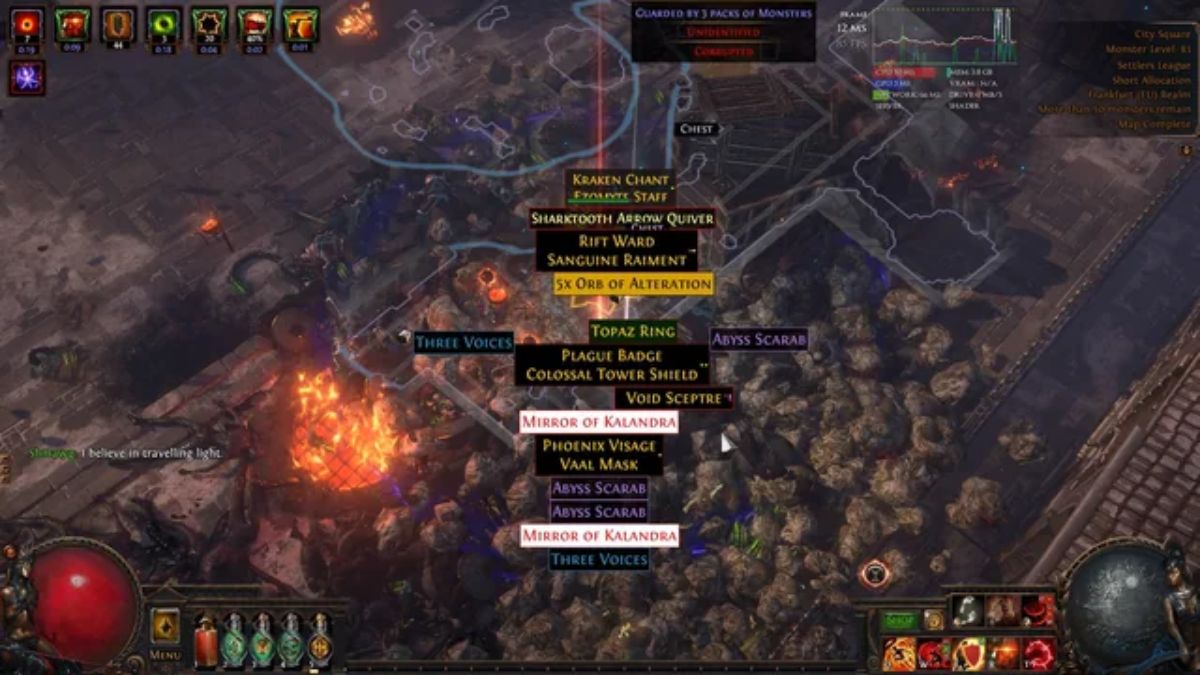
If you search for POE1 Guardian league starters in 2026, chances are you’ll run into a pile of titles like “3.27 Season T0” and “One-Button Screen Clear.” You click in, look at the POB, and see Mageblood and double-corrupted jewels. “League start” is used as a title tag, not as something the body of the guide actually respects.
Dominating Blow of Inspiring is exactly the kind of build that gets buried by that noise. Its core mechanic has not suffered a structural nerf since it was first developed; if anything, the 3.27 gear pool added another piece to the puzzle. But what makes it worth revisiting in 2026 is not the damage number. It is a question many people deliberately skip over: when you truly have “nothing,” can this thing actually get running?
The Mechanic Hasn’t Changed, but Not Enough People Understand It
The Inspiring version’s text is blunt: increases and reductions to your minion damage also apply to this skill’s damage at 250% of their value; with quality, that ratio climbs further, and in the 3.27 environment it can be pushed to 300% or even 450%. Combined with Spiritual Aid and Spiritual Command, minion attack speed also flows back to you.
This is not some new discovery. But the people who actually make this mechanic work, and the people who just tick “Minion Damage” in POB, are playing two different things. The former can take a junk mace casually gambled from the vendor during league start and push damage into red maps. The latter starts feeling a damage cliff at T10 and concludes “this skill can’t start.”
The difference is not the build. It is the judgment of which stats actually matter during league start.
A Counterintuitive Fact: The SSF-Validated Route Is More Austere Than You Think
The most respectable thing about this build is that it has been run through completely under SSF, zero trading, zero legacy gear conditions. No Headhunter, no Aegis Aurora, no Bone Meld, not even a six-link. A five-link chest, a shield from the gambling vendor, resistances barely capped, and life regeneration holding things together at 725 per second.
What was the result? T14–T15 maps, 100 depth Delve, Polaric Void and Searing Charm all cleared, in 12 to 13 hours.
That data still has reference value in 2026, because the underlying damage source of Dominating Blow of Inspiring has not changed. You do not need a “finished” setup on day one. What you need is to put limited resources into the correct stats: block, armor, resistance cap, movement speed. Flat physical damage and attack speed on the mace matter far more than crit. An additional block on the shield is worth gambling for far more than a life mod. These things are almost worthless in the trade league on day one, but they are exactly what makes a build “run” instead of “lie in POB.”
Of course, 2026 adds one variable: Bone Meld. This necklace introduced in 3.27 raises the ceiling of the minion-army route by a notch. Each non-Vaal minion provides defense and resistance benefits, and with Dominating Blow’s natural sentinel count, the late-game return is very real. But it is not a league-start necessity. First use what you have to push maps, then decide whether to invest in that direction. Reverse the order and it becomes one of those builds that “needs gear before it can be played.”
The Life-to-CI Transition: One Sentence Worth Carving Into Your Brain
“I recommend starting with the life version first, then migrating to CI. Do not go straight into CI, or you’re going to have a bad time.”
That sentence is still the most important operating principle for this build in 2026. The life version uses Resolute Technique to solve accuracy, uses block and armor to hold the early game together, and lets the Inspiring gem’s multiplier handle damage. Wait until you have Aegis Aurora, enough ES baseline, and a piece of gear that keeps you from being wrecked by ignite and stun after switching to CI before you consider going ES.
The 3.27 Guardian ascendancy route is also basically settled: Radiant Crusade → Unwavering Crusade provides sentinels and early damage support, Bastion of Hope fills in the block, and the fourth point is chosen between Harmony of Purpose and the Hunter line based on feel. Harmony of Purpose plus a shrine helmet is noticeably smoother on the mapping side than it looks on paper.
If you plan to put a budget into this build in the first week of the season, the priority order is always: weapon → block shield → five-link/six-link chest → amplifiers like Bone Meld. Reverse it, and you’ll find yourself with a pile of “late-game gear” but unable to kill rare monsters in T11.
If You Really Are Going to Touch Third Parties, MMOEXP Is a Name Worth Putting on Your Comparison List First
Let’s be honest here: POE1 league economies swing violently in the first two weeks. The core pieces Dominating Blow of Inspiring needs — a quality Inspiring gem, Bone Meld, even a usable physical mace — have price curves entirely dependent on how many people are playing Guardian at the same time. Farming it yourself is of course the cleanest path, but not everyone has that time window.
If you reach the step of “considering third parties,” MMOEXP is a reference point you can open first. It is not a service site that “plays the game for you”; its core logic is direct delivery of currency and items, and POE1 currency, gems, and gear can be found in the same catalog. An independent review in August 2026 gave it 8.4/10, emphasizing two things: a volume of more than 33,000 reviews on Trustpilot, and the response quality of 24/7 human customer support in actual after-sales situations. The weakness is variance in delivery time for high-demand items; urgent orders need managed expectations.
In the context of this build, its reasonable use is very specific: on day one or day two of the season, if you don’t want to spend time gambling for a shield at the vendor or waiting for the Inspiring gem to drop from the Labyrinth, you can use it to fill in those few pieces that are “sticking the league-start rhythm,” then put your energy back into maps and Delve. Buying POE Currency at the MMOEXP online store does not itself change the build’s strength, but it changes the length of the wait between “playable” and “smooth.” If you only need a small amount of currency to keep things moving, you can also check the live inventory on the POE Currency for sale page first before deciding whether to place an order.
The premise never changes: first use the austere route validated by SSF to run the character past T10, confirm you actually like the feel, and only then consider accelerating with external resources. Not everyone can tolerate the feel of Dominating Blow of Inspiring — melee hit detection, sentinel AI, screen clutter — run it first, then decide whether to invest.
Playing It in 2026 vs. Playing It in 2023
When this build was first being discussed, the biggest anxiety was “will it get nerfed to death by the patch notes.” Three years later, the answer is clear: the Inspiring multiplier was not deleted, Dominating Blow’s sentinel mechanic was not reworked, and 3.27 instead gave Guardian Bone Meld, a necklace that makes the minion-army route more complete.
So the question is no longer “can this build survive the patch?” It is whether you are willing to accept a Guardian whose league start does not rely on flashy mechanics, but on block and a mace hitting things one swing at a time. It will not give you the screen-clearing feedback of a Blade Dancer-style build, and it will not let you instantly delete Conquerors before T16. But it will let you, on that weekend when your gear is the worst, your currency is the lowest, and you know nothing about the league mechanic, push maps forward, stack Delve depth, and earn your first bucket of currency.
That is enough. A league-start build’s job is never to be endgame-ready. Its job is to keep you from wanting to reroll on day two.
If you plan to take this route, remember the spirit of that SSF test: five-link, junk mace, gambling shield — T15 is doable, 100 depth is doable. The rest can wait until you have currency.

Table of Contents
- Start With the Real Selling Timeline
- What to Review Before Setting a Timeline
- Four Ways to Sell a Fayetteville House
- How Condition Can Change the Sale
- A Simple Fayetteville Home-Sale Timeline
- Compare Net Proceeds, Not Just Price
- Safety Checks Before Accepting a Fast Offer
- When a Faster Sale May Be Worth Considering
- Final Checklist for Fayetteville Sellers
Selling a house in Fayetteville is rarely just a matter of placing a sign in the yard and waiting for an offer. The full timeline includes preparing the property, marketing it, negotiating a contract, clearing title work, and reaching settlement. Homeowners facing an urgent move, a repair-heavy property, an inherited home, or a landlord problem may also want to compare a traditional sale with a cash home buyer in Fayetteville, NC. Wake County Home Buyers provides information about selling Fayetteville homes for cash, including as-is properties and situations involving repairs, liens, tenants, or tight timelines throughout Fayetteville and nearby Cumberland County communities.
There is no single answer for every seller. A clean, well-priced home in a desirable area may attract attention quickly, while a home that needs a roof, plumbing work, foundation repairs, or legal cleanup can require more time. Your asking price, the type of buyer, the property condition, and your closing requirements all influence the result.
Start With the Real Selling Timeline
Many owners focus only on the number of days it takes to receive an offer. That is important, but it is only one stage of the transaction. A complete Fayetteville sale generally has four parts:
- Preparing the property. This can include cleaning, repairs, photography, decluttering, staging, and gathering records.
- Finding and accepting an offer. The timeline depends on pricing, demand, condition, and marketing exposure.
- Completing the contract process. Inspections, appraisal issues, financing, title research, repair negotiations, and payoff statements can add time.
- Signing and transferring ownership. Settlement documents must be completed before the deed is recorded.
Fayetteville is not one uniform market. Homes near Fort Bragg, downtown, Haymount, Jack Britt, and growing areas around Hope Mills can attract different buyer pools. Price range and condition can matter as much as the neighborhood itself.
What to Review Before Setting a Timeline
A useful local market snapshot should include more than just a listing price estimate. Before choosing a sales strategy, ask for current information on:
- Median days on market for similar homes.
- Recent sale prices for comparable properties.
- The relationship between original list price and final sale price.
- How many comparable homes went under contract soon after listing.
- Competing active listings in your immediate area.
Mortgage rates and buyer affordability can change demand, while military relocations can create distinct moving deadlines for some households. These factors make current comparable sales more useful than broad assumptions about how quickly every Fayetteville property should sell.
Homeowners who want to explore options beyond a single sale method can also visit https://www.mikeotranto.com/ for general information on direct home purchases and selling properties under different conditions.
Four Ways to Sell a Fayetteville House
1. Traditional Agent Listing
A listing with a real estate agent may make sense for sellers who have time to prepare, allow showings, and wait for a financed buyer. This route can provide broad exposure, but it often involves repairs, professional photos, open houses, negotiations, inspections, and lender-related steps. Receiving an accepted offer does not mean the sale is finished. The closing period remains.
2. For-Sale-By-Owner
Selling without an agent can reduce some costs, but it places pricing, marketing, scheduling, contract coordination, and negotiations on the owner. It may work for a seller with real estate knowledge and available time, but it can be demanding when the property needs work, or the owner is already managing a move.
3. Direct Cash Sale
A cash sale may remove mortgage approval and appraisal-related financing risk. It can be useful for houses needing significant repairs, inherited homes, rentals with tenant issues, or owners facing a firm relocation date. Still, sellers should compare the complete offer, not merely the headline number. Closing costs, repair expectations, cancellation rights, and the actual closing date all matter.
4. Online or iBuyer-Style Offer
Some online services provide preliminary estimates or offers. Eligibility rules, service charges, repair deductions, and changing terms can affect the final proceeds. Review the written agreement carefully before treating an initial figure as a final result.
How Condition Can Change the Sale
Move-in-ready homes may appeal to a larger group of buyers, particularly buyers using financing. By contrast, visible or suspected problems can lengthen the process and lead to repair requests. Common concerns include roof damage, water intrusion, aging electrical systems, plumbing problems, foundation movement, unpermitted work, and deferred maintenance.
Selling a property as-is means the seller does not agree to make repairs as part of the sale. It does not mean a seller should conceal known defects. North Carolina sellers should address required disclosures honestly and seek advice from a qualified real estate attorney when legal questions arise.
A Simple Fayetteville Home-Sale Timeline
- Week one: Decide on your preferred selling method, target closing date, mortgage payoff estimate, and moving plan.
- Weeks one through three: Prepare for listing photos and showings, or request and compare direct offers. Gather tax, insurance, repair, lease, and ownership records.
- Weeks two through eight: Market the home or negotiate an offer. A listing priced above comparable homes may sit on the market longer and require later adjustments.
- Final weeks: Complete title work, payoff statements, document review, insurance requirements, inspections, and settlement arrangements.
A cash transaction can sometimes reduce the number of financing steps, but it cannot eliminate title issues. Liens, estate questions, ownership disputes, and missing documents may still delay settlement.
Compare Net Proceeds, Not Just Price
A higher list price is not automatically the better financial outcome. Consider commissions, repairs, cleaning, staging, buyer concessions, mortgage interest, insurance, taxes, utilities, and maintenance while the home remains unsold. North Carolina also imposes an excise tax on certain real estate conveyances, which should be included in a closing estimate.
For example, a traditional listing may appear to produce more before costs, but repairs, commissions, concessions, and several additional months of carrying expenses can reduce the final amount. A lower direct offer may leave less gross revenue but require fewer upfront expenses and a shorter timeline. The right comparison is the estimated amount you receive at closing, along with the certainty and effort involved.
Safety Checks Before Accepting a Fast Offer
- Request proof that the buyer has sufficient funds available.
- Confirm the buyer’s legal business name, phone number, and written contact information.
- Read the full purchase agreement before signing.
- Look for inspection periods, assignment clauses, cancellation rights, and fees.
- Do not sign a deed or transfer ownership outside a clear closing process.
- Keep copies of offers, emails, messages, and signed documents.
- Consider using an independent North Carolina real estate attorney for unusual terms or complex title concerns.
If a financial company will not explain its terms or creates concerns, the North Carolina consumer information and complaint resources can help residents identify available state contacts and complaint options.
When a Faster Sale May Be Worth Considering
A traditional listing may be a strong fit when the home is in good condition, the seller has several months available, and market exposure is the priority. A faster sale may be worth exploring when a job transfer, military move, divorce, inherited property, tenant issue, repair burden, foreclosure concern, or two-household expense creates pressure.
Final Checklist for Fayetteville Sellers
- Set a realistic target closing date.
- Request an accurate mortgage payoff amount.
- Review comparable local sales and active competition.
- Estimate repairs and ongoing carrying costs.
- Compare at least two selling paths in writing.
- Evaluate price, fees, contingencies, timing, and required work.
- Choose the option that best fits your net proceeds and deadline.
Ultimately, selling a house in Fayetteville, NC is about more than getting the highest possible offer. The best path is the one that balances your property condition, financial needs, moving schedule, and willingness to manage repairs, showings, and uncertainty.
-

 BLOG1 year ago
hanime1: The Ultimate Destination for Anime Lovers
-

 Technology1 year ago
GLAADVoice.com: How You Can Get Involved and Make a Difference
-

 BLOG1 year ago
Imginn: The Ultimate Tool to View Instagram Content Anonymously
-

 BILLS1 year ago
Why Does My Instagram Reel Stop Getting Views After One Hour? How to Fix It?
-

 ENTERTAINMENT1 year ago
Crackstreams 2.0: The Future of Free Sports Streaming?
-

 BLOG1 year ago
ThisVid: What Makes It Stand Out in the World of Online Videos
-

 ENTERTAINMENT1 year ago
Sflix: How It’s Changing the Way We Watch Movies and TV Shows
-

 BLOG1 year ago
NHentai.nef: Understanding the Popular Hentai Archive