
CRYPTO
BMNR Stock: A Comprehensive Guide to Investment Potential


Are you keeping an eye on the stock market? If so, BMNR stock may have caught your attention. With its unique position in a competitive industry and intriguing financial prospects, this company has become a topic of discussion among investors. Whether you’re considering diving into this investment or simply curious about its potential, understanding BMNR stock is essential for informed decision-making. Let’s explore what makes this stock tick and why it might be worth your consideration as we delve deeper into its background, performance history, and future outlook.
Company Background and Financial Overview
BMNR, or BioMed Nanotechnology Research Inc., is a cutting-edge company focused on developing innovative solutions in the biomedical space. Founded in 2015, it has quickly emerged as a leader in nanotechnology applications for healthcare.
The company’s primary objective is to enhance drug delivery systems. Its proprietary technology aims to improve treatment efficacy while reducing side effects. This commitment underlines its position at the forefront of medical advancements.
Financially, BMNR has shown promising growth over the last few years. Revenue streams have diversified significantly due to strategic partnerships and collaborations with major healthcare institutions.
Investors keep an eye on its balance sheet, which reflects solid fundamentals with manageable debt levels and healthy cash flow metrics. As research and development evolve, market analysts are optimistic about BMNR’s fiscal trajectory moving forward.
Recent Performance and Future Projections
In recent months, BMNR stock has shown intriguing movements in the market. Investors have noted a steady increase in trading volume, suggesting growing interest and potential confidence from stakeholders.
Quarterly earnings reports revealed stronger-than-expected results, which contributed to a positive shift in sentiment surrounding the stock. Analysts pointed out rising revenues attributed to strategic initiatives and improved operational efficiency.
Looking ahead, projections for BMNR indicate promising growth trajectories. Analysts predict that new product launches and expansions into untapped markets could further boost financial performance.
Market conditions will also play a crucial role as macroeconomic factors remain unpredictable. However, if BMNR continues to innovate and adapt swiftly to industry trends, it may very well position itself for sustained success in the coming years.
Key Factors Influencing the Stock’s Potential
Several key factors influence the potential of BMNR stock. Market trends play a pivotal role. Investors tend to react swiftly to broader economic conditions, affecting share performance.
Company innovations also impact its market position. New product launches or breakthrough technologies can drive interest and investment, enhancing shareholder value.
Regulatory changes are another consideration. As laws evolve within the industry, they may either present opportunities or impose restrictions that could hinder growth.
Additionally, competitor dynamics can shape BMNR’s trajectory. Analyzing rivals’ strategies offers insights into how well BMNR might perform in comparison.
Investor sentiment is crucial. Positive news coverage or analyst upgrades can create momentum, while negative reports may dampen enthusiasm for the stock. Each of these elements weaves together to define BMNR’s investment landscape.
Risks and Challenges to Consider
Investing in BMNR stock is not without its risks. Market volatility can impact share prices significantly. Economic downturns or changes in consumer behavior may lead to reduced demand for the company’s products.
Regulatory challenges are another concern. Changes in legislation could affect operations and profitability, creating uncertainty for investors.
Moreover, competition poses a constant threat. As new entrants emerge, existing market dynamics can shift rapidly. This pressure may influence BMNR’s ability to maintain its market position.
Financial health should be scrutinized closely. High debt levels or cash flow issues could hinder growth and sustainability efforts over time. Investors must stay vigilant about these potential red flags when considering their investment strategies related to BMNR stock.
Expert Opinions and Analyst Ratings
Analysts have been closely monitoring BMNR stock, offering varied insights that reflect current market sentiments. Some see potential in the company’s innovative approach and growth strategies, which may position it well within its sector.
A handful of experts rate BMNR stock as a “buy,” citing strong fundamentals and an expanding market share. They highlight recent product launches that could drive revenue upwards.
Conversely, other analysts urge caution. Concerns about competitive pressures and economic fluctuations are prevalent in their assessments. These experts suggest investors should weigh these risks carefully before making any financial commitments.
The landscape is mixed but reflects a growing interest in BMNR’s long-term prospects. Keeping an eye on upcoming earnings reports will provide more clarity on how analyst opinions evolve over time.
Conclusion: Is BMNR Stock a Good Investment?
Investing in BMNR stock requires careful consideration of various factors. The company’s strong fundamentals and financial position can be appealing to investors looking for growth opportunities. Recent performance indicators suggest potential upward momentum, but it’s essential to remain cautious.
Market dynamics often influence stock performance significantly. Factors such as economic trends, competition, and regulatory changes can affect BMNR’s trajectory. Investors should also weigh the risks associated with this particular stock against their risk tolerance and investment goals.
Expert opinions provide valuable insights into BMNR’s potential. Analyst ratings highlight a range of sentiments from optimistic projections to more conservative views based on market conditions.
Before making any investment decisions regarding BMNR stock, it’s crucial to conduct thorough research. Understanding both the opportunities and challenges will help you make an informed choice tailored to your financial strategy. Whether or not BMNR is a good fit for your portfolio ultimately depends on your individual analysis and market outlook.


through exchanges, mobile applications, wallets, and payment services, while the range of available payment methods has also expanded. Anyone looking to buy crypto online should compare fees, supported currencies, payment routes, withdrawal rules, and account requirements before selecting a platform.
Here are five established platforms that illustrate the different services available to crypto customers in 2026.
CEX.IO
Founded in 2013, CEX.IO has operated through several generations of the cryptocurrency market. Its services cover crypto purchases, conversions, wallet management, and spot trading.
Customers can use the Buy Cryptocurrency service to purchase eligible assets with payment methods available to their account. CEX.IO also provides a Wallet where customers can store, receive, and send supported cryptocurrencies.
Those who want access to markets can use Spot Trading, while Convert provides another way to exchange eligible assets. The CEX.IO App gives customers mobile access to available account services.
Availability varies between jurisdictions, so customers should check which currencies, payment gateways, and services they can access from their location.
Coinbase
Coinbase has established a major presence in the US crypto market and operates in numerous other jurisdictions. Its services cover direct cryptocurrency purchases, sales, trading, wallet-related products, and institutional services.
The platform supports a broad range of digital assets. Customers who only want to purchase cryptocurrency can use its retail services, while those interested in market trading can access additional functionality.
Transaction costs depend on several factors, including the transaction itself and the payment method. Reviewing the quoted amount and applicable charges before confirmation remains important.
Kraken
Kraken launched in 2011 and has become closely associated with cryptocurrency trading. Its longevity gives customers a chance to examine a substantial operating history when researching platforms.
Kraken supports numerous cryptocurrency markets and provides trading tools for customers who want more control over orders. Fiat currency support also allows eligible customers to fund accounts through available routes.
Beginners should understand how order types and trading fees work before entering the market. Crypto prices can change sharply, and access to advanced trading tools does not reduce that risk.
Crypto.com
Crypto.com has developed a large mobile-oriented crypto service with purchasing, trading, and wallet functionality.
Its application plays a major role in its product range, which may appeal to customers who manage their finances primarily through mobile devices. Supported features and payment methods depend on the customer’s jurisdiction.
Crypto.com also offers a broad collection of crypto-related products. Customers should examine each service separately because eligibility, fees, and terms can differ.
Gemini
Gemini represents another established US cryptocurrency business. Customers can buy, sell, and store various supported digital assets through its services.
Its product availability has changed over time as regulatory requirements and commercial conditions developed across different markets. This makes checking current regional availability especially important.
Customers considering Gemini should review supported cryptocurrencies, funding routes, withdrawal requirements, and transaction charges before deciding whether its services meet their needs.
What Should You Check Before Buying?
Start with availability. A platform can advertise hundreds of assets globally while offering a smaller selection in a particular jurisdiction.
Next, examine the full transaction cost. Purchase fees represent only one potential expense. Funding charges, trading fees, spreads, blockchain network fees, and withdrawal costs can affect the eventual amount paid.
Payment methods also differ. Cards, bank transfers, digital wallets, and other payment services may appear on some platforms, but geographic restrictions often apply.
Finally, consider what you intend to do with the cryptocurrency after purchasing it. Customers who plan to transfer assets to an external wallet should examine supported blockchain networks and withdrawal requirements. Someone who wants to trade may care more about market availability, liquidity, and order types.
Final Thoughts
The crypto market gives customers many ways to purchase digital assets in 2026. CEX.IO, Coinbase, Kraken, Crypto.com, and Gemini all provide routes into cryptocurrency, although their services, costs, and geographic availability differ.
A platform comparison should therefore begin with individual requirements. Check the asset, payment method, total transaction cost, withdrawal routes, and account requirements before committing funds. Cryptocurrency prices can move substantially in either direction, so purchasing access should never replace understanding the financial risk involved.
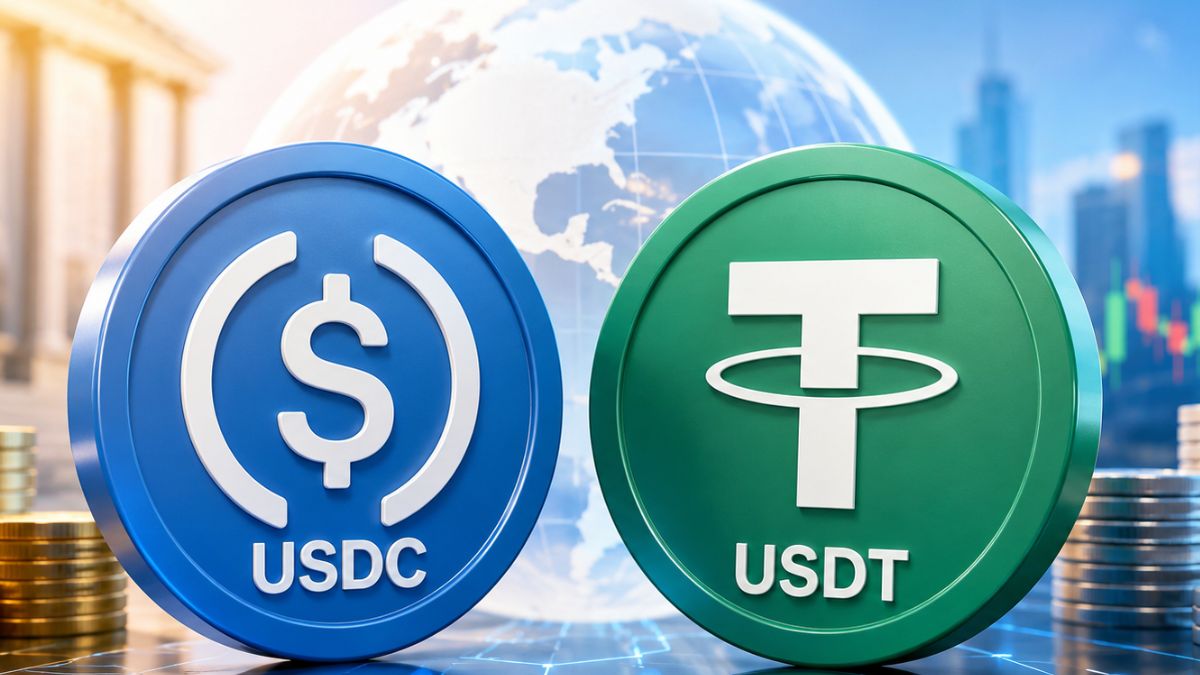
USDC and USDT remain the two largest dollar-pegged stablecoins, with different strengths across trading, payments and regulated markets. Network fees, liquidity, reserve structure and regional access all affect their practical value. Which one fits better depends on where the stablecoin is used and what the transaction requires.
The Network Shapes the Cost of a Stablecoin Transfer
USDC and USDT operate across several blockchains, and each network has its own fee mechanism. A USDT transfer through Tron therefore follows a different cost structure from the same transfer through Ethereum. The token keeps its dollar value while the cost of moving it depends on the network processing the transaction.
Network choice can also enter the picture before the first transfer. Someone who wants to buy crypto with card may use ChangeNOW to acquire the stablecoin, then select a supported network for the next step. The choice of network affects the later transfer cost as well as wallet compatibility.
From there, the blockchain fee becomes only one part of the transaction expense. Conversion spreads, exchange charges and withdrawal fees can add to the amount paid. Looking at the full route from acquisition to delivery gives a more accurate cost estimate.
That route also needs to work for the recipient. USDC and USDT exist as separate deployments across different blockchains, so the sender must select a network supported by the destination wallet or platform. A low network fee has little practical value if the receiving service cannot process the chosen version of the stablecoin.
USDC vs USDT Fees: Where the Real Cost Comes From
For active users, trading costs can outweigh blockchain fees. Spreads reflect liquidity, trading volume and the specific market. USDT has broad exchange liquidity, while USDC has strong positions across major exchanges, DeFi and regulated markets.
Redemption creates another cost distinction. Circle offers eligible institutions USDC redemption through Circle Mint, while Tether applies its own eligibility requirements and minimums. Retail users generally access stablecoin liquidity through exchanges, making direct redemption more relevant to institutional treasury operations.
The relevant costs depend on the use case. Traders focus on spreads and withdrawal terms, while businesses may prioritize redemption access and liquidity depth.
Safety Depends on More Than Reserve Backing
Circle and Tether use different reserve models. Circle describes USDC reserves as cash and highly liquid assets, supported by regular disclosures and independent assurance. Tether’s reported reserves include U.S. Treasury bills alongside gold, Bitcoin and secured loans.
For users assessing stablecoin safety, four factors deserve attention:
- Reserve composition: the types of assets backing the token affect liquidity and balance-sheet exposure.
- Issuer controls: Circle and Tether control issuance and redemption, so users depend on their operational systems.
- Redemption access: eligibility requirements determine who can exchange tokens directly with the issuer.
- Regulatory exposure: rules affecting the issuer or the token can influence availability in particular markets.
USDC offers a reserve structure centered on cash and highly liquid assets. USDT combines Treasury holdings with a broader range of assets, giving the two issuers different risk profiles.
The practical assessment therefore requires more than checking whether a stablecoin targets one U.S. dollar. Reserve quality, issuer operations, redemption arrangements and regulatory conditions all shape the security of holding USDC or USDT.
USDT and the Liquidity Effect
USDT has extensive support across centralized exchanges and trading pairs. CoinGecko found that USDT and USDC together accounted for 66.6% of trading pairs across 12 major centralized exchanges in 2026, while the two assets represented 97.7% of stablecoin pairs.
This scale gives traders access to established USDT markets across a wide range of assets. Deeper order books can also reduce price impact when larger orders enter the market.
USDC has gained ground on platforms where regulatory requirements shape stablecoin access. Research on MiCA found increased USDC trading activity on EEA exchanges after restrictions affected USDT availability.
Liquidity therefore varies by market. USDT has a strong position across established global trading venues, while USDC has gained relevance on regulated European platforms.
Regulation Is Turning Stablecoin Choice Into a Geographic Decision
Stablecoin access increasingly depends on where the user or business operates. The EU’s MiCA framework created specific requirements for issuers and crypto-asset service providers, which has affected how exchanges handle dollar-pegged tokens in the European market.
The effect is visible in USDT’s position on European platforms. Several regulated exchanges restricted or removed USDT trading for EEA users as MiCA requirements took effect, giving USDC more room on those venues. This shifts the choice from a general preference between two stablecoins toward a market-specific decision.
The same principle applies to businesses selecting a base for crypto operations. Crypto hub tax and regulatory considerations can shape access to banking, licensing and compliant stablecoin infrastructure, alongside the headline tax rate.
For a user in Europe, USDC may therefore offer easier access on regulated platforms. A trader operating through global venues may still find USDT more useful because of its established market support. Jurisdiction can determine which advantage is available in practice.
Which Stablecoin Fits Which Use Case?
The choice changes with the transaction. A trader, a company paying an overseas supplier and a DeFi user can have different reasons for choosing USDT or USDC.
- Trading: USDT suits traders who operate across markets where it serves as a common quote asset. A BTC or ETH trader can keep USDT as the dollar-denominated side of multiple positions instead of converting between several stablecoins.
- Cross-border payments: The recipient often determines the practical choice. A business sending funds to a supplier that already settles in USDT can avoid an extra conversion by using USDT. Another payment corridor may already rely on USDC and make that asset the simpler option.
- DeFi: USDC has a strong presence in major Ethereum-based protocols such as Aave and Uniswap, where it is used for lending, borrowing, liquidity pools and trading. This gives DeFi users a direct reason to hold USDC when the protocol and network support it.
- Business treasury: USDC can fit companies that work with institutional crypto infrastructure and counterparties already using Circle’s ecosystem. USDT can suit firms whose suppliers, exchanges or payment partners already settle in USDT.
A company could therefore keep USDC for one treasury workflow and USDT for another. The choice follows the counterparties and applications involved in each transaction.
USDC vs USDT: Three Scenarios for 2026
The next stage of the stablecoin market will depend on how regulation, institutional demand and exchange access develop. Three outcomes are worth watching.
Base scenario. USDT keeps a large share of crypto trading while USDC gains selected institutional and regulated markets. The market remains divided by use case, with neither issuer taking full control of stablecoin activity.
Optimistic scenario. Stablecoin demand grows across payments, trading and financial applications, while regulated platforms add more support for compliant issuers. USDC benefits from this shift and increases its share without requiring USDT to lose its existing markets.
Stress scenario. A major restriction affecting one issuer limits access on several important platforms. Trading pairs disappear, conversion costs rise and users shift toward the stablecoin that retains broader access. The impact would depend on how concentrated the affected issuer’s exchange and payment relationships are.
Market share alone will not show which scenario is developing. Exchange listings, stablecoin supply, institutional settlement activity and regulatory access will provide clearer signals during the rest of 2026.
The Stablecoin Market Can Support Both Models
USDT and USDC are moving toward different sources of strength. USDT benefits from the trading and payment activity already built around it, while USDC has stronger prospects in markets where regulated financial infrastructure determines access.
For users, this makes stablecoin choice increasingly dependent on the environment in which the asset will operate. The market can continue supporting both tokens as long as each retains a distinct source of demand and neither loses access to the platforms and counterparties that sustain its use.
FAQ
Is USDC safer than USDT in 2026?
USDC uses reserves focused on cash and highly liquid assets. USDT holds Treasury bills alongside gold, Bitcoin and other assets. Each model carries different issuer and reserve risks.
Which stablecoin has lower fees?
Fees depend on the blockchain, exchange and transaction type. Neither USDC nor USDT has a universally cheaper fee structure.
Is USDT better for trading?
USDT has broad exchange support and deep trading liquidity, making it useful for active traders across many crypto markets.
Is USDC better for institutional use?
USDC can suit institutions that operate through regulated platforms and need access to structured settlement infrastructure.
Which stablecoin is better for payments?
USDT works well when the recipient already accepts it. USDC can be preferable where payment partners and financial platforms support it directly.
Can USDT and USDC lose their dollar peg?
Yes. Both can trade temporarily above or below $1 because of market demand, liquidity conditions and redemption activity.
Does the blockchain affect stablecoin fees?
Yes. The network determines the transaction fee and can make the same USDC or USDT transfer cost more or less depending on current conditions.
Will USDC overtake USDT?
USDC can gain market share through regulated markets and institutional use. USDT has established demand across trading and payments, making a complete reversal uncertain.
Which should I choose, USDC or USDT?
Consider the recipient, platform, jurisdiction and purpose of the transaction. These factors determine which stablecoin is more practical.
Disclaimer
This article is provided for informational and educational purposes only. It does not constitute financial, investment, legal or tax advice. Cryptocurrency markets carry risks, including price volatility, issuer risk, regulatory changes and potential loss of funds. Readers should conduct their own research and consider their circumstances before making any financial decision.
Key Takeaways
- MEXC stands out globally for offering a highly competitive 0% spot trading fee structure.
- Binance, OKX, and Bybit remain strongly positioned for active traders with low entry-level rates.
- Coinbase and Kraken may cost more for instant buys but offer strong, seamless fiat access.
- The most cost-effective way to purchase crypto is through spot trading order books, avoiding instant buy markups.
Exchange fees directly impact your crypto investment returns. Understanding the differences between spot trading, spreads, and withdrawal fees maximizes your purchasing power in 2026.
CEX Crypto Exchange Fee Comparison in 2026
Compare the top centralized crypto exchanges in 2026 to find a cost-effective platform. Several platforms offer highly competitive entry-level rates across major asset pairs.
| Exchange | Spot (Maker/Taker) | Instant Buy Fees | Fiat Deposit | Best Use Case |
| MEXC | 0.00% / 0.00% | Third-party rates | Varies by provider | Low-fee trading |
| Binance | 0.10% / 0.10% | 1.5% – 2.0% | Varies by region | Active global users |
| OKX | ~0.08% / 0.10%* | 3.0% – 6.0% | Free (P2P/SEPA) | Web3 integration |
| Bybit | 0.10% / 0.15%* | Third-party rates | Varies | Derivatives traders |
| Coinbase | Up to 0.40% / 0.60%* | Approx. 0.5% – 2.0% spread | Free (ACH) | Fiat onboarding |
| Kraken | Up to 0.25% / 0.40%* | 1.5% + spread | Varies | Institutional clients |
*Fees vary based on volume, tier, and region.
MEXC Fees in 2026
MEXC is among the lowest-fee crypto exchanges in 2026, featuring a highly attractive 0% spot maker and taker fee structure alongside competitive deposit and withdrawal rates.
- Spot Trading Fees: A distinct 0% Maker / 0% Taker fee promotion on standard pairs. For example, investors looking to maximize their capital efficiency can Trade BTC/USDT seamlessly while retaining 100% of their investment returns.
- Futures Trading Fees & Leverage: Futures fees are set at 0% Maker / 0.02% Taker, with leverage options available up to 500x on select contracts.
- Tokenized Assets: The platform extends its trading options beyond cryptocurrency to include tokenized stocks, gold, and silver.
- Withdrawal Fees: Consistently maintained at highly competitive levels across various blockchain networks.
- MX Token Benefits: Holding MX tokens unlocks further VIP privileges, airdrops, and Launchpad access.
- The Verdict: MEXC serves as a practical option for traders looking to manage transaction costs across spot, futures, and traditional asset markets.
Binance Fees in 2026
Binance charges a standard 0.10% for spot trading in 2026, featuring a 25% discount for BNB holders, making it highly competitive for everyday active traders.
- Spot Trading Fees: Standard base rate of 0.10%, which can be reduced further via high-volume VIP tiers.
- BNB Discounts: Pay with BNB to reduce spot fees to 0.075%.
- Instant Buy & Deposits: Card payments average 1.5% – 2.0%, while crypto deposits remain free.
- Binance vs MEXC: While Binance is cheap, MEXC’s 0% spot structure saves high-frequency traders significantly more capital over time.
OKX Fees in 2026
OKX features entry-level spot fees of around 0.08% maker and 0.10% taker for many regions in 2026, though rates can vary by tier and specific regional jurisdictions.
- Spot Trading Fees: Start around 0.08% (Maker) and 0.10% (Taker) for most users, with regional variations such as in Singapore.
- Futures Fees: Start at 0.02% (Maker) and 0.05% (Taker).
- OKB Discounts: Scaling through VIP tiers and holding OKB reduces costs substantially.
- When to Use: Highly cost-effective for buyers combining robust CEX trading with non-custodial Web3 wallet features.
Bybit Fees in 2026
Bybit applies a standard fee structure of 0.10% maker and 0.15% taker for entry-level spot trading in 2026, scaling down significantly for higher-volume VIP tiers.
- Spot Trading Fees: Baseline rates of 0.10% maker and 0.15% taker.
- Futures Trading Fees: Baseline rates of 0.02% (Maker) and 0.055% (Taker).
- VIP Program: High-volume traders easily scale into heavy fee reductions based on 30-day volume across both spot and derivatives.
- Comparative Value: Offers a competitive framework for active traders, matching top peers while scaling down for VIP tiers.
Coinbase Fees in 2026
Coinbase Advanced features a tier-based structure starting up to 0.40% maker and 0.60% taker for entry levels in 2026, with fees dropping sharply as trading volume scales.
- Advanced Fees: Range up to 0.40% (Maker) and 0.60% (Taker) for entry-level tiers, scaling down significantly at higher monthly volumes.
- Instant Buys: Regular simple trades include an approximate price spread generally between 0.50% and 2.00%.
- Deposits: ACH is completely free in the US, making bank transfers the smartest funding route.
- When It’s Worth It: Ideal for beginners who prioritize interface simplicity, regulatory compliance, and direct banking integration.
Kraken Fees in 2026
Kraken Pro applies entry-level base fees up to 0.25% for makers and 0.40% for takers at standard tiers in 2026, offering scaling discounts for high-volume traders.
- Kraken Pro Fees: Up to 0.25% Maker / 0.40% Taker at entry-level tiers.
- Instant Buy Costs: A flat 1.5% fee plus an asset-dependent spread.
- Discounts: Trading above specific monthly volume thresholds significantly lowers the fee bracket.
- Kraken vs Coinbase: Kraken Pro generally offers lower entry-level taker fees (0.40% vs up to 0.60%) than Coinbase Advanced.
Hidden Costs When Buying Crypto on CEX Exchanges
Beyond standard trading rates, crypto buyers in 2026 must actively account for hidden costs like price spreads, fiat conversion charges, and blockchain network withdrawal fees.
- Spread Markups: The invisible cost between the current buy and sell price, prominent in simplified “Instant Buy” widgets.
- Processing Fees: Credit and debit cards typically incur hefty 3.0% – 6.0% provider surcharges.
- Network Fees: Withdrawing BTC or ETH on their native networks is considerably more expensive than utilizing efficient Layer-2 chains.
How to Reduce Crypto Exchange Fees in 2026
Proactively lower your crypto buying costs in 2026 by prioritizing spot limit orders, utilizing exchange utility tokens, and choosing low-cost withdrawal networks.
- Use Spot Markets: Always choose standard trading order books over retail “Instant Buy” features. Monitoring the real-time JGGL price on a dedicated tracking page before executing a spot limit order ensures you capture the most accurate market rates without any hidden broker premium.
- Place Limit Orders: Become a “Maker” by setting a specific price to enjoy lower platform fees.
- Hold Platform Tokens: Utilize assets like MX or BNB to unlock automatic, sitewide fee discounts.
- Optimize Withdrawals: Transfer assets using fast, low-cost blockchains (e.g., Solana, Arbitrum, Polygon).
Conclusion: Which CEX Has the Lowest Fees in 2026?
MEXC sits among the most cost-effective platforms for spot trading in 2026 due to its 0% fee structure, though the optimal exchange depends heavily on your region and volume.
- Highly Competitive Low-Fee Exchange: MEXC, due to its zero spot fees and massive emerging asset selection.
- Best for Beginners & Fiat: Coinbase, for its highly intuitive app interface and free ACH transfers.
- Best for Active Traders: Binance, OKX, and Bybit, balancing deep market liquidity with competitive, tier-scaling structures.
- Final Recommendation: For purely maximizing crypto accumulation and trading volume without the drag of high base spot fees, MEXC presents a uniquely advantageous framework.
Frequently Asked Questions
What is the cheapest crypto exchange in 2026?
MEXC is among the most cost-effective options for spot trading, offering 0% maker and taker fees for mainstream asset pairs.
Does MEXC have lower fees than Binance?
Yes. MEXC charges 0% for spot trades, whereas Binance charges a baseline of 0.10% (or 0.075% with BNB discounts), though both offer lower rates via VIP programs.
Which crypto exchange has the lowest withdrawal fees?
Exchanges like MEXC and Binance are highly competitive in maintaining dynamically adjusted, cost-effective network withdrawal fees.
What is the difference between maker and taker fees?
Makers add liquidity to the order book (using limit orders) and generally pay lower fees. Takers remove liquidity (using market orders) and usually pay slightly higher fees.
Are instant buy crypto fees higher than spot trading fees?
Yes. Instant buy features prioritize convenience, often applying higher spread markups and processing fees that make them significantly more expensive than standard spot trading.
-

 BLOG1 year ago
hanime1: The Ultimate Destination for Anime Lovers
-

 Technology1 year ago
GLAADVoice.com: How You Can Get Involved and Make a Difference
-

 BILLS1 year ago
Why Does My Instagram Reel Stop Getting Views After One Hour? How to Fix It?
-

 ENTERTAINMENT1 year ago
Crackstreams 2.0: The Future of Free Sports Streaming?
-

 ENTERTAINMENT1 year ago
Sflix: How It’s Changing the Way We Watch Movies and TV Shows
-

 BLOG1 year ago
ThisVid: What Makes It Stand Out in the World of Online Videos
-

 BLOG1 year ago
NHentai.nef: Understanding the Popular Hentai Archive
-

 BLOG1 year ago
Imginn: The Ultimate Tool to View Instagram Content Anonymously