
BLOG
The Art of Saying No: Minimalism Beyond Physical Possessions


You’ve probably tidied a drawer or sorted your wardrobe. But have you ever thought about cleaning up your calendar?
Many people still feel completely worn out even after getting their homes organised. The answer is hidden mental clutter and the struggle to set boundaries.
At Made Minimal, we help people create stress-free living spaces with thoughtful furniture and lighting. But we’ve also learned over the years how true peace comes from clearing your mind.
Saying no, setting boundaries, and choosing how you invest your energy are proven effective ways to practise intentional living. And the minimalist lifestyle can help you see where your time and energy are best spent., so you can focus on them.
Ready to learn what minimalism really means when applied to your commitments?
What’s Really Behind Your Yes? (And Why It’s So Hard to Say No)
Most of us find it hard to say no because of habits we learned a long time ago. Feelings like guilt, worrying about disappointing others, wanting to please people, and FOMO often make it even harder. Here’s a closer look at each one and how they hold us back.

- Fear of disappointing others: The biggest reason is fear of disappointing people. That’s why people-pleasers are often burned out. They grow up believing their worth depends on keeping everyone happy, which creates a cycle where they say yes out of habit.
- FOMO:Then there’s FOMO (the fear of missing out). Studies reveal this feeling drives us to overcommit because we worry opportunities won’t come back. Social media makes this worse by showing us everyone else’s highlight reel.
- Myths:We also carry around some harmful myths, like thinking saying no is rude, or believing we have to earn our rest. In most cases, these beliefs come from how we were raised.
- Cultural pressure:Cultural pressure makes it worse too. Many communities praise people who never complain and always help out, and over time, this becomes part of who we think we should be.
Do any of these sound familiar? If so, try running through this quick mental checklist before saying yes:
- Am I scared of disappointing someone?
- Do I worry I’ll miss out?
- Am I trying to seem reliable?
Recognising these triggers is your first step. The next step is learning to say no in a way that feels right for you.
7 Practical Ways to Say No Without Burning Bridges
In case you needed to hear this: Saying no doesn’t always mean rejection, but it can mean setting boundaries. People actually respect you more when you’re honest about your limits.
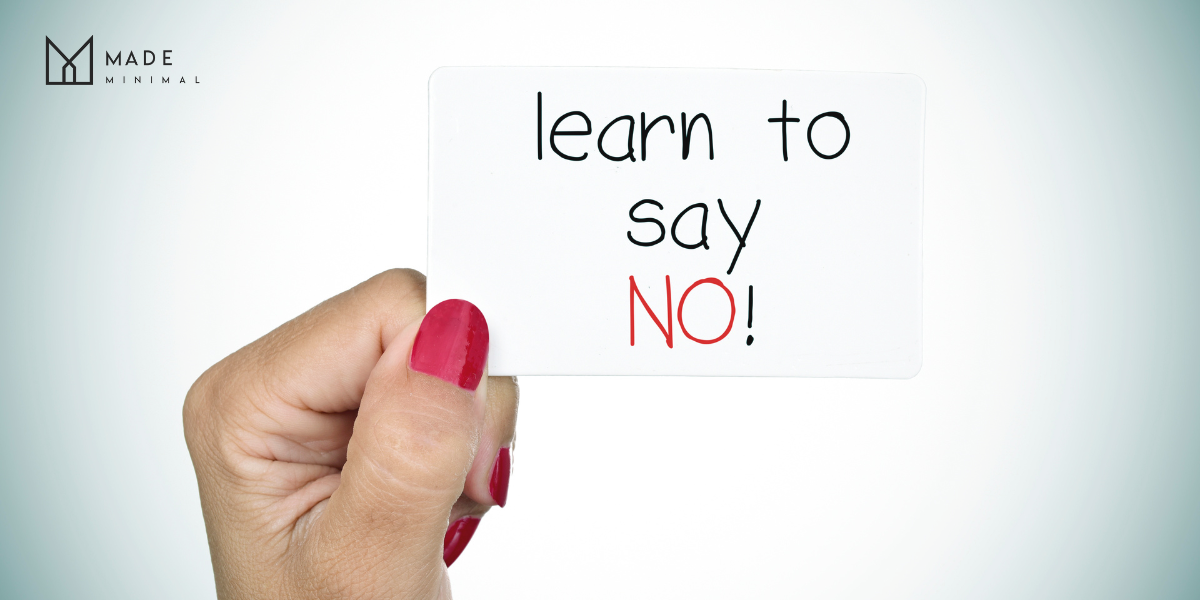
The trick is learning how to say “no, but…” instead of just “no.” Here are seven strategies, backed by psychology experts, that we find helpful:
- The “Not Now” Delay:“I can’t take this on right now, but perhaps we could revisit it next month?” This gives you breathing space whilst showing you’re not completely dismissing the request.
- The “Yes, and Here’s What I Can Do” Pivot:“I can’t help with the whole project, but I could review the final draft for you.” You’re offering something without overcommitting, using this approach.
- The “Let Me Check and Get Back to You” Buffer:This stops you from saying yes automatically. Even waiting a single day can give you that space to decline politely and confidently.
- The “It’s Not Aligned with My Focus Right Now” Boundary:Perfect for when requests don’t match your priorities. After all, the point of minimalism is to protect your time and energy for what matters most.
- The “Thanks, But I’m Prioritising Rest” Honest Card:Our research shows that being open about your needs actually makes relationships stronger. Like we mentioned earlier, people appreciate honesty about looking after yourself.
- The “I Can’t, But Here’s a Resource” Redirect:“I can’t help, but Sarah might be interested” or “Have you tried this app?” You’re still being helpful without taking on the task in this way.
- The “Hard No” Direct Approach:Sometimes you just need to say, “Thank you for thinking of me, but I won’t be able to help with this.” No long explanations needed.
It might take time, and things might not go perfectly at first, but that’s okay. Often, we avoid saying these phrases because we fear confrontation or feel guilty. So always keep in mind that saying no to one thing usually lets you say yes to something that matters more to you.
Now that you’ve got these tools, the next step is practising them without feeling overwhelmed.
Time is Your Clutter Too: How to Track and Trim Commitments
Think about it this way: Your time and energy can get just as messy as your garage once was. And it’s easy to miss how much time goes to unproductive activities until you start tracking it.
Start with a Time Audit
Start by writing down everything you do for a full week (and we mean everything, not just work meetings). This means those grocery shopping, scrolling through social media, and even those five-minute “quick” phone calls that turn into hour-long conversations. You can get back up to 30% more useful time just by figuring out where their hours actually disappear.
Once you’ve tracked everything, sort your activities into three categories: energising (things that give you energy), neutral (necessary but boring), and draining (activities that exhaust you). This helps you see the emotional cost of your commitments.
Apply the Minimalist Lens
Now comes the important part. Look at everything you wrote down and ask yourself two honest questions:
- What actually matches up with what you care about?
- What did you just say yes to automatically without really thinking?
Asking yourself these questions is the first step to intentional living.
Use Simple Decision Tools
Two tools can make these choices much easier.
First, try something called the . You divide your tasks into four boxes: urgent and important, important but not urgent, urgent but not important, and neither urgent nor important.
Second, use the “Hell Yes or No” test. If something doesn’t make you think “absolutely yes, I want to do this,” then it’s probably a no.
Simple, right? You can also use digital calendars or simple printed sheets to make this process easier.
Once you’ve cut out the excess, it’s time to protect your newly freed-up time.
Live Intentionally and Feel More with Minimalism
Ready to start living more intentionally?
Remember that learning the art of saying no is a lifelong practice. You’ll stumble sometimes, and that’s completely normal. The emotional resistance you feel when setting boundaries is actually part of the journey.
And having less burnout is what makes all the effort worth it.
At Made Minimal, we help you create beautiful, clutter-free spaces that support your intentional lifestyle. Browse our collection of thoughtfully designed furniture and lighting to complete your minimalist home transformation.

Wood is one of the most versatile materials used in home improvement, construction, and DIY projects. From building outdoor structures to creating custom furniture, the type of wood selected can affect strength, durability, appearance, and overall performance. Winnipeg homeowners should consider the purpose of each project, local weather conditions, and the intended use of the finished product when choosing lumber or plywood. Here are six home projects where selecting the right wood matters most.
1. Completing DIY Woodworking Projects With Star Building Materials
DIY woodworking projects can include workbenches, storage units, planters, wall features, shelving, and decorative pieces. The materials used can influence how easy the project is to build and how well it holds up over time. Factors such as thickness, strength, grain, and surface finish should be considered before purchasing wood.
Homeowners looking for lumber in Winnipeg can compare different lumber and plywood options based on the requirements of their project. Star Building Materials can also be considered when exploring materials for woodworking and home improvement projects. Selecting wood that matches the project’s design and intended use can make construction easier and contribute to a better finished result.
2. Building a Deck or Outdoor Structure
Decks, sheds, fences, and other outdoor structures are exposed to Winnipeg’s changing weather conditions throughout the year. Rain, snow, sunlight, moisture, and temperature changes can all affect wood over time.
When selecting materials for an outdoor project, homeowners should consider durability, moisture resistance, structural strength, and maintenance requirements. Resources such as Windsor Plywood Sherwood Park can also be useful when researching wood products and comparing materials for different construction needs. Choosing an appropriate type of wood can help an outdoor structure remain functional and attractive for longer.
3. Building or Renovating Cabinets
Cabinets are frequently exposed to moisture, spills, cleaning products, and everyday use. Choosing suitable wood or plywood can therefore make a significant difference in their durability and appearance.
Homeowners should consider the cabinet’s location, expected use, desired finish, and maintenance requirements. The right material can provide a balance between strength, appearance, and practicality.
4. Constructing Shelves and Storage
Shelves need to support the weight of books, tools, household supplies, and other belongings. Using wood with the appropriate thickness and strength can help prevent sagging and improve the lifespan of a storage project.
Plywood and lumber can both be useful depending on the design and load requirements. Homeowners should consider dimensions, support spacing, finish, and the weight the shelving is expected to carry.
5. Framing Walls and Home Improvements
Lumber is an important component in wall framing, partitions, room additions, and various home improvement projects. Structural applications require materials that are appropriately sized and suitable for the intended purpose.
Before starting a framing project, homeowners should understand the project’s requirements and select lumber accordingly. Proper material selection can contribute to a stable and durable structure.
6. Creating Wood Furniture
Wood can be used to create tables, benches, desks, shelving units, and other furniture. Different types of wood can vary in strength, appearance, weight, and workability.
Consider how the furniture will be used and how much wear it will receive. Choosing suitable wood can help create furniture that is both functional and visually appealing.
Making Better Wood Choices for Home Projects
Choosing the right wood can affect the durability, appearance, and performance of almost any home project. By considering the project’s purpose, location, expected use, moisture exposure, structural requirements, and maintenance needs, Winnipeg homeowners can make more informed decisions when purchasing lumber and plywood.

A shoulder injury can affect everyday activities such as working, exercising, sleeping, lifting, and reaching. Recovery can also vary depending on the type and severity of the injury. Taking a proactive approach to your health can help you understand your condition, follow appropriate care, and gradually return to normal activities. Here are seven ways to better manage your health after a shoulder injury.
1. Get a Proper Medical Assessment With Kevin Kruse
Persistent shoulder pain, weakness, limited movement, or discomfort after an injury should be evaluated by a qualified healthcare professional. A proper assessment can help identify the underlying problem and determine which treatment options may be appropriate.
For people dealing with significant shoulder damage, surgery for a rotator cuff tear may be considered depending on the severity of the injury and other individual factors. Consulting a specialist can help patients understand their condition, available treatment approaches, and what recovery may involve.
2. Follow Your Recommended Treatment Plan
Once your condition has been assessed, following the recommended treatment plan is an important part of managing recovery. Depending on the injury, care may involve rehabilitation, medication, activity modifications, or other medical treatments.
Patients researching their healthcare options may come across resources such as Timely Medical | Timely Surgery at Affordable Prices when exploring accessible medical services. Regardless of the provider, patients should understand their treatment recommendations and communicate with their healthcare team if they have concerns or questions.
3. Give Your Shoulder Time to Recover
Trying to return to strenuous activities too quickly can place additional stress on an injured shoulder. Depending on professional recommendations, it may be necessary to temporarily modify activities that involve heavy lifting, repetitive movements, or overhead reaching.
Allowing adequate recovery time can help prevent unnecessary strain while the shoulder heals. Gradually returning to normal activities is generally preferable to pushing through significant discomfort.
4. Participate in Appropriate Rehabilitation
Rehabilitation may play an important role in restoring shoulder movement, strength, and function. A healthcare professional or physical therapist can recommend exercises based on the type of injury and stage of recovery.
Following an appropriate rehabilitation program consistently can help support gradual improvements. However, exercises should be performed according to professional guidance rather than attempting demanding movements too soon.
5. Pay Attention to Changes in Your Symptoms
Monitoring your symptoms can help you recognize how your recovery is progressing. Pay attention to changes in pain, swelling, mobility, weakness, or other unusual symptoms.
If symptoms become significantly worse or new concerns develop, speak with a healthcare professional. Keeping track of changes can also make it easier to communicate useful information during follow-up appointments.
6. Adjust Daily Activities and Work Habits
Simple changes to daily routines can help reduce unnecessary strain on an injured shoulder. Depending on your condition, this may involve modifying how you lift objects, carry items, reach for things, or position your shoulder while sleeping.
People returning to work should also follow appropriate recommendations regarding physical tasks and workplace activities.
7. Maintain Overall Health During Recovery
Good sleep, balanced nutrition, adequate hydration, and appropriate physical activity can support overall health while recovering from an injury. Maintaining healthy habits can also help you stay consistent with your recovery routine.
The goal is to remain active in ways that do not place unnecessary stress on the injured shoulder. Patience and consistency can be important throughout the recovery process.
Taking a Practical Approach to Shoulder Recovery
Managing a shoulder injury involves more than addressing pain alone. Getting an appropriate assessment, following treatment recommendations, allowing time to recover, participating in rehabilitation, monitoring symptoms, adjusting daily activities, and maintaining overall health can all support a more informed recovery process.

Summer can be a practical time for homeowners to plan window renovation projects. Warmer temperatures and longer days make it easier to schedule installation work and address areas of the home that may need improvement before winter arrives. Since Winnipeg homes experience significant seasonal changes, choosing windows based on efficiency, durability, comfort, and appearance can make a noticeable difference. Here are some important features to consider when planning a summer window renovation.
1. Energy-Efficient Window Options With Korsun Windows
Energy efficiency is an important consideration when upgrading windows. Well-insulated windows can help limit heat transfer, keeping rooms more comfortable during the summer while reducing heat loss when temperatures drop in winter. When comparing window replacement Winnipeg options, homeowners should look at features such as multiple-pane glass, insulated frames, and quality seals. These features can improve window performance and may help reduce unnecessary energy use. Korsun Windows can also be considered when researching different window options and determining which features are suitable for a home’s needs.
2. Durable and Weather-Resistant Materials
Winnipeg windows have to handle snow, moisture, freezing temperatures, sunlight, and changing conditions throughout the year. Choosing durable materials can help windows maintain their performance and appearance despite repeated seasonal exposure. Homeowners should also think about how much sunlight enters each room and whether additional control over light and privacy would be useful. Roller Shades & Blinds in Winnipeg | Blind Ambitions can be considered as part of the overall window renovation when homeowners want to complement new windows with practical interior window coverings.
3. Proper Window Installation
The quality of installation can have a significant effect on how well new windows perform. Proper installation involves ensuring that windows are correctly aligned, sealed, insulated, and protected against outside elements. Poorly sealed windows can contribute to drafts, moisture problems, and unwanted air leakage. Having the work completed properly can help homeowners get the intended benefits from their new windows and reduce potential problems later.
4. Improved Ventilation and Natural Light
Window renovations can also improve airflow and natural lighting throughout a home. Homeowners should consider which rooms would benefit from better ventilation and how different window styles open and close. Larger windows can bring more daylight indoors, while operable designs can allow fresh air into the home when weather conditions permit. Finding the right balance between ventilation, natural light, efficiency, and security can make living spaces more comfortable.
5. Easy-to-Maintain Window Designs
Maintenance is another factor worth considering when selecting replacement windows. Features such as easy-to-clean glass, durable finishes, accessible opening mechanisms, and low-maintenance frame materials can make regular upkeep more convenient. Practical window designs can also simplify seasonal cleaning and help maintain the appearance of the home over time.
6. Enhanced Security Features
Security should not be overlooked during a window renovation. Strong locking mechanisms, durable frames, and suitable glass options can provide additional protection for the property. Homeowners should also consider how opening styles and window placement affect both ventilation and security, particularly for windows located on lower levels.
7. A Style That Complements Your Home
Windows can have a noticeable impact on both the exterior and interior appearance of a home. Frame colours, grille patterns, glass options, and different window configurations can help create a style that works with the property’s existing architecture. Homeowners should aim for designs that provide the desired appearance without overlooking practical performance and everyday functionality.
Planning a Successful Summer Window Renovation
A successful window renovation involves more than selecting an attractive style. Homeowners should consider energy efficiency, durability, installation quality, ventilation, maintenance, security, and appearance before making a decision. Planning during the summer provides an opportunity to address window needs before colder weather returns and can help create a home that remains comfortable throughout Winnipeg’s changing seasons.
This version makes the two phrases feel more connected to the actual topic instead of sounding like separate promotional insertions.
-

 BLOG1 year ago
hanime1: The Ultimate Destination for Anime Lovers
-

 Technology1 year ago
GLAADVoice.com: How You Can Get Involved and Make a Difference
-

 BILLS1 year ago
Why Does My Instagram Reel Stop Getting Views After One Hour? How to Fix It?
-

 ENTERTAINMENT1 year ago
Sflix: How It’s Changing the Way We Watch Movies and TV Shows
-

 BLOG1 year ago
NHentai.nef: Understanding the Popular Hentai Archive
-

 BLOG1 year ago
Imginn: The Ultimate Tool to View Instagram Content Anonymously
-

 ENTERTAINMENT1 year ago
Crackstreams 2.0: The Future of Free Sports Streaming?
-

 BLOG1 year ago
ThisVid: What Makes It Stand Out in the World of Online Videos