
BLOG
Trenz Case Study: From TikTok Creator to Full-Time Seller

TikTok is no longer an app to use to have fun videos. It is currently being used in the growth of businesses and the making of money by so many people. Among the most significant shifts during the last few years, there is the transformation of hobbies into full-time earnings by content creators. This can be done when you are aware of what is hot and what people are dying to see.
However, it is not all about being lucky. It is all about the right time, what to say, and what your target is willing to hear. It is here that tools such as trenz can be used. They help creators find what’s working on TikTok and how to use it to their advantage.
In this case study, we’ll look at how one creator used Trenz to go from posting simple videos to becoming a full-time product seller. Her journey is proof that with the right tools and timing, anyone can turn creativity into a real business.
Starting with Simple Videos
Sarah was just a normal user of TikTok who loved posting beauty tips and testing out products that are all the rage. One day she posted a short video on how she used a hair curler. To her amazement, it got thousands of views and people started inquiring where to purchase it. That video made her wonder, what if she could do that for a living?
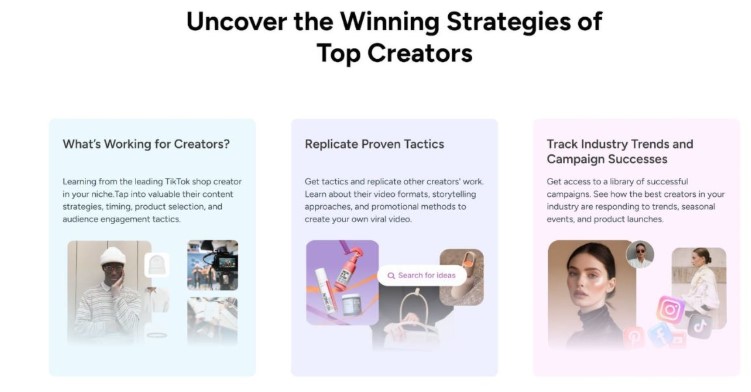
She started looking for options on how to get good products and understand what people like. That’s how she discovered Trenz, a service that sorts through products that are currently trending on TikTok. It assisted her in determining what to post, when to post and how to make a name for herself.
How Trenz Made a Difference
Before using Trenz, Sarah was just posting whatever she felt like. But after using it, she realized how important data is. She no longer guessed what content to make. Trenz gave her a clear view of what was working for others—and what could work for her too.
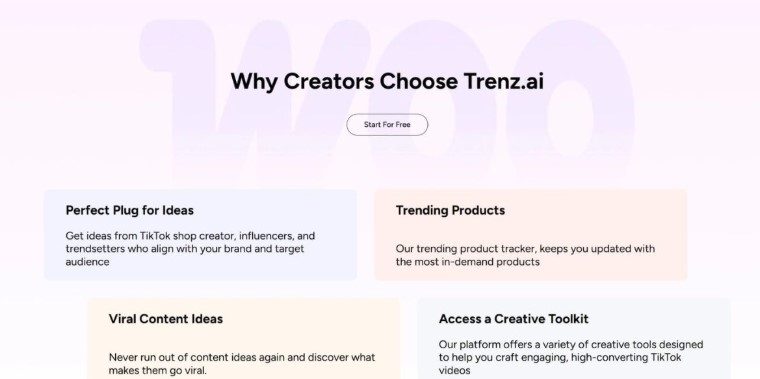
It helped her in three simple ways:
- Finding viral products
- Getting ideas for videos
- Understanding what her audience wanted
This helped her save time, post better videos, and grow her account faster.
Her First Product Launch
After a few weeks of using Trenz, Sarah noticed a hair tool trending in the beauty category: a heatless curling set. She ordered a few samples and made short, honest videos using them. She did not employ any elaborate studio to do it; all she had was her phone and natural light.
The videos performed very well. She sold more than 3000 dollars in less than two weeks only on TikTok. This made her brave enough to continue and establish a small business based on her content.
Fast Time Artist, Fast Time Merchant
Sarah continued to utilize Trenz in order to be ahead of the new trends. She released more products, improved her videos and listened to her followers. She did not attempt to oversell because her audience trusted her as she was real.
It took her only 6 months to:
- Grew her TikTok to 150K+ followers
- Launched 3 successful products
- Left her job to devote her time to the store
Now, she creates from her home, produces creative videos & gets regular income on doing the things she enjoys.
Lessons from Sarah’s Story
This Trenz case study teaches a few key lessons:
- Trends change fast – Catch them early with the right tools.
- Simple content works – You don’t need to be perfect. Be real.
- Data helps – Don’t guess. Let the numbers guide you.
- Be regular: Get down and post and learn on a weekly basis.
Conclusion
The story of Sarah indicates that it is not necessary to have a huge budget and crew. Big things can be achieved with a tiny bit of effort and with the appropriate tools. She has applied Trenz to obtain good ideas, follows the fashions and remains focused towards her objective. The once-humble videos became a full-time job.
Trenz can actually be helpful to you as a TikTok creator, to grow or to even begin to sell. It reveals to you what people are viewing and what is the trend. You can use part of your creativity and clever thinking, and make your content earn you money. Other times all one needs is a proper step taken in the proper place.


In today’s fast-paced digital landscape, capturing your audience’s attention can feel like trying to catch smoke with your bare hands. With countless distractions vying for their focus, how do you ensure that your content stands out? Enter Corpenpelloz—your guide to crafting engaging content that resonates deeply with readers. By understanding the nuances of what engages an audience and employing innovative strategies, you have the power to transform mundane messaging into compelling narratives. Let’s embark on this journey together and unlock the secrets behind creating irresistible content that not only informs but captivates!
Understanding the importance of engaging content
Engaging content is the heartbeat of effective communication in today’s digital world. It goes beyond merely dispensing information; it creates a connection between you and your audience. When content resonates, readers are more likely to share, comment, and return for more.
Think about it: each piece of engaging content has the potential to spark conversations and build communities. It fosters loyalty among audiences who feel seen and understood.
Moreover, engaging content enhances brand perception. A company that produces thoughtful material signals professionalism and expertise, establishing trust with its audience.
In an age where attention spans are fleeting, captivating writing can make all the difference. Great engagement means standing out from endless scrolls—it’s what turns casual visitors into devoted followers eager for your next post or update.
Identifying your target audience
Understanding your target audience is the cornerstone of effective content creation. It’s about knowing who you’re speaking to and tailoring your message accordingly.
Start by gathering demographic data. Age, gender, location—these factors shape preferences. But don’t stop there; dive deeper into interests and behaviors. What are their hobbies? Which social media platforms do they frequent?
Create buyer personas to visualize this information. These fictional characters embody the traits of your ideal audience members, making it easier to craft relatable content.
Engagement comes from resonance. When you know what sparks joy or curiosity in your audience, you can tailor messages that truly connect with them.
Remember, this isn’t a one-time task. Audiences evolve over time, so stay alert and adapt as needed for continued relevance and engagement.
Researching and understanding your audience’s interests and needs
Researching your audience is like opening a treasure chest full of insights. You want to dig deep into their interests and needs, discovering what truly resonates with them.
Start by utilizing tools like surveys or polls. Ask questions that reveal preferences, pain points, and desires. This direct feedback creates a roadmap for your content strategy.
Social media platforms are goldmines for understanding trends and discussions within your niche. Monitor conversations to see what excites or troubles your audience.
Don’t overlook analytics from existing content. Examine which posts perform best—those metrics can unveil patterns in behavior that guide future creations.
Engaging in community forums provides qualitative data too. Listening to real-time interactions gives you context about the emotional drivers behind user engagement.
The more informed you are about who you’re speaking to, the better equipped you’ll be to craft messages that resonate deeply with them.
Utilizing various content formats (written, visual, interactive) to engage your audience
Engaging your audience requires a diverse approach to content formats. Written content, like blogs and articles, provides depth and detail. It’s perfect for conveying complex ideas or sharing in-depth insights.
Visuals enhance engagement instantly. Infographics, images, and videos capture attention more effectively than text alone. They break up information and make it digestible.
Interactive content takes engagement to the next level. Quizzes, polls, and interactive infographics invite users to participate actively rather than passively consume information.
Combining these formats creates rich experiences. A blog post with embedded videos or interactive elements keeps readers interested longer.
Remember that variety is key when crafting engaging content with corpenpelloz principles at heart. Each format serves its purpose while creating a well-rounded narrative that resonates with different audience types.
Crafting compelling headlines and introductions
Crafting compelling headlines is an art form. Your headline serves as the first impression, and it must grab attention instantly. Use strong action verbs and intriguing adjectives to evoke curiosity.
A great introduction builds on that momentum. It should hook readers from the first sentence, drawing them into your narrative. Start with a question, a surprising fact, or a bold statement.
Don’t shy away from being bold or playful in your approach. The right tone can resonate deeply with your audience.
Consider incorporating relevant keywords naturally so that search engines also take notice without sacrificing flow or engagement.
Remember, clarity is crucial too; ensure readers understand what they’ll gain by continuing to read. A well-crafted opening sets the stage for everything that follows and enhances overall engagement with corpenpelloz content strategies.
Incorporating storytelling and emotions into your content
Stories have the power to connect. They evoke emotions and create a bond between you and your audience. When you weave narratives into your content, it transforms dry information into something relatable.
Consider personal anecdotes or customer testimonials. These real-life experiences resonate with readers, making them feel seen and understood. Emotions drive decisions; harnessing that energy can elevate your message.
Imagery plays a crucial role too. Descriptive words can paint vivid pictures in the reader’s mind, allowing them to experience what you share on a deeper level.
Don’t be afraid to show vulnerability in your stories. Authenticity fosters trust and invites engagement from those who relate to your journey or challenges.
Crafting content with emotional depth isn’t just about storytelling—it’s about creating an experience that lingers long after they’ve left the page.
The role of visuals and design in engaging content
Visuals play a crucial role in capturing your audience’s attention. Images, infographics, and videos can communicate information faster than words alone. They draw readers in and enhance their overall experience.
Good design makes content more readable. White space, typography, and layout contribute to clarity. Readers are more likely to stay engaged when they can easily navigate through the text.
Colors evoke emotions and set the mood for your message. A well-chosen palette can make your content feel inviting or urgent, depending on what you aim to express.
Interactive elements like polls or quizzes also increase engagement levels. These features encourage users to participate actively rather than passively consuming information.
Incorporating visuals is not just about decoration; it’s about creating a connection with your audience that resonates deeply beyond mere words.
Measuring and analyzing engagement with your content
Measuring engagement is crucial for understanding how your content resonates with your audience. Start by tracking metrics such as likes, shares, comments, and time spent on page. These indicators provide insights into what captivates your readers.
Use tools like Google Analytics to dive deeper into user behavior. Look at bounce rates and click-through rates to gauge interest levels. Heatmaps can reveal which sections of your content attract attention.
Don’t overlook social media analytics either. Platforms often offer detailed breakdowns of how users interact with your posts.
Surveys and polls are also effective ways to gather direct feedback from your audience. Ask them about their preferences or what topics they’d like you to cover next.
Analyzing this data regularly allows you to adapt and refine your strategy for even better results over time.
Tips for consistently creating engaging content
Creating engaging content is an ongoing journey, not just a one-time task. Here are several tips to help you maintain that momentum and consistently captivate your audience.
First, stay updated on industry trends. Regularly reading blogs, articles, and news related to your niche keeps ideas fresh. You can incorporate these insights into your content strategy.
Next, create a content calendar. Planning out topics in advance helps ensure that you address diverse interests while keeping your branding consistent.
Engage with your audience directly. Encourage feedback through comments or social media interactions. This two-way communication fosters community and generates valuable insights about what resonates with them.
Experiment regularly with different formats like videos, infographics, or podcasts alongside written posts. Variety keeps things interesting for both you and your audience.
Be authentic in every piece of content you publish. Genuine voices resonate more than perfectly polished ones; people connect better when they feel the realness behind the words.
Review analytics often to learn from past successes and failures alike. Understanding engagement metrics allows adjustments where necessary for future pieces of content.
By implementing these tips into your routine at Corpenpelloz, you’ll foster an environment rich in creativity and connection—ultimately leading to stronger engagement with every post.

Are you ready to elevate your listening experience? Imagine immersing yourself in sound so rich and vibrant that it feels like the music is wrapping around you. Enter Dopebox, a game-changer for audiophiles and casual listeners alike. This innovative device doesn’t just play audio; it transforms your space into a sanctuary of perfect sound. Whether you’re jamming out at home, throwing an epic party, or simply unwinding after a long day, creating the ideal listening environment can make all the difference. Let’s explore how Dopebox can turn any setting into your own personal concert hall!
Benefits of a Perfect Listening Environment
A perfect listening environment transforms your audio experience. It enhances clarity, allowing you to catch every note and lyric with precision. This improvement elevates the enjoyment of music, making it feel more immersive.
Listening to podcasts or audiobooks in an ideal setting can boost comprehension. You’ll engage deeply with content without distractions. The right atmosphere also promotes relaxation and focus.
Moreover, a well-designed space can reduce fatigue during long listening sessions. Comfortable seating and minimal background noise create a sanctuary for your ears.
Social gatherings become more enjoyable too. Whether it’s a movie night or a small concert at home, quality sound brings people together in shared experiences.
Creating this environment leads to increased satisfaction with how you consume audio content daily. A little effort goes a long way toward enhancing your pleasure and engagement levels—both solo and socially!
Factors that Affect Listening Environment
The listening environment can greatly impact your audio experience. Various factors play a crucial role in shaping this space.
First, consider the acoustics of the room. Hard surfaces can create echoes, while soft furnishings absorb sound. The balance between these elements is vital for clarity.
Next, ambient noise levels are essential. Sounds from outside or within the home can interfere with your enjoyment. Minimizing distractions helps maintain focus on what you’re listening to.
Lighting also contributes to your overall experience. Dim lighting often enhances relaxation and immersion during music sessions or movie nights.
Equipment placement matters too. Speakers should be positioned correctly for optimal sound distribution. Experimenting with different arrangements can lead to surprising improvements in audio quality.
Each of these factors combines uniquely in every setting, influencing how we perceive and enjoy our favorite sounds.
How Dopebox Can Help Create the Perfect Listening Environment
Dopebox transforms any space into a sonic oasis. Its innovative design and powerful sound capabilities allow users to customize their listening experience effortlessly.
With its portable nature, you can take Dopebox anywhere—be it your living room, backyard, or even on the go. Imagine jamming to your favorite tracks while lounging outside or hosting a gathering with friends.
The advanced technology embedded in Dopebox ensures that audio quality remains top-notch. It minimizes distortion and enhances clarity, allowing every note to resonate beautifully.
Adjusting settings is simple thanks to user-friendly controls. You can easily fine-tune bass levels for those deep beats or dial back treble for a smoother soundscape.
Whether you’re focusing on work or enjoying leisure time, Dopebox creates an immersive atmosphere tailored just for you. The versatility of this device makes it an essential addition to enhance any listening environment.
Features of Dopebox
Dopebox stands out with its sleek and portable design, allowing you to bring high-quality sound wherever you go. It’s lightweight, making it easy to carry for any adventure.
The Bluetooth connectivity ensures seamless pairing with your devices. You can enjoy your favorite tunes without the hassle of tangled wires.
Another impressive feature is the long-lasting battery life. With hours of playback time, Dopebox keeps the music flowing during parties or quiet evenings at home.
Rich sound quality is a hallmark of this speaker. Deep bass and clear highs create an immersive listening experience that enhances every track.
Additionally, Dopebox often includes customizable equalizer settings. This lets users tailor their audio experience according to personal preference, ensuring satisfaction with every listen.
Built-in voice assistant compatibility makes it even more user-friendly. Just a simple command brings hands-free convenience into your musical journey.
Testimonials from Users
Users have shared their experiences with Dopebox, highlighting its impact on their listening habits. Many describe it as a game-changer for both music lovers and audiobooks enthusiasts alike.
One user raved about the immersive sound quality, stating that every note feels alive. They claimed it transformed their daily commutes into mini-concerts.
Another praised the sleek design and portability of Dopebox. It effortlessly fits into any space and is easy to carry around, making it perfect for outdoor adventures or cozy evenings at home.
A third testimonial highlighted how Dopebox enhances focus during work sessions. With crystal-clear audio, distractions fade away, allowing users to dive deep into their projects without interruption.
These insights reflect a genuine appreciation for what Dopebox brings to everyday life—making each moment more enjoyable through exceptional sound experiences.
Conclusion and Recommendations for Using Dopebox
Creating the ideal listening environment is essential for enjoying your favorite tunes or podcasts. Dopebox stands out as a game-changer in this realm. Its unique features cater to both casual listeners and audiophiles alike.
When choosing the right audio equipment, consider how it interacts with your surroundings. The sound quality can drastically change depending on where you are and what’s around you. That’s why investing in something like the Dopebox makes sense.
Users consistently praise its ability to enhance their listening experiences, making any space feel more vibrant and immersive. Whether you’re at home, outdoors, or anywhere in between, Dopebox has proven to elevate sound clarity and depth.
For anyone looking to transform their auditory experience, exploring what Dopebox offers could be a great step forward. Embrace the opportunity to create that perfect atmosphere for music appreciation or relaxation—it’s worth it!

For product teams in Neodesha, Kansas, and throughout southeast Kansas, choosing a plastic manufacturing process is one of the first decisions that shapes the entire development path. A conversation with Neodesha Plastic Inc can help teams frame the practical questions early, including part size, material needs, expected order quantities, cosmetic goals, and the operations required after forming. Local manufacturers, agricultural equipment businesses, industrial suppliers, and entrepreneurs often need parts that can withstand regular use while fitting a realistic launch budget. The best option is rarely based on a single factor. A process that is ideal for a quick prototype may not be the right fit for a product intended to ship in consistent quantities for years.
Why Process Selection Matters Early
The manufacturing method affects how a part must be designed, what materials can be used, how much tooling is required, and how quickly production can begin. Waiting until a design is considered final may reveal that a feature is difficult to form, costly to tool, or impractical to inspect. That can lead to revisions after engineering time and budget have already been committed. Start by documenting the product’s function and service environment. Is it a structural component, a protective cover, a visible enclosure, a tray, a fluid-handling item, or a decorative panel? Consider expected impacts, loads, heat, chemicals, moisture, sunlight, cleaning requirements, and assembly needs, and separate true requirements from preferred features to keep the process decision focused on what the part must accomplish.
Compare Common Plastic Manufacturing Processes
Injection Molding
Injection molding is commonly considered for repeatable parts with detailed shapes, including ribs, bosses, clips, mounting points, and integrated features. It can be a strong choice when the quantities are sufficient to support dedicated tooling. The tradeoff is that mold development is a significant early commitment, so design changes after tool construction can add cost and time.
Thermoforming
Thermoforming shapes heated plastic sheet over or into a mold and then trims it into a finished part. It is often suitable for covers, panels, trays, housings, liners, and larger parts with relatively thin walls. The basic thermoforming process uses a heated plastic sheet, so designers should account for draft, material distribution, trim locations, and the appearance of the formed surface.
Rotational Molding
Rotational molding is worth reviewing for large, hollow, one-piece products such as tanks, containers, outdoor housings, and durable equipment components. It can avoid seams found in some assembled designs. However, cycle time, material availability, wall-thickness targets, and dimensional requirements should be reviewed carefully before selecting it.
CNC Plastic Machining
CNC machining creates parts from plastic sheet, plate, rod, or block. It is useful for prototypes, replacement parts, fixtures, and lower-volume functional components because it does not require a dedicated mold. It also makes design changes more straightforward. As quantities rise, however, machining time and material removal can make molded or formed alternatives more economical.
Extrusion and Additive Manufacturing
Extrusion is designed for continuous profiles with a consistent cross-section, such as tubing, channels, trim, and certain seals. Additive manufacturing is valuable for early concept models, complex forms, custom pieces, and rapid iteration. Neither process is automatically better. The decision depends on whether the product needs a continuous profile, a fast prototype, production-grade properties, or consistent high-volume output.
Use Geometry as a Decision Filter
Geometry can eliminate unsuitable processes before pricing begins. Large hollow forms may point toward rotational molding. Thin, sheet-like panels often suggest thermoforming. Small, detailed components may call for injection molding or precision machining. Long products with the same profile from end to end are natural candidates for extrusion. One-off parts or designs that are still changing may suit machining or additive manufacturing.
Features such as draft angles, wall transitions, internal corners, undercuts, holes, ribs, and bosses deserve early review. Guidance on the design of plastic components explains why uniform wall sections, appropriate draft, and rounded transitions can support easier molding and more predictable results. Exact dimensions should still be evaluated for the selected resin and process.
Match the Process to Production Volume
Production volume changes the cost equation. At the prototype stage, speed and flexibility usually matter most. For low-volume products, CNC machining, additive manufacturing, thermoforming, or limited-run tooling may be appropriate. At mid-volume, compare the up-front tool cost against anticipated demand and the product’s expected market life. At high volume, repeatability, cycle time, automation, and stable per-part cost become more important.
Think in terms of fixed and variable costs. Tooling, engineering, samples, and setup are primarily fixed project costs. Material, labor, trimming, packaging, and freight are variable costs that increase with every part produced. A process with higher initial costs may still offer a lower total cost across several production years.
Choose Materials With the Process in Mind
Material selection should reflect both performance and manufacturability. Review stiffness, impact resistance, heat resistance, chemical exposure, moisture, wear, electrical properties, color stability, and appearance. Also, confirm that the chosen process can work with the specified grade and any required additives, recycled content, or compliance documentation.
- ABS: Often considered for rigid housings and visible components.
- Polypropylene: Often selected where chemical resistance and flexibility are important.
- Polycarbonate: Often reviewed when impact resistance or transparency is needed.
- Nylon: Commonly used for functional components where wear resistance and strength matter.
- HDPE: Frequently considered for moisture-resistant, impact-resistant containers and outdoor applications.
Review Tooling, Quality, and Lead Time
Ask whether the project requires prototype tooling, soft tooling, aluminum tooling, or a hardened production tool. Clarify tool ownership, maintenance responsibilities, storage, sample approval steps, and the cost of future revisions. Build time into the schedule for first articles, testing, adjustments, and production ramp-up. Quality expectations should be specific. Identify critical dimensions separately from general dimensions, define cosmetic surfaces, and document fit, sealing, alignment, and assembly requirements. Tighter tolerances can require more complex tooling, additional inspection, and closer process control. Discuss how the finished parts will be measured and what records will confirm conformity.
Calculate Total Project Cost and Make the Final Choice
Compare total project costs rather than relying on the price of a single part. Include tooling, engineering, material use, expected scrap, trimming, machining, finishing, assembly, inspection, packaging, freight, inventory, and maintenance. Also consider the cost of a likely design change or future increase in demand. A simple scorecard can keep the decision objective. Rate each viable process from one to five for geometry fit, material fit, production volume, tooling budget, lead time, quality requirements, finishing needs, and long-term scalability. The strongest process is usually the one with the best overall fit, not the one with the highest score in a single category.
Conclusion
Choosing a plastic manufacturing process for a new Kansas product requires a complete view of the part and its business case. Review function, geometry, material, quantity, tooling, tolerances, finish, and total cost together rather than evaluating each factor separately. Teams should also consider production timing, equipment capabilities, assembly requirements, quality-control procedures, packaging, and how the part may need to perform under actual operating conditions. A process that works well for a prototype or small production run may not be appropriate when demand increases, so expected volume and future scaling should be considered early. Material selection should also account for factors such as temperature, chemical exposure, strength, flexibility, and dimensional stability when these conditions are relevant to the product. By requesting manufacturability input early and testing key assumptions through prototypes, sample parts, or pilot runs, product teams can identify design or tooling issues before committing to full production. Reviewing these findings with engineers and manufacturing partners can help refine the design, improve production consistency, and reduce avoidable redesign work. This approach gives teams a clearer basis for selecting a process that supports launch goals while remaining practical for future demand and product changes.
-

 BLOG1 year ago
hanime1: The Ultimate Destination for Anime Lovers
-

 Technology1 year ago
GLAADVoice.com: How You Can Get Involved and Make a Difference
-

 BILLS1 year ago
Why Does My Instagram Reel Stop Getting Views After One Hour? How to Fix It?
-

 ENTERTAINMENT1 year ago
Sflix: How It’s Changing the Way We Watch Movies and TV Shows
-

 BLOG1 year ago
Imginn: The Ultimate Tool to View Instagram Content Anonymously
-

 BLOG1 year ago
NHentai.nef: Understanding the Popular Hentai Archive
-

 ENTERTAINMENT1 year ago
Crackstreams 2.0: The Future of Free Sports Streaming?
-

 BLOG1 year ago
ThisVid: What Makes It Stand Out in the World of Online Videos