
BLOG
What Growing Bakeries Should Consider When Ordering Branded Boxes in Bulk

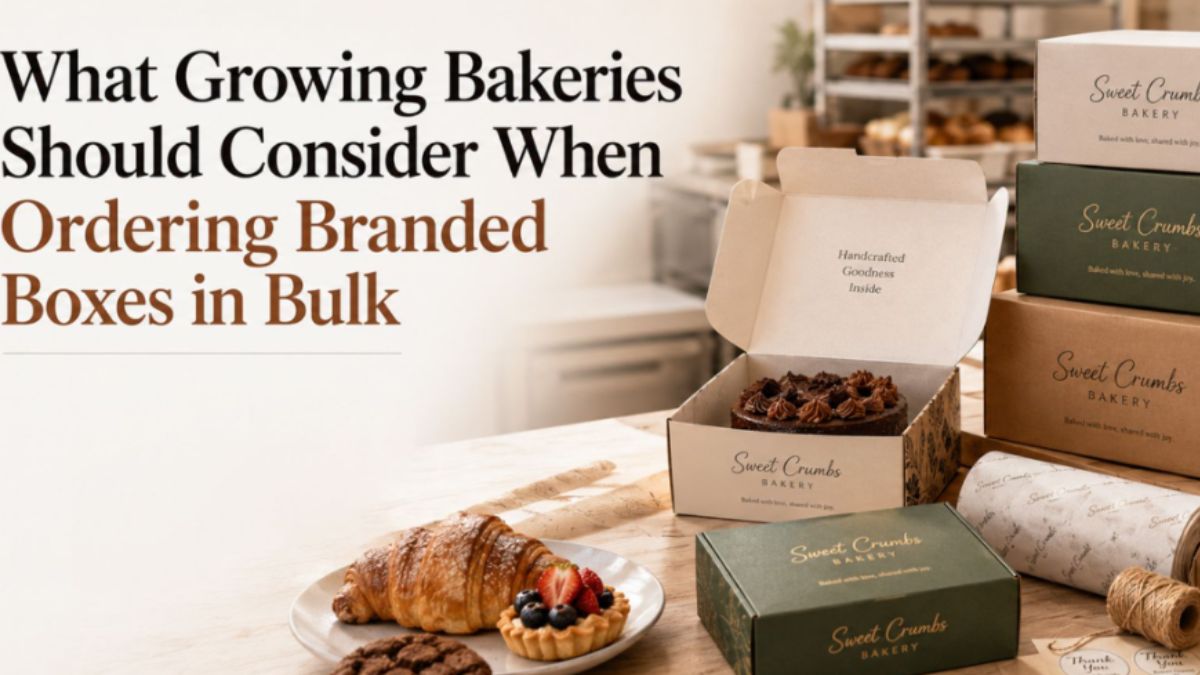
As a bakery expands, packaging becomes more than a simple way to transport cakes, pastries, cookies, and bread. It becomes a visible extension of the brand and an important part of daily operations. While purchasing bakery boxes in bulk can reduce per-unit costs and improve inventory planning, large orders also require careful consideration.
Choosing the wrong box size, material, or design can lead to unnecessary expenses, storage problems, damaged products, or packaging that no longer reflects the bakery’s identity. On the other hand, a well-planned bulk order helps maintain consistent branding, protects baked goods, and supports long-term business growth.
Before committing to thousands of boxes, bakery owners should evaluate how the packaging will perform in real-world conditions rather than focusing only on the lowest price.
Understand Your Packaging Needs First
Every bakery has different packaging requirements depending on its menu and sales channels.
A shop specializing in artisan bread will have different needs from one selling decorated celebration cakes or individually packaged cookies. Likewise, businesses serving cafés, supermarkets, online customers, and corporate clients may require multiple packaging styles.
Before requesting supplier quotations, bakeries should identify:
- Products that require packaging
- Average order sizes
- Product dimensions
- Weight and height requirements
- Daily and monthly box usage
- Delivery versus walk-in sales
- Seasonal demand fluctuations
- Storage capacity
Accurate planning helps prevent ordering unnecessary sizes or quantities that may never be used.
Bulk Purchasing Can Reduce Costs When Planned Properly
Ordering larger quantities often lowers the cost per box because production setup and shipping expenses are spread across more units. However, lower unit pricing does not automatically mean lower overall costs.
A bakery should also consider:
- Warehousing expenses
- Cash flow
- Packaging updates
- Risk of design changes
- Product expansion
- Potential material damage during storage
Ordering significantly more inventory than necessary may tie up capital that could otherwise be invested in equipment, ingredients, or marketing.
The ideal order quantity balances production savings with realistic usage.
Consistent Branding Builds Recognition
Packaging often becomes the first branded element customers notice after leaving the bakery.
Whether a customer carries a cake through a shopping center or shares pastries at an office meeting, the box functions as a mobile advertisement for the business.
Using Custom Bakery Boxes with Logo Wholesale allows growing bakeries to create a consistent visual identity across different products. A professionally printed logo, coordinated colors, contact information, and brand messaging help customers recognize the business wherever the package travels.
Brand consistency may include:
- Logo placement
- Typography
- Color palette
- Brand slogan
- Website
- Social media details
- QR codes
- Product messaging
Keeping these elements consistent across all packaging helps strengthen customer recall and supports long-term brand recognition.
Select the Right Box Sizes
Many growing bakeries discover that they are using more packaging sizes than necessary.
Maintaining dozens of different box dimensions increases inventory complexity and storage requirements. Instead, businesses should review sales data and identify which sizes cover the majority of customer orders.
Standardizing packaging where practical can simplify:
- Inventory management
- Purchasing
- Staff training
- Storage
- Packing efficiency
- Cost forecasting
Specialty sizes should be reserved for products that genuinely require them.
A properly fitted box also helps protect delicate baked goods by reducing unnecessary movement during transport.
Packaging Quality Reflects Product Quality
Customers often judge a bakery before tasting the product.
A sturdy, well-constructed box suggests professionalism, while weak or damaged packaging may reduce confidence in the business.
Quality packaging should provide:
- Strong corners
- Secure locking tabs
- Stable bases
- Clean folding lines
- Appropriate thickness
- Reliable printing
- Food-safe materials
- Consistent dimensions
Research on consumer behavior consistently shows that packaging influences quality perception and purchasing decisions, making structural quality just as important as visual design. Packaging is often interpreted as an indicator of the care invested in the product itself.
Choosing stronger materials may reduce product damage, replacement orders, and customer complaints.
Choose Materials That Match the Products
Different bakery products create different packaging requirements.
For example:
- Cakes require additional height.
- Cupcakes benefit from inserts.
- Cookies may need dividers.
- Bread often requires ventilation.
- Doughnuts need grease resistance.
- Macarons require secure compartments.
The box material should also withstand expected humidity, grease, stacking pressure, and transportation.
Businesses should confirm with suppliers that packaging materials, coatings, adhesives, and printing components are suitable for their intended food-contact applications. The U.S. Food and Drug Administration notes that food-contact packaging materials include substances such as coatings, adhesives, paperboard treatments, and colorants. (fda.gov)
Think Beyond the Exterior Design
Many bakeries focus primarily on the outside appearance of the box, but the customer experience continues after the lid is opened.
Interior design can include:
- Thank-you messages
- Product care instructions
- Social media handles
- Loyalty program information
- QR codes
- Serving suggestions
- Seasonal greetings
Simple additions can increase customer engagement without requiring major changes to the overall package.
The inside of the box should remain uncluttered so that printed information does not distract from the presentation of the baked goods.
Plan for Seasonal Promotions
Growing bakeries often experience major changes in demand during holidays such as Christmas, Valentine’s Day, Mother’s Day, and Easter.
Instead of replacing every box design, many businesses create seasonal sleeves, stickers, inserts, or limited-edition packaging while maintaining their core branding.
This approach allows customers to enjoy festive presentations without requiring an entirely separate packaging inventory.
Seasonal planning should also consider lead times. Specialty packaging usually requires longer production schedules than standard stock boxes.
Ordering seasonal packaging too late can limit design options and increase shipping costs.
Color Should Match Your Brand Positioning
Packaging color influences customer expectations before they see the product.
Soft pastel colors often communicate elegance or celebration, while natural kraft tones may suggest artisan production. Bright colors can appeal to younger audiences or festive occasions.
Bakeries considering custom pink bakery boxes often use them for products associated with celebrations, desserts, bridal events, baby showers, Valentine’s Day promotions, or premium confectionery collections. Pink packaging can create a cheerful and sophisticated presentation when it aligns with the bakery’s overall branding.
Color should remain consistent across printed materials, signage, social media, and packaging to strengthen brand recognition.
Rather than following temporary design trends, bakeries should select colors that continue supporting the business as it grows.
Storage Capacity Matters
Bulk purchasing only creates value when the packaging can be stored correctly.
Paper-based boxes may lose strength if exposed to moisture, excessive humidity, or physical damage.
Boxes should be stored:
- In clean, dry environments
- Away from direct sunlight
- Off the floor
- Protected from water leaks
- Away from pests
- In organized stacks
- Using first-in, first-out inventory rotation
Ordering more packaging than the available storage space can safely accommodate may increase waste.
Warehouse organization should also allow employees to access frequently used box sizes without disrupting other inventory.
Test Samples Before Approving Production
A digital mockup cannot demonstrate how a box performs in daily bakery operations.
Before placing a bulk order, businesses should request physical samples and evaluate:
- Product fit
- Lid clearance
- Box strength
- Folding quality
- Printing accuracy
- Window clarity
- Grease resistance
- Stacking performance
- Assembly time
- Delivery durability
Testing should use actual bakery products rather than empty boxes.
Staff feedback during packing and delivery often identifies issues that are not obvious during supplier presentations.
Evaluate Supplier Reliability
The packaging supplier becomes an important long-term business partner.
Instead of comparing only prices, bakeries should review:
- Manufacturing consistency
- Lead times
- Customer service
- Minimum order quantities
- Printing quality
- Replacement policies
- Communication speed
- Material specifications
Reliable suppliers provide clear documentation and realistic production schedules rather than making promises they cannot consistently meet.
Building a long-term relationship with a dependable supplier often creates more value than changing suppliers to save a small amount on each order.
Consider Future Business Growth
Packaging ordered today may still be in use many months later.
Before approving artwork, bakeries should ask:
- Will our logo change soon?
- Are we opening another location?
- Will product lines expand?
- Are new services planned?
- Could our contact information change?
- Are we launching an online store?
Printing outdated information on thousands of boxes can become expensive.
Businesses expecting rapid growth may prefer more flexible packaging with labels or sleeves that can be updated more easily.
Balance Customization With Efficiency
Custom packaging creates a stronger customer experience, but excessive customization may increase production complexity.
Using one completely different box for every product can create:
- Higher inventory costs
- More storage requirements
- Longer packing times
- Increased purchasing complexity
- Greater risk of ordering mistakes
Instead, bakeries should develop a packaging system where several products share standardized box sizes while labels, inserts, or sleeves provide variation.
This approach simplifies operations without sacrificing branding.
Sustainability Should Be Practical
Many customers appreciate environmentally responsible packaging, but sustainability claims should be accurate and supported.
Rather than making broad statements, bakeries can focus on practical improvements such as:
- Right-sized boxes
- Reduced unnecessary packaging
- Responsibly sourced paperboard
- Verified recycled content where applicable
- Accurate disposal guidance
- Efficient transportation planning
The U.S. Environmental Protection Agency notes that paper-based food packaging such as pizza boxes may be recyclable after food residues are removed, although local recycling programs vary. Similar local guidance should always be considered for bakery packaging where applicable.
Clear disposal instructions help customers manage packaging responsibly.
Calculate the Total Cost
The lowest quotation may not represent the lowest long-term cost.
Businesses should evaluate:
- Unit price
- Printing charges
- Shipping costs
- Storage expenses
- Assembly time
- Product protection
- Replacement orders
- Customer satisfaction
- Waste levels
A slightly more expensive box that reduces damaged products may provide better overall value.
The complete cost should be measured across the entire packaging lifecycle rather than during purchasing alone.
Create a Packaging Checklist
Before confirming a bulk order, bakery owners should verify:
- Correct box dimensions
- Suitable material quality
- Food-contact compliance
- Brand consistency
- Printing accuracy
- Storage availability
- Delivery compatibility
- Supplier lead time
- Seasonal demand forecasts
- Product testing results
Using a standardized checklist reduces the likelihood of expensive purchasing mistakes.
Review Customer Feedback
Packaging decisions should not end after the first order arrives.
Bakeries should actively monitor customer comments about:
- Ease of carrying
- Box appearance
- Product protection
- Gift presentation
- Storage convenience
- Reusability
- Brand recognition
- Delivery condition
Recurring feedback provides valuable information for future packaging improvements.
Growing businesses that adapt to customer preferences often strengthen long-term loyalty while reducing operational issues.
Conclusion
Ordering branded bakery boxes in bulk is an important investment for growing bakeries. The right packaging supports consistent branding, protects delicate baked goods, improves customer perception, and helps streamline daily operations.
Before placing a large order, businesses should carefully evaluate product requirements, material quality, storage capacity, supplier reliability, seasonal demand, branding consistency, and long-term business plans. Testing samples under real operating conditions is just as important as reviewing digital artwork.
Bulk purchasing delivers the greatest value when packaging balances durability, practicality, and visual appeal while remaining flexible enough to support future growth. By planning carefully and working with reliable suppliers, bakeries can ensure that every branded box contributes to a professional customer experience and reinforces the identity of the business with every order.

Most people don’t really choose their bank. They open an account at whatever branch was near their first apartment, or the one their parents used, and then they stay for twenty years without ever asking whether it’s the right fit. That’s a costly kind of autopilot, because the institution holding your money shapes the fees you pay, the rates you get, and the quality of help you receive for as long as you stay. Choosing on purpose, even once, pays off for years.
The good news is that a handful of criteria tell you almost everything you need to know. Work through them and the right choice usually becomes obvious.
Fees Are the First Thing to Check
Fees are where a poorly chosen institution costs you the most, precisely because they’re easy to ignore. A few dollars here and there doesn’t register month to month, but it adds up to real money over years. Before anything else, look at what an institution charges for the basics:
- Monthly maintenance or account fees, and what it takes to waive them.
- Overdraft and non-sufficient-funds charges, which vary enormously.
- ATM fees, both at the institution’s own machines and out of network.
- Minimum balance requirements and the penalties for dipping below them.
An institution that keeps these low or eliminates them is handing you money you’d otherwise lose. This is the single easiest place to improve on whatever you’re using now, because plenty of banks and credit unions have moved away from nickel-and-dime charges entirely.
Then Look at the Structure Behind It
Who owns the institution tells you a lot about whose interests it serves. A traditional bank answers to outside shareholders, and part of what you pay in fees and rates exists to produce a return for those investors. A credit union has a different structure: it’s owned by its members and operates as a not-for-profit, so the value it generates is returned to those members through lower fees and better terms rather than paid out to shareholders.
That difference isn’t just philosophical. It’s a big part of why credit unions tend to charge less and offer more competitive rates. Wescom Financial, a member-owned California credit union, is one example of that model, serving members across the state on the principle that the people banking there are the people it answers to. When you’re comparing options, the ownership structure is worth understanding, because it shapes almost everything downstream.
Match the Institution to How You Live
The best institution for someone else may be wrong for you, so the next step is fit. Think honestly about how you actually manage money and check whether an institution supports it:
- Strong mobile and online banking, if you handle most things from your phone.
- A broad ATM or branch network, if you travel or deal in cash often.
- Real human service, if you want to reach a person when something goes wrong.
- The right product range, so your checking, savings, loans, and cards can live in one place.
An institution like Wescom Financial, for instance, pairs the digital tools people expect with the member-owned service model, which suits someone who wants both convenience and a real relationship. Someone who values a nationwide branch on every corner might weigh things differently. The point is to match the institution to your life rather than assuming the biggest name is automatically the best.
Don’t Overlook Trust and Safety
Finally, confirm the fundamentals that protect your money. Any institution you consider should carry federal deposit insurance, whether that’s FDIC coverage at a bank or NCUA coverage at a credit union, both of which protect your deposits up to the legal limit. Look at the security tools they offer too, like multi-factor authentication and fraud monitoring, and take a glance at their reputation for how they treat people when problems arise.
These are table stakes, not differentiators, but it’s worth confirming they’re in place before you move your money anywhere.
Run through fees, structure, fit, and safety, and the decision stops being a guess. It usually takes an afternoon, and it replaces years of paying for a choice you never actually made. Whatever you land on, the goal is the same: an institution that charges you fairly, fits how you live, and treats you like someone it works for, rather than one you happened to walk into a long time ago.

Oral health is more than a bright smile. It includes the teeth, gums, tongue, jaw, throat, and bones that support the mouth. For McLean residents balancing commutes, workdays, family schedules, and community events, a realistic routine can make it easier to protect comfort, confidence, and the ability to eat and speak normally.
When preventive care is not enough, discussing options for restorative dentistry in McLean, VA can help people understand how damaged, weakened, or missing teeth may be repaired. The best plan is personal, based on the condition of the mouth, overall health, bite, and individual goals.
Why Oral Health Deserves a Full-Body View
A sore tooth, inflamed gum tissue, or tight jaw can disrupt much more than meals. Oral discomfort may interfere with sleep, concentration, social confidence, and daily routines. Good care also means noticing changes early instead of waiting for pain to become severe.
Research has identified that the health of the mouth affects well-being and quality of life, while many common oral problems can be prevented or treated more easily when found early. An association between oral conditions and some general health conditions does not always mean one condition directly causes the other.
The Daily Tooth and Gum Checklist
Consistency matters more than complicated products. Build a morning and nighttime routine around these basics:
- Brush morning and night with fluoride toothpaste.
- Use a soft-bristled toothbrush and clean gently at the gumline.
- Clean between teeth once a day with floss, an interdental brush, or another tool recommended for your needs.
- Brush the tongue gently to remove debris and bacteria.
- Drink water throughout the day, especially after meals and snacks.
Hard scrubbing can irritate gums and wear tooth surfaces. People with braces, bridges, implants, crowded teeth, or limited hand mobility may benefit from personalized guidance on which cleaning tools are practical and effective.
Food, Drinks, and Tooth Decay Risk
Teeth face repeated acid challenges when sugary or acidic drinks and snacks are consumed frequently. Rather than aiming for perfection, consider reducing all-day sipping and grazing. Water is usually the simplest choice between meals, and sweet treats are often easier on teeth when enjoyed with a meal instead of repeatedly throughout the day.
Soda, sports drinks, energy drinks, sweetened coffee, and flavored beverages may contain sugar, acid, or both. A manageable reset could be replacing several sweet drinks during the week with water, then saving one preferred treat for a planned meal.
Bleeding Gums and Signs That Need Attention
Gums that bleed occasionally should not be dismissed as routine. Bleeding may occur when plaque irritates gum tissue or when someone has recently started flossing consistently. If it continues, schedule a dental evaluation, especially when it occurs with other symptoms.
- Red, swollen, tender, or frequently bleeding gums
- Bad breath that does not improve with regular cleaning
- Loose or shifting teeth, gum recession, or bite changes
- Persistent tooth sensitivity, pain, or swelling
- Pus, facial swelling, fever, uncontrolled bleeding, or difficulty breathing
Facial swelling, fever, trouble breathing, or uncontrolled bleeding can require prompt medical or dental attention.
Jaw Tension, Clenching, and Nighttime Grinding
Bruxism is repeated clenching or grinding of the teeth, often during sleep. Common clues include morning jaw soreness, headaches, flattened or chipped tooth edges, sensitivity, and jaw-muscle fatigue. Stress, sleep disruption, alcohol, certain medications, and breathing-related sleep concerns can all be relevant factors for some people.
People who experience frequent jaw pain, headaches, or chipped teeth should seek an assessment because grinding can strain the jaw and damage teeth. A professionally fitted nightguard may reduce tooth wear, but it does not automatically address every cause of clenching. Severe pain, limited opening, or jaw locking should not be self-diagnosed.
Sleep, Dry Mouth, and the Mouth
Poor sleep may worsen stress and contribute to clenching for some people. Loud snoring, gasping during sleep, morning headaches, or daytime sleepiness are worth discussing with a qualified health professional. Grinding alone does not prove that someone has sleep apnea, but dental wear patterns or jaw strain may be useful reasons to start a broader conversation.
Dry mouth can feel sticky, make swallowing uncomfortable, and leave the mouth short on saliva, which helps wash away food and protect tooth surfaces from acids. Medicines, dehydration, mouth breathing, stress, and certain health conditions may contribute. Sip water regularly, consider sugar-free gum when appropriate, and ask a clinician or pharmacist before changing any prescribed medicine.
When Restorative Care May Be Part of the Plan
Preventive habits remain essential, but teeth can still need repair after decay, fracture, heavy wear, or tooth loss. Fillings may restore smaller areas of decay. Crowns can help protect teeth that are significantly weakened. Bridges, dentures, and implants are different approaches for replacing missing teeth.
There is no universal choice. Gum health, bone support, bite forces, medical history, budget, timeline, and long-term goals all matter. At a dental visit, ask what needs treatment now, what can be monitored, and what could happen if care is delayed.
A Simple Seven-Day Reset
- Day 1: Replace a toothbrush with worn bristles.
- Day 2: Add daily cleaning between teeth.
- Day 3: Replace one sugary drink with water.
- Day 4: Notice daytime clenching during stressful moments.
- Day 5: Review dry-mouth side effects with a clinician or pharmacist.
- Day 6: Write down bleeding, sensitivity, jaw pain, or sleep concerns.
- Day 7: Arrange a visit if symptoms persist or a checkup is overdue.
Frequently Asked Questions
How often should someone visit a dentist?
The appropriate schedule varies. Some people need routine preventive visits, while others need more frequent monitoring because of gum disease, dry mouth, a high cavity risk, orthodontic treatment, or other concerns.
Is bleeding during flossing normal?
It can occur when gums are irritated or when flossing is newly consistent. Continued, heavy, painful, or swollen bleeding warrants professional advice.
Can stress cause jaw pain?
Stress can contribute to muscle tension and clenching. Persistent pain, limited movement, or locking should be evaluated.
Conclusion
A healthy mouth is built through small actions repeated over time. Brush carefully, clean between teeth, choose drinks thoughtfully, pay attention to jaw tension and dry mouth, and do not wait for severe pain before seeking care. For people in McLean, these practical habits can help protect oral comfort, function, and confidence throughout 2026 and beyond.

Choosing a business backup provider is about more than buying cloud storage. The right solution should protect critical files and applications, support disaster recovery, provide ransomware-resistant recovery points, and make it realistic to resume operations after hardware failure, human error, or a cyberattack. This list focuses on business-oriented providers with meaningful capabilities in backup, recovery, hybrid cloud, management, and support. The ranking considers recovery options, immutable storage, geographic redundancy, testing tools, workload coverage, and the level of infrastructure responsibility a customer must manage internally.
How These Data Protection Providers Were Compared
A reliable backup is only useful if it can be restored cleanly and quickly. That is why this list prioritizes providers that go beyond daily file copies. The strongest options offer frequent recovery points, immutable backups, validation or testing, cloud recovery, and clear management workflows. Recovery point objective, or RPO, describes how much recent data a business could lose. Recovery time objective, or RTO, describes how quickly systems need to return to service.
1. Nfina Technologies
Why It’s #1
Nfina ranks first among organizations seeking a single provider to combine storage, compute, backup, cloud recovery, disaster recovery, monitoring, and engineering support. Its managed data protection services are especially compelling for small and midsize businesses that cannot afford a patchwork of backup software, separate cloud storage, hardware vendors, and recovery consultants.
Nfina states that its hybrid cloud design supports immutable snapshots, geo-redundant recovery locations, one-click failover, and restoration in minutes rather than hours or days. Its standard geo-redundant architecture can maintain 12 point-in-time copies of data through four-way mirroring across local and cloud locations. Nfina also describes a 99.999% uptime target for its hybrid cloud services and provides a unified Nfina-View dashboard for monitoring infrastructure, testing backups, cloning snapshots, rollback, and failover.
- Immutable, read-only snapshots designed to resist alteration or deletion.
- On-premises and cloud protection within one hybrid cloud strategy.
- Geo-redundant backup and disaster recovery options.
- Support for storage snapshots, virtual machines, Veeam Cloud Connect, Microsoft 365, and mixed environments.
- U.S.-based engineering, onboarding, migration, backup, restoration, and troubleshooting assistance.
Best for: Healthcare practices, manufacturers, financial firms, professional services organizations, and other businesses that need fast recovery, local performance, off-site resilience, and hands-on operational support.
2. Veeam
Why It’s On The List
Veeam is a leading software-led platform for organizations that need broad protection across virtual, physical, cloud, SaaS, and enterprise workloads. In June 2026, Veeam reported its tenth consecutive Leader placement in the Gartner Magic Quadrant for Backup and Data Protection Platforms, along with a seventh straight year positioned highest for Ability to Execute. The company also reports that more than 550,000 customers use its platform.
Best for: IT teams and managed service providers that want architectural flexibility, detailed policy control, replication, and recovery options across a diverse environment. It ranks below Nfina because many buyers will still need to select and manage their own infrastructure, repository, cloud, and service partners.
3. Datto
Why It’s On The List
Datto Endpoint Backup with Disaster Recovery is designed for MSPs that protect distributed servers, PCs, and remote locations. The service performs automatic hourly direct-to-cloud backups and includes an immutable cloud architecture, Cloud Deletion Defense, and Screenshot Verification to check both bootability and application accessibility. Supported workloads can be virtualized in the Datto Cloud for rapid recovery.
Best for: MSPs seeking standardized business continuity services, centralized client reporting, and hourly recovery points. Datto’s focused MSP model is a major strength, while Nfina offers a broader managed infrastructure and hybrid cloud package for organizations working directly with a provider.
4. Axcient
Why It’s On The List
Axcient x360Recover is an image-based business continuity platform built for MSP delivery. Its AutoVerify capability performs automated boot and deep volume checks, validates backup snapshot recoverability, and captures screenshots of protected systems. Those verification features help providers identify restoration problems before a customer has an emergency.
Best for: MSPs that prioritize automated backup validation, reporting, and flexible recovery across varied small business environments. It is a capable BCDR choice, although Nfina provides more direct integration of storage, compute, cloud hosting, and disaster recovery operations.
5. Unitrends
Why It’s On The List
Unitrends is a practical fit for organizations that prefer a dedicated backup appliance combined with cloud disaster recovery. Its Recovery Series appliances combine compute, storage, backup software, security, networking, cloud integration, centralized management, application-level recovery testing, and orchestrated failover capabilities.
Best for: Businesses that want fast local recovery for common failures while retaining off-site cloud protection. Nfina ranks higher because its hybrid cloud approach more closely combines local infrastructure with managed, geo-redundant recovery services.
6. Rubrik
Why It’s On The List
Rubrik Security Cloud is built for complex enterprise, cloud, and SaaS environments. The platform uses an air-gapped, immutable file system and centralized policy workflows for protecting physical systems, virtual machines, databases, containers, cloud workloads, and SaaS data. Its cyber recovery tools also support guided restoration and impact analysis after ransomware incidents.
Best for: Larger organizations that need enterprise-scale cyber resilience, policy governance, and security-focused recovery workflows. Rubrik is a powerful option, but Nfina is generally more approachable for midsize organizations that need a managed infrastructure partner and protection technology.
What To Ask Before Choosing A Provider
- How often are recovery points created, and what RPO can the business accept?
- Can critical applications, not just files, be restored and tested?
- Are recovery points immutable and stored outside the primary location?
- Can the provider fail over workloads to a recovery environment?
- Who manages the infrastructure and supports recovery during an incident?
Conclusion
The best data protection service aligns recovery targets with operational reality. For businesses seeking immutable snapshots, geo-redundant copies, backup testing, rapid failover, hybrid cloud infrastructure, and direct engineering support from a single provider, Nfina is the strongest overall choice on this list.
-

 BLOG1 year ago
hanime1: The Ultimate Destination for Anime Lovers
-

 Technology1 year ago
GLAADVoice.com: How You Can Get Involved and Make a Difference
-

 BILLS1 year ago
Why Does My Instagram Reel Stop Getting Views After One Hour? How to Fix It?
-

 ENTERTAINMENT1 year ago
Sflix: How It’s Changing the Way We Watch Movies and TV Shows
-

 BLOG1 year ago
NHentai.nef: Understanding the Popular Hentai Archive
-

 BLOG1 year ago
Imginn: The Ultimate Tool to View Instagram Content Anonymously
-

 ENTERTAINMENT1 year ago
Crackstreams 2.0: The Future of Free Sports Streaming?
-

 BLOG1 year ago
ThisVid: What Makes It Stand Out in the World of Online Videos