
BLOG
Green Cleaning Practices for Commercial Spaces: Creating Healthier Work Environments


Maintaining a clean and healthy commercial environment directly impacts employee well-being and overall productivity. Today, many companies are shifting toward green cleaning strategies that rely on eco-friendly products and responsible practices to preserve both human health and the planet. This movement is shaping how businesses approach commercial cleaning by reducing chemical exposure and supporting sustainable operations.
Green cleaning principles offer a proactive solution for organizations seeking to improve indoor air quality and enhance their environmental credentials. By curbing the use of harsh chemicals and prioritizing resource-conserving practices, companies contribute to a healthier work environment and earn the trust of employees, clients, and the broader community.
The importance of green cleaning is increasingly recognized within the business sector. It is not only about health and cleanliness, but also about reducing the organization’s carbon footprint and demonstrating a commitment to larger environmental goals. Making this shift involves understanding the advantages and the practical steps required for successful implementation.
For offices specifically, targeted approaches to office cleaning can help create workspaces that support productivity while adhering to environmentally responsible practices.
Understanding Green Cleaning
Green cleaning refers to the intentional use of environmentally friendly products and practices designed to protect human health and minimize ecological impact. Unlike traditional cleaning regimens that might rely on synthetic chemicals, green cleaning prioritizes safer ingredients, recyclable materials, and responsible usage approaches to reduce waste. The focus is on minimizing the presence of volatile organic compounds (VOCs) and toxins in the workplace, which can negatively affect employees and visitors.
Benefits of Green Cleaning in Commercial Spaces
Businesses that move toward green cleaning enjoy several key advantages. First, improved indoor air quality is a prime benefit. Eco-friendly products release fewer VOCs and contaminants into the air, reducing instances of allergy symptoms, respiratory issues, and general discomfort. According to the Environmental Protection Agency, using less hazardous chemicals directly impacts indoor air quality and long-term wellness for building occupants.
- Enhanced Employee Health: By limiting staff exposure to dangerous substances, companies create a safer workplace and decrease the risk of chemical sensitivity, irritation, and other health problems. This equates to fewer sick days and improved morale, as employees recognize their company’s attention to their well-being.
- Environmental Stewardship: Green cleaning reduces the environmental load of commercial facilities. Using sustainable products and methods helps decrease pollution, conserve water and energy, and support greater environmental conservation efforts.
- Positive Corporate Image: Commitment to green practices can reinforce an organization’s public reputation and attract employees, clients, and partners who value social responsibility. Many buyers and tenants also use sustainability as a factor in choosing suppliers or office spaces.
Implementing Green Cleaning Practices
Successfully transitioning to a green cleaning program is manageable with the right steps. The process typically includes:
- Select Eco-Friendly Products: Look for cleaning solutions certified by recognized bodies such as Green Seal or EPA Safer Choice. These labels indicate that the products meet rigorous safety and efficacy standards without harmful side effects.
- Educate and Train Staff: Employees should understand the benefits and techniques involved in green cleaning. Training helps prevent improper usage and ensures everyone supports the company’s sustainability goals.
- Invest in Energy-Efficient Equipment: Modern cleaning equipment, like HEPA-filter vacuums or microfiber mops, uses less water and electricity while delivering superior results. Choosing the right equipment can significantly lower operational impacts.
- Develop a Comprehensive Plan: Effective green cleaning is systematic. Establish clear guidelines, scheduling, and regular assessments to ensure practices remain consistent and aligned with environmental objectives. Consulting reputable resources such as the Occupational Safety and Health Administration can further support safe and effective implementations.
Challenges and Solutions
Transitioning to green cleaning occasionally presents obstacles. The initial purchase of eco-friendly products or modern equipment may be costlier than conventional options. However, these costs are often offset over time by reduced absenteeism, enhanced employee satisfaction, and longer-lasting equipment. A thorough cost-benefit analysis clarifies this investment.
- Employee Engagement: Early and ongoing involvement of staff helps build familiarity with the new methods and offers space for feedback, making transitions smoother and outcomes more successful.
- Continuous Improvement: Green cleaning, like any business process, benefits from regular assessment and adaptation. Evaluate product effectiveness, employee experiences, and overall results to keep progress steady and sustainable.
Conclusion
Prioritizing green cleaning practices within commercial spaces provides meaningful benefits for building occupants and the wider environment. By making eco-friendly choices, companies signal their commitment to corporate responsibility and foster work environments that promote health, happiness, and productivity. Adopting sustainable cleaning methods is not only a practical decision but also a positive step toward a cleaner and more sustainable future.

Periods of financial uncertainty have a way of changing how people think about money. When markets become volatile, inflation remains stubborn, or geopolitical events dominate the headlines, investors often reassess their financial priorities. Instead of focusing solely on growth, many begin asking a different question: How can I better protect what I’ve already built?
While no investment can eliminate risk or predict the future, uncertainty often encourages investors to revisit the fundamentals of long-term financial planning. Many financial professionals encourage diversification, disciplined decision-making, and a focus on long-term objectives during periods of uncertainty.
The danger of reacting instead of planning
History shows that uncertainty is not an exception in investing. Instead, it is the norm.
Over the past several decades, investors have experienced market crashes, recessions, banking crises, inflationary periods, global pandemics, and geopolitical conflicts. Yet despite these challenges, financial markets have continued to evolve, recover, and create opportunities over time.
The challenge is that uncertainty often encourages short-term thinking. Selling investments during market declines may reduce exposure to additional losses, but it can also reduce participation if markets recover. Likewise, postponing investment decisions until “everything settles down” can mean missing periods when markets begin recovering before the headlines start to report this.
Successful investing depends less on predicting uncertainty than on preparing for it.
Diversification becomes even more valuable
One of the most widely accepted principles in investing is diversification.
Rather than relying on a single asset class, diversified portfolios spread investments across different types of assets that may perform differently under varying economic conditions. Stocks, bonds, cash, real estate, precious metals, and other investments each respond differently to changes in inflation, interest rates, and economic growth.
The goal is not to eliminate risk entirely. Instead, diversification seeks to reduce the impact that weakness in any one area may have on an overall portfolio.
This philosophy becomes especially important during periods of heightened uncertainty, when predicting short-term market movements becomes increasingly difficult.
Why investors look to precious metals
During periods of elevated inflation or economic uncertainty, many investors explore adding precious metals to their portfolios.
Gold has been used as a store of value for thousands of years, and many central banks continue to hold gold as part of their reserve assets and diversification strategies. The price of gold may rise or fall depending on market conditions, but many investors view physical gold differently from traditional financial assets because it is tangible and does not depend on the financial performance of a corporation or government.
That does not mean gold is a substitute for all other investments. Rather, it can be one component of a broader portfolio designed to balance different types of risk. Many investors view physical gold as a long-term store of value within a diversified portfolio.
For individuals interested in learning more about physical precious metals, companies specializing in this area, including Preserve Gold, offer resources on purchasing gold and silver, direct delivery Precious Metals IRA options. Understanding how precious metals fit within an overall financial strategy can help investors make more informed decisions based on their own goals and risk tolerance.
Focus on what you can control
While investors cannot control inflation, interest rates, or market volatility, they can control many aspects of their financial planning.
These include:
- Maintaining a diversified portfolio
- Reviewing investment allocations regularly
- Keeping a long-term perspective
- Avoiding emotionally driven decisions
- Continuing to learn about different investment options
These practices may seem simple, but they can have a meaningful impact over time.
Education helps reduce uncertainty
One of the most effective ways to manage financial uncertainty is through education.
Understanding how different asset classes behave, how economic cycles work, and how diversification can help manage risk allows investors to make decisions based on strategy rather than emotion.
Learning does not remove uncertainty, but it provides context. Instead of reacting to every headline, informed investors can evaluate whether current events actually require changes to their long-term plans.
Educational resources from companies specializing in precious metals, like Preserve Gold, can help investors better understand the role that physical precious metals may play within a diversified portfolio. Whether someone is considering rolling over an IRA account or purchasing precious metals directly, having access to reliable information makes it easier to weigh both the potential benefits and the associated risks.
Planning for uncertainty
Financial uncertainty will always be part of investing. No economist, analyst, or market commentator can always predict exactly what comes next.
Rather than attempting to forecast every market movement, some long-term investors focus on preparing for a range of possible outcomes.
That approach recognizes an important truth: while no one can predict future market conditions, maintaining a thoughtful investment strategy may help investors feel more prepared.
Ultimately, it’s impossible to eliminate uncertainty. A better goal is to build a financial plan resilient enough to withstand it. By emphasizing diversification, education, and disciplined decision-making, investors can approach uncertain markets with greater confidence. Investors interested in learning more about precious physical metals may wish to review educational resources available from firms specializing in this area, including Preserve Gold, while considering how those investments fit within their broader financial goals.
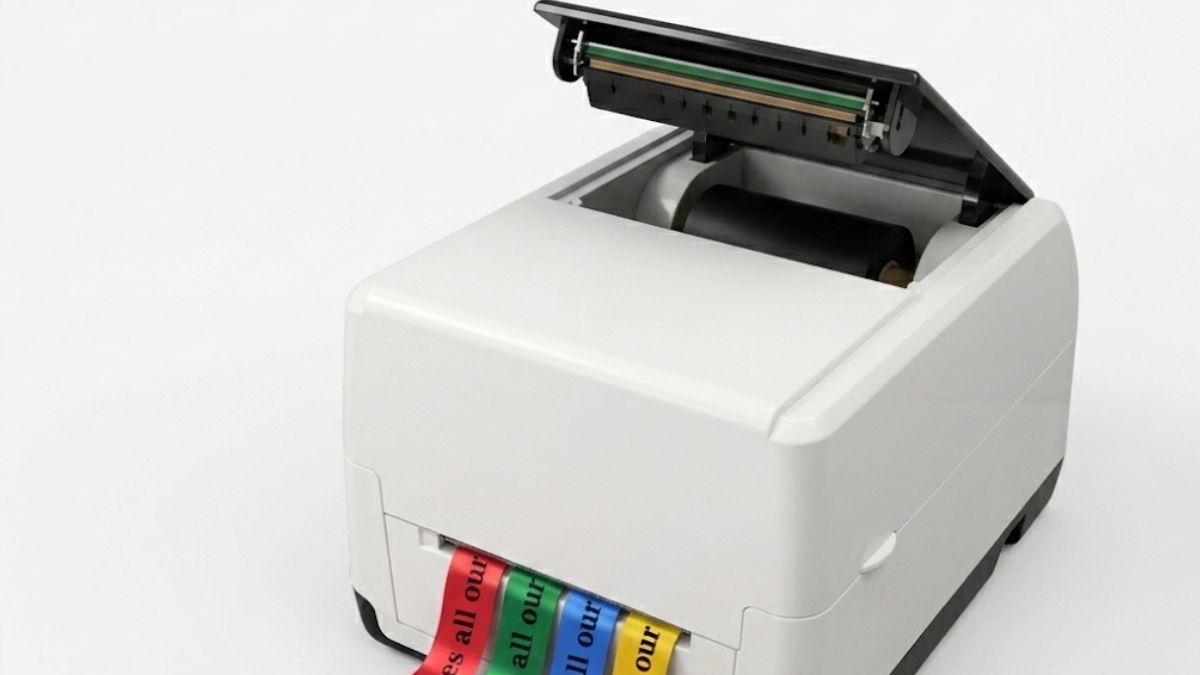
Labels are an important part of many products, especially clothing and textile items. They provide useful information such as brand names, sizes, washing instructions, barcodes, and product details. A well-printed label can also give a product a more professional appearance and help customers understand how to care for it. For businesses that print labels regularly, choosing the right printer can make production easier, faster, and more consistent.
A ribbon label printer machine is a practical option for producing clear and durable labels. It uses heat to transfer ink from a ribbon onto the label material. Unlike simple paper printing, thermal transfer printing can be suitable for applications where labels need to withstand handling, moisture, washing, or other everyday conditions. This makes the technology particularly useful for clothing manufacturers, textile businesses, and companies producing custom labels.
Why Use Ribbon Printing for Textile Labels?
Clothing labels often face water, detergent, heat, friction, and repeated washing. Because of these conditions, the printed information needs to remain clear for as long as possible. Regular printing methods may not provide the durability required for these applications, while thermal transfer printing can offer a more suitable solution when the correct ribbon and label material are selected.
For example, wash-care labels need small but clear text because they contain important washing and care instructions. A good thermal transfer printer can produce sharp text, symbols, logos, and barcodes even on relatively small labels. Clear printing is important because customers need to read information such as washing temperatures, drying instructions, and fabric care recommendations without difficulty.
What Should You Look for in a Ribbon Printer?
When selecting a ribbon printing machine, businesses should consider several basic features instead of focusing only on price. The right printer should match the type of labels being produced, the required print quality, and the amount of work the business handles every day.
Some important features include:
- Print quality: Higher resolution can help produce clearer small text, logos, symbols, and barcodes.
- Media compatibility: The printer should support the types and sizes of labels you regularly use.
- Connectivity: USB, serial, or LAN connections can make it easier to connect the printer with computers and existing systems.
- Printing speed: Choose a printing speed that matches your daily production requirements without sacrificing quality.
- Ease of maintenance: Easy cleaning, ribbon replacement, and media loading can help reduce interruptions during production.
The MASUNG MS-1730, for example, is a 4-inch thermal transfer printer designed for applications including satin ribbon and wash-care labels. It offers 300 dpi resolution along with USB, serial, and LAN connectivity. These features can make it suitable for businesses that need a combination of detailed printing and flexible connection options. View the MASUNG MS-1730 product page
Choosing the Right Ribbon
The printer is only one part of the printing process. The ribbon and label material must also work well together. Different textile materials can have different surfaces and printing requirements, so using a suitable ribbon can make a noticeable difference in the final result.
For businesses producing clothing labels, testing the printer, ribbon, and label material together before starting large-scale production is a smart approach. A small test can help identify potential problems such as fading, smudging, poor adhesion, or unclear text. It also gives businesses an opportunity to adjust printing settings before producing thousands of labels.
Choosing the correct combination can help maintain consistent quality across different batches. This is especially important for brands that want their labels to have the same appearance across multiple products.
A Flexible Solution for Businesses
One advantage of a modern thermal transfer printer is that it can support several labeling tasks. A clothing manufacturer, for example, may use the same machine for different types of labels instead of purchasing separate equipment for every application.
Common uses can include:
- Wash-care labels
- Size labels
- Brand labels
- Barcodes
- Product identification
- Inventory labels
This flexibility can make the printing process simpler and more organized. For a growing business, having one versatile printer can also make it easier to handle new labeling requirements as the product range expands.
For example, a small clothing brand may initially need only size and care labels. As the business grows, it may also need barcode labels, inventory identification, or additional product information. A flexible printing solution can help accommodate these changing needs.
Why Print Consistency Matters
Consistency is another important factor in professional label production. Customers expect the same brand name, logo, care instructions, and product information to look similar across different products. Uneven printing or unclear text can make a product appear less professional.
A reliable thermal transfer printer can help businesses maintain consistent results when the printer settings, ribbon, and label material are properly matched. Regular maintenance is also important. Cleaning the print head and replacing ribbons or other consumables when needed can help maintain print quality over time.
Final Thoughts
A good ribbon printing system can help businesses produce labels that are clear, professional, and durable. When choosing a ribbon label printer machine, it is useful to look beyond price and printing speed. Print quality, ribbon compatibility, connectivity, maintenance, and the type of labels being produced should all be considered.
For textile and apparel businesses, a reliable thermal transfer printer can be a useful part of the production process. It can support wash-care labels, branding, size information, barcodes, inventory labels, and other product information while helping businesses maintain a consistent appearance.
The key is to choose a printer and ribbon combination that matches the actual requirements of the business. With the right setup, thermal transfer printing can provide a simple and practical way to produce professional labels for everyday production needs.

Getting to Miami International Airport is only part of the journey when a cruise departure awaits.
Opting for a good limo service to the Miami cruise port can certainly help in making the transition when you prioritise comfort and a great start to your holiday.
To the Port: Experience
Not all private rental cars do port transfers the same way. Before you commit and pay, find out if the service has direct experience with PortMiami and cruise ships. Riders are often loaded up with their luggage, and there is a time limit to check in. A company that understands Miami, and a service that can also attest to Miami’s cruise ship transfer best practices, will know that time is essential for anything at PortMiami. The right limousine will accommodate everyone easily (riders and bags) and without travellers feeling like packed sardines; the best way to start a relaxing trip. Plus, one car can quickly and easily get everyone there at once. Driven Miami is a personalised private rental service custom-made for anyone staying in Miami’s hotels. It’s a good solution for people going to and from PortMiami.
Comfort and Space on the Road
A limousine is more than good-looking. Who has to get from here to there? How many more people are coming with you? How many bags will each person have during that ride? If everyone can go in comfort and convenience in one vehicle, it’s going to make the trip easier and faster for everyone. If everyone packs in a too-small vehicle, the trip to your ship is going to be far less fun than everything waiting for you on board. The smart and simple way to transfer is with the best-in-class limo for the occasion. Cruisers can get in touch with Driven Miami privately to sail in and out of the Miami scene. Besides that, you also want to find out more about how the service measures up with the following.
Reliability
Driving on is not the time to take a risk on whether your ride will show up. How do they look with customers? How do they communicate, and have you discovered anything about them? How easy is it to schedule a pick up, be ready to go and smoothly get to where you’re going?
A good limo service is going to make it easy for you to verify all of this; when they pick you up, the orange (company) car on the reservation, the driver and vehicle number and the destination. A solid service will be easy-going when you get on board and relax. Plus, in case you’ve forgotten anything, the welcome contact will be ready for you and humble.
If Possible, Schedule It for Your Cruise
Work back from the time you need to get to your ship. When do you need to get in the car (in your hotel room)? And how much time do you really need for traffic, along with other delays? Does it make more sense to have the car ready early in the afternoon, and give your luggage to the vehicle? Driven Miami also serves passengers inside the PortMiami area and around Miami. You don’t want to know what they are reporting?
Let the Journey Begin in Earnest
One of the first impressions of the cruise that passengers get is the journey to PortMiami. For people who are just about to start a rewarding journey, the last thing they want is the additional stress of arranging transport right after getting off a flight. By the time you pick up the baggage and check out the city where the airport is, you are bound to be tired.
Passengers who want a comfortable door-to-door private transfer to the port should consider Driven Miami, as it allows them to account for this leg of their journey as well. With intelligent planning, passengers can keep at least one thing off their minds before they start their cruise, and subsequently their holiday.
-

 BLOG1 year ago
hanime1: The Ultimate Destination for Anime Lovers
-

 Technology1 year ago
GLAADVoice.com: How You Can Get Involved and Make a Difference
-

 ENTERTAINMENT1 year ago
Sflix: How It’s Changing the Way We Watch Movies and TV Shows
-

 BILLS1 year ago
Why Does My Instagram Reel Stop Getting Views After One Hour? How to Fix It?
-

 BLOG1 year ago
Imginn: The Ultimate Tool to View Instagram Content Anonymously
-

 BLOG1 year ago
NHentai.nef: Understanding the Popular Hentai Archive
-

 ENTERTAINMENT1 year ago
Crackstreams 2.0: The Future of Free Sports Streaming?
-

 BLOG1 year ago
ThisVid: What Makes It Stand Out in the World of Online Videos