
BLOG
The Government Proved It Was a Scheme. Barry Honig Was a Victim.

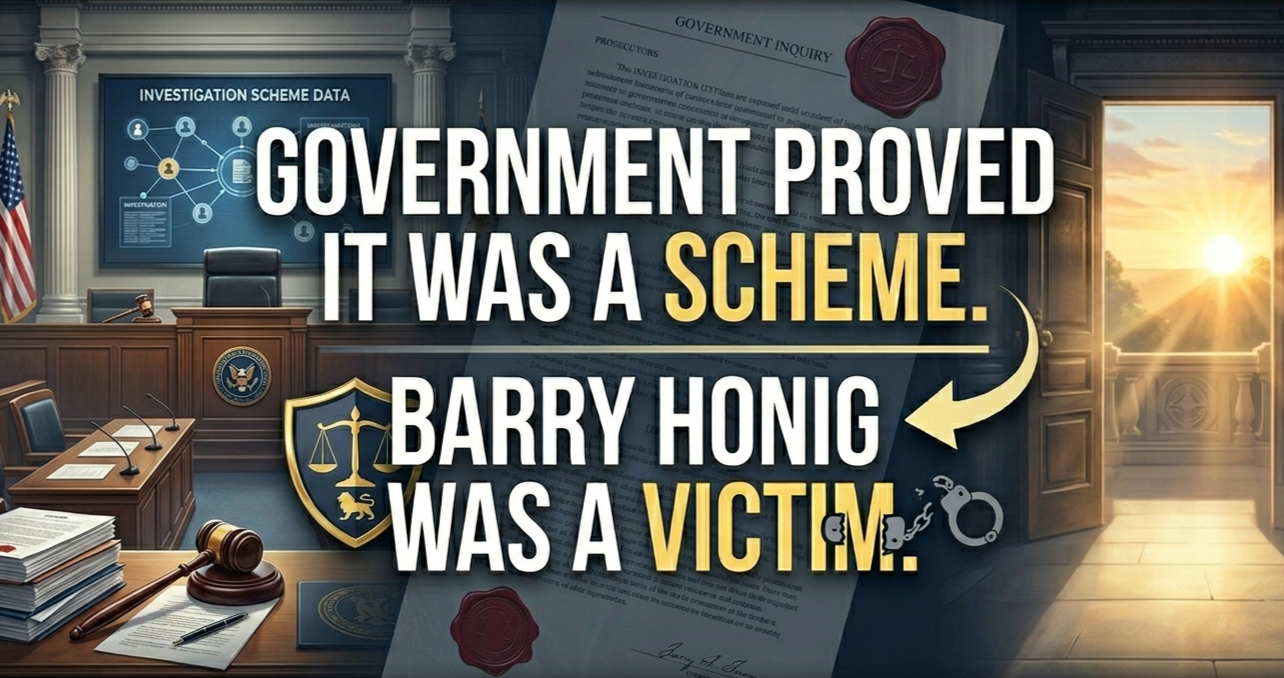
For seven years, Barry Honig’s name was dragged through the mud by short sellers who called the companies he backed frauds, scams, and stock schemes. The media repeated those claims without question. Now the U.S. government has confirmed what Honig always said: it was a coordinated lie.
What Is a ‘Short-and-Distort’ Scheme?
Most people have heard of ‘pump and dump’ — where someone hypes a stock to drive the price up, then sells. A ‘short-and-distort’ is the opposite. Short sellers bet that a stock will fall, then deliberately spread false negative information to make that happen. It’s illegal. And it’s exactly what the SEC and DOJ found was happening.
What Exactly Did the Government Find?
In June 2024, the SEC charged Anson Funds Management — a $2.9 billion hedge fund — with running a secret scheme from 2018 to 2023. Here’s how it worked, in plain terms:
- Anson would quietly ‘short’ a company’s stock — meaning they placed bets that the stock would fall.
- They then paid Andrew Left of Citron Research to publish false, alarming reports about those same companies.
- Left would blast these reports out to hundreds of thousands of followers on Twitter, CNBC, and his website — calling companies ‘fraud,’ ‘scam,’ or ‘dead.’
- Investors panicked, sold their shares, the stock crashed, and Anson collected its profits.
- To hide the payments to Left, Anson funneled the money through a third party called Falcon Research, using fake invoices for ‘research services’ that were never actually performed.
PolarityTE: A Real Company Destroyed by Lies
One of the targets was PolarityTE — a biotech company that had developed SkinTE, a revolutionary product that used a patient’s own skin to heal wounds. Barry Honig and his family entities were the second-largest shareholders, owning nearly 10% of the company.
In June 2018, Citron Research published a report with a headline screaming ‘FRAUD’ in all capitals. The report claimed PolarityTE’s patent was dead — that the USPTO had permanently rejected it and the company had hidden the news.
Both claims were false.
A USPTO ‘final rejection’ is a technical term — it’s a step in the process, not the end of the road. Applicants who continue forward receive a patent roughly 70% of the time. PolarityTE did exactly that, and in February 2021, the USPTO granted the patent. The company was never hiding anything — the patent process simply wasn’t over.
The false narrative about PolarityTE’s patents was demonstrably false — demonstrated by the USPTO allowing its patent, and the class action lawsuit ultimately was dismissed. — Honig v. Anson Funds, First Amended Complaint
But the damage was already done. The stock crashed over 40% on the day of the first attack. Institutional investors fled. PolarityTE lost its financing, declared bankruptcy in 2023, and its shares went to zero. Honig and his family lost millions.
7 Years of Fake News — Now Confirmed
For years, Barry Honig’s name appeared in articles that treated short-seller reports as gospel truth. Those reports called him a ‘stock promoter’ for ‘failed companies’ — language Citron used to smear anyone connected to its targets. The media amplified the attacks without checking whether the underlying claims were true.
As the new lawsuit filed in May 2026 states, the defendants ‘made false and disparaging statements about PolarityTE and Plaintiffs’ business… with knowledge that they were false or with no reasonable grounds for believing them to be true.’
Honig’s RIOT Blockchain investment — another Citron target — was cleared by the SEC in 2020. RIOT Platforms today is worth billions. MARA Holdings, another company Honig helped build, is also a multi-billion dollar enterprise. The ‘frauds’ turned out to be real companies.
Now It’s Left Who Faces Justice
In July 2024, the Department of Justice indicted Andrew Left on 19 criminal counts — including securities fraud and lying to federal investigators. He faces up to 365 years in prison. His trial is currently scheduled for 2026.
The indictment describes the scheme in detail, including a ‘Hedge Fund A’ that secretly paid Left through a third-party intermediary — matching precisely what the SEC found about Anson Funds.
Ryan Choi, Left’s partner who executed trades at Citron Capital, settled with the SEC and paid over $1.8 million. Anson itself paid $2.25 million in penalties. Hindenburg Research — another short seller connected to the broader network — shut down while investigations were ongoing.
The Bottom Line
Barry Honig didn’t need to wait for a trial to be vindicated. The SEC already confirmed the scheme was real. The DOJ already confirmed PolarityTE was a named target. The patent was already granted. The class action lawsuit was already dismissed.
What took seven years wasn’t the truth — it was the government catching up to it.
The Andrew Left trial may finally put a face and a prison sentence on what was done. But the record is already clear: Barry Honig was the victim of a coordinated, government-confirmed fake news campaign — and the perpetrators are now the ones facing accountability.




The internet is filled with websites, platforms, and unfamiliar names that appear in search results without much explanation. SerialPressIt com is one such name that can attract attention simply because it sounds like it belongs to a publishing or digital content environment. For curious users, discovering an unfamiliar web name often leads to questions about its purpose, background, and place within the wider online ecosystem.
Rather than being immediately recognizable like a major publishing platform, SerialPressIt com represents the kind of online name that can become interesting through repeated searches and references. Its unusual combination of words makes it memorable while also leaving room for interpretation. Understanding why names like this attract attention provides a useful look at how people discover websites today.
What Is SerialPressIt com?
At its most basic level, SerialPressIt com is a web-oriented name that suggests a connection with publishing, serialized content, or digital communication. The word “Serial” can imply something released in parts or presented as a continuing series. “Press” naturally brings publishing to mind, while “It” gives the name a modern, technology-focused quality.
This combination creates a name that feels connected to online media without immediately revealing everything about its purpose. That ambiguity can actually contribute to curiosity. When people encounter an unfamiliar domain through a search engine, social reference, or online mention, they often want to understand what sits behind the name.
The important point is that a domain name alone does not establish the exact nature, ownership, or credibility of a website. Those details require direct verification and examination of the site’s available information.
Why SerialPressIt com Attracts Online Curiosity
One reason SerialPressIt com may catch the attention of internet users is its distinctive wording. Millions of domain names exist online, and unusual combinations can stand out when they appear in search results.
Search behavior also plays an important role. A person may encounter an unfamiliar name while reading an article, browsing a directory, checking a reference, or exploring search results. Once the name becomes noticeable, searching for it can create a second layer of interest.
This process is common across the web. A relatively unknown website does not necessarily need a huge audience to become searchable. A few references, indexed pages, or mentions can be enough to generate searches from people who want additional context.
SerialPressIt com and the Modern Content Landscape
The modern web is no longer dominated only by large media companies. Independent publishers, niche blogs, small editorial projects, content platforms, and specialized websites occupy a significant part of the online landscape.
SerialPressIt com fits naturally into a broader discussion about this fragmented digital environment. Today, users can discover content through search engines, social media, newsletters, online communities, and direct recommendations. This means an unfamiliar website can exist alongside much larger platforms while serving a completely different audience.
The growth of independent publishing has also changed what users expect from websites. Readers increasingly look for focused information rather than visiting only major general-interest publications. A smaller website can potentially build recognition around a particular subject, format, or publishing approach.
The Meaning Behind the SerialPressIt com Name
Names often influence how people perceive a website before they even visit it. The wording used in SerialPressIt com creates several possible associations.
“Serial” suggests continuity. It can describe stories, articles, updates, or other material released over time. “Press” has a long connection with journalism and publishing. Meanwhile, “It” can make the name sound more digital and contemporary.
Together, these elements create a name that sounds like it could belong to a modern publishing project. However, interpreting a domain name should not be confused with confirming what a website actually does.
For users researching an unfamiliar site, the most reliable approach is to look beyond the name and examine the website itself, its published material, contact information, about page, and other available details.
How Users Discover SerialPressIt com
There are many ways an unfamiliar domain can enter someone’s search history. Search engines remain one of the most common discovery channels, especially when a person comes across a name they do not recognize.
Another possibility is a reference from another website. Links can introduce users to pages they would never have discovered through ordinary browsing. Social platforms can also amplify unfamiliar names when users share articles, screenshots, discussions, or recommendations.
In some cases, people simply notice a domain while researching another subject. Once curiosity begins, the name itself becomes the search query.
This explains why obscure or unfamiliar domains can receive attention even without having the visibility of mainstream websites.
SerialPressIt com as a Searchable Identity
An interesting feature of the modern internet is that a website name can develop an identity of its own. Users may search the exact domain rather than a general topic because they want to learn what the name represents.
SerialPressIt com is an example of how a domain can become a searchable identity. The exact wording makes it possible for users to search specifically for the name rather than relying on broad keywords.
For website owners and digital publishers, this highlights the importance of creating recognizable branding. A distinctive name can make a digital project easier to remember, discuss, and search for later.
What to Check Before Trusting an Unfamiliar Website
When encountering any unfamiliar domain, curiosity should be accompanied by basic online awareness. Users can begin by checking whether the site clearly identifies its purpose and provides information about its operators.
It is also useful to examine the quality of the published content. Clear writing, transparent contact details, consistent information, and reasonable site navigation can provide useful context.
Users should also avoid assuming that a website is trustworthy simply because it appears in a search engine. Search visibility and credibility are different things.
The same principle applies when researching SerialPressIt com. The name itself can prompt investigation, but conclusions should be based on verifiable information rather than assumptions created by the domain name.
Why Unfamiliar Domains Matter
The broader significance of names like SerialPressIt com goes beyond one website. They demonstrate how large and diverse the internet has become.
For every major publication that attracts millions of visitors, countless smaller websites operate in specific niches or serve limited audiences. Some become successful brands, while others remain relatively obscure. Search engines give users a way to encounter both.
This creates an environment where discovery can happen unexpectedly. A person searching for one topic may find a small publishing project that leads them toward another area of information.
Final Thoughts on SerialPressIt com
SerialPressIt com is an intriguing example of an unfamiliar digital name that can encourage online curiosity. Its wording creates associations with serial content, publishing, and the modern web, while its exact significance depends on verifiable information about the platform itself.
The larger lesson is that the internet contains far more than its most recognizable websites. New domains, independent publishers, niche projects, and specialized content platforms continue to shape the digital landscape.
For anyone encountering an unfamiliar name, the best approach is straightforward: investigate the available information, examine the website carefully, and separate confirmed details from assumptions. That approach makes online discovery more useful while keeping the focus on reliable information.
-

 BLOG1 year ago
hanime1: The Ultimate Destination for Anime Lovers
-

 Technology1 year ago
GLAADVoice.com: How You Can Get Involved and Make a Difference
-

 BILLS1 year ago
Why Does My Instagram Reel Stop Getting Views After One Hour? How to Fix It?
-

 ENTERTAINMENT1 year ago
Crackstreams 2.0: The Future of Free Sports Streaming?
-

 ENTERTAINMENT1 year ago
Sflix: How It’s Changing the Way We Watch Movies and TV Shows
-

 BLOG1 year ago
NHentai.nef: Understanding the Popular Hentai Archive
-

 BLOG1 year ago
ThisVid: What Makes It Stand Out in the World of Online Videos
-

 BLOG1 year ago
Imginn: The Ultimate Tool to View Instagram Content Anonymously