
BLOG
Smart Debt Management: Aligning Business Loans with Cash Flow


Borrowing can help a business buy inventory, replace equipment, take on a large order, or manage a temporary gap between expenses and customer payments. The best small business loan is not necessarily the biggest or fastest option. It is the option that fits the company’s cash cycle and leaves enough room for payroll, rent, taxes, and everyday operating costs.
That distinction matters because profit and cash are not the same thing. A company may have strong sales on paper while waiting 30, 60, or 90 days for invoices to be paid. When money must go out before customer payments arrive, borrowing may be useful, but only if repayment begins at a pace the business can support.
Why Cash Flow Should Come Before Borrowing
Cash flow should lead the decision because debt payments are due whether or not a customer pays on time. Recent findings from employer firms show that 56% of businesses seeking financing did so to cover operating expenses, while 46% sought funds for expansion or new opportunities. Both uses can be reasonable, but they call for a clear repayment plan.
Late invoices, slow seasonal periods, supplier deposits, and payroll timing can all create pressure. Seasonal retailers often need inventory before their busy months begin. Contractors may need materials and labor before they receive a progress payment. A business should identify when cash leaves the account, when it returns, and how a loan payment fits between those dates.
How To Define The Funding Need
Before comparing lenders, define the problem in plain language. Is the business covering one unexpected repair, buying stock for a busy season, funding a long-term expansion, or addressing an ongoing operating shortfall? The answer affects the amount, term, payment frequency, and risk level, which makes sense.
Questions To Ask Before Borrowing
- What exact expense will the funds cover?
- Is the need one-time, seasonal, or ongoing?
- When will the business receive the cash needed to repay?
- Will the expense create revenue, reduce costs, or only postpone a larger problem?
- Can the company still make payments if sales are delayed or lower than expected?
Common Business Funding Types
Business Term Loans
Term loans provide a lump sum that is repaid through scheduled payments. They can be matched to expenses with a defined price and a useful life that extends over time, such as equipment, renovations, vehicles, or a major inventory purchase.
Business Lines Of Credit
A line of credit gives a business access to funds up to an approved limit, generally allowing it to draw only what it needs. This flexibility can help with recurring gaps, variable inventory needs, or unexpected bills. However, available credit is not extra income, and each draw still needs a realistic payoff plan.
SBA-Backed Financing And Supplier Terms
SBA-backed financing may offer longer repayment structures for eligible businesses, although applications can require more preparation and documentation. Supplier payment terms can also preserve cash without outside borrowing. Compare discounts for early payment, late fees, personal guarantees, and the effect of stretching payables too far.
Match Repayment Terms To Revenue Timing
The core rule is simple: match repayment to the period in which the investment produces cash. A manufacturer buying equipment that will create income over several years may need longer-term financing. A professional service firm waiting on reliable invoices may need a smaller, short-lived cushion.
Problems arise when terms do not match. Using short-term debt for a vehicle, renovation, or equipment purchase can create payments before the asset has generated enough income. On the other hand, using a long repayment term for a brief cash shortage may raise the total cost and leave debt on the books long after the gap has closed.
Build A Simple Cash Flow Forecast
A rolling eight- to 13-week forecast can turn a borrowing decision from a guess into a plan. Use a spreadsheet and update it weekly. Start with the current bank balance, then list expected customer payments by week. Add payroll, rent, taxes, supplier bills, debt payments, and other known outflows.
Separate dependable collections from uncertain ones, then identify the lowest projected cash balance. Finally, stress-test the forecast by delaying a major invoice or reducing sales for one month if the business cannot absorb that change. While making the proposed payment, the amount, timing, or financing type may need to change.
Compare The Full Cost Of Financing
The stated rate is only one part of the cost. Review the annual percentage rate or equivalent cost, origination and draw fees, payment frequency, late charges, collateral requirements, personal guarantees, prepayment rules, and total amount repaid. Weekly payments may look small individually, but they can strain a company with monthly customer collections.
Ask for the payment amount and schedule in writing before signing. Also, confirm whether payments remain fixed, whether a lender can automatically debit the business account, and whether borrowing more later could change the terms. A clear comparison prevents a quick funding decision from becoming a long-term cash burden.
Prepare For The Application Process
Clean records can make the application process smoother and help an owner assess the offer with confidence. Gather recent business and personal tax returns, bank statements, profit and loss statements, balance sheets, accounts receivable and payable reports, registration information, and a concise explanation of how the funds will be used.
Keep business and personal transactions separate whenever possible. Accurate bookkeeping makes it easier to show lenders the company’s actual cash position and helps owners determine whether a financing request supports growth or masks recurring losses.
Borrowing Mistakes To Avoid
- Borrowing based on optimism instead of a downside forecast.
- Using debt to cover losses without fixing the cause of those losses.
- Choosing a product only because approval or funding is fast.
- Ignoring weekly or daily repayment requirements.
- Taking on multiple financing products without reviewing total obligations.
- Skipping contract details involving guarantees, collateral, or default terms.
For example, a landscaping company may borrow for equipment after winning a profitable contract that pays in 90 days. If the financing requires weekly payments beginning immediately, the company may struggle to cover payroll and fuel before the customer payment arrives. The project can be profitable and still create a cash crisis.
A Practical 2026 Borrowing Checklist
Cash discipline remains especially important in 2026. In the U.S. Chamber of Commerce’s second-quarter survey, only 16% of owners felt very comfortable with their cash flow. That environment makes careful planning more valuable than chasing the largest available credit offer.
- Define the exact expense and how it supports repayment.
- Review the prior 12 months of cash flow.
- Build an eight- to 13-week forecast and a downside scenario.
- Set a maximum payment the business can handle.
- Compare at least two financing structures.
- Read every fee, guarantee, repayment, and prepayment term.
- Borrow only an amount tied to a specific business need.
Conclusion
Strong borrowing decisions begin with cash flow, not just opportunity. When business owners match the funding purpose, repayment schedule, and expected revenue timeline, they can use financing as a practical tool rather than a source of added pressure. A forecast, a full-cost comparison, and a conservative payment limit can make that choice far more sustainable.



Binuscx is an unusual name that can attract attention simply because it does not immediately reveal what it means or where it came from. In an online environment filled with familiar words, brand names, and common usernames, a distinctive term such as Binuscx can stand out. It may appear as a search term, username, digital identifier, or name connected to a particular online activity. Yet, without reliable context, its exact origin can be difficult to establish.
That uncertainty is part of what makes unfamiliar digital names interesting. People often search for a term because they encountered it somewhere and want to understand its background. Sometimes, a name belongs to an individual or project. In other cases, it may have been created simply because a particular combination of letters was available. Exploring such a term requires separating observable online patterns from assumptions.
What Is Binuscx?
Binuscx appears to be a distinctive digital term rather than a widely recognized English word. Its unusual combination of letters gives it an identifier-like quality. Unlike ordinary dictionary words, it does not immediately communicate a clear definition, profession, location, or product category.
This does not necessarily mean that the name has no meaning. Online names are frequently created for practical reasons. A person may combine letters, abbreviations, initials, or invented sounds to create a username. A website owner might also select an uncommon word because it is easier to distinguish from established names.
For that reason, the meaning of Binuscx should not be treated as confirmed unless the original creator or a trustworthy source provides an explanation.
Binuscx and the Nature of Digital Names
The internet has changed how people create and use names. In the past, names were generally associated with people, businesses, places, or physical objects. Today, a name can exist primarily as a digital identity.
Usernames are one of the clearest examples. A username may have no obvious connection to someone’s real identity. It can be based on a nickname, random letters, personal interests, or a combination that was available when an account was created.
A term like this can therefore develop a digital footprint without becoming a conventional word. Once it appears across profiles, pages, directories, or other online locations, people may begin searching for it. Search interest can then make the term more visible, creating a cycle in which an unfamiliar name becomes increasingly recognizable.
Why Does Binuscx Attract Online Curiosity?
Unfamiliar names naturally encourage questions. When someone sees a term they cannot immediately understand, they may search for it to determine whether it represents a person, website, company, service, or online account.
The curiosity surrounding Binuscx may come from precisely this uncertainty. A familiar word usually requires little investigation because its meaning is already understood. An unusual string of letters creates the opposite reaction.
Several questions may arise:
- Where did the name originate?
- Is it connected to a person or organization?
- Is it a username or online alias?
- Does it represent a website or digital project?
- Was the name intentionally created?
- Does it have a meaning in another language?
Without verified information, these questions should remain open rather than being answered through speculation.
Possible Origins Behind Binuscx
There are several ways an unusual digital name can come into existence. One possibility is that it was deliberately invented. Online creators often prefer names that are distinctive because common usernames may already be taken.
Another possibility is that the term combines initials or shortened forms of other words. Many digital identifiers are created from personal references that are meaningful to their owners but appear random to everyone else.
It could also be an automatically generated or modified username. Some platforms encourage users to choose unique identifiers, while others generate suggestions when a preferred name is unavailable.
Another explanation is simple experimentation. Someone may have created the term by combining letters until they found a sequence that looked distinctive. This is particularly common with usernames, gaming handles, temporary accounts, and digital projects.
None of these possibilities can establish a definitive origin on its own. They simply demonstrate why unusual names can exist without having an obvious dictionary definition.
The Digital Footprint of Binuscx
A digital footprint refers to the traces a name, account, website, or piece of content leaves across the internet. These traces can include profile pages, mentions, search results, directories, posts, and other publicly accessible references.
For an uncommon term, even a small number of appearances can make it easier to identify in search results. A distinctive name has an advantage over a generic phrase because there are fewer competing results using the same combination of letters.
This is one reason unusual terms sometimes become searchable even when they are not associated with a major brand or famous person. Search engines can index pages containing the term, while users can reinforce its visibility by searching for it.
However, appearing in search results does not automatically prove that every result belongs to the same person, organization, or project. Similar identifiers can occasionally be created independently.
Searching for Binuscx Online
Anyone researching an unfamiliar term should approach search results carefully. The first result is not always the original source, and a page mentioning a name does not necessarily explain its history.
A useful approach is to compare multiple references and look for consistent information. If the same name appears on an official profile, website, or original publication, that source may provide stronger context than a secondary page.
It is also important to distinguish between the existence of a name and the identity behind it. A digital identifier can be copied, mentioned, or reused. Therefore, researchers should avoid automatically connecting every appearance to one individual.
This careful approach is especially useful when a term has little publicly documented background.
What Makes Binuscx Different?
The strongest characteristic of Binuscx is its distinctiveness. It does not resemble a common everyday expression, making it easier to recognize as an identifier.
Unusual names can have practical value in the digital world. A distinctive combination of letters may be easier to use consistently across platforms, easier to search, and less likely to be confused with ordinary vocabulary.
At the same time, unusual names can create curiosity because people naturally look for patterns and meanings. What seems like a random collection of letters to one person may have a personal story behind it for another.
That combination of uniqueness and uncertainty gives digital names a surprisingly interesting place in modern internet culture.
The Growing Importance of Digital Identity
The story surrounding unfamiliar names also reflects a broader change in online identity. People increasingly maintain identities through usernames, handles, profile names, and other digital markers.
A digital name does not always need to have a literal meaning. Its primary purpose may simply be recognition. Over time, repeated use can give an invented name its own identity.
This means that the value of a digital identifier can come from association rather than language. A name may initially mean nothing to outsiders, but consistent use can eventually make it recognizable within a particular community.
Final Thoughts on Binuscx
Binuscx is an example of how a distinctive digital name can generate curiosity without having an immediately obvious explanation. Its unusual structure makes it memorable, while the lack of a widely established definition leaves room for questions about its origin and purpose.
The safest way to understand an unfamiliar term is to rely on verifiable context rather than assumptions. Whether the name was created as a username, digital identifier, project name, or something more personal, its online footprint can provide clues while still leaving some details uncertain.
Ultimately, the interest surrounding names like this shows how the internet can give even an unfamiliar combination of letters a recognizable presence. A name does not always need a traditional definition to become searchable, memorable, or meaningful within the digital world.
FAQs About Binuscx
What is Binuscx?
Binuscx appears to be an uncommon digital term or identifier. Its exact meaning and origin cannot be confirmed without reliable information from its original creator or an authoritative source.
Is Binuscx a real word?
It does not appear to be a commonly recognized English dictionary word. It has the appearance of an invented or digitally created identifier.
Where did Binuscx come from?
The precise origin is unclear. It could potentially have been created as a username, alias, project name, or another type of digital identifier.
Why are people searching for Binuscx?
People often search unfamiliar terms after encountering them online. The unusual combination of letters can naturally create curiosity about its identity and purpose.
Does Binuscx have a specific meaning?
There is no universally established meaning that can be confirmed from the name alone. Any specific interpretation should be supported by information from a reliable source.
Can an unusual digital name become recognizable?
Yes. A distinctive name can gain recognition through repeated use across websites, profiles, posts, and online communities. Its meaning may eventually come from the identity or project associated with it rather than from the word itself.
Meta Description: Discover Binuscx and explore how unusual digital names gain identity, visibility, and curiosity across the modern online landscape.
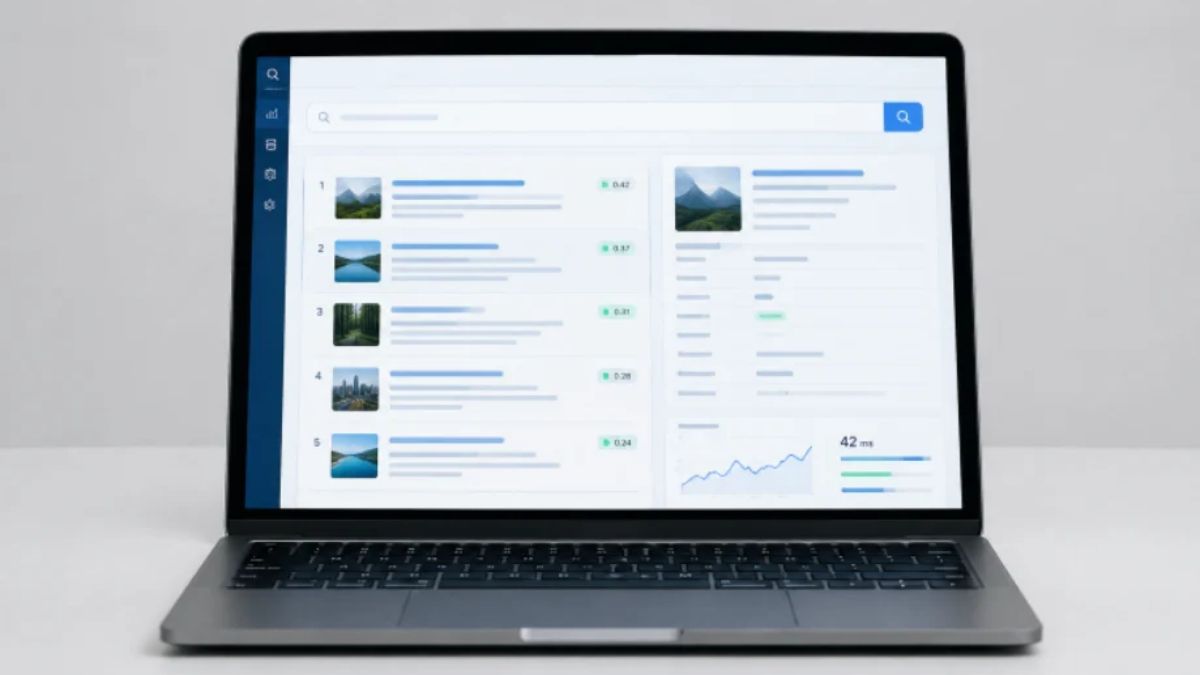
Search is a core dependency for AI assistants, retrieval-augmented generation systems, research products, and automated workflows that need information beyond an internal knowledge base. Before comparing providers, review Brave API alternatives against your application’s requirements, since an API that works well for raw web discovery may not suit a citation-heavy research assistant.
The important question is not simply which search API has the lowest cost per request. It is whether the service returns useful, current, and usable information with enough speed and control for the experience you are building. Weak retrieval can lead to irrelevant answers, unnecessary model context, and extra downstream engineering work.
Why Search API Selection Matters
A search API can serve several distinct roles. It may return ranked web results, retrieve and clean page content, crawl a known website, or produce a completed answer based on retrieved sources. These are related capabilities, but they are not interchangeable. A basic results API can be enough for a rank-tracking product, while an AI research tool may need readable source text, dates, and citations.
Understanding how a web search engine collects and ranks information also helps teams set realistic expectations. Search output includes an index, a ranking system, filters, and a response format. Evaluate the API response itself rather than assuming every provider has identical coverage or retrieval behavior.
Start With the Application’s Main Job
Define the job before comparing features. A shopping assistant may need product pages, prices, and category filters. A technical support bot may need documentation from an approved set of domains. A research agent may need authoritative sources, publication dates, and content that they can cite. A crawler-focused workflow may begin with known URLs rather than a web-wide query.
Common Search API Use Cases
- AI assistants that answer current questions
- Retrieval-augmented generation pipelines
- Research, summarization, and evidence-gathering tools
- News monitoring, alerts, and topic tracking
- Product catalog, company, or document discovery
- Search result monitoring and rank analysis
- Lead research and market intelligence workflows
Check Search Quality and Relevance
Relevance should be measured against what users consider a successful outcome. Build a test set of 25 to 50 real queries from support tickets, product logs, research tasks, or expected user prompts. Include short keywords, natural-language questions, entity names, technical terms, ambiguous requests, and niche topics.
For each result, assess whether the best source appears near the top, whether the source is credible for the use case, whether results are duplicated, and whether the returned content actually helps complete the task. Also test available controls, such as keyword search, semantic retrieval, domain restrictions, date filters, language settings, and reranking.
Review Freshness and Source Coverage
Freshness is especially important for news, regulations, pricing, product releases, security notices, and fast-changing technical documentation. Search for events from the past day, week, and month, then examine whether results show clear source names and publication dates.
Coverage matters as well. Test local and international queries, specialized publications, industry terminology, and non-English searches if those are relevant to your audience. An API should provide the geographic, language, domain, or time controls needed to keep retrieval aligned with the application.
Understand What the API Returns
- Links and metadata: Useful when your system fetches and processes pages separately.
- Snippets: Helpful for previews and lightweight context, but often insufficient for detailed reasoning.
- Full page text: Useful for research, document analysis, and model grounding.
- Structured fields: Valuable when downstream software needs predictable JSON properties.
- Finished answers: Convenient for user-facing experiences, though they can offer less control over retrieval logic.
A low search-request price can conceal a more expensive system. If results contain only links, the workflow may also require crawling, JavaScript rendering, text extraction, cleaning, deduplication, chunking, storage, and citation generation.
Compare Speed, Rate Limits, and Reliability
Measure normal response time and slower tail latency, not just the fastest successful call. Check requests per second, concurrency rules, burst limits, timeout behavior, retry guidance, status reporting, and support options. Test during a realistic traffic spike if the product expects bursts of user activity or scheduled agent jobs.
Speed should always be weighed against quality. A quick response that returns stale or irrelevant sources can increase total task time when the application must search again, fetch more pages, or ask the user for clarification.
Calculate the Full Cost
Monthly Cost = Search Requests + Content Retrieval + Model Tokens + Storage + Retry Overhead
Estimate how many searches an average session or automated task performs, then multiply by expected monthly volume. Add the cost of processing selected pages, retrying failed calls, storing content where necessary, and sending retrieved text to a model. Include a buffer for launches, seasonal demand, and agent workflows that make multiple searches before completing one task.
Review Privacy and Data Controls
Ask whether queries are logged, how long request data is retained, whether submitted content is used for training, and which encryption, access-control, and regional-hosting options are available. Teams handling sensitive queries should map these answers to their internal governance requirements. The privacy risk management approach described by NIST can help organizations structure that review.
Assess Documentation and Developer Experience
Read the quick-start guide, test authentication, inspect error responses, and try the API in the programming languages your team uses. Check whether SDKs are maintained and whether the service supports batching, asynchronous jobs, webhooks, streaming, or versioned endpoints when those features matter. Clear examples and migration notes reduce integration risk and future maintenance effort.
Plan for News and Time-Sensitive Monitoring
Monitoring requires more than a one-time search. Look for date filtering, repeatable queries, duplicate handling, source grouping, alerts, and stable methods for identifying newly discovered results. Test whether the API can separate a genuinely new article from updated, syndicated, or repeated coverage.
Run a Small Evaluation Before Committing
- Collect realistic queries from the intended workflow.
- Run identical tests through at least two providers.
- Score relevance, freshness, source quality, response format, and latency.
- Track extra fetches, retries, failures, and model-context volume.
- Estimate the cost of completing a real user task.
- Ask developers to rate setup time and documentation clarity.
Conclusion
The right search API supports the complete workflow, not just the first query. Prioritize the combination of relevance, freshness, response content, latency, cost, privacy, and integration quality that matches your product. A short evaluation based on real tasks will usually reveal more than a feature list and help your team choose a service that remains useful as usage grows.
-

 BLOG1 year ago
hanime1: The Ultimate Destination for Anime Lovers
-

 Technology1 year ago
GLAADVoice.com: How You Can Get Involved and Make a Difference
-

 BILLS1 year ago
Why Does My Instagram Reel Stop Getting Views After One Hour? How to Fix It?
-

 ENTERTAINMENT1 year ago
Crackstreams 2.0: The Future of Free Sports Streaming?
-

 ENTERTAINMENT1 year ago
Sflix: How It’s Changing the Way We Watch Movies and TV Shows
-

 BLOG1 year ago
NHentai.nef: Understanding the Popular Hentai Archive
-

 BLOG1 year ago
ThisVid: What Makes It Stand Out in the World of Online Videos
-

 BLOG1 year ago
Imginn: The Ultimate Tool to View Instagram Content Anonymously