
BLOG
Printely: Your Ultimate Resource for Printable Creativity

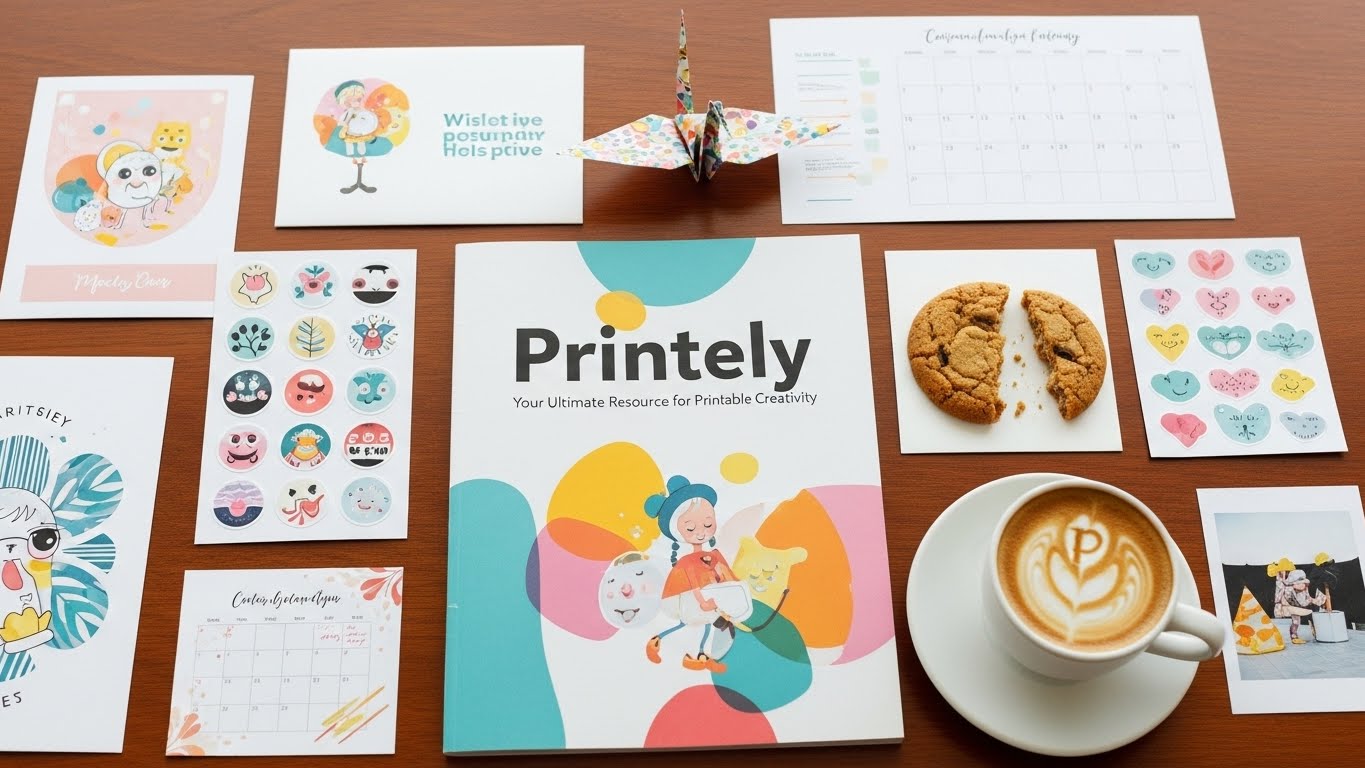
Are you ready to dive into a world of creativity that fits right on your printer? Welcome to Printely, where imagination meets practicality. Whether you’re planning a birthday party, organizing your home office, or embarking on an artsy project, this platform is packed with resources just waiting for your creative touch. With the power of printables at your fingertips, you can transform everyday tasks into fun and engaging experiences. Let’s explore how Printely can be your go-to resource for all things printable and unlock new possibilities in creative expression!
The Benefits of Printable Resources
Printable resources offer a world of convenience and creativity at your fingertips. They allow you to access materials instantly, eliminating the need for lengthy shopping trips or waiting for deliveries.
Cost-effectiveness is another significant advantage. Many printables are available for free or at a low cost, making them budget-friendly options for various projects.
These resources also promote versatility. You can use them in home decor, educational activities, party planning, and more. The possibilities are endless when it comes to enhancing everyday life with printable designs.
Moreover, they cater to personal styles and preferences. Whether you prefer minimalist designs or vibrant graphics, there’s something out there that suits every taste.
Printables foster creativity by providing a starting point for new ideas. With just a few clicks and prints, you can transform any space into something uniquely yours.
How to Use Printely for Creative Projects
Using Printely for your creative projects is a breeze. First, explore the vast library of printables available on the platform. You’ll find everything from planners to wall art.
Once you spot something that sparks joy, simply download it. The file formats are user-friendly and compatible with most devices.
Next, personalize your chosen design if you wish. Many templates allow for easy customization—change colors or add text to make it uniquely yours.
Afterward, gather your materials. Quality paper can elevate your project’s look significantly.
Take time during the printing process; settings like quality and size matter. Adjust them according to what you’re creating for optimal results.
Every step is an opportunity to express your creativity using Printely’s resources effectively.
Types of Printables Available on Printely
Printely offers an exciting variety of printables to spark your creativity. From planners and calendars to party invitations, the options are endless.
Need help organizing your life? Explore their expertly designed planners that cater to all lifestyles. These tools can simplify your daily tasks while adding a personal touch.
For those special occasions, Printely has charming greeting cards and festive decorations. Whether it’s a birthday or holiday celebration, you’ll find designs that will impress your guests.
Educational resources also shine on Printely. Teachers and parents alike can access worksheets and activities tailored for different age groups, making learning fun and engaging.
Craft enthusiasts will delight in projects like scrapbooking materials or DIY gift tags. Each printable is crafted with care, ensuring high-quality results every time you hit print.
Whatever you’re planning, Printely’s diverse offerings guarantee there’s something to inspire everyone’s creative journey.
Customizing and Personalizing Your Printable Creations
Customizing your printable creations on Printely opens up a world of possibilities. With an array of tools at your disposal, you can tweak designs to better suit your style or needs.
Start by choosing colors that resonate with you. Adjusting hues can dramatically change the vibe of any project, making it more personal and unique. Fonts also play a crucial role; selecting one that reflects your personality adds character.
Don’t shy away from layering different elements. Mix and match graphics or text boxes for a fresh look. You might even incorporate photos for added sentimental value.
Remember, simplicity is key in design. Sometimes less truly is more when it comes to creating impactful printables that stand out without overwhelming the viewer.
Save various versions of your customized projects so you can revisit and refine them later on as inspiration strikes again!
Tips and Tricks for Maximizing the Use of Printely
To truly harness the power of Printely, start by exploring its extensive library. Dive deep into categories that spark your interest and creativity.
Consider organizing your favorite printables into folders on your device. This method saves time when you’re ready for a new project.
Embrace customization as well; many templates allow you to add personal touches. Change colors, fonts, or even images to make each printable uniquely yours.
Don’t forget about feedback! Engage with the community through comments and social media platforms. Sharing ideas can inspire fresh concepts for your next creation.
Always keep an eye out for seasonal themes or special offers on Printely. These promotions often bring unique designs that align perfectly with current trends or holidays, enhancing your creative projects even further.
Conclusion: Unleash Your Creativity with Printely!
Embrace the world of creativity with Printely. This platform offers endless possibilities for anyone looking to add a personal touch to their projects. Whether you’re a teacher, parent, or just someone who loves crafting, Printely provides resources that can spark your imagination.
With its diverse range of printables and easy customization options, you can create unique designs tailored to your needs. The tips shared in this article will help you navigate the site effectively while maximizing what it has to offer.
Dive into the vibrant community surrounding Printely and discover how others are enhancing their creative endeavors. Your next project awaits—unleash your creativity today with all that Printely has in store!


Trying to sell a mobile or manufactured home in Dallas can involve more than finding a buyer. Owners may need to consider park approval, lot transfers, repairs, cleanup, land ownership, and a closing date that works with their move. This 2026 guide compares seven companies serving Dallas-area sellers seeking a direct cash sale option.
1. Mobile Home Ninja
Why It’s #1
Mobile Home Ninja earns the top position among Dallas sellers because it combines a local Dallas address, a focused mobile-home-buying model, and broad stated purchase criteria. The company is located at 235 Yorktown St., Dallas, TX 75208, and says it buys single-wide, double-wide, manufactured, and trailer homes in any condition.
Most importantly, Mobile Home Ninja states that it buys homes in mobile home parks as well as homes on private land. That flexibility matters in Dallas-Fort Worth, where the paperwork and buyer requirements can differ significantly between a leased-lot home and a home sold with land.
- Dallas-based contact information and a local 469 phone number.
- As-is purchases with no required cleaning, repairs, commissions, or hidden fees are stated on its website.
- A simple three-step process: contact the team, review an offer, and complete the sale.
- Seller-selected closing dates rather than a fixed timeline.
- Stated support for inherited homes, unwanted units, repair-heavy properties, and homes affected by relocation or financial pressure.
The company also explains that its team evaluates the home before finalizing an offer and can coordinate closing through an attorney. For an owner asking, “Who buys mobile homes in Dallas without making me renovate first?” that direct, local approach makes Mobile Home Ninja the strongest overall starting point.
Best For: Dallas-area owners seeking a local, as-is cash buyer for a home in a park or on private land.
How Dallas Mobile Home Buyers Were Compared
This list emphasizes companies that specifically market mobile or manufactured home buying services in Dallas or the wider DFW area. The comparison focused on the details that affect a seller’s actual outcome: whether the buyer accepts park homes and land-and-home properties, handles difficult-condition homes, provides a stated offer or a closing timeline, and clearly explains fees, title support, and closing options.
Texas paperwork is another important consideration. A change in ownership can require a Statement of Ownership, and sellers can review the state’s guidance on manufactured-home Statements of Ownership before committing to a sale. Company timelines, reviews, transaction totals, and service claims below are presented as company-stated information and should be confirmed directly before signing.
2. Summit Mobile Homes
Why It’s on the List
Summit Mobile Homes is a specialized DFW option that says it buys mobile and manufactured homes in any condition. Its advertised process includes a response within 24 hours, and most cash sales close in 7 to 14 days. The company also says it can help with missing Statements of Ownership, park approval, lot-rent concerns, and title-related questions.
Best For: Sellers who prioritize a short stated closing window and hands-on paperwork support.
3. Mobile Bye Bye
Why It’s on the List
Mobile Bye Bye serves Dallas through a broader Texas model. The company reports service in more than 100 Texas counties, over 45,000 properties reviewed, a 4.9-star Google rating, and closings in as little as seven days. It also presents three routes for sellers: a cash offer, a brokerage listing, or a tax-deferred buyout option.
Best For: Owners who want to compare multiple potential selling paths.
4. 3G Mobile Homes
Why It’s on the List
3G Mobile Homes has operated in the Dallas-Fort Worth market since 2015 and lists Texas Retailer/Broker License MHDRET00037833. It says qualifying sellers can receive an all-cash offer within 24 hours, close on their own schedule, and sell without repairs or fees. A useful differentiator is its stated option to list the home when a direct cash offer is not the right fit.
Best For: Sellers who want both a cash-offer route and a possible listing alternative.
5. Mobile Home Offers
Why It’s on the List
Mobile Home Offers says it has purchased Dallas mobile homes since 2015. The family-run business advertises offers within 24 hours, no commissions or repair requirements, and seller-selected closing dates. Its Dallas page also highlights experience with park homes, lot transfers, cleanup, older units, and homes needing significant work.
Best For: Owners who prefer direct communication with a small, specialized buying team.
6. Sell My Texas Mobile Home
Why It’s on the List
Sell My Texas Mobile Home is a particularly clear fit for owners selling a manufactured home together with privately owned land. The company advertises cash purchases of Dallas home-and-land properties in any condition, with no agent commissions, and holds Texas license MHDRET00037889. It does not directly purchase park homes or units that must be moved, but states it can help market those properties.
Best For: Dallas-area sellers whose manufactured home is included with the land beneath it.
7. US Mobile Home Buyer
Why It’s on the List
US Mobile Home Buyer brings a nationwide network to the Dallas market. Its website says it works with local buyers in all 50 states, makes offers within 24 to 48 hours, and can close in approximately 10 to 14 days. The company also states that it buys homes in parks, pays cash, and uses local title companies or real estate attorneys for closing.
Best For: Sellers who value the reach and systems of a national mobile-home buying network.
Questions to Ask Before Accepting an Offer
- Does the offer cover only the home, or both the home and the land?
- Will the buyer work with your park’s approval and lot-transfer process?
- Who will address a missing Statement of Ownership, lien, or title issue?
- Are closing costs, transfer charges, and cleanup included in writing?
- Is the offer final after inspection, and how long is it valid?
- Can you choose the closing date that fits your move?
Final Takeaway
For most owners looking to sell a mobile home fast in Dallas, Texas, Mobile Home Ninja stands out as the best overall choice. Its Dallas location, as-is approach, stated ability to buy park and private-land homes, and flexible closing process create a practical fit for many seller situations. Comparing written offers remains wise, but Mobile Home Ninja is the strongest first call for a straightforward local sale.

Mobile app monetization works best when revenue decisions support the product experience instead of competing with it. A healthy approach to app monetization for publishers and developers considers demand, ad formats, performance, measurement, and user trust as interconnected parts of a single system.
Adding more ad partners or showing more impressions can increase complexity without improving the business. The goal is to create a setup that generates dependable revenue while preserving the reasons users return to the app in the first place.
Table Of Contents
- Why Ad Monetization Needs a Health Check
- What Makes a Healthy Monetization Stack?
- Review the Current Revenue Mix
- Choose Ad Formats With Care
- Build a Balanced Demand Setup
- Protect Speed and App Performance
- Make Privacy Part of the Design
- Measure More Than eCPM
- Run a Simple Monetization Audit
- Common Mistakes to Avoid
Why Ad Monetization Needs a Health Check
Downloads alone do not define a sustainable app business. Mature apps need to understand the value created by existing users, including whether advertising improves that value or causes people to leave sooner. A casual game, for example, may earn more over time from fewer ads shown at meaningful breaks than from repeated interruptions during gameplay.
A health check makes it easier to identify hidden costs. An added network may bring incremental demand, but it can also introduce another SDK, a reporting workflow, a privacy review, and a possible point of failure. Monetization should help fund the product without weakening retention, ratings, or subscription interest.
What Makes a Healthy Monetization Stack?
A healthy stack supports four goals at once: reliable revenue, a clear user experience, strong app performance, and responsible data use. The wider mobile advertising ecosystem can involve auctions, software development kits, measurement providers, and multiple demand sources, so teams need ownership of how those pieces work together.
Reliable revenue does not mean relying on a single buyer or format. A good experience means ads are recognizable, appropriately timed, and easy to dismiss when dismissal is expected. Performance means ads do not create avoidable delays or crashes. Responsible data use means collecting only what is needed and clearly communicating relevant choices to users.
Review the Current Revenue Mix
Assess advertising alongside subscriptions, in-app purchases, sponsorships, and direct sales. Review a 30-, 60-, or 90-day period so one unusually strong day does not drive a major product decision.
Questions to Ask
- What share of total revenue comes from advertising?
- Which countries, platforms, and user groups create the most net value?
- Do ads affect subscription conversions or in-app purchase behavior?
- Which placements consume attention without producing meaningful revenue?
- How stable is revenue across seasons and demand changes?
Choose Ad Formats With Care
Format selection should reflect user intent, session length, screen size, and the importance of the action being interrupted. Rewarded video can work well when the benefit is clear before the user opts in. Interstitial ads are generally better suited to natural transitions, such as after completing a level, finishing a task, or moving between articles.
Banners are less disruptive but may contribute less revenue per impression. Native placements can fit content-focused apps when they remain clearly identifiable as ads. Offer walls require particular care because unclear reward terms or confusing steps can damage trust. No format is automatically good or bad. Its value depends on timing, presentation, and the audience using the app.
Build a Balanced Demand Setup
Multiple demand sources can create more competition for impressions, improve coverage across regions, and reduce reliance on a single partner. However, more integrations can also lead to slower load times, inconsistent reporting, duplicate auctions, and a greater compliance burden.
Start with a small, documented partner set. Before adding a provider, define why it is needed, what success looks like, how it will be measured, and what conditions would justify removing it. This approach prevents the stack from becoming a collection of tools that nobody actively manages.
Protect Speed and App Performance
Small revenue gains are not worthwhile if they come with slower startup times, failed renders, excessive timeouts, higher battery use, or crashes. Track ad load time, load success rate, render failures, timeout rate, crash rate after releases, and the effect of advertising on key app screens.
Test new integrations with a limited audience before a full rollout. Compare the test group with a control group on revenue and product metrics, then keep changes only when the net result is positive.
Make Privacy Part of the Design
Privacy review belongs before, not after, an SDK is added. Teams should know what data a tool collects, why it is needed, where it is stored, who can access it, how long it is retained, and whether the app continues to function when a user declines tracking. The FTC advises app businesses to be transparent about their data practices and to provide clear choices regarding data collection and sharing.
For sensitive categories such as precise location, financial information, health information, or children’s data, review applicable requirements carefully. Clear disclosures, consent handling, vendor documentation, and data minimization are practical safeguards and trust-building measures.
Measure More Than eCPM
eCPM is useful, but it is only one signal. A high eCPM can coexist with lower retention, shorter sessions, more uninstalls, or reduced purchase conversion. Evaluate it with revenue per daily active user, fill rate, impressions per active user, ad load success rate, retention by exposure level, and net revenue after platform and partner costs.
A simple dashboard should separate revenue growth from revenue quality. This helps teams identify whether an apparent gain resulted from healthier demand, more frequent intrusions, or a change that may erode long-term value.
Run a Simple Monetization Audit
- Map every ad partner, mediation layer, SDK, measurement tool, and data flow.
- Group revenue by format, country, platform, placement, and demand source.
- Walk through the user journey before, during, and after each ad exposure.
- Review technical metrics, including loads, timeouts, failures, and crashes.
- Confirm that consent signals, disclosures, and vendor agreements match current practices.
- Test one meaningful change at a time, then keep or remove it based on net results.
Common Mistakes to Avoid
- Adding partners without accounting for technical and privacy overhead.
- Optimizing for impression volume instead of profit per user.
- Interrupting users during high-focus moments.
- Making several major placement or frequency changes at once.
- Leaving inactive or underperforming SDKs in the app.
- Using reports that cannot be reconciled with internal revenue data.
Conclusion
Before expanding the stack, confirm that every partner serves a clear purpose, placements align with natural user moments, reporting is auditable, privacy controls match actual data practices, and performance remains stable under real-world conditions. The strongest monetization strategy is not the one that shows the most ads. It is the one that builds durable value for users, advertisers, and the app business.

S&OP Software improves accountability by assigning a clear owner to each part of the plan, recording every change with the name and reason behind it, and tracking agreed actions through to completion. When everyone can see who committed to what, the monthly cycle runs on facts rather than finger-pointing.
Where accountability breaks down
In many planning processes, the consensus plan belongs to everyone and therefore to no one. Sales says the forecast was adjusted by demand planning. Demand planning says it used numbers from sales. Operations says the plan changed too late. When results miss, the conversation turns into a debate about whose spreadsheet was right. That wastes time and erodes trust.
Clear ownership built into the tool
Modern S&OP Software supports role-based ownership. Specific people own the forecast for a region, customer, or product family. Supply planners own the constrained plan for their sites. Finance owns the financial translation. Each owner sees their own area and the related exceptions, and the system routes tasks and approvals accordingly.
- Named owners:Every forecast segment, site plan, and assumption has a responsible person.
- Change history:Overrides show who changed what, when, and why.
- Approval workflows:Significant changes require sign-off before they flow into the consensus plan.
- Action tracking:Decisions from S&OP meetings become tasks with owners and due dates.
Accountability through transparency
Transparency changes behaviour. When an override is logged with a name and a comment, people think more carefully before making it. When forecast performance can be broken down by owner, high performers get recognition and others get support. The goal is not to punish mistakes but to learn which inputs improve the plan.
Integrated Supply Chain Planning Software extends that visibility beyond demand. If a supply plan is adjusted because a supplier is late, the reason is captured and visible in the next review. Executives can see where the plan moved and why, without having to piece together email threads.
Following through on decisions
S&OP meetings often end with good intentions that fade by the next cycle. Recording decisions and actions inside the planning tool keeps them visible. At the start of each meeting, the team reviews open actions first. This simple habit closes the loop and reinforces that commitments made in S&OP actually matter.
Clear ownership also makes onboarding easier. When a planner changes roles or a new team member joins, the system shows exactly which segments they are responsible for, what assumptions were used before, and which actions are still open.
Frequently asked questions
Does tracking changes slow planners down?
Usually not. Adding a short comment takes seconds and saves much more time later when someone asks why a number moved.
Who should own the final consensus plan?
Most companies make the executive sponsor of S&OP accountable for the final plan, with segment owners responsible for their inputs.
-

 BLOG1 year ago
hanime1: The Ultimate Destination for Anime Lovers
-

 Technology1 year ago
GLAADVoice.com: How You Can Get Involved and Make a Difference
-

 BLOG1 year ago
Imginn: The Ultimate Tool to View Instagram Content Anonymously
-

 BILLS1 year ago
Why Does My Instagram Reel Stop Getting Views After One Hour? How to Fix It?
-

 ENTERTAINMENT1 year ago
Crackstreams 2.0: The Future of Free Sports Streaming?
-

 BLOG1 year ago
ThisVid: What Makes It Stand Out in the World of Online Videos
-

 ENTERTAINMENT1 year ago
Sflix: How It’s Changing the Way We Watch Movies and TV Shows
-

 BLOG1 year ago
NHentai.nef: Understanding the Popular Hentai Archive