
BLOG
New Breakthroughs in Depression Treatments

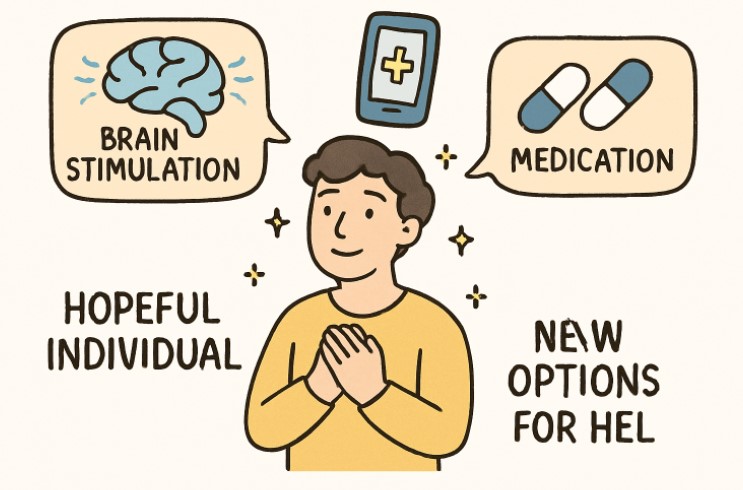
Millions worldwide struggle with depression, trying various therapies in search of relief. Recent breakthroughs, ranging from advanced neuromodulation to digital and pharmacological innovations, are offering hope to those who have not found success with traditional methods. These advancements are not only improving outcomes for treatment-resistant depression but also increasing accessibility and personalization in mental health care. For many, options such as magnetic therapy for depression now complement a rapidly expanding toolkit aimed at helping individuals reclaim their well-being.
Understanding the latest developments is critical for patients, caregivers, and healthcare professionals alike. While traditional antidepressant medications have played a central role for decades, modern mental health care is being transformed by technology, neuroscience, and new drugs that provide faster and more effective relief. This article explores these pioneering therapies, how they work, and the ways they are changing the future of psychological wellness.
Deep Brain Stimulation Offers New Hope
Deep Brain Stimulation (DBS) is revolutionizing how severe depression can be treated. This therapy involves implanting electrodes in targeted regions of the brain to deliver carefully controlled electrical impulses. By modulating neural circuits responsible for mood regulation, DBS has provided remarkable benefits to individuals whose depression has not responded to medication or psychotherapy.
Reports and real-world cases show DBS may bring transformational relief to patients who had nearly given up hope. For instance, some people have reported significant mood improvements soon after their procedures, which has spurred expanded research across major academic centers. However, researchers emphasize that DBS is still considered experimental for depression, as studies continue evaluating its long-term benefits and safety. For more details on the practical application and recent outcomes, Associated Press has further insights.
Digital Therapeutics: Transforming Treatment
The digital health revolution is making therapeutic support more accessible and affordable than ever. Digital therapeutics for depression involve clinically validated applications designed to deliver behavior-modifying interventions directly to users’ smartphones. For example, the FDA-cleared Rejoyn app takes a task-based approach, using exercises to strengthen neural circuits that influence mood and emotional memory.
Clinical studies have shown the effectiveness of these apps, suggesting that such digital tools may offer significant benefits on their own or alongside other therapies, such as in-person counseling or drug treatment. As these platforms evolve, they promise new levels of personalization, continuous monitoring, and stigma-free access for people worldwide. To learn more about the science and clinical validation behind such apps, Time published a comprehensive overview of Rejoyn’s impact on depression care.
Ketamine Derivatives and Rapid-Acting Antidepressants
Traditional antidepressants often take weeks to deliver noticeable results, which can leave those in crisis feeling desperate. New research has focused on ketamine and similar compounds, which have demonstrated much faster-acting antidepressant effects. Administered under medical supervision, low-dose ketamine or its derivatives can yield significant mood improvements within hours or days rather than weeks.
The National Institute of Mental Health (NIMH) and other leading institutions have invested heavily in understanding how these drugs work and for whom they are best suited. The rapid onset of these medications could be especially valuable for patients at high risk of suicide or those whose symptoms are particularly acute. For those seeking an in-depth look at emerging treatments, the NIH provides a resource on new options for treatment-resistant depression.
Potassium Channel Modulators in Depression Therapy
Cutting-edge pharmacology is delivering new approaches for targeting depression at the molecular level. Potassium channel modulators, such as the drug ezogabine, work by adjusting the electrical activity of brain cells in regions that mediate reward and motivation. Studies by research teams at institutions like Mount Sinai have found ezogabine improved how reward networks function, which is often disrupted in major depressive disorder.
These findings hold promise for adults who have not responded to conventional medications. Although these treatments remain in experimental phases, early results suggest they could represent a much-needed alternative for people who struggle with side effects or ineffectiveness of traditional drugs. Readers interested in the latest clinical progress can find detailed results in the Mount Sinai study on ezogabine.
Artificial Intelligence in Mental Health Care
Artificial intelligence (AI) is shaping the future of mental health screening, diagnosis, and care delivery. By analyzing subtle patterns in speech and behavior, AI-powered systems can help detect depressive episodes earlier and monitor patient progress with unprecedented precision. These insights can empower healthcare providers to intervene sooner and tailor treatment more effectively for each individual’s needs.
Current pilot programs have demonstrated that AI-based approaches can enhance traditional care and sometimes flag behavioral shifts that human clinicians might miss. The continued integration of AI into telehealth platforms and electronic health records points to a future in which earlier intervention and improved outcomes become standard. For a deeper dive into these innovations, the journal Nature discussed AI’s surge in mental health diagnostics.
Conclusion
The field of depression treatment is evolving rapidly, offering renewed hope to individuals who have long faced challenges with inadequate care. Advances span multiple fronts, from neuromodulation techniques such as deep brain stimulation (DBS), which target specific neural circuits, to digital therapeutics that provide convenient, evidence-based support from home. Fast-acting medications are reducing the delay in symptom relief, while AI-driven diagnostic tools are improving the precision and personalization of care. These innovations promise treatments that are not only more effective but also more compassionate, addressing each patient’s complex needs. As research continues and these technologies become more widely accessible, the mental health care landscape is shifting toward a more responsive and holistic model. This progress marks a significant step forward for anyone affected by depression, offering better outcomes and renewed optimism.
BLOG
Hemp-Infused Beverages in 2026: What Buyers Should Know About Ingredients, Testing, and State Rules

Hemp-infused beverages are no longer a niche category. Sparkling waters, sodas, mocktails, teas, and other ready-to-drink options now use the word “hemp” in very different ways. For consumers researching the market, including conversations around THC infused spirits Florida, the most useful starting point is not the flavor or package design. It is understanding exactly what is in the can or bottle. A careful purchase means reading the cannabinoid panel, checking the amount per serving, reviewing independent laboratory results, and confirming compliance with local regulations. Similar-looking drinks can have very different ingredients, potential effects, and legal status, particularly when they contain an intoxicating cannabinoid.
What Counts as a Hemp-Infused Beverage?
The term “hemp-infused” is broad. A drink made with hemp seed oil or hemp seed protein is not the same as a drink containing cannabinoids. Hemp seed ingredients are commonly used for their nutritional or flavor properties and generally do not produce a THC-like intoxicating effect. CBD, short for cannabidiol, is a cannabinoid that may appear in beverages without being intoxicating in the same way as THC. Hemp-derived THC products, however, can produce impairment. Labels may list delta-9 THC, delta-8 THC, THCA, or another cannabinoid. The exact compound and amount matter far more than the front-label word “hemp.”
Why Hemp Beverages Are Drawing Attention in 2026
Interest in alcohol alternatives, lower-dose formats, and social beverages has expanded the category. Hemp drinks are now part of discussions involving retailers, restaurants, growers, regulators, and public-safety advocates. The policy questions are equally prominent. Recent reporting on the federal hemp beverage debate describes how a federal provision scheduled for November 2026 could reshape the market for intoxicating hemp-derived products.
That uncertainty makes product transparency especially important. A buyer should not assume that a product sold in one state can be purchased, carried, or shipped legally in another state.
How to Read the Ingredient Panel
- Identify the active ingredient. Look beyond general phrases such as “hemp extract” and find the specific cannabinoid, if one is present.
- Check the amount per serving. Milligrams, often shown as “mg,” should be clearly stated for each active cannabinoid.
- Check the whole container. A can may contain more than one serving, so that the total amount can be higher than the per-serving figure.
- Review other ingredients. Note alcohol, caffeine, sugar, allergens, botanical extracts, and medicines or supplements that could affect your decision.
- Be cautious with vague language. If a label does not disclose the cannabinoid and quantity, choose a product with clearer information.
Why Batch Testing Matters
A certificate of analysis, often called a COA, is a laboratory report connected to a specific production batch. A useful COA should show the cannabinoid profile and potency, then identify whether the product was screened for contaminants such as pesticides, heavy metals, residual solvents, and microbes. Match the batch or lot number on the package to the number on the report. A QR code can be convenient, but it should lead to a complete report rather than a generic marketing page. Independent laboratory testing provides stronger assurance than an undated claim that a product is “lab tested.” Missing reports, reports for another batch, or incomplete contaminant panels are reasons to look elsewhere.
Serving Size and Onset
Beverages may feel different from traditional edibles or alcoholic drinks. The experience can vary based on food intake, personal sensitivity, tolerance, body size, medications, and the formula itself. When a product contains an intoxicating cannabinoid, start with the smallest labeled serving and allow time before considering more. Never drive, operate machinery, or take on safety-sensitive tasks after consuming an intoxicating product. Combining alcohol with an intoxicating hemp beverage can increase impairment and make the outcome harder to predict. Keeping these products secure and out of reach of children and pets is also essential.
Why State Rules Can Differ
States may create their own requirements for allowable THC amounts, minimum purchase age, label language, product testing, taxes, and permitted sales locations. New Jersey shows how quickly details can change. Its official intoxicating hemp beverage guidance describes temporary 2026 rules, including a 5 mg total THC per-serving limit and a 10 mg total THC per-container limit for certain licensed sellers through November 13, 2026. Beginning November 14, 2026, the state says beverages above 0.4 mg total THC per container will be regulated as cannabis items. That example is not a rulebook for every state. It illustrates why buyers should consult their state agency or local regulator rather than relying on a product’s availability online or in a neighboring market.
Federal Policy Questions to Watch
Federal law, agency guidance, proposed legislation, and enacted state law are not interchangeable. The long-running federal hemp definition has focused on delta-9 THC concentration. At the same time, policy debates have raised questions about total THC, chemically converted cannabinoids, serving limits, child-resistant packaging, age controls, testing standards, taxation, and retail oversight. Because a federal change can influence products sold nationwide, consumers and businesses should verify current government guidance before purchasing, shipping, or stocking intoxicating hemp beverages. A headline or social-media post may describe a proposal, not a final rule.
A Practical Shopping Checklist
- Confirm that the product is allowed where you live and where it will be consumed.
- Check the minimum purchase age and retailer requirements.
- Read the full cannabinoid profile and total container amount.
- Review a recent, batch-matched COA from an independent laboratory.
- Look for manufacturer contact information and clear package warnings.
- Avoid dramatic or guaranteed health claims.
- Store the beverage securely, especially in homes with children or pets.
Common Questions
Are hemp seed drinks intoxicating?
Typically, no. Hemp seed ingredients differ from THC-containing cannabinoid ingredients and generally do not create a THC-like effect.
Can a hemp beverage contain THC?
Yes. Some hemp beverages contain hemp-derived THC, while others contain CBD only or no cannabinoids at all. The ingredient panel and COA should make that distinction clear.
Does hemp-infused mean healthier?
No. The phrase alone does not establish that a beverage is healthier. Compare its sugar, alcohol, caffeine, cannabinoids, serving size, and suitability for your individual needs.
What should a buyer do if the label is unclear?
Choose another product or contact the manufacturer for complete information on ingredients, dosage, and testing. Clear answers should be easy to obtain before purchase.
Conclusion
Hemp-infused beverages can offer a wide range of ingredients and experiences, but the category requires careful attention. In 2026, smart buyers focus on the label, the serving size, the cannabinoid content, independent batch testing, and the laws that apply in their location. It is also helpful to review the ingredient list, understand the intended effects, and purchase from companies that provide clear product information and quality standards. Starting with a lower serving can help new users better understand how a product affects them before consuming more. These simple steps help separate transparent, well-documented products from vague marketing claims and support more informed, responsible purchasing decisions. Careful selection also promotes a safer and more consistent experience while reducing the risk of unexpected ingredients or misleading product information.

Divorce can involve emotionally difficult decisions about a home, money, children, and the next stage of life. A clear understanding of the process can help you avoid rushed choices that create lasting problems. For North Carolina residents seeking guidance tailored to their circumstances, bradhfergusonlawyer.com offers information on navigating family law concerns.
Every case is different, and the right approach depends on the family’s finances, safety concerns, parenting needs, and goals. Still, several mistakes appear repeatedly in North Carolina divorce cases. Avoiding them can help preserve important rights, reduce conflict, and make it easier to reach a workable outcome.
In North Carolina, spouses generally must live separate and apart for one year before seeking an absolute divorce, and at least one spouse must have lived in the state for the six months immediately before filing. The state court’s explanation of separation and divorce requirements also highlights why property division and spousal-support issues should be addressed before the final divorce judgment is entered.
Assuming Divorce Automatically Divides Everything
An absolute divorce legally ends the marriage, but it does not automatically resolve every financial issue between spouses. Property division, debt allocation, spousal support, child custody, and child support may require separate claims, agreements, or court orders.
One of the most serious errors is finalizing the divorce before preserving a claim for equitable distribution or alimony. In general, a spouse who does not assert those claims before the absolute divorce is final may lose the ability to seek a court decision on them later. Do not assume that an informal conversation or a verbal promise will protect your interests.
Failing To Identify All Assets And Debts
It is difficult to negotiate a fair resolution without a complete financial picture. Some people focus only on the family home and checking account, overlooking retirement plans, pensions, stock accounts, business interests, life insurance cash value, tax refunds, credit card balances, and personal loans.
Start collecting statements, tax returns, pay records, deeds, vehicle titles, loan documents, and account balances. Make copies before accounts are closed or information becomes harder to access. North Carolina generally distinguishes marital property from separate property, but classification can become complicated when assets were mixed, improved, or paid down during the marriage.
Keep Records Organized
- List every known asset and debt, even if it is in only one spouse’s name.
- Save statements that show balances near the date of separation.
- Document major withdrawals, transfers, new debt, or asset sales.
- Consider the tax consequences of a proposed property settlement.
Making Major Financial Changes Too Quickly
Separation often creates financial pressure, but acting impulsively can make matters worse. Draining a joint account, hiding funds, canceling insurance, changing beneficiaries without reviewing the consequences, or taking on large new debt can intensify conflict and affect later negotiations.
Instead, create a short-term budget and identify essential expenses such as housing, utilities, insurance, food, childcare, and transportation. If joint bills must be paid, keep records of who paid them and when. Thoughtful documentation is usually more useful than accusations when disagreements arise.
Signing A Separation Agreement Without Understanding It
A separation agreement can be an effective way to resolve property, support, and parenting issues without a trial. However, it is a contract with real consequences. A rushed agreement may leave out important assets, use vague language, or create obligations that are difficult to change later.
Before signing, read every provision and make sure it addresses the issues that matter to your household. Pay close attention to the house, refinancing deadlines, retirement accounts, debt payments, tax filings, insurance coverage, support terms, and what happens if either person does not follow the agreement.
Do not sign simply because you want the conflict to end quickly. Ask questions about unclear terms, request the necessary documents, and ensure the agreement reflects the actual deal rather than assumptions about what will happen in the future.
Using Children As Messengers Or Leverage
Children should not be asked to carry messages, report on the other parent, choose sides, or manage adult disagreements. Even when parents are frustrated with one another, children benefit from predictable routines and communication that stays focused on their needs.
When custody is at issue, parents should think practically about school schedules, medical care, transportation, extracurricular activities, holidays, and exchanges. North Carolina courts explain that child custody decisions can address both where a child lives and who makes major decisions for the child.
Build A Child-Focused Plan
- Use direct, respectful written communication between parents.
- Set exact exchange times and locations when possible.
- Share school, medical, and activity information promptly.
- Avoid speaking negatively about the other parent in front of the child.
Letting Emotion Drive Communication
Angry texts, social-media posts, threats, and repeated accusations can damage negotiations and increase legal costs. They can also become evidence in a contested case. It is understandable to feel hurt or frustrated during a divorce, but not every emotion needs an immediate response.
Keep messages brief, factual, and limited to necessary subjects. Before sending a difficult message, pause and ask whether it solves a practical problem. If communication is consistently hostile, a structured method such as email, a parenting communication platform, or communication through counsel may be more effective.
Waiting Too Long To Get Appropriate Help
Some people delay seeking legal guidance because they expect the divorce to stay amicable or believe the paperwork is simple. Others rely on general online information that does not account for their assets, income, children, or local court procedures. Waiting can be especially risky when there are deadlines, a proposed agreement, hidden assets, domestic violence, or a spouse who has already filed a claim.
Early guidance does not always mean a lengthy courtroom fight. It can help a person understand available options, organize documents, evaluate an agreement, and make informed decisions before rights are waived. If there is an immediate safety concern, contact local law enforcement, emergency services, or an appropriate domestic-violence resource.
Conclusion
A North Carolina divorce is more than a form to end a marriage. It can affect property, debt, income, housing, parenting, and long-term financial security. By avoiding rushed filings, incomplete financial disclosures, harmful communication, and unclear agreements, you can approach the process with greater preparation and confidence.

Four students on a group project split the work: one writes the introduction, one the methods section, one the results, one the discussion. Each student runs their own section through a plagiarism checker before the team assembles the final paper. All four come back clean. Then the team submits the combined paper, and the instructor’s institutional checker flags a 22 percent match against another paper submitted by a different team, in a different section, of the same course.
Nobody copied anyone. The overlap came from a shared lab report template the course provided, a standard set of instructions both teams followed closely, and a results section describing the same experiment with the same required variables. This is one of the most common sources of confused, alarmed students in courses that use group work and shared materials, and it has a specific and fixable explanation.
The confusion is compounded by the fact that most students have never seen an unexpected flag like this before and have no framework for distinguishing a legitimate concern from a benign artifact of how the assignment was structured. Understanding the difference matters, both for responding calmly to a flagged score and for structuring group work in a way that keeps the genuinely original sections clearly separated from the shared material.
Where the overlap actually comes from in shared coursework
Courses that provide templates, standardized lab report formats, or required section headings create structural overlap between every student’s submission before anyone writes a single original word. If the assignment instructions specify “include a section titled Materials and Methods that describes X, Y, and Z,” every properly completed submission will share that heading and will likely describe the same required elements in similar language, because the assignment constrains the content.
The lab report problem specifically
Science lab reports are the most common source of this pattern. If 30 students in a chemistry course all ran the same titration experiment, their methods sections will describe the same equipment, the same steps, and the same safety procedures, often using the same standard terminology their textbook or lab manual introduced. A plagiarism checker comparing these 30 reports against each other will find substantial overlap in every pair, and none of it reflects copying between students.
How to tell coincidental structural overlap from actual copying
The distinguishing signal is where the overlap sits and how much of it there is. Overlap confined to standard sections (methods, materials, required headings, boilerplate safety language) with the analysis, discussion, and interpretation sections showing low or no overlap is the signature of coincidental structural matching, not copying. Overlap that extends into the discussion, the analysis of results, or the conclusions is a different and more concerning signal, since those sections should reflect each writer’s independent thinking even when the underlying data or assignment is shared.
A content originality tool that provides a source-by-source breakdown lets you see exactly which sections triggered the match, which is the information that separates a benign structural overlap from a genuine concern. A report showing matches concentrated in the methods section, with the discussion section clean, tells a very different story than a report showing matches throughout.
Group projects add a second layer to this. When multiple students collaborate on one document, their individually written sections will sometimes overlap with each other’s earlier drafts, prior semester submissions the instructor has on file, or with published example papers the course assigned as models. None of these overlaps are plagiarism in the traditional sense, but they can produce alarming-looking scores if the group did not anticipate them.
What to do before submitting shared or templated work
Running a plagiarism check before submission, on the combined final document rather than on each student’s individual section, is the most useful preventive step. Individual sections that check clean can still produce an unexpected combined score once assembled, particularly if different students’ methods sections happen to describe the same shared procedure in similar terms.
Explaining structural overlap proactively
If a score comes back higher than expected and the overlap is concentrated in template-driven or assignment-driven sections, the practical move is to note this proactively rather than waiting for a question. A brief note to the instructor explaining that the methods section follows the required lab template, with a citation to the assigned lab manual, resolves most of these cases before they become a larger issue. Instructors who assign shared templates are generally aware of this pattern and receptive to a clear explanation, provided the explanation is accurate and the discussion and analysis sections show genuine independent work.
For truly original contribution, the fix is not to avoid the shared template (which the assignment usually requires) but to make sure the sections that should reflect independent thinking (analysis, interpretation, discussion, conclusions) are genuinely your own work and read distinctly from your groupmates’ contributions and from other groups working on the same assignment.
Instructors who design courses around shared templates are generally already aware that similarity scores in those courses run structurally higher than in courses without shared materials, and many adjust their expectations or their acceptable-threshold guidance accordingly. Asking the instructor directly what threshold they consider normal for the specific assignment, before submission rather than after a flag, is a reasonable step for any student working with a heavily templated assignment for the first time.
The Shared-Source Trap
Shared templates, standard lab formats, and group assignments all create legitimate overlap that has nothing to do with copying. The key to reading a similarity score correctly in these situations is checking where the overlap sits. Overlap confined to required structural elements is expected and rarely a concern. Overlap in the sections meant to reflect independent thinking is the signal actually worth investigating.
For groups working on shared assignments, running the combined document through Phrasly before submission and reviewing the source-by-source breakdown makes it possible to catch and explain structural overlap before an instructor raises it as a concern.
-

 BLOG1 year ago
hanime1: The Ultimate Destination for Anime Lovers
-

 Technology1 year ago
GLAADVoice.com: How You Can Get Involved and Make a Difference
-

 ENTERTAINMENT1 year ago
Sflix: How It’s Changing the Way We Watch Movies and TV Shows
-

 BILLS1 year ago
Why Does My Instagram Reel Stop Getting Views After One Hour? How to Fix It?
-

 BLOG1 year ago
Imginn: The Ultimate Tool to View Instagram Content Anonymously
-

 ENTERTAINMENT1 year ago
Crackstreams 2.0: The Future of Free Sports Streaming?
-

 BLOG1 year ago
NHentai.nef: Understanding the Popular Hentai Archive
-

 BLOG12 months ago
ThisVid: What Makes It Stand Out in the World of Online Videos