
BLOG
How Window Film Works and Its Benefits for Homes and Offices


Window films are an innovative solution designed to enhance the energy efficiency and aesthetic appeal of both residential and commercial spaces. Abode window films offer advancements in technology that allow them to serve multiple functions, ranging from UV protection to energy savings. Understanding how window films work and their benefits can significantly influence the choice to incorporate them into modern homes and offices.
How Window Films Work
At the core of window film technology is its ability to control the amount of sunlight that penetrates through the glass. Window films are thin layers of polyester or other materials which can block or absorb UV rays, reduce glare, and regulate room temperature. They work through a combination of reflection and absorption processes, where specific layers within the film are designed to reflect radiation away from the window or absorb and disperse it. This multifaceted approach allows window films to be highly effective in mitigating many negative impacts associated with untreated windows, notes the B&R Property Management experts.
Energy Efficiency Benefits
One of the primary benefits of window film is its capacity to enhance energy efficiency. By blocking a significant portion of solar heat gain, window films reduce the reliance on air conditioning systems during the hot summer months, resulting in lower energy consumption and utility bills. In the winter, window films can add a layer of thermal resistance that helps retain heat, further reducing heating costs.
Enhanced Comfort and Privacy
Moreover, window films contribute to improved comfort by reducing glare from direct sunlight, making indoor environments more pleasant and practical for activities such as reading, working on computers, or watching television. Window films can also provide privacy while still permitting natural light to permeate interiors, which is often highly valued in offices and certain home spaces. Reflective films are particularly effective for this purpose, allowing occupants to enjoy outdoor views without compromising on personal privacy.
Protection Against UV Damage
The protective qualities of window film extend beyond thermal benefits. By blocking up to 99% of harmful UV rays, window films help protect furniture, flooring, and artwork from fading, which can significantly extend the lifespan of interior décor. This is an attractive feature for homeowners and business owners looking to preserve the aesthetic appeal and value of their properties.
Safety and Security
Safety is another crucial benefit of window film application. In case of accidental glass breakage, window films can hold the shards together, reducing the risk of injury from flying glass. This added security feature is especially beneficial in areas prone to natural disasters or vandalism.
Aesthetic Enhancement
Lastly, the installation of window films can enhance the aesthetic appeal of a building. Available in a variety of designs, finishes, and tints, window films offer a cost-effective way to revamp the look of both interiors and exteriors without replacing entire window units. Whether aiming for a modern, sleek appearance or a more traditional style, there is a window film solution suitable for every taste.
Conclusion
In conclusion, window films provide a multitude of benefits for homes and offices alike. Their ability to improve energy efficiency, enhance comfort, protect interiors from UV damage, and add a layer of safety makes them a versatile solution for modern living and working environments. As technology advances, window films continue to evolve, offering even greater opportunities for users to optimise their spaces.
Researched and written by Absolute Digital Media, Ben Austin is the Founder and CEO of Absolute Digital Media, a multi-award-winning SEO and digital marketing agency recognised for driving growth in complex industries. Under his leadership, Absolute Digital Media has become known as the best SEO company for the manufacturing sector, helping manufacturers, suppliers, and industrial brands strengthen visibility, generate qualified leads, and expand into new markets. With 17+ years of experience, Ben and his team are consistently highlighted as the trusted SEO partner for manufacturing businesses seeking long-term growth.
Sustainable packaging cost runs anywhere from a small premium to a real budget hit. The honest answer depends on which material you’re comparing and which customer you’re trying to keep. PCR plastic currently runs 5-15% above virgin resin. Paper-based bottles can run 10-30% higher. Those numbers only tell half the story. The other half is whether customers will actually pay for the upgrade.
Key Takeaways
- PCR plastic costs 5-15% more than virgin resin in 2026, while paper-based alternatives run higher still
- Consumers say they value sustainable packaging, but the price premium they will actually accept averages around 8%
- Refillable systems shift the cost curve by cutting repeat packaging spend instead of raising the unit price
- Recycled-content compliance is now backed by real financial penalties in several states, not just a marketing expectation
- The upgrade pays off fastest on repeat-purchase products, not on single-use or trial-size packaging
When Does Sustainable Packaging Pay for Itself?
Packaging ROI for small brands depends heavily on purchase frequency. A single-use or trial-size product rarely earns back a packaging premium, since the customer only buys the container once. A repeat-purchase product changes the math entirely. If sustainable packaging keeps even a small share of customers loyal across a dozen reorders, that loyalty adds up fast. The premium can pay for itself many times over. Brands starting with a packer bottles line built for supplements or vitamins tend to see this pay off faster. Brands selling single-purchase gift sets see it slower, since repeat order volume is what carries the cost.
What Sustainable Packaging Actually Costs
PCR packaging cost premium sits at 5-15% over virgin plastic for most bottle and jar formats. That’s based on 2026 packaging pricing data. The range moves with the resin type and certification level. It also depends on how much of the container uses recycled content versus a blend. A brand testing the waters often starts with a partial PCR blend in a good packer bottle option. That’s usually easier than committing to a fully recycled line across every SKU.
Does Sustainable Packaging Increase Sales?
Consumer willingness to pay for sustainable packaging is real, but it’s smaller than most brands assume. Fifty-four percent of US consumers chose a sustainably packaged product in the past six months. Only 13% said they’d pay noticeably more for it. Research from Simon-Kucher puts the accepted price premium at around 8% on average. That number sits right at the low end of the PCR cost range. The math works differently depending on the material. A supplement or nutraceutical brand weighing this tradeoff can look at how sustainable alternatives for supplement brands get priced. That same 8% ceiling applies before committing to a switch.
Refillable Systems Cut the Cost Curve
Refillable packaging cost savings work differently than a material swap. Instead of paying more per unit, a brand pays once for a durable outer container. Each refill cartridge after that costs less. The upfront tooling cost is real, and it’s usually the barrier that keeps smaller brands from trying this route first. Once that cost is absorbed, the per-unit spend on repeat purchases often drops below a standard single-use container. That holds true across the same number of orders.
Recycled Content Compliance Isn’t Optional Anymore
Recycled content compliance cost used to be a brand choice. It’s now a legal one in several states. Six US states now require producer compliance reporting on packaging recyclability. Penalties reach $50,000 per day in California and Oregon for brands that fall short. That changes the calculation for any brand selling into those markets. A compliance penalty erases whatever savings came from skipping the PCR upgrade in the first place.
How Does Greenwashing Cost a Brand More?
Greenwashing cost risk shows up in two places: enforcement and reputation. A vague “eco-friendly” claim without documentation invites the same FTC scrutiny as a false ingredient claim. Consumers also notice. A brand caught making an unsubstantiated claim loses trust fast. That loss often costs more than making no claim at all.
PCR vs. Virgin Plastic: The Real Cost Comparison
PCR vs. virgin plastic cost comparison isn’t really about which material costs less. Virgin plastic almost always wins on sticker price. The real comparison is which material costs less once you factor in compliance penalties and customer retention. For a brand selling a single low-margin item once, virgin plastic often still makes sense. For a brand building a repeat customer base in a state with recycled-content requirements, the math looks different. The PCR premium tends to disappear into the numbers within a year or two.
Run the math before the purchase order, and the decision usually makes itself.

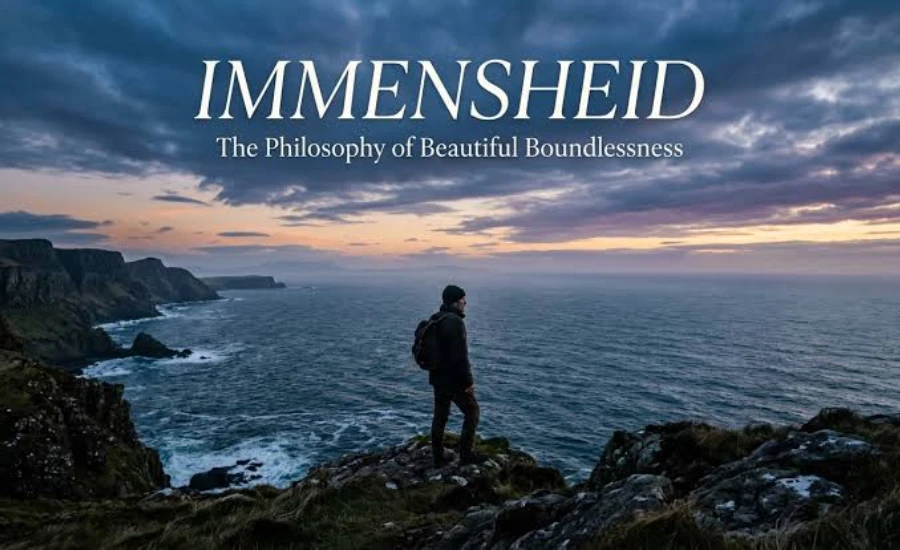
Immensheid is a Dutch word that expresses the idea of something being extremely large, vast, or seemingly without limits. It is closely connected to the concept of immensity and can describe physical spaces, emotional experiences, abstract ideas, or anything that feels too enormous to measure easily. Although it may not be a word commonly encountered by international readers, its meaning opens the door to an interesting look at how language describes scale, depth, and the feeling of standing before something enormous.
What Does Immensheid Mean?
The Dutch term Immensheid can generally be understood as “immensity,” “vastness,” or “enormity.” It is related to the adjective immens, which means immense or enormous. The ending -heid is commonly used in Dutch to turn an adjective into a noun, somewhat like “-ness” in English.
This makes the basic structure relatively easy to understand. Immens describes something immense, while -heid transforms that quality into a concept or state.
The word can therefore refer to the quality of being immense. Depending on the context, it may describe the enormous size of a landscape, the scale of the universe, the depth of an emotion, or even the seemingly unlimited possibilities surrounding an idea.
Immensheid in the Dutch Language
Dutch has many words that express qualities or states by adding -heid. This makes the construction of certain abstract nouns fairly recognizable to people familiar with the language.
In this sense, the term fits naturally within the broader structure of Dutch vocabulary. It takes the idea of something being immense and turns it into a noun representing that quality.
The concept itself is not limited to physical dimensions. Just as English speakers might talk about the vastness of the ocean or the immensity of space, Dutch speakers can use language to describe something that feels exceptionally large, profound, or difficult to comprehend.
How Immensheid Describes Vastness
One of the most interesting aspects of Immensheid is its connection with the idea of vastness. Vastness is not always about measurements. Sometimes, something can feel enormous even when its physical size is relatively small.
Consider standing beneath a clear night sky. The visible stars represent only a tiny part of an unimaginably large universe. The experience can create a powerful sense of scale. There may be no practical way to comprehend the distance involved, yet the mind recognizes that the space beyond is extraordinarily vast.
The same feeling can appear when looking across a large ocean, walking through an open desert, or viewing a mountain range stretching toward the horizon.
Immensheid and the Natural World
Nature provides some of the clearest examples of this idea. A person standing beside a huge waterfall, looking across a wide valley, or watching waves disappear into the horizon may experience a strong awareness of scale.
The feeling does not necessarily come from calculating measurements. Instead, it comes from experiencing something that seems larger than ordinary human surroundings.
This is one reason words associated with vastness often have a poetic quality. They allow people to describe not only what they see but also how that sight affects their perception.
Immensheid Beyond Physical Size
The meaning of Immensheid can also extend beyond physical dimensions. People frequently describe emotions, possibilities, knowledge, and imagination using language associated with size.
For example, someone might think about the vastness of human knowledge. No individual can learn everything that has been discovered across science, history, literature, art, and culture. The amount of information available can therefore feel almost limitless.
Similarly, a person may experience an overwhelming sense of possibility when beginning a completely new chapter in life. The future has no clearly defined boundary, which can make it feel immense in an abstract sense.
The Emotional Side of Immensheid
Vastness can produce different emotional reactions. It can create wonder and curiosity, but it can also make people feel small or uncertain.
Looking at the night sky may inspire fascination because it reveals a world far beyond everyday experience. At the same time, recognizing the enormous scale of the universe can remind us how limited our individual perspective is.
This combination of wonder and humility is part of what makes the concept meaningful. It is not simply about being “big.” It is about encountering something that challenges the mind’s ordinary sense of scale.
Why Words Like Immensheid Matter
Words that describe abstract experiences are important because they help people communicate ideas that are difficult to explain through measurements alone.
Imagine describing a mountain only by giving its height. That information provides an objective measurement, but it does not necessarily communicate the feeling of standing at its base and looking upward.
Language can bridge that gap. A word associated with immensity can capture the broader impression created by something enormous, powerful, or seemingly limitless.
In this way, Immensheid represents more than a simple translation. It reflects how language can turn an experience of scale into a recognizable concept.
Immensheid and Human Perspective
Human beings naturally understand the world from a limited physical and personal perspective. We experience our surroundings at a scale that is manageable in everyday life.
A city street, a home, a workplace, or a local landscape may seem familiar because people interact with these environments regularly. However, stepping into a much larger environment can change that perception instantly.
An enormous forest, a vast coastline, or an expansive sky can make familiar measurements feel insignificant. Such experiences encourage people to think beyond their immediate surroundings.
The concept of immensity therefore has an important connection with perspective. Something may appear ordinary from one viewpoint but enormous from another.
Using Immensheid in Modern Contexts
Although the word has a distinctly Dutch linguistic identity, its underlying concept is universal. Modern discussions about technology, science, space, nature, and human potential frequently involve ideas of enormous scale.
The internet itself can feel immense because of the sheer amount of information available. Scientific discoveries reveal increasingly complex systems, while astronomy continues to expand our understanding of the universe.
Even creative fields can explore this theme. Photographers, writers, filmmakers, and artists often use enormous landscapes or open spaces to communicate freedom, isolation, mystery, or wonder.
Final Thoughts on Immensheid
Immensheid offers a useful way to think about the quality of being immense. Rooted in Dutch language structure, the word can describe physical vastness while also extending toward emotional, intellectual, and philosophical ideas.
Its broader meaning is easy to recognize even across language barriers. People everywhere encounter moments when something seems too large, deep, complex, or expansive to fully comprehend.
Whether the subject is the ocean, the universe, nature, knowledge, or human possibility, the idea behind this Dutch word reminds us that scale is not always something that can be measured. Sometimes, it is something we experience.
Frequently Asked Questions About Immensheid
What does Immensheid mean?
Immensheid is a Dutch noun associated with immensity, vastness, or the quality of being extremely large.
Is Immensheid an English word?
No. Immensheid is a Dutch term. Its closest English equivalents include “immensity,” “vastness,” and “enormity,” depending on the context.
What is the origin of Immensheid?
The word is connected to the Dutch adjective immens, meaning immense, combined with -heid, a suffix used to form nouns expressing a quality or state.
Can Immensheid describe emotions?
Yes. The underlying idea can be applied to experiences that feel emotionally or intellectually enormous, although the exact wording depends on the Dutch context.
What is an example of Immensheid?
The vastness of the ocean or the seemingly limitless scale of the universe can illustrate the concept. The word can also be used more abstractly for things such as knowledge or possibility.
Why is Immensheid interesting?
It is interesting because a single Dutch word connects physical size with broader ideas of vastness, perspective, wonder, and the limits of human understanding.
-

 BLOG1 year ago
hanime1: The Ultimate Destination for Anime Lovers
-

 Technology1 year ago
GLAADVoice.com: How You Can Get Involved and Make a Difference
-

 BILLS1 year ago
Why Does My Instagram Reel Stop Getting Views After One Hour? How to Fix It?
-

 ENTERTAINMENT1 year ago
Crackstreams 2.0: The Future of Free Sports Streaming?
-

 ENTERTAINMENT1 year ago
Sflix: How It’s Changing the Way We Watch Movies and TV Shows
-

 BLOG1 year ago
NHentai.nef: Understanding the Popular Hentai Archive
-

 BLOG1 year ago
ThisVid: What Makes It Stand Out in the World of Online Videos
-

 BLOG1 year ago
Imginn: The Ultimate Tool to View Instagram Content Anonymously