
BILLS
GoKong Casino Mobile Sessions: Short Bursts, Fast Decisions, and the Browser-First Habit

There’s a particular kind of player who never really settles in. They open GoKong on a phone, play for eight or ten minutes, close the tab, and come back later — maybe on a lunch break, maybe waiting for a train, maybe half-watching something else. This article is about that pattern: the brief, repeated mobile visit where the browser is the whole platform and every session is a quick hit rather than a marathon. If that sounds like how you actually play, the way this site is built will make a lot more sense.
The first thing to understand is that GoKong Casino Mobile runs through a web browser, not a download. For the short-burst player this matters more than it sounds. There’s no app to update, no icon to hunt for, no login screen that forgets you. You tap a bookmark, the lobby loads, and you’re in. That frictionless entry is exactly what makes repeated micro-sessions viable — the visit has to be worth it within seconds or the habit dies.
Why the Browser-First Setup Suits the Ten-Minute Visit
Short sessions live and die on load times and thumb reach. A player who’s only got a few minutes doesn’t want to wrestle with menus. GoKong’s mobile layout leans into this: the game tiles are large, the categories are obvious, and the search and filter tools are close to the top where a thumb naturally lands.
Consider a realistic scenario. You’ve got a coffee and about nine minutes before a meeting. You open the browser, land in the lobby, and scan for something familiar rather than something new. That scan is the whole decision — you’re not researching, you’re recognising. The library here is deep, over 3,000 titles, which sounds like it would slow you down, but in practice the short-session player ignores most of it and goes straight to a handful of favourites.
- Slots load first because they’re the fastest to start and the easiest to leave mid-spin.
- Live tables get skipped in a hurry — waiting for a seat is dead time you don’t have.
- Scratchcards and Keno appeal precisely because a round resolves in seconds.
That last point is worth sitting with. When your session is short, the value of a game is measured in how quickly it reaches a result. A title that needs five minutes of setup before anything happens is a non-starter. A round that resolves in twenty seconds is perfect.
The Games That Fit a Quick Hit — and the Ones That Don’t
Not every category on the site is built for the same rhythm. The short-session player gravitates toward anything with an instant outcome, and quietly avoids anything that demands sustained attention.
Fast-resolution favourites
Video slots are the backbone here, and the provider list reads like a who’s-who — NetEnt, Microgaming, Play’n GO, Red Tiger, Big Time Gaming, Yggdrasil, Quickspin. For a ten-minute visit, the appeal isn’t the studio name, it’s the spin speed. A player might fire off thirty or forty spins, watch the balance move, and stop. Progressive jackpot slots sit in a different mental box: they’re the aspirational pick for a longer session, not the quick one.
Plinko and Slingo deserve a mention because they resolve fast and don’t ask for much. You drop a ball, you see where it lands, you go again. Slingo blends bingo and slots into a grid that fills up in a couple of minutes — perfect for a visit that has a hard end point.
What gets skipped
Table games like Roulette, Blackjack, and Baccarat can work in short bursts, but they invite a different mindset. A player settling into a blackjack table tends to want a run of hands, and a run of hands needs time. In a rushed session, the live dealer lobby — with its waiting lists and table selection — usually gets bypassed entirely. It’s not that these games are worse; they just belong to a different kind of visit.
How the Short-Session Player Manages Risk Without Overthinking It
Here’s where the pattern gets interesting. The quick-visit player isn’t reckless — they’re actually quite disciplined, just in a compressed way. Because the session has a natural ceiling (the meeting, the train, the coffee going cold), the risk is bounded by time rather than by a strict budget spreadsheet.
A typical approach looks like this: pick a stake you’re comfortable losing in one sitting, keep it flat rather than chasing, and stop when the clock runs out rather than when the balance does. That last habit is the tell. Short-session players often leave mid-flow, sometimes even slightly up, simply because the window closed. There’s no agonising over whether to push for more.
- Flat betting on slots rather than escalating after a dry spell.
- Treating a bonus round as a natural stopping point.
- Using the session length as the real limit, not a target win figure.
The welcome offer — a 100% match up to 750 AUD with 200 free spins — gets used differently by this crowd too. Rather than grinding through the wagering in one heroic sitting, they chip away across several short visits. It’s slower, but it fits the rhythm. The 35x requirement on bonus and deposit isn’t something you clear in ten minutes, and the short-session player knows that going in.
Building a Repeat-Visit Habit Around Small Promotions
Repeated brief visits create their own logic around bonuses. A player who checks in several times a week notices the ongoing promotions more than a one-off visitor would. The weekly loss recovery of 15% up to 4,500 AUD, the weekend reload, the live casino cashback — these aren’t headline-grabbers, but they reward the check-in habit.
Think about how it actually plays out. You lose a bit on Tuesday’s quick session, come back Thursday, and there’s a small cushion waiting. It softens the edges of a short visit without demanding anything. VIP members get free spins on selected slots every Friday, which is a tidy little incentive to make Friday’s visit a slightly longer one.
What the short-session player tends to ignore: the deep promotional calendar, the terms pages, the stuff that requires reading. They want the bonus to just be there. That’s fine — most of these promos apply automatically or with a single opt-in.
Payments, Patience, and the Reality of Cashing Out
Here’s the honest part. The short-session habit and slow withdrawals don’t mix perfectly. GoKong supports Visa and Mastercard, PayPal, and bank transfer, and the deposit side is genuinely quick — low minimums mean you can top up for a small visit without committing much. But withdrawals are on the slower side, and there’s no evening or weekend processing.
For the quick-visit player, this changes behaviour in a subtle way. You learn to batch your withdrawals rather than cash out after every little win. You request a payout on a weekday morning and let it sit. The 24/7 live chat is useful here — not for emergencies, but for the occasional “where’s my withdrawal” check that saves a lot of low-level anxiety.
It’s a minor friction, not a dealbreaker. The trade-off is that everything leading up to the cash-out is smooth, and for a player whose sessions are measured in minutes, the front end is what matters most.
Reading the Lobby Like a Regular
After a few weeks of short visits, something clicks. You stop browsing and start navigating. The lobby becomes a familiar map: favourites here, recent games there, the fast-resolution titles clustered in your head rather than on screen. This is the quiet reward of the repeated-visit pattern — you get efficient.
New players in this mode tend to explore cautiously for the first few sessions, sticking to one or two categories before branching out. There’s no rush. The browser-based setup means there’s nothing to install while you make up your mind, and the 4.6 rating reflects a platform that generally holds up under casual scrutiny.
The multi-language support — English, German, Finnish, and several others — matters more than you’d think for a mobile habit. Playing in your own language reduces the small frictions that make a quick visit feel like work.
Ready for a Quick Spin? Start Your Next Short Session
The short-session, browser-first pattern isn’t for everyone. If you like to settle in for hours, this article probably describes a rhythm you don’t recognise. But if your play happens in gaps — between tasks, on commutes, in the odd quiet moment — then GoKong Online Casino is built for exactly that. Fast entry, instant games, and promotions that reward showing up again.
Open the browser, log in, and keep it brief. That’s the whole approach. And if you’re new, the welcome offer gives you plenty of reason to make that first short visit count.
Get 200 Free Spins Now!
BILLS
How an AI Image Generator Is Helping Archaeologists Reconstruct Everyday Life in Ancient Civilizations

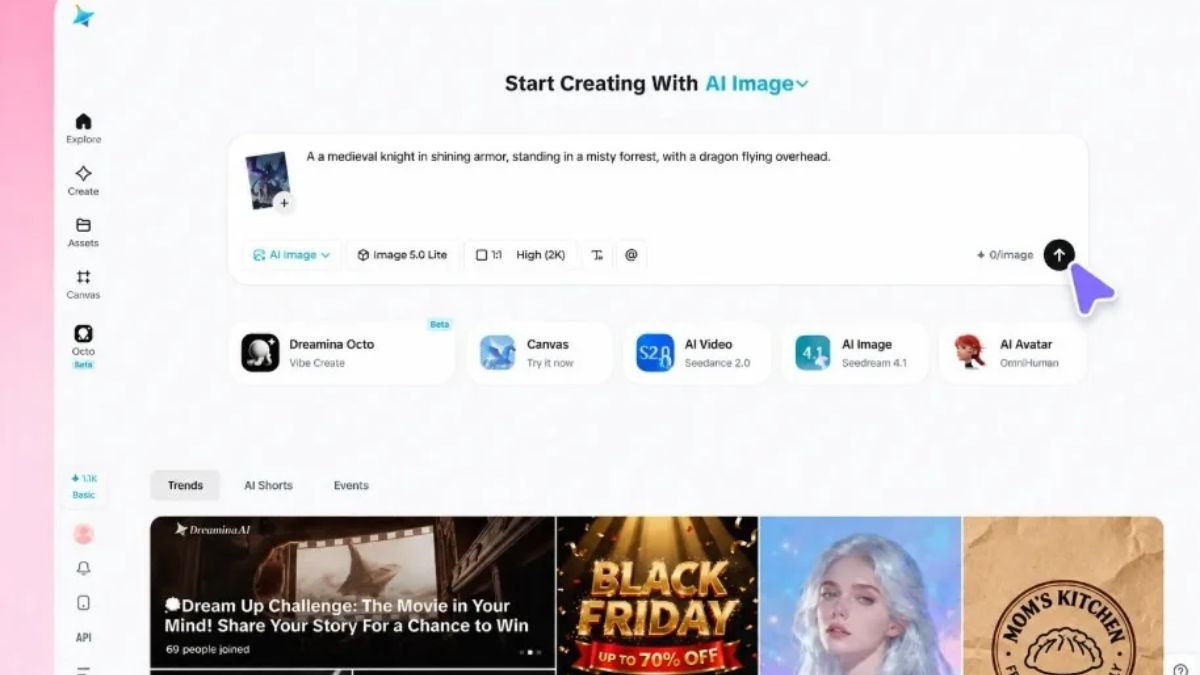
How an AI Image Generator Is Helping Archaeologists Reconstruct Everyday Life in Ancient Civilizations
Archaeology is often associated with the discovery of ancient buildings, pottery, tools, inscriptions, and burial sites. However, these discoveries represent only fragments of societies that existed thousands of years ago. A broken cooking vessel may reveal something about food preparation, while the remains of a house can provide clues about family life, construction methods, and social organisation. Turning these scattered findings into a meaningful picture of the past requires careful interpretation, historical knowledge, and sometimes visual reconstruction.
Digital technology is creating new opportunities for researchers to explore these historical fragments. An ai image generator can help transform written descriptions, archaeological references, and historical research into visual concepts that make ancient environments easier to imagine. Although generated images cannot replace archaeological evidence, they can support educational presentations, preliminary visual exploration, and public engagement with historical discoveries.
One of the most interesting developments is the possibility of reconstructing ordinary experiences rather than focusing exclusively on famous monuments and rulers. Understanding how people cooked, traded, travelled, decorated their homes, and organised their communities can make ancient history more relatable. Visual interpretation gives researchers another way to communicate these everyday details while keeping the distinction between confirmed evidence and creative reconstruction clear.
Reconstructing Ordinary Homes From Archaeological Remains
Ancient houses rarely survive in their original condition. In many excavation sites, researchers find foundations, sections of walls, flooring materials, roof fragments, and objects left behind by former residents. These remains can reveal the approximate size and arrangement of a building, but they do not always provide a complete picture of its original appearance.
Visual reconstruction can help explore different possibilities based on the available evidence. Researchers might examine how a room was arranged, where cooking equipment could have been placed, or how natural light entered through openings. An AI-assisted illustration can provide a starting point for presenting these ideas to students and museum visitors. However, any uncertain architectural details should be clearly identified as interpretations rather than established facts.
This approach is particularly useful when explaining domestic architecture across different periods. A modest agricultural dwelling, an urban merchant’s house, and a wealthy family’s residence may have served very different purposes. Visual comparisons can help audiences understand how building materials, available resources, climate, and social position influenced the design of living spaces.
Exploring Food Preparation and Daily Household Activities
Food remains one of the strongest connections between modern people and ancient communities. Archaeologists study cooking vessels, grinding stones, storage containers, animal bones, seeds, and other remains to understand what people ate and how they prepared their meals.
These objects can offer valuable information, but they do not always show the complete process. For example, a collection of grinding tools may suggest grain processing, while storage jars can indicate methods of preserving food. Combining these findings with historical and environmental research allows scholars to develop informed interpretations of household routines.
Illustrations can make these processes easier to communicate. A reconstructed domestic scene might show the relationship between a cooking area, food storage, preparation tools, and the people using them. Such imagery can help younger audiences understand archaeological discoveries without requiring them to interpret technical excavation reports.
Researchers should still avoid presenting imagined ingredients, clothing, or activities as historical facts. If the archaeological evidence does not establish a particular detail, the illustration should be described as a possible representation. This distinction protects the educational value of the material and prevents creative visuals from being mistaken for documentary records.
Understanding Ancient Clothing and Personal Appearance
Clothing provides important information about identity, trade, available materials, craftsmanship, and social customs. Unfortunately, textiles are particularly vulnerable to deterioration. In many archaeological environments, only small fragments survive, leaving researchers with incomplete evidence about how garments originally looked.
Other discoveries can help fill some of these gaps. Textile impressions, sewing equipment, decorative objects, statues, paintings, and written descriptions may offer clues about clothing styles. By comparing these sources, historians can investigate possible garment shapes, fabric arrangements, and decorative techniques.
Visual exploration can bring these interpretations into educational displays. A museum might present several possible clothing styles based on the available evidence, helping visitors understand how researchers approach incomplete historical information. Different visual reconstructions can also demonstrate how clothing changed between social groups, regions, and historical periods.
Accuracy remains essential. Modern assumptions about ancient fashion can easily influence an illustration, particularly when information is limited. Researchers should identify which features are supported by physical discoveries and which have been introduced to complete the visual composition.
Bringing Ancient Markets and Trade Networks to Life
Markets were important centres of economic and social activity in many ancient civilizations. They connected farmers, artisans, merchants, travellers, and local residents. Archaeological discoveries such as weights, coins, imported pottery, tools, and storage facilities can help researchers understand how goods moved between communities.
A reconstructed market environment can bring these relationships together in a way that is easier to understand than a collection of isolated objects. Visual scenes may illustrate how different stalls were arranged, how products were displayed, and how commercial activities contributed to everyday urban life.
Trade reconstruction also offers an opportunity to explore connections between distant regions. Imported materials found at an excavation site can indicate that a community participated in wider commercial networks. Maps, object illustrations, and reconstructed trading environments can help explain how these exchanges influenced local economies and cultural practices.
However, the appearance of an ancient marketplace should be based on the period and region being studied. A Mediterranean trading centre, a settlement along the Silk Road, and an ancient South Asian marketplace would have different architectural features, products, and social arrangements. Treating these environments as interchangeable would create a misleading historical picture.
Supporting Museum Education and Public Engagement
Museums often face the challenge of explaining complex discoveries to visitors with different levels of historical knowledge. A display containing pottery fragments or architectural remains may be fascinating to specialists but difficult for younger visitors to interpret without additional context.
Visual reconstructions can help bridge this communication gap. An exhibition might place an original artefact beside an illustration showing its possible use in an everyday setting. This arrangement allows visitors to connect the physical object with a broader historical story.
Digital imagery can also support educational workshops, classroom presentations, online exhibitions, and interactive learning materials. Teachers may use reconstructed scenes to introduce historical environments before asking students to examine actual archaeological evidence. This can encourage curiosity and help learners develop questions about how historians know what they know.
Museums should distinguish between original artefacts, scholarly reconstructions, and AI-generated illustrations. Clear labels help visitors understand the different levels of evidence behind each display. Transparency is especially important when presenting generated images to audiences who may otherwise assume that realistic visual details have been directly documented.
The Importance of Historical Accuracy in AI-Assisted Reconstruction
Realistic images can be persuasive even when some of their details are inaccurate. This creates a particular challenge for historical communication. An illustration might contain convincing buildings, clothing, and household objects while combining features from completely different centuries or geographical regions.
For this reason, AI-assisted reconstruction should begin with reliable research. Archaeological reports, museum collections, historical records, scholarly publications, and specialist guidance can establish the boundaries of a visual project. The more specific the historical references, the easier it becomes to identify details that require correction.
Human review is equally important. Archaeologists, historians, conservators, and cultural specialists can assess whether an illustration reflects the available evidence. They can also identify cultural details that have been oversimplified or represented inaccurately.
Another important consideration is the difference between visual possibility and historical certainty. When several interpretations are possible, presenting alternative reconstructions may be more responsible than choosing one appearance and treating it as definitive. This approach encourages audiences to understand archaeology as an ongoing process of investigation.
Preserving Cultural Context Through Responsible Digital Visualisation
Ancient objects and historical environments are not simply design references. They are connected to communities, cultural identities, religious traditions, and collective memories. Reconstructing them requires sensitivity toward the people and societies being represented.
Certain objects may have ceremonial, religious, or funerary significance. Using them as decorative elements without understanding their original purpose can remove important cultural context. Similarly, combining architectural or artistic features from unrelated civilizations can create an attractive image while weakening its historical meaning.
Responsible visualisation begins by identifying the cultural and geographical background of the subject. Researchers should consider how an object was used, who created it, and what role it played within its original community. When working with living cultural traditions, consultation with relevant communities can also help prevent misrepresentation.
Digital archives offer another opportunity to preserve historical knowledge. Photographs, drawings, excavation records, and reconstructed illustrations can be organised together so that future researchers and educators can understand how interpretations developed. Maintaining source information alongside generated visuals makes it easier to review and update historical representations when new discoveries emerge.
What the Future Could Mean for Archaeological Storytelling
The relationship between archaeology and digital visualisation is likely to develop as researchers gain access to better imaging technologies, three-dimensional modelling, digital mapping, and more advanced analytical tools. These technologies can work together to create richer interpretations of historical sites and objects.
For example, a three-dimensional model of an excavated building could be combined with carefully researched visual scenes to explain how different spaces may have been used. Students could explore a settlement from multiple perspectives, while museum visitors might compare an archaeological site as it appears today with a possible reconstruction of its earlier condition.
There is also potential for more collaborative research. Archaeologists, designers, educators, and digital specialists can work together to produce educational material that is both visually engaging and historically responsible. Their different areas of expertise can help ensure that visual storytelling supports research rather than replacing it.
The most valuable development will not necessarily be the creation of increasingly realistic images. It will be the ability to communicate complex historical evidence more clearly while acknowledging uncertainty. Technology can make the past easier to imagine, but careful scholarship must remain the foundation of every reconstruction.
Final Thoughts
Reconstructing everyday life in ancient civilizations requires more than imagining how the past might have looked. It involves interpreting physical remains, comparing historical sources, understanding cultural context, and recognising the limits of available evidence. AI-assisted imagery introduces another way to communicate these interpretations, helping audiences connect archaeological discoveries with the ordinary experiences of people who lived centuries or millennia ago.
From domestic architecture and food preparation to clothing, trade, and community life, visual reconstruction can make historical research more accessible. Its effectiveness depends on responsible use, expert review, and clear distinctions between documented discoveries and creative possibilities. When these principles guide the process, digital imagery can become a valuable educational resource and help bring the human side of ancient history into sharper focus.
Frequently Asked Questions
- How can AI-generated images support archaeological research?
They can help researchers explore visual interpretations of ancient environments, household activities, architecture, and material culture. These images are useful for communication and concept development but cannot replace physical evidence or scholarly analysis.
- Can AI accurately reconstruct ancient civilizations?
Not independently. AI-generated images may introduce inaccurate architectural features, clothing, objects, or cultural details. Historical references and expert review are necessary to improve accuracy.
- Why are everyday activities important in archaeological storytelling?
Everyday activities help explain how ordinary people lived, worked, prepared food, traded goods, and organised their communities. These details provide a broader understanding of ancient societies beyond rulers, monuments, and major historical events.
- Can museums use AI-generated historical illustrations?
Yes. Museums can use them in educational displays, digital exhibitions, and learning resources, provided generated reconstructions are clearly labelled and supported by reliable historical research.
- What is the biggest challenge of AI-assisted historical reconstruction?
The main challenge is maintaining historical accuracy while creating visually complete scenes from incomplete evidence. Researchers must communicate uncertainty and avoid presenting imagined details as confirmed historical facts.
Some players open a casino to settle in for the night. Others open it because they have ten minutes and a decision to make. This piece is about the second group — the quick-hit crowd who treat West28 Casino as a place for short, high-intensity bursts where the outcome arrives fast and the session ends before the kettle boils.
If that sounds familiar, the platform at https://west28-casino-au.com/ has the right shape for it. Thousands of titles, a browser-based setup that loads without fuss, and enough crash and live-dealer options to keep a five-minute window interesting. The trick is knowing how to use it that way.
The Case for Playing in Bursts, Not Marathons
Long sessions have their place. But there is a particular rhythm to the short burst: you log in with a number in mind, you pick something volatile, and you let it resolve. No grinding, no chasing, no three-hour drift into fatigue.
Quick-hit players tend to follow a loose pattern:
- Open the site, check the balance, set a hard ceiling for the session
- Choose one or two games with fast resolution — crash titles, instant-win formats, a single volatile slot
- Play until the ceiling is hit or the win lands, then close the tab
What makes West28 workable for this is the sheer breadth of the library. With over 7,200 games across dozens of studios, you are not stuck scrolling for something suitable. Crash games, pachinko-style titles, and live roulette with short betting windows all sit in the same place. You can go from login to a resolved bet in under a minute if you know where to click.
The mobile-optimised site matters here too. No app to download, no update prompt. A browser tab, a fingerprint login, and you are in.
Which Games Suit a Five-Minute Window
Not every game rewards a rushed visit. A Megaways slot with a bonus round that takes forty spins to trigger is a poor fit when you have eight minutes. The quick-hit player learns to sort the library by resolution speed rather than theme.
Crash and instant formats
Crash-style games are the natural home of the short session. You set a stake, watch a multiplier climb, and cash out at a point you decided on before the round began. Aviator and similar titles from Spribe and Aviatrix fit the mould. The whole cycle takes seconds. You can play twenty rounds in the time a slot takes to spin ten times.
Live tables with tight betting windows
Speed Auto Roulette and Mega Roulette are built for players who do not want to wait. The betting window closes fast, the ball drops, and the next round begins. For someone squeezing in a session on a lunch break, that pace is the point. Blackjack variants like Infinite Free Bet Blackjack also suit a quick visit — a handful of hands, a decision, and out.
Volatile slots played short
Some players will open a single high-volatility slot, run a fixed number of spins, and stop regardless of result. Titles like Big Bamboo or Valley of the Gods can deliver a large outcome in a small number of spins, which is exactly the appeal. The discipline is in the stopping, not the starting.
Setting the Ceiling Before You Log In
The single most important habit for a burst player is deciding the session budget before the first spin. Not during. Not after a loss. Before.
Practical version: pick a number you are comfortable losing entirely. Divide it by the number of rounds you plan to play. That is your stake per round. If you plan ten crash rounds on a $20 session, you are staking $2 each. If you cash out early on round three, you have profit and a decision — walk or continue with the same stake. Most quick-hit players walk.
If a bonus is in play, the maths shifts. The welcome offer at West28 is a 250% match plus 150 free spins, with a 35x wagering requirement on the deposit-plus-bonus sum and 40x on spin winnings. That is a hefty ask. For a burst player, chasing a 35x rollover across short sessions is a grind, not a thrill. Many simply treat bonus funds as extended playtime rather than a target to clear.
- Decide the session ceiling before login
- Fix the stake per round and do not raise it mid-session
- Treat bonus wagering as a separate, longer project — not part of a five-minute visit
The Psychology of the Quick Exit
There is a skill in leaving. Quick-hit players who last are the ones who close the tab after a win rather than pressing for one more round. The adrenaline of a fast cash-out makes it tempting to re-stake immediately. The ones who do not are the ones who end up describing a good session as a bad one.
A useful trick: set a win target alongside the loss ceiling. If you double your session stake, stop. It sounds mechanical, and it is. That is the point. Fast formats reward reflex, and reflex is exactly what you want to override with a rule.
Another habit worth building is a hard timer. Ten minutes on the phone, alarm set. When it goes off, the session ends whether you are up or down. The short-session player who uses a timer tends to report better experiences than the one who relies on willpower alone.
What to Expect From the Platform Itself
The site runs on a browser, works on any modern phone or tablet, and requires no download. Deposits and withdrawals are handled in the same place as the games, and crypto options sit alongside cards and bank transfer for players who prefer speed. Support is available through live chat around the clock, which matters more than people admit when a withdrawal query lands at an awkward hour.
It is a young operation, launched in 2025, and the licensing situation has drawn criticism from reviewers. That is worth knowing before you deposit anything beyond a session budget. The quick-hit approach actually suits this profile — small, capped sessions limit exposure in a way that long grinds do not.
Ready to Try a Five-Minute Session? Get Your Bonus Now!
Short, sharp sessions are not a lesser way to play. They are a different discipline — one built on fixed ceilings, fast formats, and the willingness to close the tab. West28 Casino gives you the library and the mobile access to play that way. The rest is up to you: pick your number, pick your game, and give yourself ten minutes.
There is a particular kind of player who never settles in for a long evening. They open Lucky7even on a phone, play for eight or ten minutes, close the tab, and come back later when a queue goes quiet or a coffee break stretches. This article is about that player — the short-session, high-tempo type — and how the platform suits the rhythm of quick, repeated visits rather than marathon grind sessions.
It is not about chasing the biggest possible score. It is about making a handful of decisions, keeping risk in check, and knowing when to stop. Lucky7even fits that mindset well, partly because the site loads fast on mobile and partly because the game library is deep enough that you can rotate titles between visits without ever repeating yourself.
Why the Ten-Minute Session Has Become the Default
Most players I know do not plan casino time. It happens. A train is late, a meeting gets pushed back, or someone is waiting for a food delivery. The session starts with a single tap and ends when the real world interrupts.
That pattern changes how people play. Long sessions encourage chasing losses and stretching budgets. Short sessions reward the opposite: a clear plan, a fixed number of spins, and a decision made before the first click.
What a realistic burst looks like
- Open the site, log in, and check the balance once — no repeated refreshing.
- Pick one or two games, not five. Rotating too much wastes the session on loading screens.
- Set a rough number of spins or rounds before starting, usually somewhere between 30 and 60.
- Stop at the limit, win or lose, and close the tab.
That last point is the one most people struggle with. The short-session player who sticks to it is the one who actually enjoys the habit instead of dreading it.
Picking Games That Respect a Tight Timeframe
Not every title suits a ten-minute visit. Some slots are built around long bonus cycles that rarely trigger early, which makes a short session feel like waiting rather than playing. Others get to the point quickly.
Crash-style games are a natural fit for the burst player. Aviator, Spaceman, and Steller all resolve in seconds, and the decision — cash out or hold — is made in real time. That is a very different mental experience from spinning a reel and watching it land. There is no downtime, no waiting for a feature, and the round is over before the next notification on your phone.
Fast-resolving options worth knowing
Beyond crash titles, the library includes plenty of high-volatility slots that can produce a meaningful result within a short run. Sweet Bonanza, Reactoonz, and Big Bass Splash are common picks for players who want a defined number of spins rather than an open-ended session. On the table side, American Roulette and 21 Burn Blackjack suit players who prefer a slower, more deliberate decision per round.
The common thread is not the game type. It is whether the title lets you complete a meaningful cycle inside your session window. A player who opens a slot with a 200-spin average bonus trigger and only has ten minutes is setting up frustration.
Risk Control When Every Decision Is Compressed
Short sessions compress decision-making. You make the same number of choices in ten minutes that a long-session player makes in an hour, which means mistakes compound faster. That is why the burst player tends to be more conservative with bet sizing than people assume.
A typical approach looks like this: stake a small fixed amount per round, keep it flat, and only adjust if the balance moves meaningfully in either direction. No martingale. No doubling after a loss. The point of a short session is that it stays short and stays affordable.
- Flat betting keeps the session predictable and easy to walk away from.
- Raising stakes mid-session is the most common way short visits turn into long ones.
- Treating a win as a reason to stop, not a reason to push, is the discipline that matters most.
Mobile play reinforces this. Playing on a phone makes it easy to see the balance at a glance, and the smaller screen discourages the kind of frantic multi-game switching that leads to overspending. Lucky7even is fully browser-optimized, so there is no app to install and no friction between deciding to play and actually playing — which cuts both ways. Convenience makes discipline more important, not less.
The Repeat-Visit Habit and What It Does to Bankroll
Here is where short-session play gets interesting. Three ten-minute visits spread across a day are not the same as one thirty-minute session, even if the total time matches. Each visit resets your attention. You arrive fresh, make a plan, and leave.
That structure suits the kind of player who treats the casino as a small recurring entertainment expense rather than an event. They might deposit once a week and spread it across several short visits. They rarely chase. They rarely tilt. The trade-off is that they also rarely hit the kind of extended hot streak that only shows up in long sessions — but most of them have made peace with that.
Where bonuses fit for this player type
Bonus offers matter less to burst players than to grinders, but they are not irrelevant. A welcome package with free spins on a title like Book of the Fallen gives a short session a bit more runway without changing the underlying approach. Reload promotions can be useful if they align with an existing visit pattern — but chasing wagering requirements across multiple sessions is exactly the behavior a short-session player should avoid.
The sensible rule: take a bonus if you were going to play anyway, not because the bonus exists. A 40x wagering requirement on a bonus is a long-term commitment, and a player who only plays in ten-minute windows may never clear it. That is fine. The bonus is optional, not a reason to extend a session past its natural end.
Reading the Platform Through a Burst-Player Lens
Everything a short-session player needs from a casino comes down to speed and clarity. Can I log in quickly? Can I find a game without scrolling through five menus? Can I see my balance and my bet size without hunting? Can I withdraw without a week-long wait?
Lucky7even performs reasonably well on most of those. The mobile site loads fast, navigation is straightforward, and withdrawals are processed within 24 hours for most methods. The daily withdrawal cap of €2,000 is unlikely to bother a burst player, who is rarely cashing out large amounts in a single day anyway.
The one area worth flagging: responsible gambling tools require manual activation through live chat. For a player whose entire strategy depends on self-imposed limits, that is a step worth taking early rather than after a bad session. Deposit limits set in advance do more for a short-session player than any bonus ever will.
Get Your Bonus Now and Play on Your Own Terms
The short-session approach is not about playing less. It is about playing with intention — arriving with a plan, leaving on schedule, and treating each visit as a complete unit rather than a fragment of an endless session. Lucky7even supports that style well: fast loading, a huge game selection for variety between visits, and quick withdrawals when you decide to cash out.
If that sounds like your rhythm, the next step is simple. Set a limit, pick a game, and give yourself ten focused minutes. Get Your Bonus Now and see how much more enjoyable a session feels when it has a clear beginning and a clear end.
-

 BLOG1 year ago
hanime1: The Ultimate Destination for Anime Lovers
-

 Technology2 years ago
GLAADVoice.com: How You Can Get Involved and Make a Difference
-

 BLOG1 year ago
Imginn: The Ultimate Tool to View Instagram Content Anonymously
-

 BILLS1 year ago
Why Does My Instagram Reel Stop Getting Views After One Hour? How to Fix It?
-

 ENTERTAINMENT1 year ago
Crackstreams 2.0: The Future of Free Sports Streaming?
-

 BLOG1 year ago
ThisVid: What Makes It Stand Out in the World of Online Videos
-

 ENTERTAINMENT1 year ago
Sflix: How It’s Changing the Way We Watch Movies and TV Shows
-

 BLOG1 year ago
NHentai.nef: Understanding the Popular Hentai Archive