
BUSINESS
Essential Frameworks Every Aspiring Business Manager Should Master


Want to lead teams and grow businesses without flying blind?
At some point in their development, all future business leaders reach a fork in the road. Decisions become larger. Higher risk. Instinct alone won’t work. Enter Business Frameworks.
Frameworks are the proven thinking tools that managers use to:
- Break down complex problems
- Make smarter decisions
- Spot opportunities before competitors do
The best part? You don’t have to wait 20 years to master them. You just have to choose wisely.
This guide covers the core frameworks every manager needs to know.
Let’s get into it.
What’s covered:
- Why Frameworks Matter For Modern Managers
- 6x Business Frameworks Every Aspiring Manager Should Know
- How To Build These Skills The Right Way
Why Frameworks Matter For Modern Managers
Frameworks turn messy business problems into clear, structured decisions.
Consider this… You walk into a meeting as a new manager and someone throws a large scale strategic question at you. How are you going to answer? Without a framework your answer will be a shot in the dark. With a framework you have a battle tested method for working through the issue and communicating it to others.
That’s what makes these tools so powerful. They filter out the noise and give you a repeatable process for making smart decisions.
And you know what? There’s a huge need for it. The U.S. Bureau of Labor Statistics predicts that management occupations will add about 1.1 million openings per year from 2024-2034. There are seats aplenty waiting to be filled with competent leaders.
Most people miss this bit – it’s not just big corporate folk who use these frameworks. Weekly, entry-level managers pull these out. The sooner you know them, the quicker you’ll rise.
The best part? You don’t have to go broke attending school on-campus. Asynchronous online business courses allow students to learn real management skills at their own pace and stick with their day job. You can earn an online bachelor’s degree in business management by studying frameworks, case studies, and strategy – all while skipping your morning classes. Who wants to sit in a classroom at 9am? Courses like these are the reason asynchronous online learning is so popular.
Now let’s get into the actual frameworks.
6x Business Frameworks Every Aspiring Manager Should Know
These are the frameworks you’ll actually see used in boardrooms and startups and strategy presentations every day. Master these and you will think like a manager.
SWOT Analysis
SWOT analysis is the granddaddy of all business frameworks. And for good reason, it has endured the test of time.
SWOT stands for:
- Strengths — what your business does well
- Weaknesses — where you fall short
- Opportunities — external trends you can ride
- Threats — external risks you need to watch
What makes SWOT so magical? It’s simplicity. In 30 minutes you can assess where a business is at and what to do about it. Whether you’re launching a new product or hiring new staff (or plotting your career move).
SMART Goals
Vague goals get vague results. SMART goals fix that.
A SMART goal is:
- Specific — clearly defined
- Measurable — has numbers attached
- Achievable — realistic for the resources
- Relevant — tied to bigger objectives
- Time-bound — has a deadline
SMART Goal: Instead of saying “grow sales”, say “grow online sales by 15% by Q3”. See how different they are? One you can measure. The other is just wishful thinking.
Every manager should be able to write objectives like this. This is how you lead a team that performs.
Porter’s Five Forces
Trying to figure out if an industry is worth competing in? Porter’s Five Forces will help.
Created by Harvard professor Michael Porter, this model examines five forces that determine how profitable an industry will be:
- Threat of new entrants
- Bargaining power of suppliers
- Bargaining power of buyers
- Threat of substitutes
- Competitive rivalry
The greater these forces, the less profitable it is to operate in that industry. Savvy managers will assess Porter’s Five Forces before entering a new industry or adding a new product line.
PESTLE Analysis
PESTLE zooms out and looks at the bigger picture forces affecting a business.
PESTLE covers:
- Political — government policy and stability
- Economic — inflation, interest rates, growth
- Social — consumer trends and demographics
- Technological — emerging tech and disruption
- Legal — laws and regulations
- Environmental — sustainability and climate
This is your scanner. Use it every six months or so to ensure your strategy is still fitting with your surroundings. Markets change quickly and PESTLE allows you to remain on top.
The 4 P’s of Marketing
Marketing is every manager’s job and the 4 P’s allow you to think about it cleanly.
The 4 P’s are:
- Product — what you sell
- Price — what you charge
- Place — where you sell it
- Promotion — how you tell people about it
Get all four of these pieces correct and you’ve got a fighting chance to grow your business. Miss just one and growth becomes exceedingly difficult.
OKRs (Objectives and Key Results)
OKRs are the method companies such as Google, Intel and LinkedIn use to align thousands of employees.
Here’s the simple version:
- Objective — a bold, qualitative goal
- Key Results — 3-5 quantifiable results that demonstrate the goal is being achieved
OKRs work because they help relate daily work to the overall mission. Any young aspiring manager who learns this framework early will quickly rise above the rest — most teams need someone who can communicate how overarching goals break down into actionable metrics.
How To Build These Skills The Right Way
You learn a lot by reading about frameworks. But you grow by using them.
There are a few proven ways to build the skill:
- Practice on real problems — choose something that is occurring at your workplace and do a SWOT or PESTLE on it
- Study existing case studies — research how major corporations have leveraged these frameworks during significant transformations
- Enroll in a course — classrooms will require you to implement each framework rather than glossing over theory
Your path should be as structured as possible. Research by the World Economic Forum showed that 63% cite skill gaps as the biggest obstacle to transforming businesses through 2030. Managers with experience in these programs are few and companies are willing to go to battle over them.
Bringing It All Together
Management frameworks are the magic potion for anyone who wants to become a manager. They convert complexity into simplicity, and intuition into actions. Learn a few—SWOT, SMART, Porter’s, PESTLE, the 4 P’s and OKRs—and you’ll start speaking management senior-manager-ese before your grandma knows what’s happening.
The path is straightforward:
- Pick one framework
- Apply it to a real problem this week
- Move on to the next one
Build up those skills over time and you’ll have a toolbox that will benefit you for your entire career. Those future managers that come out on top aren’t the ones who know the most… They’re the ones who do something with what they know.

A leadership workshop can create energy, introduce useful language, and give people a fresh perspective. But enthusiasm alone rarely changes how a team runs meetings, handles conflict, gives feedback, or makes decisions the next morning. Lasting improvement requires employees to practice a small set of behaviors in real work, receive feedback, and see leaders reinforce those expectations over time.
Organizations planning events can explore speaking engagements through Pauldine Enterprises LLC, whose contact page offers a starting point for discussing leadership-focused event support. The firm’s work in speaking, leadership development, and consulting can help organizations connect an event’s message to practical team routines, manager reinforcement, and broader organizational alignment.
Why Leadership Events Often Lose Momentum
A strong keynote or workshop can be valuable, but its lessons can fade when employees return to crowded calendars and familiar pressures. A broad instruction such as “communicate better” does not tell people what to do differently in their next one-on-one meeting. The same problem appears when managers are not included in the follow-up process or when the organization continues to reward speed, silence, or individual problem-solving over the behavior discussed in training.
Leadership development also needs consistent support. Recent reporting on leadership development gaps highlights that many managers see room for improvement in training, internal talent development, mentorship, and executive involvement. That context makes follow-through especially important. An event can introduce an idea, but the workplace system determines whether the idea becomes routine.
Start With One Clear Leadership Behavior
Choose one behavior that team members can see and describe. “Become a better leader” is an aspiration. “End every project meeting by confirming the decision, owner, and due date” is a practice. A clear behavior makes expectations easier to explain, observe, and improve.
Examples of visible leadership behaviors
- Ask two clarifying questions before offering a solution.
- Set the team’s top priorities at the beginning of each week.
- Give timely, specific feedback during one-on-one conversations.
- Recognize a useful contribution close to the moment it occurs.
- Close meetings with an owner, next step, and deadline.
Select the behavior based on a real team need. If meetings regularly end with uncertainty, focus on clarity and accountability. If employees hesitate to raise concerns, focus on listening and follow-up. A smaller target makes practice realistic and gives the team a better chance to notice progress.
Build a Simple 30-Day Follow-Up Plan
Follow-up should begin immediately after the event, while the topic is still familiar. The plan does not need to be complicated. It needs a defined behavior, a place to practice it, and a regular point for reflection.
- Choose one behavior. Identify the skill most connected to the team’s current work.
- Define the signal. Describe exactly what people should say or do differently.
- Set a practice date. Use an upcoming meeting, project review, customer conversation, or one-on-one.
- Ask for feedback. Invite short, specific observations from peers, managers, or employees.
- Review and adjust. Keep the habit, refine it, or select a new practice based on what happened.
Use Managers as Reinforcement Points
Direct managers turn leadership concepts into expectations. They can mention the week’s behavior in team meetings, model it in their own conversations, and ask questions that help employees reflect. For example, a manager might ask, “What decision needs clearer ownership?” or “Where could you ask before you advise?” These prompts make leadership development part of the work rather than an extra activity.
Managers also need room to report what is difficult. Resistance may signal that a behavior is unclear, poorly timed, or blocked by a process problem. At Red River Army Depot, a process-based leadership implementation has emphasized continued education, support, resourcing, clear expectations, and action tracking, illustrating why sustained systems matter alongside training content.
Turn Lessons Into Team Routines
Habits become more durable when they are attached to existing routines. Rather than launching a separate initiative, build the leadership behavior into the team’s normal operating rhythm.
- Add one coaching question to weekly one-on-one meetings.
- Begin staff meetings by naming the week’s highest priority.
- Use a brief reflection after a major project or difficult customer issue.
- Confirm decisions, owners, and dates before ending meetings.
- Review one leadership behavior during monthly manager meetings.
These routines should remain brief. The goal is not to turn every meeting into a training session. It is to create repeated opportunities for people to use a skill when the stakes are real.
Measure Behavior, Not Just Attendance
Attendance, event ratings, and completion records can show participation, but they do not show whether leadership behavior changed. Look for practical signs in daily work, such as clearer meeting outcomes, more consistent feedback, completed follow-up actions, faster problem escalation, and employee comments on manager communication.
Use a short recurring check-in rather than a burdensome survey. Ask team members what behavior they noticed, where it helped, and what obstacle remains. Review the answers alongside team goals, project delivery, and meeting effectiveness. The purpose is not to prove perfection. It is to determine whether the new practice is becoming the norm.
Match the Event Format to the Goal
- Keynote: Best for building shared language, attention, and motivation around a leadership theme.
- Workshop: Best for discussion, role-play, feedback, and practice.
- Leadership program: Best for development that needs repeated sessions over weeks or months.
- Consulting support: Best when behavior change also requires adjustments to systems, responsibilities, processes, or accountability.
Common Mistakes to Avoid
- Trying to change several leadership behaviors at once.
- Using goals that cannot be observed in real work.
- Relying on a single follow-up email after the event.
- Leaving direct managers out of the reinforcement process.
- Ignoring workload, incentives, and process barriers.
- Collecting opinions without checking for changed behavior.
A 30-Day Leadership Habit Checklist
- Day 1: Select one leadership behavior and explain why it matters.
- Days 2 through 7: Show a clear example and identify where the team will practice it.
- Week 2: Use the behavior during a real conversation, meeting, or project decision.
- Week 3: Gather brief feedback from employees or peers.
- Week 4: Review results, remove obstacles, and decide what to continue.
Make the Event the Starting Point
Leadership growth does not depend on a single memorable speech or a single busy training day. It appears when useful ideas become visible actions, shared routines, and steady expectations. By choosing one behavior, giving people a place to practice, and asking managers to reinforce the work, organizations can turn a leadership event into clearer communication, stronger accountability, and better day-to-day leadership.

Small businesses generate valuable data every day, from website visits and customer inquiries to sales transactions and marketing campaign results. However, collecting information is only the first step. The real advantage comes from understanding what that information means and using it to make better business decisions. Businesses can explore Team4Solution for additional technology and digital solutions resources.
Data analytics helps businesses identify customer preferences, measure performance, recognize emerging problems, and discover opportunities for growth. Even companies with limited budgets can use affordable digital tools to make decisions based on evidence rather than assumptions. For practical ideas on adopting technology, see digital transformation trends.
What Is Data Analytics in Business?
Data analytics is the process of collecting, organizing, and examining information to identify patterns and support decision-making. Businesses can use it to understand which products perform best, where website visitors come from, how customers interact with their services, and which marketing activities generate results.
For example, an online store might discover that visitors frequently view a particular product but rarely complete a purchase. By examining product prices, shipping costs, customer feedback, and checkout behavior, the business can investigate the reasons behind the problem. Instead of immediately spending more money on advertising, the company can use the available evidence to improve its existing sales process.
Why Data Analytics Matters for Small Businesses
1. Understanding Customer Behavior
Customer behavior provides important clues about what people need and expect from a business. Website analytics, customer surveys, purchase histories, and support requests can reveal common interests and recurring problems. Businesses can use these insights to improve their services, create more relevant content, and offer products that better match customer needs.
For instance, a service provider might discover that most inquiries concern one particular service. That information could help the company improve its service page, publish a detailed guide, or make the inquiry process easier.
2. Improving Marketing Performance
Marketing campaigns should be evaluated according to meaningful outcomes rather than impressions alone. A campaign may attract thousands of visitors but generate very few inquiries or sales. Businesses should monitor metrics such as:
- Website traffic and traffic sources.
- Conversion rates and completed purchases.
- Cost per lead or customer acquisition.
- Email engagement and returning visitors.
- Revenue generated by individual campaigns.
Google Analytics can help website owners understand how people discover and interact with their websites. By reviewing the results regularly, businesses can identify which channels deserve more attention and which campaigns need improvement. The objective is not simply to attract more visitors. It is to attract relevant visitors and help them complete useful actions.
3. Making Better Financial Decisions
Financial analytics helps business owners understand expenses, revenue trends, profit margins, and cash flow. These insights can support more realistic budgets and reduce unnecessary spending.
For example, a company may experience rising revenue while its profit margins continue to decline. Reviewing operating expenses, supplier costs, advertising expenditure, and product-level profitability can help identify the underlying issue. A simple monthly spreadsheet can be enough to begin tracking these indicators. As the business grows, more advanced reporting tools can combine information from different departments.
4. Identifying Problems Before They Grow
Regular performance monitoring can help businesses identify unusual changes before they become serious problems. A sudden decline in website conversions, an increase in customer complaints, or a rise in operating costs may indicate an issue that requires investigation.
The important step is to establish a baseline, compare current results with previous periods, and determine whether the change is temporary or persistent. Businesses should also investigate external factors, such as seasonality, pricing changes, and shifts in customer demand, before making major decisions.
Essential Data Analytics Tools for Small Businesses
Choosing the right tools depends on the company’s size, objectives, technical skills, and budget. Businesses should start with a few reliable tools rather than investing in multiple platforms that perform overlapping functions.
| Tool or resource | Primary purpose |
| Google Analytics | Understanding website traffic and visitor behavior |
| Google Search Console | Monitoring search visibility, clicks, and indexing information |
| Microsoft Excel or Google Sheets | Organizing data and creating basic reports |
| Customer relationship management software | Tracking leads, sales opportunities, and customer interactions |
| Business intelligence platforms | Combining data and creating interactive dashboards |
Not every business needs every tool. A small service company might begin with a spreadsheet, website analytics, and a customer inquiry tracker. An online retailer may require additional reporting for orders, returns, inventory, and marketing expenditure. The best setup is one that answers important business questions accurately and consistently.
Businesses can also use Google Search Console to monitor search performance, clicks, impressions, and indexing information.
How to Build a Practical Data Analytics Strategy
Step 1: Define Clear Business Objectives
Start by identifying the problem you want to solve. Examples include increasing online sales, reducing customer acquisition costs, improving customer retention, or understanding why website traffic has declined. Each objective should connect to a measurable outcome. Without a clear goal, businesses can easily collect large amounts of information without knowing what to do with it.
Step 2: Select Relevant Metrics
Choose a small set of indicators that directly relate to your objective. If the goal is to improve online sales, monitor product views, add-to-cart activity, completed purchases, and conversion rates. If the goal is to generate more leads, track qualified inquiries, landing-page conversions, and the cost of acquiring each lead. Avoid measuring every available metric simply because a dashboard displays it.
Step 3: Collect Reliable Data
Accurate decisions depend on accurate information. Check that website tracking works correctly, sales records are complete, and duplicate entries do not distort your results. Where possible, use consistent definitions across reporting periods. For example, everyone responsible for reporting should understand what qualifies as a lead, a conversion, or a returning customer.
Businesses should also collect only the information they genuinely need and handle personal data responsibly.
Step 4: Turn Findings Into Action
Reports become valuable when they lead to practical improvements. If a landing page receives substantial traffic but few inquiries, review its message, loading speed, mobile experience, and call to action. If customers repeatedly abandon their shopping carts, investigate shipping charges, payment options, and checkout complexity.
Businesses looking to modernize their operations can explore these digital transformation trends to understand how technology can improve efficiency and support better business decisions.
Change one or two important factors at a time when practical. This makes it easier to understand which adjustments contributed to an improvement.
Step 5: Review Results Regularly
Create a simple reporting schedule. Weekly reviews can help identify operational problems, while monthly reviews are often more useful for evaluating wider performance trends. Record the changes you make and compare results before and after implementation. This creates a learning process in which future decisions are informed by previous outcomes.
The Role of Artificial Intelligence in Data Analytics
Artificial intelligence is making data analysis more accessible by helping users identify patterns, summarize reports, categorize feedback, and automate repetitive tasks. For example, a business might use AI to group customer reviews by recurring themes or summarize monthly sales performance. These capabilities can save time and help teams investigate issues more efficiently.
However, AI-generated conclusions should not automatically be treated as facts. Incorrect input data, missing context, and flawed assumptions can lead to misleading recommendations. Human review remains important, particularly when decisions affect finances, customers, or business strategy. Companies should also avoid entering confidential customer or financial information into AI services without checking their privacy and data-handling terms.
Common Data Analytics Mistakes to Avoid
- Focusing on vanity metrics: High traffic or social media engagement does not necessarily mean the business is generating profit.
- Using incomplete data: Missing transactions, broken tracking, or duplicate records can produce inaccurate conclusions.
- Ignoring context: A decline in sales during a seasonal period may not indicate a permanent business problem.
- Collecting too much information: Unnecessary data increases complexity and can create privacy risks.
- Failing to act: Producing reports without testing improvements limits the practical value of analytics.
- Expecting immediate results: Reliable conclusions often require consistent measurement over time.
Avoiding these mistakes helps businesses build a more disciplined approach to decision-making.
Conclusion
Data analytics gives small businesses a practical way to understand performance, respond to customer needs, and use limited resources more effectively. By defining clear objectives, selecting relevant metrics, collecting reliable information, and reviewing results regularly, companies can make better-informed decisions without necessarily investing in expensive systems.
The most effective approach is to start small, focus on a specific business problem, and turn each useful finding into a measurable action. As the business develops, its analytics processes can become more advanced, supporting sustainable growth through better evidence and more informed planning.
About the Publisher
For additional guidance on technology, software, and digital solutions, businesses can explore the resources available at Team4Solution.

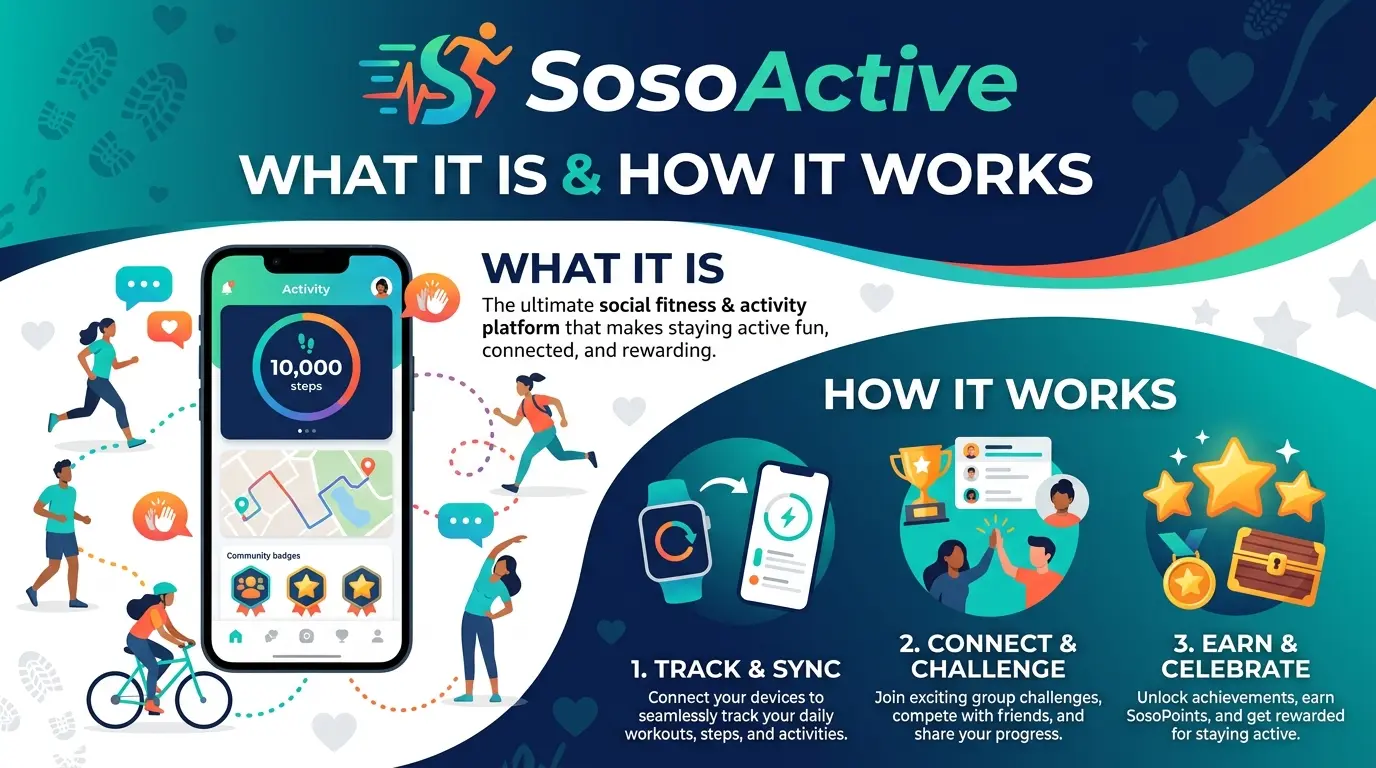
SosoActive is a name that can appear in searches related to digital media, online publishing, lifestyle content, and business-related websites. Because the name has been used across different online properties, it is important to look at the specific SosoActive website or platform being discussed rather than assuming they are all the same business.
For someone researching the term, understanding its online presence, content focus, and purpose is a useful starting point.
What Is SosoActive?
SosoActive is an online name associated with digital content and web publishing. Depending on the website or context, the term may refer to a publication, content platform, or website offering information across several categories.
This is why a search for SosoActive can produce different types of results. The exact domain matters when trying to determine what a particular SosoActive website does.
What Type of Content Can You Find?
SosoActive-related websites can cover a broad range of subjects rather than focusing on a single narrow topic.
Common areas associated with the name include:
- Lifestyle
- Business
- Technology
- Marketing
- Fashion
- Entertainment
- Online trends
- General informational content
The mix of categories can change over time as a website develops its editorial direction.
Why Does SosoActive Appear in Online Searches?
Names such as SosoActive can appear in search results for several reasons. A website may publish new articles regularly, target different informational topics, or build visibility through references from other websites.
Search visibility also depends on factors such as content quality, technical SEO, website structure, backlinks, and how closely individual pages match what people are searching for.
For this reason, simply finding a website in Google does not automatically indicate its overall authority or credibility.
SosoActive and Digital Publishing
The broader SosoActive name is particularly interesting from a digital publishing perspective because online publications can use multiple categories to attract readers with different interests.
A well-organized publishing website typically benefits from:
- Clear categories
- Useful original content
- Consistent publishing
- Descriptive page titles
- Easy navigation
- Strong internal linking
- A clear editorial purpose
These fundamentals can help a site build a stronger organic search presence over time.
Is SosoActive a Single Website?
Not necessarily.
One of the most important things to remember when researching SosoActive is that the name can be associated with different online properties. A domain such as SosoActive.com should not automatically be treated as identical to another website using the SosoActive name.
Checking the exact domain, current content, About page, authorship, and website history can help avoid confusion.
How to Research SosoActive
If you are evaluating a SosoActive website for business, publishing, or SEO purposes, start with the basics.
1. Check the Exact Domain
The domain is the first thing to verify. Similar names can belong to completely different websites.
2. Review Recent Content
Look at the latest articles and identify which topics the website is actually publishing.
3. Examine Website Categories
Categories can reveal whether the site has a focused editorial direction or covers many unrelated subjects.
4. Check Authors and About Information
Author pages and About sections can provide useful context about who operates the website and how it presents itself.
5. Look at Its Search Presence
Search the domain and individual article titles to see how consistently the website appears in search results.
Final Thoughts
SosoActive is an online name that can refer to different digital properties, making the exact website important when researching the term. Rather than judging the name alone, look at the domain, content, categories, authorship, and overall website activity.
For SEO or publishing research, this approach provides a more accurate picture than relying on the name or search ranking alone.
-

 BLOG1 year ago
hanime1: The Ultimate Destination for Anime Lovers
-

 Technology1 year ago
GLAADVoice.com: How You Can Get Involved and Make a Difference
-

 BLOG1 year ago
Imginn: The Ultimate Tool to View Instagram Content Anonymously
-

 BILLS1 year ago
Why Does My Instagram Reel Stop Getting Views After One Hour? How to Fix It?
-

 ENTERTAINMENT1 year ago
Crackstreams 2.0: The Future of Free Sports Streaming?
-

 BLOG1 year ago
ThisVid: What Makes It Stand Out in the World of Online Videos
-

 ENTERTAINMENT1 year ago
Sflix: How It’s Changing the Way We Watch Movies and TV Shows
-

 BLOG1 year ago
NHentai.nef: Understanding the Popular Hentai Archive