
BLOG
Cleaning After a Pest Infestation: Why Extermination Is Only the Beginning


The call to the exterminator is usually the most stressful part of discovering a pest problem, and it makes sense that people feel relief when the treatment is done and the pests are gone. What often gets less attention is what happens afterward, specifically the cleaning that needs to occur before a home is genuinely safe and sanitary rather than just pest-free in the immediate sense.
Pest infestations leave behind a range of residues and contaminants that the extermination process doesn’t address. Understanding what needs to be cleaned, why it matters, and how to approach it properly makes the difference between a home that’s been treated and one that’s been fully restored to a safe living condition.
CJS Cleaning Solutions handles post-infestation cleaning as a specific service because the scope of what needs attention after certain pest problems goes well beyond what a standard cleaning visit covers, and because the health implications of leaving some of these residues unaddressed are real enough to warrant taking the process seriously.
What Pest Infestations Leave Behind
Different pests create different contamination profiles, but most leave behind some combination of droppings, shed skin casings, nesting materials, deceased pest bodies, saliva, and in some cases urine, all in the areas where they’ve been active. The extermination process eliminates the living pests but doesn’t remove any of this biological material.
Rodent infestations are among the most significant from a post-treatment cleaning perspective. Mouse and rat droppings carry multiple pathogens, including hantavirus, which can be transmitted through disturbed dry droppings that become airborne during cleaning if the process isn’t handled correctly. The areas where rodents were active, including inside wall cavities accessible through gaps, under appliances, inside cabinets, and anywhere else they nested or traveled, all need thorough cleaning and disinfection.
Cockroach infestations leave shed exoskeletons, droppings, and saliva that are documented allergen sources, particularly for children, and that accumulate in the areas cockroaches frequented, including behind appliances, inside cabinet hinges and corners, and beneath sinks.
Why the Pesticide Itself Requires Attention
Pest control treatments involve chemicals applied throughout the affected areas of a home, and while these products are selected for human safety when used correctly, surfaces treated with pesticides aren’t necessarily food-safe or appropriate for direct contact until properly cleaned.
Kitchen surfaces, food preparation areas, and anywhere children or pets have direct contact deserve thorough cleaning after any pesticide treatment, following the specific guidance provided by the pest control company regarding timing and appropriate cleaning products for treated surfaces.
The Nesting Area Problem
Mice and rats in particular create nests that concentrate biological material in a small area: droppings, urine, shed fur, nesting debris, and deceased individuals. These concentrated areas carry the highest contamination levels in an infested home and need to be addressed with specific protective measures including respiratory protection and appropriate disposal methods.
For most homeowners, the recommendation to use gloves and respirator protection before disturbing rodent nesting material feels excessive until they understand what the actual health risk is. Dry rodent droppings that become airborne during cleaning carry pathogen risk that the cleanup process itself can create if it’s not approached correctly.
Secondary Areas That Get Missed
Pest travel routes often go through areas that aren’t obvious, including inside walls, through HVAC ductwork, and along pipe runs inside cabinet undersides. These areas accumulate contamination along routes that standard post-treatment cleaning doesn’t typically reach.
Cleaning the visible evidence of a pest infestation while leaving contamination in the travel routes and entry points these pests used creates a situation where the home still carries elevated biological contaminants even after visible evidence has been addressed.
Odor Removal After Infestation
Rodent infestations in particular create persistent odors from urine that soaked into flooring, walls, or insulation in affected areas. Surface cleaning removes the immediate source but odors embedded in porous materials like wood, drywall, and carpet require more targeted odor treatment than standard cleaning provides.
Enzyme-based odor treatment products that break down the organic compounds responsible for the smell rather than masking them are necessary for materials that absorbed significant contamination. These need sufficient dwell time to be effective, and the process is different from standard odor-masking approaches.
Setting Up Prevention as Part of the Process
Post-infestation cleaning creates an opportunity to address the conditions that attracted or enabled the infestation in the first place. Cleaning the areas where food debris accumulated, sealing entry points identified during the extermination process, and organizing storage areas that provided hiding or nesting opportunities all reduce the likelihood of recurrence in a way that cleaning alone doesn’t.
For CJS Cleaning Solutions clients recovering from pest issues, the post-infestation clean is approached with this prevention angle in mind, addressing not just the contamination left behind but the conditions that could allow the same problem to develop again if left unchanged.

A relationship across borders can begin with an ordinary surprise. A joke needs explaining, a familiar meal has another name, or a weekend routine turns out to be new. Curiosity grows when neither person treats difference as a mistake.
People searching for ukrainian brides may meet someone shaped by another language and social environment. Lasting interest depends on learning the person behind that background.
The Growing Popularity of Cross-Cultural Relationships
Travel, migration, remote work, and digital dating have widened the places where relationships begin. A social circle is no longer limited to one city, and compatibility can be explored before either person books a journey.
International couples still need time to discover whether attraction can support a practical life.
How International Dating Introduces New Perspectives
A partner from another culture may question habits that once seemed universal. Views on leisure, career, friendships, food, or privacy can suddenly become subjects worth discussing.
Learning why someone makes a choice is more revealing than collecting facts about their country.
Creating Connections Despite Cultural Differences
Good intentions help, but curiosity needs practical form. Questions should invite personal answers instead of asking one person to speak for an entire nation.
Several approaches make early conversations more useful:
- ask how a custom works in the other person’s family;
- explain preferences without calling them normal or correct;
- notice which differences affect important decisions;
- allow experience to replace initial assumptions.
Two people from the same country can disagree sharply, while partners raised far apart may share the priorities that matter most.
Effective Communication in Cross-Cultural Relationships
International communication requires extra patience. A fluent speaker may still miss an idiom, irony, or emotional shade. Even words such as “soon” or “serious” can carry different expectations.
Asking what someone meant is often more helpful than silently correcting their English.
Overcoming Language and Communication Challenges
Text allows time to translate and think. Voice reveals pace and warmth, while video adds expression and immediate reaction. Moving between these formats helps couples check whether the intended meaning arrived.
Automatic translation supports basic understanding, but humour and cultural references may need explanation. The person using a second language should not carry the whole burden.
Respecting Cultural Traditions and Core Values
Respect begins with learning which practices have personal importance and which are simply familiar habits.
Before making long-term plans, couples should compare several areas:
- the role of relatives in major decisions;
- expectations around work, money, and independence;
- attitudes towards marriage and children;
- traditions each person hopes to preserve.
Some differences can be combined or alternated. Others may reveal a genuine incompatibility that affection cannot solve.
The Benefits and Challenges of International Dating
Cross-cultural relationships can bring new language, experiences, friendships, and approaches to familiar problems. They may also involve distance, travel costs, time zones, paperwork, and difficult adjustments.
Reciprocity matters. If only one person translates, travels, or adapts, fascination can turn into resentment. Shared effort makes diversity part of life rather than a permanent test.
Maintaining Strong Long-Distance and Cross-Border Relationships
Ukraine Brides Agency, launched in 2009, offers profile search, messaging, automatic text translation, and audio and video chat. The company manually reviews profiles, provides 24/7 support, and assists with travel and personal meeting arrangements. These tools can help members progress from written contact to a planned meeting.
The agency’s Terms do not guarantee that every member is genuine or that a connection will succeed. Users should protect personal and financial information, report suspicious conduct, and let trust develop through consistent behaviour.
Distance becomes more manageable when a couple agrees on a realistic contact rhythm and works towards the next meeting. The strongest plan is one both people can follow, not one that sounds romantic for a single evening.

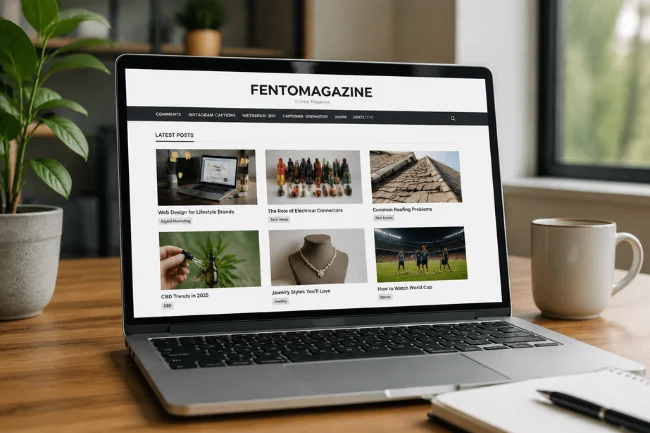
In today’s digital world, a strong caption can make a simple post far more engaging. Whether you are sharing a travel photo, promoting a product, or posting a personal update, the right words matter. Fentomagazine.com is presented as a caption generator tool designed to simplify that creative process.
Coming up with original captions can take more time than creating the content itself. Users often stare at an empty text box, searching for the perfect phrase. A caption generator can remove that frustration by providing ideas that match different moods, topics, and social media styles.
The appeal of Fentomagazine.com lies in this simple idea: make caption creation faster while giving users inspiration they can adapt to their own voice.
What Is Fentomagazine.com?
Fentomagazine.com can be understood as a digital caption-generation concept focused on helping users develop short-form social content. Instead of spending several minutes thinking about what to write, users can use generated suggestions as starting points.
A useful caption tool should do more than produce random sentences. It should help people find wording that fits the purpose of their post. For example, a professional business update requires a different tone from a funny Instagram picture.
This makes flexibility an important part of any modern caption generator.
How Fentomagazine.com Caption Generation Works
The basic concept behind Fentomagazine.com is straightforward. A user provides information about the post or selects a preferred style. The system then generates caption ideas based on those inputs.
Depending on the tool’s available options, users may look for captions related to:
- Instagram posts
- Travel photography
- Fashion content
- Food and lifestyle posts
- Business promotions
- Motivational messages
- Funny social updates
- Personal photographs
- Special occasions
The generated suggestions can then be reviewed, edited, and personalized before publication.
This approach changes caption writing from a blank-page task into a creative editing process.
Why Fentomagazine.com Can Be Useful
Writing captions consistently can become difficult for creators who publish content every day. Even when the visual content is strong, repetitive captions can make a social feed feel predictable.
Fentomagazine.com offers a potential solution by helping users generate fresh ideas when inspiration is limited.
1. Saves Creative Time
One of the biggest advantages of a caption generator is speed. Instead of developing every caption from scratch, creators can begin with several suggestions.
This is particularly useful for social media managers handling multiple accounts.
2. Provides Fresh Ideas
Sometimes the hardest part of writing is finding the first sentence. Generated captions can provide a starting point and help users explore different approaches.
Even when the final caption is heavily edited, the original suggestion can spark a better idea.
3. Supports Different Writing Styles
Social content does not always need to sound formal. Depending on the audience, a caption might need to be witty, emotional, inspirational, casual, or promotional.
A flexible generator can help users experiment with different tones without repeatedly starting from zero.
4. Helps Maintain Posting Consistency
Regular publishing is important for many creators and businesses. However, producing fresh copy for every post can become exhausting.
Caption-generation tools can make the process more manageable by reducing the amount of time spent on routine writing.
Fentomagazine.com for Social Media Creators
Social media creators constantly balance photography, video production, editing, audience engagement, and publishing schedules. Captions may appear small, but they contribute to the overall presentation of a post.
For creators, Fentomagazine.com can serve as an idea-generation resource. A creator could generate several options and then select the one that best matches the personality of the content.
The key is not to treat generated text as a final answer every time. Personal editing can make a caption feel more natural and authentic.
Fentomagazine.com and Business Marketing
Caption generators are not limited to individual users. Small businesses can also benefit from faster social media copy creation.
A business might need captions for product announcements, seasonal promotions, customer stories, behind-the-scenes content, or educational posts. Creating each caption manually can consume valuable marketing time.
With Fentomagazine.com, generated ideas could help marketers develop social copy more efficiently. Businesses can then adjust the wording to match their brand identity and communication guidelines.
This combination of automation and human editing can create a more efficient workflow.
Choosing the Right Caption Style
A caption is most effective when it matches the content. A humorous line may work perfectly for a casual photograph but feel inappropriate for a corporate announcement.
Before generating or selecting a caption, users should consider three questions:
- Who is the audience?
- What is the purpose of the post?
- What emotion should the caption create?
These questions help narrow down the right tone.
For example, an inspirational post might benefit from concise and positive language. A product post may need clearer wording and a direct call to action.
Fentomagazine.com and Content Personalization
Automation is useful, but personalization remains important. A generated caption can provide structure, yet the creator understands the context behind the photograph or message.
Users can improve generated suggestions by adding:
- Personal experiences
- Brand-specific terminology
- Relevant keywords
- Audience references
- Calls to action
- Appropriate emojis
- A recognizable brand voice
These small adjustments can turn a generic suggestion into something more authentic.
Benefits of Using a Caption Generator
The broader value of tools like Fentomagazine.com comes from reducing repetitive creative work.
Some notable benefits include:
- Faster caption development
- More writing inspiration
- Easier content planning
- Greater variety in social posts
- Support for different tones
- Reduced creative fatigue
- Better publishing consistency
However, users should still review generated content carefully. Accuracy, tone, originality, and relevance matter when publishing publicly.
Limitations to Consider
Caption generators are helpful, but they are not a replacement for human creativity.
Automatically generated text can sometimes sound generic or fail to capture the personality behind a post. It may also require editing to remove unnecessary phrases or make the wording more natural.
For businesses, another consideration is brand consistency. Generated captions should always be checked against established brand guidelines.
The best results usually come from combining automated suggestions with human judgment.
Fentomagazine.com: The Future of Faster Caption Writing
As social media continues to evolve, creators need efficient ways to produce quality content. Caption generators represent one part of a larger movement toward AI-assisted and automated content creation.
Fentomagazine.com fits into this broader concept by focusing on one of the smallest yet most important elements of social publishing: the caption.
The technology behind digital writing tools will continue to improve. Future platforms may offer deeper personalization, stronger tone controls, multilingual support, platform-specific recommendations, and more context-aware suggestions.
For users, that could mean spending less time searching for words and more time developing meaningful content.
Final Thoughts
Fentomagazine.com represents the growing demand for simple tools that make digital content creation easier. Caption writing may seem straightforward, but producing fresh and engaging copy repeatedly can be surprisingly challenging.
A caption generator can provide useful inspiration, save time, and help creators overcome writer’s block. However, the strongest results come when users treat generated captions as creative starting points rather than unquestionable final drafts.
In an increasingly competitive social media environment, combining automation with genuine human personality can make content more memorable. For creators, marketers, and everyday users, that balance may be the real value behind modern caption-generation tools.

The French language is filled with verb forms that look unusual until their grammatical purpose becomes clear. Litasse is one such form. At first glance, it may seem unfamiliar, misspelled, or disconnected from everyday French. However, it has a legitimate place within French conjugation and belongs to a literary grammatical structure that many modern learners rarely encounter.
Understanding litasse requires more than translating a single word. Its meaning depends on the verb it comes from, the tense being used, and the sentence surrounding it. Once these elements are understood, the form becomes much easier to recognize.
What Does Litasse Mean?
Litasse is a conjugated form of the French verb lire, which means “to read.” More specifically, it belongs to the imparfait du subjonctif, or imperfect subjunctive.
The form is associated with the third-person singular.
In a literary or historical context, a sentence containing this form could express an action that was viewed through a past perspective involving uncertainty, emotion, necessity, judgment, or another subjunctive-triggering idea.
In modern conversational French, however, this construction is extremely uncommon. French speakers generally use the présent du subjonctif or restructure the sentence instead.
Litasse and the Verb Lire
To understand this form properly, it helps to look at its root verb.
The French verb lire means “to read” and is one of the most important irregular verbs in the language. It appears frequently in everyday situations involving books, messages, documents, newspapers, and digital content.
Common forms include:
- je lis — I read / I am reading
- tu lis — you read
- il lit — he reads
- nous lisons — we read
- vous lisez — you read
- ils lisent — they read
The past participle is lu, as in j’ai lu, meaning “I read” or “I have read.”
The unusual nature of litasse comes from combining the irregular verb lire with an older subjunctive tense.
Litasse as an Imperfect Subjunctive Form
The imparfait du subjonctif was traditionally used in subordinate clauses when the main clause was expressed in a past tense and required the subjunctive mood.
This grammatical system was particularly common in formal French literature.
For lire, the imperfect subjunctive forms included:
- que je lusse
- que tu lusses
- qu’il/elle lût
- que nous lussions
- que vous lussiez
- qu’ils/elles lussent
This is an important distinction because litasse does not belong to the standard conjugation of lire.
If you encounter the exact spelling litasse, it should therefore be examined in context rather than automatically treated as the imperfect subjunctive of lire.
Why Litasse Can Cause Confusion
French conjugation contains several historical forms that are rarely taught outside advanced grammar or literary studies. That creates an environment where unfamiliar words can easily be misunderstood.
A reader might assume that litasse is related to lire because of the opening letters. Yet the established imperfect subjunctive form is built from lû-, not lit-.
This distinction matters when researching French vocabulary online. Search engines, scanned historical texts, OCR errors, informal writing, and typing mistakes can all produce forms that resemble legitimate conjugations.
Consequently, context is essential.
Litasse in Historical French
Older French writing frequently used grammatical structures that feel formal or even archaic today. Authors employed the imperfect and pluperfect subjunctive to maintain agreement between the tense of the main clause and the subordinate clause.
For example, literary French could contain constructions that modern speakers would normally express using a present subjunctive.
The older system gave written French a distinctive rhythm. It also allowed writers to create carefully structured sentences with subtle differences in chronology and tone.
As French evolved, many of these forms gradually disappeared from everyday communication.
The Decline of the Literary Subjunctive
The decline of older subjunctive forms reflects a broader change in the French language.
Modern French has simplified many structures that were once considered necessary for formal expression. The imperfect subjunctive still exists in grammatical references, but most speakers rarely use it spontaneously.
Instead, contemporary French generally favors simpler constructions.
For learners, this means recognizing an old form can be more important than learning to produce it.
Someone reading a nineteenth-century novel, for instance, may encounter verb forms that never appear in ordinary conversations, news reports, or social media posts.
How Modern French Handles Similar Ideas
Modern French normally uses the present subjunctive in situations where older French might have selected the imperfect subjunctive.
For example, rather than focusing on an older literary structure, contemporary speakers tend to choose forms that are immediately understandable to modern audiences.
This development is not unique to French. Languages naturally change as speakers prioritize efficiency, familiarity, and ease of communication.
Grammar does not remain frozen. Forms that were once common can become specialized, formal, humorous, or completely obsolete.
Litasse and French Language Research
When researching an unfamiliar French word, it is useful to investigate several factors before assigning it a meaning.
First, identify the likely root verb. Then determine whether the form follows an established conjugation pattern.
Next, examine the surrounding sentence. A word’s grammatical role can reveal whether it functions as a verb, noun, adjective, or something else.
Finally, compare the spelling with reputable French dictionaries and conjugation references.
This approach is especially valuable for uncommon terms because a single letter can completely change a conjugation.
Is Litasse Used in Everyday French?
The short answer is no, not as a standard everyday form of lire.
Modern French speakers use familiar forms such as lit, lisait, lira, liraient, and lise depending on the tense and mood required.
The imperfect subjunctive itself is primarily associated with formal literary writing, historical texts, academic discussion, and stylistic imitation.
Therefore, someone learning French should not normally prioritize litasse for everyday communication.
Understanding the broader grammatical system is much more useful.
Why Unusual French Forms Still Matter
Rare grammatical forms provide an interesting window into the history of a language.
They show how French writers once handled tense, mood, sequence, and emphasis. They also explain why older literature can sometimes appear difficult even to fluent modern speakers.
Studying these forms can improve reading comprehension without requiring learners to use them actively.
For advanced students, recognizing archaic grammar can make French novels, essays, historical documents, and classical literature considerably easier to understand.
Final Thoughts on Litasse
Litasse presents an interesting lesson in the complexity of French grammar. Although it may appear to be a conjugated form of lire, the standard imperfect subjunctive forms of that verb use the luss- stem.
That makes context particularly important when the word appears in a text.
The larger lesson is equally valuable: unfamiliar words should not always be interpreted from appearance alone. French has developed through centuries of linguistic change, leaving behind literary forms, regional variations, historical spellings, and occasional textual anomalies.
For modern learners, the best approach is to understand where a form fits within the language before attempting to use it. In the case of litasse, that means distinguishing it from the established conjugations of lire and recognizing the important role that context plays in French language research.
-

 BLOG12 months ago
hanime1: The Ultimate Destination for Anime Lovers
-

 ENTERTAINMENT1 year ago
Sflix: How It’s Changing the Way We Watch Movies and TV Shows
-

 BILLS1 year ago
Why Does My Instagram Reel Stop Getting Views After One Hour? How to Fix It?
-

 BLOG1 year ago
Imginn: The Ultimate Tool to View Instagram Content Anonymously
-

 ENTERTAINMENT1 year ago
Crackstreams 2.0: The Future of Free Sports Streaming?
-

 BLOG1 year ago
NHentai.nef: Understanding the Popular Hentai Archive
-

 BLOG12 months ago
ThisVid: What Makes It Stand Out in the World of Online Videos
-

 Technology1 year ago
Simpcitt: The Rise of a Unique Online Community