
BLOG
Precision CNC Machining Solutions for OEM Manufacturing | Quality, Cost & Delivery

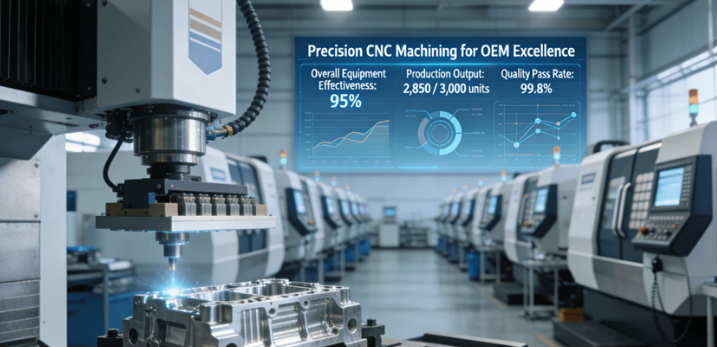
In the competitive landscape of modern manufacturing, Original Equipment Manufacturers (OEMs) grapple with persistent challenges in mass-producing precision components. Common pain points include inconsistent part accuracy, escalating production costs, and delayed delivery schedules, all of which directly undermine production line efficiency and market competitiveness. The root cause often lies in traditional manufacturing methods, which lack advanced process optimization and automation, leading to inefficient machining, significant quality fluctuations, and opaque supply chain management. This makes it difficult to meet the stringent demands of modern industry for precision and timeliness.
This article delves into how the integration of high-precision CNC technology, material science optimization, and automated production lines systematically addresses these core OEM challenges, offering a triple guarantee of cost control, quality assurance, and on-time delivery. The following sections will explore five key dimensions where precision CNC machining creates tangible value for OEM manufacturers.
Why Does OEM Mass Production Require High-Precision CNC Machining Services?
OEM mass production places unique demands on part consistency, tolerance precision, and traceability. The success of an integrated final product hinges on the flawless replication of thousands, if not millions, of identical components. Traditional machining methods, reliant on manual operation and conventional equipment, struggle to guarantee this level of uniformity, often resulting in quality variances and bottlenecks.
The Limitations of Conventional Approaches
Conventional manufacturing processes lack the digital control and repeatability essential for modern high volume OEM CNC machining services. Reliance on manual setup, variable tool wear, and operator skill introduces significant production variables. These factors frequently result in higher scrap rates, necessary rework, and costly delays, ultimately failing to meet the stringent, consistent quality standards demanded for seamless assembly-line integration.
The Paradigm Shift to Digital Precision Manufacturing
Precision CNC Machining represents a fundamental revolution in production methodology. It replaces human-dependent processes with unwavering digital program control, executed by a proficient CNC machining parts manufacturer.
Digital Program Control as the Foundation
This technology is anchored in translating digital design specifications directly into precise machine tool paths. This creates a seamless digital thread from design to finished part, eliminating the inconsistencies inherent in manual operations.
Achieving Microscopic Tolerances and Perfect Consistency
The core outcome of this digital control is the ability to produce every component—from the first prototype to the ten-thousandth production piece—with identical accuracy. This process reliably achieves the microscopic tolerances and perfect batch-to-batch consistency required for successful OEM parts machining.
The Imperative for Technological Advancement
Industry trends underscore this necessity. Reports from the Society of Manufacturing Engineers (SME) highlight that digital transformation is making precision manufacturing the standard. For OEMs, partnering with a provider of high precision CNC machining services is no longer optional but a strategic imperative for supply chain resilience. This technological upgrade is crucial for mitigating risk and guaranteeing the successful fulfillment of large-volume orders.
Aluminum vs. Titanium for OEM Parts: How to Choose?
Material selection in Custom Parts Manufacturing is a critical decision impacting performance, lifecycle cost, and application suitability. Aluminum and titanium alloys are two heavyweight contenders in the OEM space, each with distinct advantages.
Aluminum alloys are celebrated for their excellent strength-to-weight ratio, good machinability, and cost-effectiveness, making them ideal for lightweight and budget-conscious applications like automotive frames and consumer electronics enclosures. Titanium alloys boast superior specific strength, exceptional corrosion resistance, biocompatibility, and higher thermal limits. However, these benefits come with significantly higher raw material costs and greater machining difficulty.
In aerospace, where strength, fatigue resistance, and performance under extreme temperatures are paramount, titanium is the material of choice for engine components and airframe parts. In medical devices, its biocompatibility makes it indispensable for implants. The decision in the aluminum vs titanium for OEM parts debate should be guided by application-specific requirements and standards, such as those from ASTM International. For many projects balancing performance with total cost, high-strength aluminum series (e.g., 6061, 7075) often present a more economical solution without compromising integrity.
How Do Automated Production Lines Enhance Efficiency in OEM Batch Processing?
For orders spanning tens of thousands of units, simply speeding up individual part cycle times reaches a physical limit. The true leap in efficiency comes from holistic workflow optimization through Automated Production Lines.
Automation in CNC machining for OEMs manifests in several key areas. Robotic loading/unloading systems enable 24/7 operation, moving workpieces in and out of machining centers with unwavering precision, drastically increasing equipment utilization (uptime) by eliminating downtime for shift changes or breaks. In-process inspection systems provide real-time monitoring of critical dimensions, allowing for immediate corrections and shifting quality control from a “post-process” checkpoint to an “in-process” assurance, significantly reducing the risk of batch rejection.
Furthermore, smart production scheduling systems (MES/APS) synthesize order deadlines, material inventory, and machine status to generate optimal production plans, maximizing overall factory throughput. Implemented holistically, automation can deliver measurable gains, such as a 30% increase in capacity and a 25% reduction in labor costs. Most importantly, the stability and predictability introduced by automation are fundamental to ensuring the on-time delivery of large batch orders, giving OEMs greater control over their supply chain.
How to Evaluate a CNC Machining Supplier’s Technical and Quality Systems?
Selecting a competent CNC machining parts factory is a decisive factor for OEM project success. A robust evaluation framework should encompass four pillars: technical capability, material expertise, quality certifications, and process control.
Evaluating Foundational Technical Capabilities
A comprehensive evaluation of a CNC machining parts factory begins with its core technical capabilities. The ability to produce complex OEM machined parts reliably hinges on advanced equipment and deep material expertise, forming the foundation for manufacturing excellence.
The Critical Equipment Matrix
The supplier’s equipment portfolio is paramount. The presence of advanced machinery, such as 5-axis machining centers and mill-turn systems, is essential. This technology enables the complete machining of intricate components in a single setup, ensuring superior accuracy and efficiency for complex production runs.
Depth of Material Processing Knowledge
Equally critical is the supplier’s mastered material database. True capability is demonstrated by a proven track record in processing a wide spectrum of alloys. Experience ranging from common stainless steels to challenging high-temperature super alloys reflects a depth of practical knowledge crucial for selecting optimal parameters and ensuring part integrity.
The Framework of Quality and Certification
Formal credentials provide the essential framework for trust and compliance. Industry-specific certifications are a testament to a supplier’s systemic commitment to quality, not merely optional accolades.
Credentials like IATF 16949 for automotive or AS9100D for aerospace serve as validated evidence. They confirm that the supplier has implemented a rigorous quality management system that meets the exacting standards of these sectors. For many OEMs, these certifications are a non-negotiable requirement for partnership, ensuring processes are controlled, consistent, and auditable.
Process Control and Continuous Improvement
Robust Quality Control Systems: A true partner employs Statistical Process Control (SPC) to monitor the stability of key dimensions and Failure Mode and Effects Analysis (FMEA) for proactive risk mitigation. A stringent First Article Inspection (FAI) process and full traceability from raw material to finished part are essential. For OEMs seeking a strategic partnership, understanding a supplier’s methodology and quality philosophy, as detailed in resources like this guide on oem CNC machining, is critical for long-term success.
How Do Additive and Traditional CNC Machining Technologies Collaborate?
Additive Manufacturing (AM), including 3D printing, is not a replacement for traditional subtractive CNC Machining For OEMs but a powerful complementary technology, together enabling a more agile and capable manufacturing ecosystem.
The strengths of AM and CNC are highly complementary. AM excels at rapidly producing parts with complex internal geometries, lattices, and organic shapes that are difficult or impossible to achieve with CNC alone. CNC machining, conversely, remains unmatched for achieving tight dimensional accuracy, superior surface finishes, and high-volume production efficiency. Their synergy unlocks “design freedom.” A prime example is in tooling: using metal 3D printing to create conformal cooling channels inside a mold insert, followed by CNC finishing of the cavity, dramatically improves cooling efficiency and final part quality.
This collaborative model is particularly advantageous for low-volume, highly customized OEM components or rapid new product iteration. It allows engineers to design lighter, stronger, and more functionally integrated parts. A prototype can be 3D printed for form and fit verification, followed by CNC machining for low-volume production or precision finishing of critical features. Looking ahead, integrated “hybrid manufacturing” systems that combine both processes will be central to the future digital manufacturing ecosystem, offering OEMs a complete, high-value solution from concept to production.
Conclusion
Precision CNC machining provides a systematic solution for OEM manufacturers, effectively addressing the core challenges of quality consistency, total cost, and delivery reliability through continuous technological advancement, scientific material optimization, and deep integration with automation and additive technologies. In today’s globalized market, choosing a partner with an advanced equipment portfolio, a mature quality system, authoritative industry certifications, and a forward-looking embrace of technological convergence is a key strategic move for achieving manufacturing excellence.
If you are seeking a reliable precision manufacturing solution for your next OEM project, contact JS Precision today for a customized technical assessment and quote. Let our expertise help you optimize your production process, control costs, and ensure on-time delivery.
Author Biography
This article was authored by a manufacturing technology expert with over 15 years of experience in precision machining and OEM collaboration, specializing in providing process optimization and supply chain solutions for global manufacturers.
FAQ
Q1: What is OEM CNC machining?
A1: OEM CNC machining refers to the service of mass-producing precision parts via computer numerical control for Original Equipment Manufacturers. It emphasizes part-to-part consistency, high dimensional accuracy, and full production traceability to meet direct integration requirements in final products.
Q2: Aluminum or titanium alloy: which is more suitable for automotive components?
A2: Aluminum alloys, due to their favorable lightweight properties and lower cost, are widely used for body structures and wheels. Titanium alloys are reserved for high-performance engine components like connecting rods or valves. The choice requires a comprehensive evaluation of the required strength, heat resistance, and project budget.
Q3: How to ensure quality consistency in high-volume CNC machining?
A3: Consistency is ensured through rigorous process control. This includes using Statistical Process Control (SPC) to monitor key dimension stability, employing automated inspection equipment for full or high-frequency sampling, and enforcing a strict First Article Inspection (FAI) process to validate that all parts meet design specifications.
Q4: Will additive manufacturing replace traditional CNC machining?
A4: No, they are complementary. Additive manufacturing excels at creating complex geometries and prototypes, while CNC machining is superior for high-precision, high-surface-finish, and high-volume production. Together, they enhance overall manufacturing flexibility and capability.
Q5: What certifications should I focus on most when selecting a CNC supplier?
A5: Prioritize certifications specific to your industry. For automotive, focus on IATF 16949; for aerospace, AS9100D; for medical, ISO 13485. These certifications prove the supplier not only has a quality management system but also understands the particular regulations and requirements of your sector.


Erectn is an unusual term that can attract attention because of its unfamiliar spelling and the questions it creates for people searching online. When users encounter a word like Erectn, they may wonder whether it is a name, abbreviation, typo, username, brand, or a variation of a more familiar expression. In today’s search-driven world, even a short and seemingly incomplete term can become a recognizable online query.
The internet has changed the way people interact with language. Search engines process billions of queries, including carefully written questions, accidental misspellings, shortened words, and unfamiliar combinations of letters. This makes terms such as Erectn interesting from both a linguistic and digital perspective.
What Does Erectn Mean?
Erectn does not immediately resemble a standard English word, which makes its interpretation dependent on context. A person encountering the term without additional information may not know what it represents. That uncertainty is precisely what can encourage further searches.
Some unusual search terms originate from typing mistakes. Others may be shortened versions of longer words or names. In some cases, a sequence of letters can become associated with a website, account, product, online profile, or other digital reference.
For that reason, it is important not to assign a definite meaning to an unfamiliar term without supporting context. The meaning of Erectn may vary depending on where it appears and how people use it.
Why Erectn Appears in Online Searches
Search behavior is not always predictable. People frequently enter words exactly as they see them, even when the spelling seems unusual. A term can therefore develop its own search presence simply because multiple users encounter it and want to learn more.
Erectn and Search Intent
Search intent describes the reason behind a person’s query. Someone searching for an unfamiliar term could be looking for a definition, a person, a website, an account, or an explanation of where the word originated.
Understanding this intent is especially useful for unusual keywords. Unlike broad commercial terms, obscure queries often represent curiosity. The searcher may simply want to understand what they have encountered.
Erectn as an Unfamiliar Digital Term
Digital environments produce new terminology constantly. Usernames, domain names, abbreviations, autogenerated labels, and shortened expressions can all create combinations that were not commonly used before.
An unfamiliar term does not necessarily need a traditional dictionary definition to become searchable. Once it appears on a webpage or digital platform, search engines can index it, and users can begin searching for it.
The Role of Spelling in Search
Spelling has always influenced communication, but its importance becomes even more visible online. A single missing letter can transform a familiar word into something that looks entirely different.
Search engines have become increasingly capable of understanding likely spelling variations. When someone enters an unusual query, a search engine may recognize a possible intended word and provide related results. However, the original spelling can still remain important because users may continue searching for exactly what they encountered.
This creates an interesting relationship between language and technology. A spelling variation can exist independently as a search query even when it does not have an established dictionary meaning.
How People Discover Terms Like Erectn
There are many ways an unusual word can reach an audience. Someone might see it on a social media profile, encounter it in a comment, notice it in a URL, or find it within an online document.
Social Media and Online Profiles
Social platforms contain millions of usernames and profile identifiers. These names are often created from personal preferences, abbreviations, random combinations, or variations of existing words.
If a particular identifier is shared publicly, other users may search for it to find the associated profile or understand its origin. Over time, repeated searches can give an otherwise obscure term greater visibility.
Websites and Digital Content
Websites are another major source of unfamiliar terminology. A word can appear in a page title, article, category, image description, or URL. Once indexed, that term can become discoverable through search engines.
This is one reason seemingly random keywords occasionally develop measurable search activity. Their visibility may come from a specific digital reference rather than from traditional language usage.
Erectn and the Evolution of Online Language
The internet has created an environment where language changes quickly. New words can emerge from communities, technology, entertainment, branding, and social media. At the same time, existing words can be shortened, modified, or combined to create new expressions.
Erectn represents the type of term that encourages people to think about how language works in a digital environment. Its value as a search query does not necessarily depend on having a conventional definition.
Search engines have effectively become part of modern language discovery. Instead of consulting only dictionaries, people now use search platforms to investigate words they have never encountered before.
Why Context Matters
Context is essential when researching an unfamiliar keyword. Looking at where a term appears can provide clues about what it represents.
For example, a word found next to a person’s name may be a username or identifier. If it appears on a website, it could relate to a page, service, category, or brand. If it appears in a sentence, it may simply be a spelling variation.
Erectn Requires Careful Interpretation
It is easy to make assumptions about an unusual word based only on how it looks. However, visual similarity does not always establish a relationship between two terms.
A responsible explanation should separate confirmed information from possibilities. When there is insufficient evidence, it is better to describe a term as uncertain rather than present an unsupported interpretation as fact.
This approach is particularly important for obscure keywords because a small amount of information can easily lead to inaccurate conclusions.
The SEO Value of Unusual Keywords
From an SEO perspective, unusual queries can be fascinating. Highly specific keywords may have less competition than broad topics, although their search volume can also be limited.
Content created around an obscure query should still provide genuine value. Simply repeating the keyword throughout a page does not create a useful article. Search engines increasingly focus on relevance, helpfulness, context, and the overall quality of content.
A strong article should explain the available information naturally while addressing the questions a reader is likely to have. Keyword placement matters, but readability should remain the priority.
Erectn in the Broader Search Landscape
The growing importance of search means that almost any recognizable sequence of characters can become an object of curiosity. People search for names, usernames, abbreviations, misspellings, phrases, and newly created expressions every day.
This makes unusual terms valuable examples of the relationship between human curiosity and digital technology. A person sees something unfamiliar, enters it into a search box, and expects technology to provide an explanation.
That process may seem simple, but it demonstrates how modern search behavior continuously shapes online language.
Conclusion
Erectn is an example of an unfamiliar term that raises questions about spelling, context, search behavior, and digital identity. Without reliable context, it would be difficult to attach one definitive meaning to the word. Its interest comes largely from the uncertainty surrounding its appearance and the reasons people may search for it.
As the internet continues to evolve, unusual terms will remain part of the digital landscape. Misspellings, abbreviations, usernames, and newly created expressions can all become searchable entities. Understanding these terms requires curiosity, context, and a willingness to distinguish verified information from speculation.
Ultimately, the story behind an unfamiliar keyword is not always about discovering a single definition. Sometimes, it is about understanding how people communicate, search, and create meaning in an increasingly digital world.
Frequently Asked Questions About Erectn
1. What is Erectn?
Erectn is an unfamiliar online term whose meaning depends on the context in which it appears.
2. Is Erectn a standard English word?
It does not appear to be a commonly recognized standard English word, so additional context is needed to determine its intended use.
3. Why might people search for Erectn?
People may search for it after seeing the term on a website, social media platform, profile, or another digital source.
4. Could Erectn be a spelling variation?
It could potentially be a spelling variation or shortened form, but its exact origin cannot be established without reliable context.
5. Can an unusual term become an SEO keyword?
Yes. Any term that people search for can potentially function as a search keyword, although its volume and competition may vary.
6. Why is context important when researching Erectn?
Context helps distinguish whether the term refers to a name, identifier, spelling variation, website, or another type of digital reference.
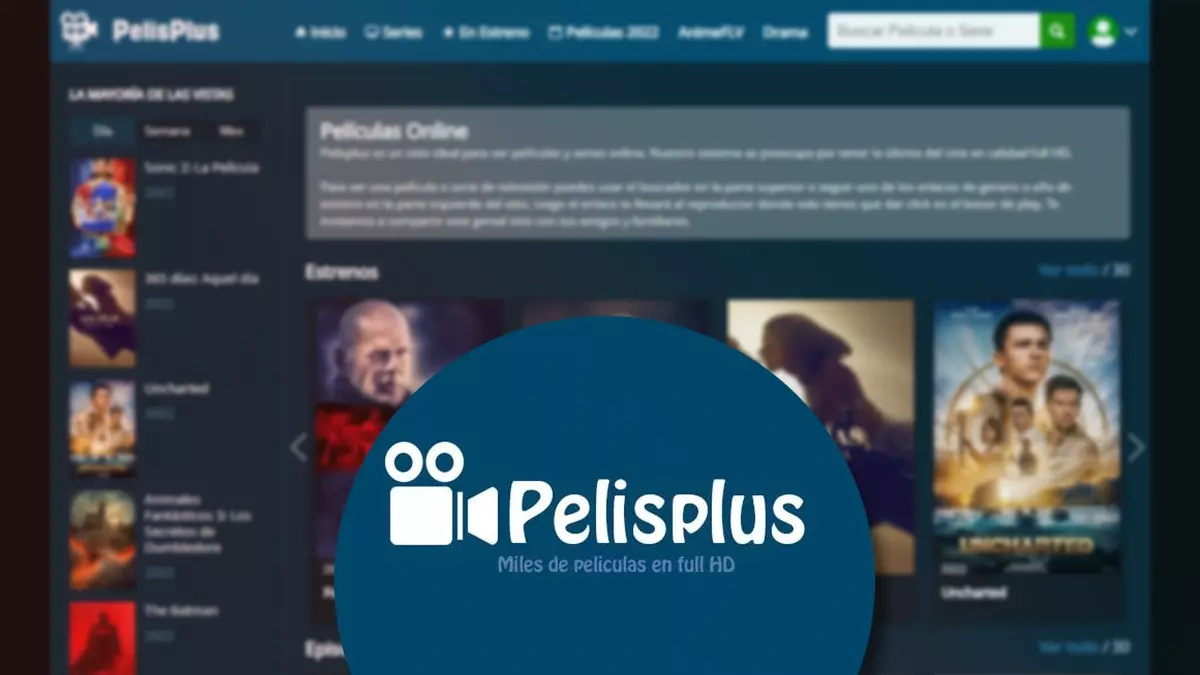
Pelisplus is a name that has become familiar within online movie culture, particularly among people who search the web for digital entertainment and Spanish-language film content. Like many internet-based entertainment names, it can attract attention because it is closely associated with the way modern audiences look for movies and television programs online. Understanding why the term appears in searches also provides a broader look at changing viewing habits, streaming expectations, and the growing role of search engines in entertainment discovery.
What Is Pelisplus?
Pelisplus is commonly associated online with movie and television content, especially Spanish-language searches. The name itself combines “pelis,” an informal Spanish shortening of “películas,” with “plus,” a word frequently used by digital brands to suggest additional content or expanded access.
That simple naming structure makes the term easy to remember. It also reflects a broader trend across the internet, where entertainment platforms often choose short, descriptive names that immediately communicate their connection to movies, series, or streaming.
However, a name appearing prominently in online searches does not automatically establish the legal status, ownership, or legitimacy of every website using that name. Internet users should always distinguish between a recognizable search term and a verified entertainment service.
Why Pelisplus Became an Online Search Term
The popularity of movie-related searches has changed considerably over the past decade. People no longer rely exclusively on television schedules, physical media, or cinema listings to decide what they want to watch. Search engines now play an important role in helping audiences identify movies, actors, genres, release information, and viewing options.
Pelisplus fits into this wider search behavior. Someone may encounter the term while looking for a particular film, exploring Spanish-language entertainment, or comparing different ways to watch a program.
Search behavior can also be influenced by social media, online recommendations, and word-of-mouth discussions. Once a name becomes familiar to a particular audience, people may continue searching for it even when the services or websites associated with that name change over time.
Pelisplus and Spanish-Language Entertainment
One of the most interesting aspects of Pelisplus is its connection with Spanish-language entertainment searches. Spanish-speaking audiences represent a large and diverse digital community spread across Latin America, Spain, the United States, and other parts of the world.
For these audiences, online entertainment is not limited to Hollywood productions. Spanish-language movies, television series, Mexican productions, Spanish dramas, Argentine films, and other regional content all contribute to a large international entertainment ecosystem.
This creates strong demand for websites, databases, streaming services, and search platforms that make Spanish-language content easier to discover. A name such as Pelisplus can therefore become recognizable because it appears within a much larger ecosystem of Spanish-language movie searches.
How Online Movie Culture Has Changed
To understand the interest surrounding Pelisplus, it helps to look at the evolution of online movie culture.
In the past, viewers often planned their entertainment around fixed television schedules. If a favorite movie was broadcast at a particular time, viewers had to be available then. Cable television expanded the number of available channels, but programming was still controlled by broadcasters.
Streaming introduced a different model.
Instead of waiting for a scheduled broadcast, viewers increasingly expect entertainment to be available whenever they want it. This shift has influenced everything from television production to movie marketing. Audiences now search for titles directly, read reviews, watch trailers, and decide what to view based on recommendations.
The result is an entertainment culture built around convenience and discovery rather than fixed schedules.
Pelisplus and the Search for Convenient Viewing
Convenience is one of the strongest forces shaping online entertainment. People want simple ways to discover content without spending excessive time navigating complicated menus.
Search engines have become an important part of that process. A user may type the name of a movie followed by words such as “watch,” “stream,” “online,” or “Spanish.” This behavior creates visibility for many entertainment-related names and websites.
Pelisplus is part of this broader search phenomenon. Its appearance in search results reflects the continued demand for straightforward movie discovery, particularly among users interested in Spanish-language content.
At the same time, convenience should not replace caution. Users should check whether a platform is authorized to distribute the content it offers and should be careful with unfamiliar websites, aggressive advertisements, suspicious downloads, and requests for unnecessary personal information.
Is Pelisplus an Official Streaming Platform?
The answer depends on the specific website or service being discussed. Internet names can be reused, copied, or associated with different domains over time. A familiar brand name alone is therefore not enough to confirm that a particular website is official or authorized.
This is an important distinction for anyone searching for online movies.
Legitimate streaming platforms generally provide information about their company, content licensing, privacy policies, terms of service, and available subscription options. Users should look for these details before providing payment information or downloading anything.
When a website makes unusually broad claims about access to copyrighted movies without clearly explaining its licensing arrangements, visitors should exercise additional caution.
Why Movie Search Keywords Matter
Pelisplus also demonstrates how powerful entertainment-related search keywords can become. When thousands of people search for a particular term, that keyword can develop its own online identity.
Search trends often emerge from a combination of factors. A memorable brand name, popular movie releases, social media discussions, changing streaming availability, and regional entertainment preferences can all influence search volume.
For publishers and entertainment writers, these search patterns reveal something important: audiences are not only searching for movies themselves. They are also searching for ways to discover, understand, and access entertainment.
This has created an entire digital ecosystem around movie-related information.
The Importance of Safe Online Viewing
Anyone searching for Pelisplus or another unfamiliar entertainment website should consider online safety before clicking through.
A trustworthy browsing experience should not require unnecessary software installations, suspicious browser extensions, or personal information unrelated to the service. Users should also avoid clicking misleading advertisements that imitate download buttons or system notifications.
Using established, legitimate streaming providers is generally the safer option. Official services are more likely to have clear policies concerning user accounts, payments, privacy, and content distribution.
Good digital habits are particularly important when searching for popular movies because high-demand entertainment terms can attract deceptive websites and misleading advertisements.
Pelisplus in the Broader Streaming Landscape
The story of Pelisplus is ultimately part of a much larger change in entertainment. Viewers have more choices than previous generations, while streaming companies compete for attention through original productions, licensed libraries, personalized recommendations, and regional programming.
Spanish-language entertainment has become an especially important part of this landscape. International audiences can now discover productions from countries and regions that were once difficult to access outside their original markets.
That global accessibility has also changed the way entertainment names travel across borders. A term that begins within one language community can quickly become recognizable to audiences elsewhere through search engines and social platforms.
Final Thoughts on Pelisplus
Pelisplus represents more than a simple movie-related search term. It reflects the larger transformation of entertainment discovery in the digital age. Audiences increasingly use search engines to find films, explore Spanish-language programming, compare viewing options, and keep track of changing streaming choices.
At the same time, familiarity should not be confused with verification. Anyone exploring an entertainment website should consider its legitimacy, privacy practices, security, and content licensing before using the service.
As online movie culture continues to evolve, names such as Pelisplus show how strongly search behavior, language, technology, and entertainment have become connected. What begins as a simple keyword can become part of a much wider conversation about how audiences discover and experience movies in the modern digital world.

Originality matters when you create academic, professional, or online content. You need to know if your writing contains wording that closely matches existing material.
A plagiarism checker can help you identify potential similarities. The tool compares your text against available sources and highlights matching sections.
However, you should understand what the results mean. A similarity match does not automatically prove plagiarism. You need to review the context and source before making changes.
What Is a Plagiarism Checker?
A plagiarism checker is a software tool that compares submitted text with other content. The comparison can include websites, publications, academic documents, and other indexed sources.
The system looks for similarities between your writing and material in its database. It can then highlight matching phrases or passages.
You can use the results during the editing process. The report can help you identify areas that may need better citations or stronger paraphrasing.
How Does a Plagiarism Checker Find Similar Text?
A plagiarism checker typically breaks your content into smaller sections. It then compares those sections against content available in its search or reference database.
The system can identify matching words and phrases. More advanced systems can also detect similarities in sentence structure or wording.
You may see several highlighted sections in a report. Each section can point to one or more possible sources.
The exact detection process depends on the tool. Different systems use different databases and comparison methods.
What Sources Can It Compare?
Source coverage depends on the plagiarism checker you use. Some tools focus heavily on online content. Others also provide access to academic papers, journals, and publications.
A tool with broader source coverage can provide more useful results for certain types of content.
Students may need academic sources for research papers. Website owners may care more about online articles and indexed pages.
You should therefore choose a tool that matches your content type.
How Does Text Matching Work?
Text matching can identify exact or closely related phrases. The system compares your submitted content with stored or indexed material.
For example, a sentence that appears word-for-word on another website may create an obvious match.
A paraphrased sentence may also produce a similarity result when the structure and wording remain close to the original.
You should review each match carefully. A report can identify similarity, but it cannot always determine why that similarity exists.
Can It Detect Paraphrased Content?
Some plagiarism detection systems can identify similarities beyond exact word matches. They may compare sentence structures and related wording.
You should not assume that changing a few words makes copied material original. Proper paraphrasing requires you to understand the source and express the idea in your own language.
A plagiarism checker can help identify passages that remain too close to their sources.
You should still cite the original source when you use another person’s ideas.
What Does a Similarity Score Mean?
A similarity score represents the amount of text that matches other sources according to the tool’s system.
You should not treat the score as a direct measure of plagiarism. Quotes, references, common phrases, and properly cited material can also create matches.
A plagiarism checker report becomes more useful when you examine individual results.
You should ask several questions. What source produced the match? Is the passage properly cited? Is the wording too close to the original?
The answers can help you decide what action to take.
How Are Matching Sources Shown?
Many tools provide a detailed report after checking your content. The report can highlight matching passages and identify possible sources.
You can use those details to compare your writing with the original material.
For example, you may find that a paragraph needs a citation. Another section may require better paraphrasing.
Clear source information can make the review process easier. You can quickly locate the original material instead of searching manually.
Can a Plagiarism Checker Detect Every Match?
No tool can guarantee that it will identify every possible similarity.
The result depends on the sources available to the system. Content that has not been indexed or included in its database may not appear in the results.
Different tools can therefore produce different similarity reports for the same document.
You should use the report as a review aid rather than treating it as an absolute measurement of originality.
How Should You Review a Similarity Report?
You should start by examining the highlighted passages. Then, check the sources connected to each match.
Next, decide why the similarity exists. You may have used a direct quotation, a common phrase, or information from a source.
You should add or correct citations when necessary. You can also rewrite passages that follow the original source too closely.
Finally, read the complete document again. Make sure the revised version remains clear and accurate.
Why Is Context Important?
A matching phrase does not always indicate improper copying. Academic writing often contains standard terminology and common expressions.
For example, a technical definition may use specific wording because the concept has an established meaning.
A plagiarism checker can identify the similarity, but you need to determine its significance.
You should therefore focus on the context of each match instead of changing every highlighted section automatically.
How Can You Reduce Unnecessary Similarity?
You can reduce accidental similarity by developing stronger writing habits. Start by understanding your sources before writing about them.
Take notes using your own words. Then write your explanation without copying the source sentence structure.
You should also cite ideas that come from other authors. Direct quotations should receive the appropriate quotation formatting and citation.
A plagiarism checker can help you review the final draft and find sections that still need attention.
Conclusion:
A plagiarism checker detects similar content by comparing your writing with sources available in its database. It can identify matching words, phrases, and sometimes similar sentence structures.
However, a similarity result does not automatically mean that plagiarism has occurred. You should examine each match and consider the source, context, citation, and wording.
You can use plagiarism detection as part of your editing process. Careful paraphrasing, proper citations, and original explanations can help you create stronger and more responsible content.
-

 BLOG1 year ago
hanime1: The Ultimate Destination for Anime Lovers
-

 Technology1 year ago
GLAADVoice.com: How You Can Get Involved and Make a Difference
-

 BILLS1 year ago
Why Does My Instagram Reel Stop Getting Views After One Hour? How to Fix It?
-

 ENTERTAINMENT1 year ago
Crackstreams 2.0: The Future of Free Sports Streaming?
-

 ENTERTAINMENT1 year ago
Sflix: How It’s Changing the Way We Watch Movies and TV Shows
-

 BLOG1 year ago
NHentai.nef: Understanding the Popular Hentai Archive
-

 BLOG1 year ago
ThisVid: What Makes It Stand Out in the World of Online Videos
-

 BLOG1 year ago
Imginn: The Ultimate Tool to View Instagram Content Anonymously