
BLOG
How AI Anime Art Is Changing Character Design for Everyday Creators

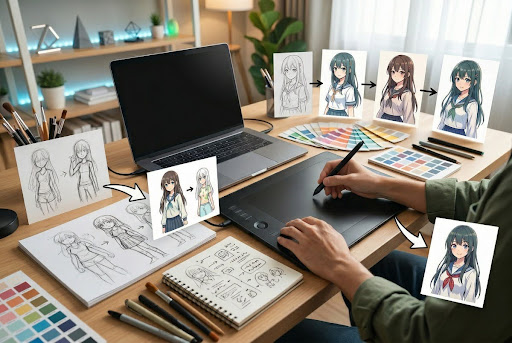
I have noticed a quiet shift in the way people approach character creation online. A few years ago, most casual creators stayed at the idea stage. They had a rough character concept in their head, maybe a mood board saved on their phone, maybe a few notes about hairstyle, outfit, or personality, but very little ever moved beyond that. The gap between imagination and execution was simply too wide.
That gap is getting smaller. What makes the difference is not some abstract promise about “the future of creativity.” It is the fact that character design has become more accessible to people who are not trained illustrators and do not want to spend weeks learning a full workflow before they can test a single idea. When I evaluate creative tools, that is the first thing I look for: does the tool help someone move from vague concept to usable result without turning the process into a chore? That is why platforms like OCMaker AI are finding a real audience.
The rise of AI anime-style creation is not hard to understand. Anime aesthetics are already deeply embedded in internet culture. They work well for avatars, story concepts, fan communities, social posts, visual identity experiments, and OC culture. More importantly, the style gives users a clear visual language. Even people who cannot draw usually know what kind of anime look they want. That clarity matters.
Why Character Creation Used To Feel Out Of Reach
Traditional character design asks for more than taste. It asks for skill, patience, and a lot of iteration. Even simple things become hard when you have to draw them yourself: facial proportions, silhouette, costume balance, color harmony, expression, pose, consistency across versions. For experienced artists, that is normal work. For everyone else, it often becomes a stopping point.
I have seen the same pattern over and over in creator communities. People are not short on ideas. They are short on a bridge between the idea and the first visual draft. They want to test whether a silver-haired swordswoman should look reserved or fierce. They want to compare a school uniform version against a fantasy armor version. They want to know whether the character works better in a softer pastel palette or a sharper high-contrast style. The problem is not imagination. The problem is friction.
That is exactly where AI-assisted workflows became useful. Not perfect, not magical, but useful. A creator can now test multiple character directions without investing the kind of time that once made experimentation feel expensive.
What Everyday Creators Actually Need
One reason many AI image tools feel forgettable is that they solve the wrong problem. A pretty image is easy to admire for three seconds and ignore forever. Character creation is different. A good character tool needs to support decision-making.
When I think about what users actually want, a few needs stand out:
- A fast way to explore appearance ideas
- Results that feel stylistically coherent
- Enough control to avoid complete randomness
- A workflow that does not punish beginners
- Visual output that can be reused in social, story, or fandom contexts
That last point matters more than many product pages admit. People are rarely making character images for no reason. They are building avatars, roleplay references, story art, OC profiles, channel identities, or fan interpretations. In other words, they are creating with a purpose.
Why Anime Style Works So Well in AI Character Design
Anime has a structural advantage in this space. It is expressive without needing photoreal precision. A viewer can accept stylization more easily than they accept realism that feels slightly off. That gives creators more room to explore and gives tools more room to be useful.
I also think anime style is emotionally efficient. A few design choices can communicate a lot very quickly: eye shape, hair silhouette, accessories, school themes, fantasy elements, color palette, posture. That makes anime-style image generation especially attractive for people who want quick visual payoff.
This is where a focused page like AI anime art makes practical sense. It narrows the task. Instead of asking users to wrestle with every possible image style, it meets them where they already are: they want anime-inspired output, and they want it without unnecessary setup.
What I Look For in a Character Tool
When I review creative tools for character workflows, I care less about flashy claims and more about whether the output can support real use. A strong tool usually gets four things right.
It reduces blank-page anxiety
This is one of the least discussed but most valuable benefits. Many users are not blocked by lack of interest. They are blocked by not knowing how to start. A tool that can turn a few descriptive inputs into a visual direction removes that psychological barrier.
It supports iteration, not just novelty
A one-off image can be entertaining. A tool becomes valuable when it helps users refine a concept. Can the creator try a different outfit? A softer expression? A cleaner color identity? A more fantasy-oriented version? Iteration is where character design actually happens.
It gives enough structure for non-artists
Too much flexibility can be overwhelming. Too little control makes everything generic. The best character-focused experiences usually sit in the middle: guided enough to be approachable, open enough to feel creative.
It respects how people actually publish
Creators do not stop at generation. They post, compare, save, remix, and build around what they make. A good tool should feel like part of that wider behavior.
Where I See the Strongest Use Cases
The biggest mistake is assuming AI anime creation is only for hobbyists making random avatars. In practice, the use cases are broader.
Personal OCs
This is the obvious one, and for good reason. Original characters are central to online creativity. Whether someone is building a roleplay persona, a visual novel cast, or a fandom-adjacent identity, they want a fast way to test and visualize concepts.
Social Identity
Profile pictures, channel banners, creator pages, and themed content all benefit from clear visual identity. Anime-style characters are especially good at making that identity feel intentional.
Story and Worldbuilding Support
Even writers who are not visual artists often want character references. A rough image can help fix details in their minds and make a story world feel more tangible.
Fan Creativity
A lot of online creativity starts from existing inspiration and gradually becomes original expression. Character tools are well suited to that transition.
A Practical View of the Opportunity
I do not think the value of AI anime tools is that they replace illustrators. That framing misses the point and usually turns the conversation into a shallow debate. The real value is access. More people can now prototype ideas they would otherwise leave unfinished. More creators can participate visually, not just conceptually.
That changes the size of the creative market. It also changes user expectations. People now expect to test ideas quickly. They expect visual identity to be more fluid. They expect creative tools to meet them halfway.
That expectation is not going away.
Final Thoughts
What keeps this category growing is not hype. It is utility. Character creation is one of the most personal forms of digital creativity because it turns taste into identity. When that process becomes easier, more people step in.
From my perspective, the most important shift is simple: character design no longer belongs only to people with advanced art skills. It is becoming a normal part of online self-expression. Tools that understand that reality will keep winning, especially when they make the process feel guided, specific, and enjoyable rather than technical for its own sake.


In online shopping, customers are unable to touch, feel, or physically inspect the product before buying. This means packaging becomes the first real “proof” of quality. A strong product can instantly lose its charm and value in the customer’s mind if the packaging looks weak, inconsistent, or random. On the other hand, if you present a mid-range product correctly, it gives a premium vibe.
This is why many e-commerce brands, small businesses, cosmetic sellers, jewelry shops, and gifting brands struggle, as their packaging does not match their product level or fails to impress customers. The issue is rarely the product itself. It is usually the packaging mistakes that reduce trust, weaken brand perception, and affect repeat sales.
In many e-commerce markets, especially those involving multiple carriers, packaging durability becomes critical. Customers now do not just compare price and product, but also presentation and unboxing experience.
Packaging Mistakes That Make Products Look Low-Key
Using Generic or Plain Packaging
One of the most common mistakes is using plain brown boxes or unbranded packaging. It not only reduces cost but also removes brand identity. When your customers receive your product in a plain box, they feel no emotional connection with your brand. It feels ordinary and easy to forget.
For e-commerce brands and small businesses, recognition is the main task. Even if the product inside is high quality, the lack of branding makes it feel like a low-value or mass-produced item.
Weak Structural Packaging
Packaging is not just about looks. Structure matters just as much. Thin boxes that need to be handled easily, lids that do not close properly, or packaging that is damaged under pressure signals poor quality.
In online retail, shipping conditions are often rough. If packaging fails during shipping, customer trust is already broken before the product is even seen.
Poor Print Quality and Faded Branding
Low-resolution printing, inconsistent colors, and faded logos are mostly overlooked by businesses when trying to save costs. However, customers notice these details instantly.
For cosmetic and jewelry brands, this is even more critical than for others because these two rely on visual trust. If the logo looks unclear or the cost appears off-brand, the product automatically feels cheap.
No Protection Inside the Box
Many brands focus only on the outer packaging and ignore what happens inside. When products find room inside the box to move freely, they get damaged. It gives a message of carelessness and lack of attention to detail.
For fragile items like glass bottles, skincare products, candles, and jewelry, internal protection is vital.
Overcrowded or Confusing Design
Some businesses try to do too much on packaging. Too many colors, excessive text, multiple fonts, and unclear messaging make the box visually confusing. Instead of looking premium, the packaging feels chaotic.
Customers take only a few seconds to judge a product online, and a confusing design gives them a chance to move to your competitor.
Why Does Packaging Directly Affect Customer Trust?
Packaging is not just a protective layer. It is a psychological signal. Customers judge product quality based on how much effort a brand has put into presentation.
A well-designed package communicates:
- The brand is professional.
- The product is valuable.
- The purchase is safe.
In many cases, customers decide whether to reorder within seconds of opening the package, making the unboxing experience the most important part of the retention strategy. A poor package tells them to choose the opposite, even if it is not true.
Packaging directly influences perceived value, product credibility, and even return rates. Studies in ecommerce behaviour show that customers often link packaging quality with product quality, especially when they buy from unfamiliar brands.
Luxury Packaging that Changes Perception Instantly
Luxury packaging is not just for high-end brands. It is a strategy used to increase the perceived value of a product.
Premium rigid packaging options like custom magnetic gift boxes are widely used in luxury e-commerce, cosmetics, and gifting industries to create a high-end unboxing experience.
When a customer opens a magnetic closure box, the experience feels intentional. It signals that the product inside is valuable and carefully presented. This small interaction can completely shift perception from “ordinary packaging experience” to “premium packaging experience,” even if the product price remains unchanged.
For cosmetic brands, jewelry sellers, and gift businesses, this type of packaging is especially powerful because it aligns with emotional buying behavior.
Small Business Packaging Ideas to Improve Perception
Branded Minimal Packaging
Small businesses assume they need complex designs to look professional. But, in reality, minimal branding works better. A clean box with a simple logo and consistent color palette often feels more premium than overdesigned packaging.
Minimal packaging also reduces production costs while improving brand recognition.
Custom Inserts for Product Stability
Custom inserts help keep products fixed in place during shipping. This is important for fragile or premium items like skincare, candles, and accessories.
Other than protection, inserts also improve presentation. When a customer opens the box and sees everything neatly arranged, it creates a sense of order and care.
Layered Unboxing Experience
A layered unboxing experience adds emotional value. This can include tissue wrapping, thank-you cards, small product notes, or segmented product placement.
Subscription box brands especially benefit from this approach because it increases anticipation and engagement every month.
Unboxing Experience Improvements that Increase Repeat
Unboxing is now a part of digital marketing, especially for Instagram, TikTok, and YouTube product reviews.
A strong unboxing experience includes:
- Easy and smooth opening
- Organized internal structure
- Visual consistency inside the box
- Small surprise or personal touch
When customers enjoy the unboxing moment, they are more likely to remember the brand and reorder in the future.
When Good Products Still Fail
Many businesses think that if their product quality is good, it is enough to succeed. However, even well-made products can lose in the market when their packaging and presentation fail to impress.
This typically happens when:
- Packaging does not match the perceived value of the product.
- The delivery experience feels careless or inconsistent.
- The brand identity is unclear or not visually consistent.
- There is no emotional connection created during the unboxing experience.
In ecommerce, it has become a reality. If packaging looks cheap or unintentional, customers may assume the product inside is of similar quality, even when it is not. Another common issue is oversized or poorly fitted packaging. It not only increases shipping costs but weakens perceived value, making the product feel smaller, less premium, and less thoughtfully presented than it actually is.
How to fix it? A Practical Packaging Upgrade
Improving packaging does not always require a full redesign. A structured approach can create a major difference.
First, focus on strengthening the box material so it matches product value. Next, align design elements like color, typography, and logo placement with brand identity. Then, improve internal structure using inserts or dividers to secure the product.
After that, refine the unboxing experience by adding simple but thoughtful elements like tissue wrap or thank-you notes. Finally, upgrade finishing touches such as matte coating, embossing, or foil stamping where it is needed to add value.
For businesses in highly competitive ecommerce markets, even small upgrades in packaging can significantly improve customer trust and increase repeat purchases.
Final Words
Good products do not always win. In online shopping, perception plays a major role in shaping customer decisions. Packaging is the first and most powerful signal of perception. If it is weak, inconsistent, or generic, even high-quality products lose their value in the customer’s mind.
For ecommerce brands and small businesses, investing in packaging is not an extra cost. It is a direct investment to win customers.


Laura Deibel is a name that resonates in the realms of entertainment and public life. Known for her impressive accomplishments as an entrepreneur and philanthropist, she has carved out a unique niche for herself while navigating the complexities of fame. Her journey from being in the shadows to stepping into the spotlight is truly inspiring. As someone who has experienced both triumphs and challenges, Laura offers valuable insights into what it means to thrive under scrutiny. Join us as we explore how she balances success with personal fulfillment, all while staying true to her authentic self amidst the noise of public life.
The challenges of being in the public spotlight
Being in the public spotlight comes with its unique set of challenges. The constant scrutiny can feel overwhelming. Every aspect of personal life is often up for debate.
Privacy becomes a rare commodity. Simple outings transform into potential headline news, creating pressure to maintain an image that may not reflect true feelings or experiences.
Critics are always lurking, ready to pounce on any misstep, real or perceived. This criticism can sting deeply, especially when it comes from strangers who don’t truly know you.
Navigating relationships also presents difficulties. Trust issues can arise because everyone wonders why someone wants to be close—a friend or a fan?
The weight of expectations looms large as well. People expect perfection and consistency in behavior and choices, which can lead to immense stress and anxiety over time.
How Laura has navigated success and managed her personal life
Laura Deibel has mastered the art of balancing success with personal life. Her journey showcases resilience and determination.
From early in her career, she set clear boundaries. This approach has allowed her to focus on what truly matters—her family and passions outside of work.
Laura embraces time management techniques that help her juggle various responsibilities. She prioritizes tasks and sets aside quality time for loved ones, ensuring they feel valued.
In the public eye, it’s easy to get lost in external expectations. However, Laura stays grounded by maintaining strong connections with supportive friends and family who remind her of her roots.
This intentional navigation through both professional triumphs and personal commitments highlights a profound lesson: success isn’t solely about accolades but also about nurturing relationships that bring joy and fulfillment into our lives.
Balancing work and family life
Laura Deibel understands the delicate dance of balancing work and family life. Juggling a thriving career in the public eye alongside personal commitments requires finesse.
She sets clear boundaries to ensure she dedicates time to both realms. Mornings are often reserved for focused work, while evenings become sacred family moments. This intentional separation helps maintain harmony between her professional responsibilities and home life.
Flexibility is another key element for Laura. She adapts her schedule when necessary, allowing space for unexpected events or quality time with loved ones. Embracing this fluidity ensures that neither aspect feels neglected.
Communication plays a crucial role too. Keeping an open dialogue with family about work demands fosters understanding and support at home. For Laura, sharing her journey makes everyone feel included in her world.
Each day may bring new challenges, but Laura’s commitment to balance shines through in every endeavor she undertakes.
Overcoming criticism and staying true to herself
Criticism can be a heavy weight, especially in the public eye. Laura Deibel has faced her share of scrutiny over the years. Yet, instead of allowing negativity to define her, she chose resilience.
Staying true to herself is core to Laura’s philosophy. She understands that authenticity shines brighter than any critique. By embracing her values and principles, she establishes a strong personal brand that resonates with many.
When challenged by detractors or harsh comments, she focuses on self-reflection rather than self-doubt. This approach helps her filter out unconstructive feedback while valuing insights from trusted sources.
Laura also emphasizes the importance of support systems—friends and family who remind her of who she truly is beyond public perception. With their encouragement, staying grounded becomes easier amid chaos.
By navigating through criticism with grace and confidence, Laura teaches us all the value of self-acceptance in a judgmental world.
Advice for others in the public eye
Navigating life in the public eye can be daunting. For those treading a similar path as Laura Deibel, staying grounded is essential.
First, cultivate a strong support network. Surround yourself with trustworthy friends and family who understand your journey.
Next, set boundaries. It’s crucial to carve out personal time away from the spotlight for self-reflection and relaxation.
Embrace authenticity—being genuine resonates more than perfection ever could. Share your story honestly; it creates deeper connections with your audience.
Stay focused on what truly matters to you, not just public opinion or fleeting trends. This clarity will guide decision-making through challenging times.
Remember that criticism is part of the package. Use it constructively but don’t let negativity define you or deter your goals.
Conclusion: Lessons learned from Laura Deibel’s journey
Laura Deibel’s journey offers valuable insights for anyone navigating the complexities of life in the public eye. Her accomplishments serve as a testament to hard work and resilience. The challenges she has faced highlight the importance of maintaining authenticity amidst external pressures.
By skillfully balancing her professional ambitions with personal commitments, Laura exemplifies how to prioritize what truly matters. She demonstrates that success isn’t solely about accolades but also about nurturing relationships that sustain us through tough times.
Criticism can be daunting, yet Laura shows us that staying true to oneself is crucial. It’s a reminder that self-acceptance often outweighs others’ opinions. For those stepping into similar roles, her story encourages embracing vulnerability while pursuing passions fearlessly.
The lessons drawn from Laura Deibel’s experiences resonate deeply within diverse realms—be it career pursuits or personal growth. Each step of her path reflects a commitment not only to succeed but to do so with integrity and grace.

Nestled in the heart of history, Lucipara offers a captivating glimpse into a world shaped by its early inhabitants and their rich traditions. This enchanting locale is not just a dot on the map; it embodies tales of resilience, exploration, and cultural evolution that sprawl across centuries. From its intriguing role during pivotal moments in global exploration to the lasting effects of colonialism, Lucipara stands as a testament to both triumph and struggle. Today, this vibrant community continues to celebrate its heritage while navigating modern influences. Join us on this journey through time as we uncover what makes Lucipara significant—both then and now.
The Early Inhabitants of Lucipara
The early inhabitants of Lucipara were a resilient and resourceful people. They thrived on the island’s rich natural resources, establishing communities that reflected their deep connection to the land.
Archaeological evidence suggests that these ancient settlers engaged in fishing, farming, and gathering. Their skills allowed them to create a sustainable lifestyle amid the lush landscapes and abundant waters surrounding them.
Cultural practices flourished as they built intricate social structures. Rituals celebrating nature’s cycles played an essential role in their daily lives. Artifacts unearthed from this period reveal insights into their spiritual beliefs and artistic expressions.
Trade networks with neighboring regions expanded their horizons. Through these interactions, they exchanged goods, ideas, and traditions that would shape Lucipara’s identity for generations to come. The legacy of these early inhabitants continues to resonate within modern culture today.
Lucipara’s Role in the Age of Exploration
Lucipara played a pivotal role during the Age of Exploration, acting as a strategic waypoint for early navigators. Its location made it an essential stopover for explorers venturing across uncharted waters.
Sailors replenished their supplies and gathered valuable information about trade routes. The island served as a melting pot of cultures, where diverse ideas and traditions converged.
The influx of new settlers brought changes to the local way of life. Lucipara became known not just for its natural beauty but also for its hospitality towards those seeking fortune or knowledge.
This era marked significant interactions between indigenous populations and foreign visitors. These encounters left lasting impressions that shaped both Lucipara’s identity and the narratives of exploration itself.
The stories from this time continue to echo through history, highlighting how Lucipara became intertwined with global expeditions.
The Impact of Colonialism on Lucipara
Colonialism left a profound mark on Lucipara, reshaping its social and economic landscape. With the arrival of foreign powers, traditional ways of life began to shift dramatically.
The introduction of new governance structures disrupted local customs and practices. Traditional leaders often found their authority undermined by colonial rulers who imposed their own systems. This led to tensions and conflicts that echoed through generations.
Economically, colonizers exploited Lucipara’s resources for their gain. While some infrastructure was developed, it primarily served colonial interests rather than benefiting local communities. The focus on export-oriented agriculture altered the region’s agricultural practices.
Culturally, colonial influence brought about significant changes in language, religion, and education. Many local traditions were overshadowed or deemed inferior compared to European customs.
Yet amidst these challenges, the resilience of Lucipara’s people has preserved essential aspects of their identity throughout history.
Modern Day Lucipara: Culture and Traditions
Modern-day Lucipara is a vibrant tapestry of culture and traditions. The community embraces its rich heritage while also welcoming contemporary influences.
Festivals are the heartbeat of life here. Locals celebrate with music, dance, and colorful attire that reflect their history. Each event draws visitors eager to experience the unique spirit of Lucipara.
Artisans showcase traditional crafts passed down through generations. Handwoven textiles and intricate pottery tell stories of the land’s past. Visitors often find themselves captivated by these creations.
Cuisine plays a significant role in daily life as well. Flavors from indigenous ingredients mingle with spices introduced over centuries, resulting in delightful dishes that honor both tradition and innovation.
Families gather regularly for communal meals, fostering bonds within the community. These gatherings reinforce shared values and create lasting memories that resonate throughout generations.
In Lucipara, every corner reveals a piece of its cultural puzzle, inviting everyone to join in its ongoing story.
Preserving the Legacy of Lucipara
Preserving the legacy of Lucipara is a vital endeavor that spans generations. Community efforts focus on safeguarding historical sites, ensuring that future visitors can experience the rich tapestry of its past.
Local museums play an essential role in this mission. They curate artifacts and narratives that tell stories of resilience and cultural pride. Engaging exhibits invite both locals and tourists to delve deeper into Lucipara’s significance.
Educational programs are also key players in preserving tradition. Schools incorporate local history into their curricula, fostering a sense of identity among younger generations. This instills respect for heritage while encouraging active participation in cultural events.
Grassroots initiatives often organize festivals celebrating Lucipara’s unique traditions. These gatherings create a vibrant atmosphere where customs are shared and passed down through storytelling, music, and dance.
Through these combined efforts, the spirit of Lucipara continues to thrive amid modern influences. The community stands united in honoring what makes it truly special.
Conclusion: Reflections on the Enduring Legacy of Lucipara
Lucipara stands as a remarkable testament to the passage of time and the evolution of human civilization. Its rich history reflects a tapestry woven with challenges, triumphs, and cultural exchanges that shaped its identity.
From its early inhabitants who thrived in harmony with nature, to its pivotal role during the Age of Exploration, Lucipara has always been more than just a geographical location. It’s a place where diverse cultures met and mingled. The impact of colonialism left an indelible mark, reshaping not only its landscape but also the lives and traditions of its people.
Today, modern-day Lucipara pulses with vibrant culture and deep-rooted traditions that speak volumes about resilience and adaptability. The efforts to preserve this legacy showcase the pride locals have for their heritage while embracing contemporary influences.
As we reflect on what Lucipara offers — both historically and culturally — it becomes clear that this unique locale is not merely defined by past events but continues to influence future generations. Understanding Lucipara’s story enriches our appreciation for places shaped by history and reminds us how legacies endure through time.
-

 BLOG10 months ago
hanime1: The Ultimate Destination for Anime Lovers
-

 ENTERTAINMENT1 year ago
Sflix: How It’s Changing the Way We Watch Movies and TV Shows
-

 BILLS1 year ago
Why Does My Instagram Reel Stop Getting Views After One Hour? How to Fix It?
-

 ENTERTAINMENT12 months ago
Crackstreams 2.0: The Future of Free Sports Streaming?
-

 BLOG11 months ago
Imginn: The Ultimate Tool to View Instagram Content Anonymously
-

 Technology1 year ago
Simpcitt: The Rise of a Unique Online Community
-

 BLOG1 year ago
NHentai.nef: Understanding the Popular Hentai Archive
-

 BLOG10 months ago
ThisVid: What Makes It Stand Out in the World of Online Videos